• KGS/USD = 0.01144 0%
  • KZT/USD = 0.00211 0%
  • TJS/USD = 0.10460 0.19%
  • UZS/USD = 0.00008 0%
  • TMT/USD = 0.28490 0%
  • KGS/USD = 0.01144 0%
  • KZT/USD = 0.00211 0%
  • TJS/USD = 0.10460 0.19%
  • UZS/USD = 0.00008 0%
  • TMT/USD = 0.28490 0%
  • KGS/USD = 0.01144 0%
  • KZT/USD = 0.00211 0%
  • TJS/USD = 0.10460 0.19%
  • UZS/USD = 0.00008 0%
  • TMT/USD = 0.28490 0%
  • KGS/USD = 0.01144 0%
  • KZT/USD = 0.00211 0%
  • TJS/USD = 0.10460 0.19%
  • UZS/USD = 0.00008 0%
  • TMT/USD = 0.28490 0%
  • KGS/USD = 0.01144 0%
  • KZT/USD = 0.00211 0%
  • TJS/USD = 0.10460 0.19%
  • UZS/USD = 0.00008 0%
  • TMT/USD = 0.28490 0%
  • KGS/USD = 0.01144 0%
  • KZT/USD = 0.00211 0%
  • TJS/USD = 0.10460 0.19%
  • UZS/USD = 0.00008 0%
  • TMT/USD = 0.28490 0%
  • KGS/USD = 0.01144 0%
  • KZT/USD = 0.00211 0%
  • TJS/USD = 0.10460 0.19%
  • UZS/USD = 0.00008 0%
  • TMT/USD = 0.28490 0%
  • KGS/USD = 0.01144 0%
  • KZT/USD = 0.00211 0%
  • TJS/USD = 0.10460 0.19%
  • UZS/USD = 0.00008 0%
  • TMT/USD = 0.28490 0%

Viewing results 115 - 120 of 5539

Navigation Seals in the EAEU: Digital Modernization or a New Barrier for Kazakhstani Businesses?

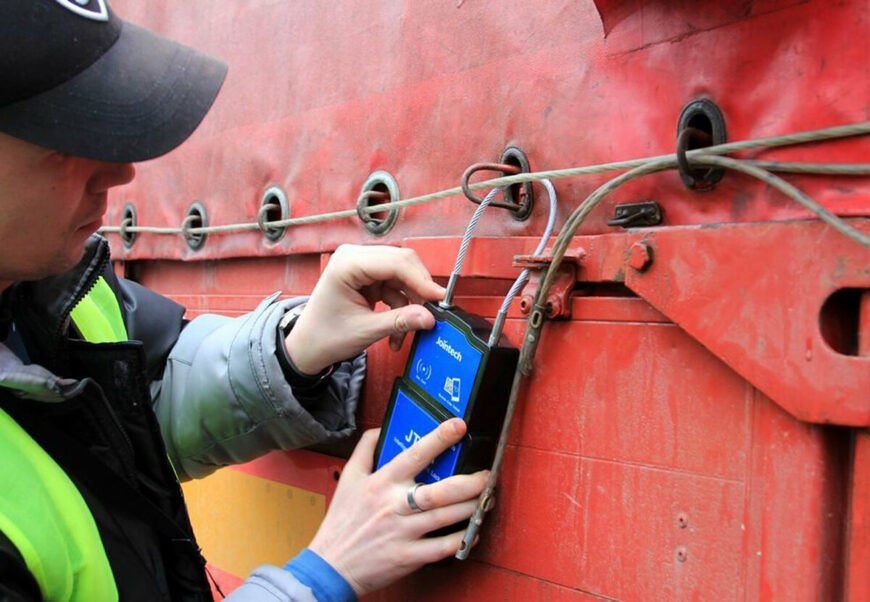
Since February 2026, the countries of the Eurasian Economic Union (EAEU), Kazakhstan, Kyrgyzstan, Tajikistan, Belarus, and Russia, have begun the phased introduction of a navigation seal system to track cargo shipments. The mechanism is designed to increase transit transparency, strengthen control over the movement of goods, and speed up logistics operations. However, business representatives warn that the new system could lead to higher logistics costs and create additional administrative barriers for carriers. Against the backdrop of the launch of the project’s first phase in Kazakhstan, debate is growing over whether digitalization will deliver the expected benefits, or become another source of pressure on the market. New Transport Control System The agreement on the use of navigation seals in the EAEU was signed by the heads of state on April 19, 2021, and ratified by Kazakhstan in 2023. The document provides for the tracking of goods transported through the territories of two or more member states of the union. In Kazakhstan, amendments were introduced to national legislation to implement the agreement, the information systems of controlling authorities were modernized, and pilot projects were conducted in both road and rail transport. Under a resolution of the Government of Kazakhstan dated September 10, 2024, the national operator of the transport tracking system is the Institute of Space Technology and Technologies LLP, which operates under the Aerospace Committee of the Ministry of Digital Development. By decision of the Eurasian Economic Commission’s Collegium dated September 23, 2025, phased transport tracking using navigation seals began on February 11, 2026, for goods transported between EAEU countries. In 2025, the national operator, together with the State Revenue Committee of the Ministry of Finance of Kazakhstan, conducted a pilot project on the use of navigation seals in transit transportation. Testing took place at road border crossings and along railway routes. The main objective was to test procedures for installing and removing seals, as well as to verify the interaction between government information systems and the Transit platform. As a result of the pilot project, more than 890 shipments involving 1,757 vehicles were tracked, and a total of 1,637 navigation seals were installed. The devices were used at key road checkpoints and along the railway route between Altynkol and Saryagash stations. Based on the results, authorities concluded that the system was technically and organizationally ready for large-scale implementation. How “Digital Seals” Work According to Osken Toishibekov, director of the Institute of Space Technology and Technologies, the system is based on the Transit information platform, which connects carriers, operators, and government agencies. He explained to The Times of Central Asia that a navigation seal is a device equipped with an electronic module and a sealing element with satellite navigation capabilities. It enables the location of a vehicle to be tracked via GPS, with data transmitted to the system through mobile networks. The device records attempts to open or damage the seal, break the sealing cable, interfere with the equipment, or trigger other abnormal events. All information is automatically transmitted to the...


Public-Private Partnership Makes Strides in Kazakhstan

In Kazakhstan, public-private partnerships (PPPs) have become a mechanism for implementing infrastructure projects using limited government financial resources. At a briefing on February 25, Aslan Kaligazin, Chairman of the Management Board of the Kazakhstan Public-Private Partnership Center, spoke about public-private partnership development in 2025 and outlined priorities for the future. According to Kaligazin, Kazakhstan has so far concluded 1,257 PPPs and concession agreements totaling KZT 3.6 trillion (€7.19bn). Of these, 697 projects are currently being implemented. Only 17 these projects are implemented at the national level, while accounting for more than half (KZT 1.8 trillion, $3.6bn) of the total projects’ value. The absolute majority of the PPPs – 1,240 projects – are being implemented at the local level. The projects mainly concentrate in the social sector, healthcare, education, energy, and housing and utilities, together accounting for over 88% of all contracts. Transport and infrastructure represent a significant share in value terms: around 27% of the total portfolio. Kaligazin noted that PPP in Kazakhstan has been undergoing a transformation in recent years: while the number of contracts is declining, the average project size is increasing. Prior to 2022, the average project cost stood at approximately KZT 6 billion ($11.99 million, but increased to KZT 18 billion ($25.97 million) in 2022–2025. The portfolio is increasingly shaped not by small social facilities, but by large-scale and technologically sophisticated infrastructure projects. Among the most capital-intensive projects of 2025 were the construction of Industrial Park No. 2 in the Astana Technopolis Special Economic Zone, and a project to introduce AI-based solutions into Astana’s security and urban infrastructure management system. The Kazakhstan Public-Private Partnership Center’s future plans include identifying priority infrastructure and sectoral segments where PPPs should become the primary project delivery mechanism. A list of areas will be formed in which PPP projects will gradually replace projects financed exclusively from the state budget. “Our task is not to formally expand the PPP portfolio, but to develop sustainable, well-structured projects that deliver long-term economic impact and tangible benefits for citizens,” Kaligazin concluded. In recent years, Kazakhstan has adopted legislative amendments increasing the efficiency and transparency of PPP project planning. PPP contracts are now concluded solely on a competitive basis, and the planning and competitive selection procedures have been digitalized, according to the Ministry of National Economy. To engage private business in the creation of social infrastructure, a Comprehensive PPP Development Plan for 2024–2028 was adopted, providing for the implementation of 43 projects in the areas of education, healthcare, sports, and social protection.  

Death Toll in Cafe Gas Explosion in Kazakhstan Rises to Nine

A cafe owner in northern Kazakhstan is under arrest for alleged negligence after a gas explosion and fire that killed nine people. The explosion occurred at the Plov Center cafe in the town of Shchuchinsk in Akmola region, outside the capital Astana, early on February 27, killing seven people, including six cafe workers and the 16-year-old daughter of one of the employees, city officials said. Two injured people later died, according to the city. It attributed the death toll to the regional health department. More than two dozen people were injured, and about half of them were hospitalized, according to the Ministry of Emergency Situations. The café is attached to a five-story residential building. The owner was arrested on Monday for suspected violation of fire safety regulations. After the disaster, workers from the emergency situations ministry conducted fire safety checks at cafes, restaurants and dormitories in northern Kazakhstan. They checked that gas cylinders were correctly positioned, fire extinguishers were on hand and evacuation routes were accessible. The ministry is leading a high-level investigation of the causes and circumstances of the gas explosion.

Uzbekistan Introduces Incentives for Major Industrial Polluters to Reduce Environmental Impact

Uzbekistan’s government has approved new measures aimed at encouraging large industrial enterprises to reduce their environmental footprint. Resolution No. 85 establishes regulations to incentivize environmental impact reduction efforts by industrial enterprises classified as Category I and Category II facilities based on their level of environmental impact. These categories include enterprises considered to have significant or moderate effects on the natural environment. Under the new framework, incentives will be introduced in two stages. At the first stage, an enterprise that installs a background air pollution monitoring station will be eligible for relief from previously assessed outstanding compensation payments for environmental damage. In addition, 50% of compensation payments allocated to the state budget for environmental harm will be refunded over a two-year period. At the second stage, if the enterprise installs dust and gas cleaning equipment as well as local wastewater treatment facilities within one year after commissioning the monitoring station, 70% of the compensation payments directed to the state budget will be refunded over two years. Enterprises seeking to benefit from these incentives must notify the Ecology Committee through Public Service Centers or via the government’s online portal. The committee will review submitted documentation within 15 working days and issue a formal conclusion on whether the enterprise qualifies for state support. The Times of Central Asia previously reported, that more than a dozen valuable trees were cut down at the construction site of the Ritz-Carlton Tashkent project in central Tashkent. Environmental damage in that case was officially assessed at 351,230,000 Uzbek sum (approximately $29,000), according to documentation cited by officials.

Uzbek FLEX Finalist Returns Home After Alleged Harassment by Host Father in Indiana

An Uzbek high school student selected for the prestigious FLEX exchange program has returned home after her family alleged she was subjected to sexual harassment by her host father in the United States. The claims were made public by her father, Dr. Aziz Boltayev, in a detailed Facebook post. Uzbek officials have confirmed that they requested explanations from program representatives, while the U.S. side has not issued a public statement. Dr. Boltayev’s daughter was one of nearly 60 finalists from Uzbekistan selected in 2025 for the Future Leaders Exchange Program (FLEX), had traveled to the United States to complete her final year of high school. The fully funded initiative, supported by the U.S. Department of State, enables students from participating countries to study at American high schools and live with volunteer host families for one academic year. According to Boltayev’s account, his daughter was placed in a small town in Indiana with a childless couple, both music teachers, who had previously hosted exchange students. Initial video calls reportedly reassured the family prior to her departure. “After graduating from medical school, I received a U.S. Department of State grant and spent time in the United States for professional development,” Boltayev wrote. “I returned to Uzbekistan with a deep sense of gratitude and a positive impression of American values. Naturally, when my eldest daughter won the FLEX grant in 2025, I was proud and supportive.” He said the situation changed approximately a month after her arrival. According to his post, the host father allegedly began making inappropriate remarks and advances when his wife was not present. “He told my daughter that it was ‘necessary to gain sexual experience’ before marriage,” Boltayev wrote. “To her credit, [his daughter] firmly resisted and immediately informed her assigned FLEX coordinator.” According to Boltayev, the local coordinator relocated his daughter shortly after the complaint was filed. However, he criticized the way communication with the family in Uzbekistan was handled. “The coordinator moved [his daughter] out of the house immediately, but in doing so, they completely bypassed us, her parents,” he wrote. Due to the time difference, he said he was informed the following day by the FLEX office in Tashkent. Boltayev further alleged that during this period his daughter’s phone was switched off and her parents’ messages went unanswered. He claimed that the coordinator had instructed her to turn off her phone for “security reasons,” which he described as isolating a minor from her parents. He also asserted that neither the temporary host family nor U.S.-based program representatives agreed to speak directly with him. According to Boltayev, his daughter was told that program officials were not obligated to provide information to her parents. Seeking reassurance, Boltayev contacted a friend, a faculty member at the University of Michigan, who lives several hours from his daughter’s location, and asked him to check on her in person. “Even then, FLEX representatives tried to block him, telling my daughter: ‘He needs our permission to see you, and for now, permission is...

Why Tajikistan Lags Behind Global Animal Welfare Standards

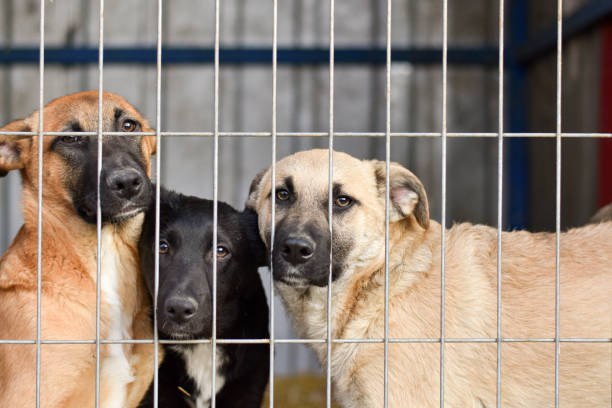
While animals are legally recognized as sentient beings and, in some countries, effectively regarded as family members, their legal status in Tajikistan remains ambiguous. The absence of a dedicated animal protection law, the continued shooting of stray animals, and illegal wildlife trade point to a systemic issue that extends beyond animal welfare. Tajikistan has not adopted a specific law on animal protection, despite ratifying the United Nations Convention on Biological Diversity in 1997, which calls for the protection of wild and domestic fauna. In practice, regulation of stray animal populations often consists of culling by shooting. At the same time, other forms of cruelty reportedly persist. Although dog fighting is officially prohibited, activists say such events continue to take place. Cases of mass poisoning and other acts of violence against animals are frequently reported, but rarely result in publicized prosecutions. The country has no state-run animal shelters. The few private shelters that operate rely primarily on donations. Experts have also raised concerns about the condition of zoos, which they argue do not meet international animal welfare standards. Additional alarm has been triggered by reported incidents of illegal wildlife trade, including cases involving lion cubs. Despite public outcry in some instances, such cases have seldom led to broader legislative reform or sustained enforcement efforts. Sociologist and animal rights activist Malika Abdulvasieva argues that a weak legal framework contributes to a culture of impunity. “Unpunished cases of cruelty, from mass poisonings to shootings by housing and utilities employees, gradually normalize cruelty in society. This has a particularly negative impact on young people and generally leads to an increase in aggression and violence,” she said. One of the key priorities for activists remains the advancement of a comprehensive animal protection bill. However, even establishing a formally registered animal rights organization reportedly involves complex administrative procedures. In the absence of a unified state strategy, civil society groups and private businesses are attempting to fill the gap. Representatives of the Brigitte Bardot Foundation are expected to visit Dushanbe this year, and a large-scale free sterilization and castration program for stray animals is being planned in cooperation with German partners. However, activists emphasize that isolated initiatives cannot substitute for a coherent national policy framework.