• KGS/USD = 0.01144 0%
  • KZT/USD = 0.00203 0%
  • TJS/USD = 0.10448 -0.19%
  • UZS/USD = 0.00008 0%
  • TMT/USD = 0.28490 0%
  • KGS/USD = 0.01144 0%
  • KZT/USD = 0.00203 0%
  • TJS/USD = 0.10448 -0.19%
  • UZS/USD = 0.00008 0%
  • TMT/USD = 0.28490 0%
  • KGS/USD = 0.01144 0%
  • KZT/USD = 0.00203 0%
  • TJS/USD = 0.10448 -0.19%
  • UZS/USD = 0.00008 0%
  • TMT/USD = 0.28490 0%
  • KGS/USD = 0.01144 0%
  • KZT/USD = 0.00203 0%
  • TJS/USD = 0.10448 -0.19%
  • UZS/USD = 0.00008 0%
  • TMT/USD = 0.28490 0%
  • KGS/USD = 0.01144 0%
  • KZT/USD = 0.00203 0%
  • TJS/USD = 0.10448 -0.19%
  • UZS/USD = 0.00008 0%
  • TMT/USD = 0.28490 0%
  • KGS/USD = 0.01144 0%
  • KZT/USD = 0.00203 0%
  • TJS/USD = 0.10448 -0.19%
  • UZS/USD = 0.00008 0%
  • TMT/USD = 0.28490 0%
  • KGS/USD = 0.01144 0%
  • KZT/USD = 0.00203 0%
  • TJS/USD = 0.10448 -0.19%
  • UZS/USD = 0.00008 0%
  • TMT/USD = 0.28490 0%
  • KGS/USD = 0.01144 0%
  • KZT/USD = 0.00203 0%
  • TJS/USD = 0.10448 -0.19%
  • UZS/USD = 0.00008 0%
  • TMT/USD = 0.28490 0%

Viewing results 19 - 24 of 108

Kinship Clans in Modern Kazakhstan: Historical Continuity and New Realities

Ancestral ties are seemingly embedded in the DNA of every Kazakh. This tradition, rooted in antiquity, reflects the clan structure that historically shaped Kazakh society. The notions of zhuz (a set of clans) and ru (clan) largely determined the social organization of the nomadic lifestyle. Kazakh society traditionally consisted of three zhuzes, the Older, Middle, and Younger which in turn united many clans. The zhuzes were large tribal unions, a kind of higher-level “horde” that included dozens or even hundreds of distinct clan groups (ru), while ru referred specifically to a group of close blood relatives. Such clan structures formed the basis of traditional society. Historical Roots: The System of Zhuzes and Shezhire The origin of the three Kazakh zhuzes remains a subject of historical debate. In early written sources from the 17th century, the names of the zhuzes had not yet been formalized. Chronicles described only a geographic custom: those living in the upper reaches of a river were called the “Big zhuz,” those in the middle the “Middle zhuz,” and those in the lower reaches the “Younger zhuz.” The 16th-century work Majmu al-Garaib mentions Kazakhs but notes that the terms Uly zhuz, Orta zhuz, and Kishi zhuz were not yet in use. The classical three-zhuz system only fully formed by the late 17th to early 18th century, during the reign of Tauke Khan (1680-1715), when the Kazakhs united under a single Kazakh Khanate. According to a legend recorded by traveler G. N. Potanin, one ruler gathered 300 warriors and divided them into three groups: the first hundred, Uly zhuz, were settled upstream along the Syr Darya; the second hundred, Orta zhuz, in the middle; and the last hundred, led by the chief Alshin, downstream as Kishi zhuz. These legends provide a cultural explanation for the emergence of the zhuzes, though historians stress there is no single agreed version. Hypotheses range from military-administrative divisions into “wings” to the influence of geography and climate across Semirechye, Saryarka, and Western Kazakhstan. Alongside the zhuz system, clan identity was reinforced through genealogical chronicles, shezhire, in which Kazakhs recorded their ancestors’ names and clan history. Knowledge of seven generations (jeti ata) was obligatory for every Kazakh and was absorbed “with mother’s milk”. These genealogies had practical implications: knowing one’s lineage helped determine kinship laws, including prohibitions on marrying within the same clan. The clan was not just a social structure, but a fundamental part of identity. As publicist Khakim Omar wrote: “The main idea of the shezhire is revealed in the close connection of ancestors’ and descendants’ names, in the continuity of generations,” allowing a person, through genealogy, “to define their place in the world”. Transformation of Tradition in the Soviet Era Under Soviet rule, internationalism and a break from “tribalism” were officially promoted. Yet in practice, the clan system continued to operate informally as a mechanism of social mobility and legitimacy. While divisions into zhuzes and clans were no longer legally recognized, they endured as a way of thinking, a cultural filter...

Kazakh Entrepreneur in Paris Launches Perfume Inspired by the “Kiz-Jibek” Epic

An ethnic Kazakh living in Paris has launched a perfume called Kiz-Jibek on the French market. Its founder, Nurzhan Tolegen, was born in China’s Ili Kazakh region and grew up in Kulja before eventually settling in the French capital. “I am the grandson of a nomadic people. My grandparents left their homeland during the civil war, carrying with them the soul of Kazakhstan etched into their stories, their songs, and their memories. Yet I had never set foot on those vast steppes whose grandeur my mother, a professor of literature, so often evoked,” he shares on his personal website. [caption id="attachment_35686" align="aligncenter" width="466"] Nurzhan Tolegen; image: www.tolegenparis.com[/caption] In 2021, Nurzhan traveled to Kazakhstan for the first time, spending a month reconnecting with his ancestral homeland. Those four weeks felt like a rebirth for him and marked a turning point in his life. Returning to France, he established a luxury perfume house, Tolegen Paris: a tribute to both his surname and to a heroic figure celebrated in a 16th-century Kazakh epic. In May 2025 he introduced Kiz-Jibek, describing it as “a fragrance honoring eternal love” and “a scent laced with wormwood.” The Kiz-Jibek epic, a cornerstone of Kazakh cultural heritage, reflects the values of traditional society. It emphasizes unity and loyalty to the homeland while exploring universal themes of love, virtue, honesty, and beauty. Through the character of Kiz-Jibek, one encounters the timeless image of the Kazakh woman—gentle yet resilient, modest yet dignified. [caption id="attachment_35688" align="aligncenter" width="624"] The epic characters Kiz-Jibek and Tolegen[/caption] For over five centuries, Kazakhs have sung the tale of Kiz-Jibek. Its central figures—Bazarbai, Tolegen, Kiz-Jibek, and Sansyzbai—are believed to have lived in history, with the story unfolding along the Ural River among the Jagalbaily tribe. In both the epic and the famous film, Tolegen is treacherously slain by Bekezhan, after which Kiz-Jibek, devastated by grief, throws herself into the river.

“Recipes for Broken Hearts”: Bukhara Launches First Art Biennale

This autumn, the ancient Silk Road city of Bukhara is poised to reemerge as a global cultural destination, hosting its first-ever international art biennale, Recipes for Broken Hearts. Running from September 5 to November 20, the ten-week festival will transform Bukhara, a UNESCO Creative City, into a vibrant arena for contemporary art, community rituals, and culinary experiences. The initiative is spearheaded by Gayane Umerova, chair of the Uzbekistan Arts and Culture Development Foundation (ACDF), with renowned curator Diana Campbell at the helm. More than 70 new works, created in Uzbekistan, will be displayed in historic madrasas and caravanserais, reimagined as immersive exhibition spaces. The event promises to be among the region’s largest cultural gatherings, aiming to reclaim Bukhara’s place on the global cultural map. Not Just an Exhibition, A Sensory Ritual Recipes for Broken Hearts is not a traditional exhibition. Designed as a “ritual for the senses,” it invites audiences to engage with art not just visually but through touch, scent, sound, and taste. Sculptures, textiles, music, and food converge into an experimental space for “emotional healing.” Visitors become participants rather than spectators. At the opening ceremony, instead of a red carpet, guests will be welcomed by the scent of fermentation. Korean Buddhist nun and chef Jeon Kwan will prepare kimchi, place it in a clay pot, and bury it. Ten weeks later, the fermented dish will be unearthed and shared with the public, symbolizing transformation and healing through time. A Dialogue Between Cultures The biennale’s installations span a wide geographic and cultural range. Egyptian-American artist Laila Gohar will craft navata, a crystal made from grape juice and saffron. Colombian artist Delcy Morelos will construct a dome of clay, sand, and spices to symbolize human connection to the earth. Uzbek artist Oizhon Khairullaeva and ceramist Abdurauf Tahirov will create “organs of the city,” including a beating ceramic heart and a “stomach” integrated into historic architecture. Indian sculptor Subodh Gupta will build a giant dome from enamel teapots and bowls, shaped like a yurt, where guests will be served fusion cuisine. Central to the project is the in situ approach: every piece is created in Bukhara with the support of local artisans, potters, weavers, and carpet makers, infusing contemporary works with traditional skills. “This isn’t an art fair,” explained the curators. “Each piece speaks from this land, even if the whole world sees it.” [caption id="attachment_21936" align="aligncenter" width="2560"] The Kalon Mosque, Bukhara; image: TCA, Stephen M. Bland[/caption] Bukhara as a Living Gallery Festival venues are dispersed throughout Bukhara’s historic core, effectively turning the city into an open-air gallery. Four restored caravanserais symbolize the emotional journey from grief to hope. The 16th-century Gavkushon madrasa, repurposed as the “House of Softness,” will host workshops, public readings, and a symposium titled The Craft of Mending. There, artists and scholars will explore the “culture of repair”, from object restoration to the preservation of historical memory. “Erasing history is also a form of pain. Restoration is resistance to oblivion,” notes Harvard-based art historian Aziza Izamova. Concurrently,...

Nigora Fazliddin: The Social Media Storyteller Bringing Life in Tajikistan to the World

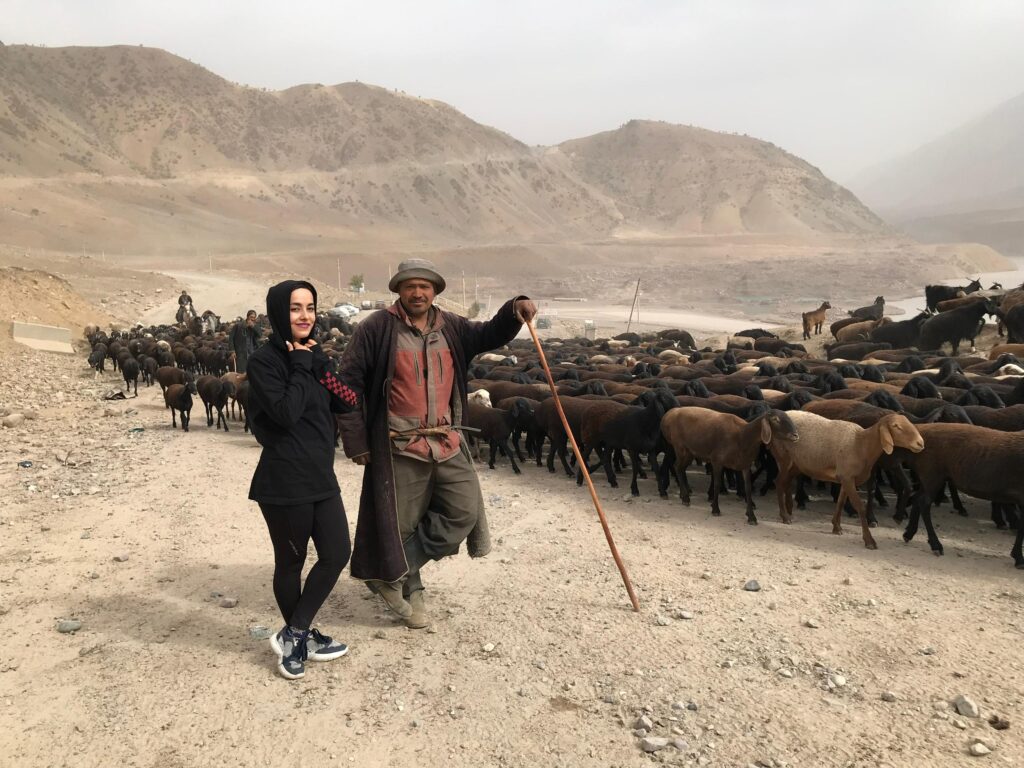
For all its beauty and Silk Road history, Tajikistan remains one of the least visited countries on earth. Life in its epic mountain ranges is rarely captured by photographers, and documentary films are few and far between – mainly half-hearted vlogs by the foreigners who pass through on the Pamir Highway. But in recent years, one Tajik filmmaker and travel influencer has made it her mission to show both her own people and the wider world what makes her homeland so extraordinary. Nigora Fazliddin, a former journalist from Dushanbe, is part of a new generation of creators using social media to bridge cultural distances. Posting simple videos and photographs from her journeys in Tajikistan, she captures the landscapes and communities that outsiders, and even many Tajiks, rarely get to see. "This love I have for our land – its wild beauty, its silence, its soul – I try to share with others," she tells The Times of Central Asia. "On X I mostly reach an international audience, since it's not very popular in Tajikistan. But on Instagram, it's a different story. That’s where Tajiks find me, and where I find them." [caption id="attachment_35211" align="aligncenter" width="400"] Image: Nigora Fazliddin[/caption] One of her favorite discoveries, she says, is Shirkent National Park in the south-west of the country, where fossilized dinosaur footprints mark the earth. "It gives you goosebumps to stand there and imagine creatures walking those same paths millions of years ago," she adds. Then there are the Pamirs, often called “the roof of the world.” At 7,495 meters, Peak Somoni attracts mountaineers from Central Asia and further afield. The region is also home to the rare Marco Polo sheep and shaggy yaks, which are found only here. But what lingers most for Fazliddin is not the challenge of climbing or the sight of wildlife, but the solitude of valleys so remote that no car can reach them. She also cherishes journeys into the Yaghnob Gorge, where people still live as their ancestors did. There she met a shepherd in his seventies, Mirzoali, who has spent four decades with his flock among the peaks. "He told me, “I’ve been a shepherd for 40 years – and I never get tired of it.’” His secret? Clean air, peace, a healthy routine – and living in the mountains year-round. That’s the kind of wisdom you can only find in the mountains," she says. [caption id="attachment_35209" align="aligncenter" width="400"] Image: Nigora Fazliddin[/caption] What Fazliddin shares online is more than travel content. For many Tajiks, especially those in cities, her images bring new perspectives to familiar places. "My Instagram has become like a mirror where people can see themselves, their roots, and the beauty they grew up with – but may have never really looked at," she explains. The responses have been moving. Her social media followers now invite her to visit their villages. For Fazliddin, these moments confirm that her work is worth doing: "It makes me feel like what I do matters – even in...

Kyrgyzstan Hosts Inaugural World Festival of Traditional Culture and Music “Rukh Sanat”

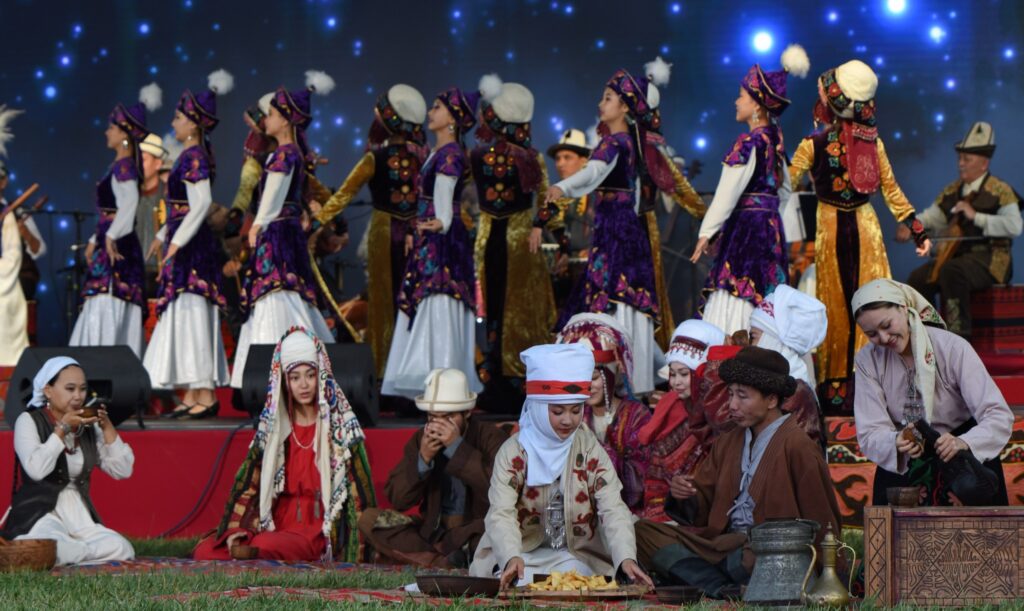
From August 1-3, the cultural and ethnographic complex Rukh Ordo, on the shores of Lake Issyk-Kul, hosted Kyrgyzstan’s first World Festival of Traditional Culture and Music, Rukh Sanat. The event brought together more than 130 performers, researchers, and artisans from 37 countries. The festival opened with a parade of participants and a theatrical ceremony celebrating nomadic traditions and harmony with nature. Kyrgyz Minister of Culture, Information and Youth Policy Mirbek Mambetaliev described Rukh Sanat as “a new cultural doctrine” where tradition “sounds, lives, and interacts.” [caption id="attachment_34893" align="aligncenter" width="2560"] Image: TCA/Maria Malinovskaya[/caption] [caption id="attachment_34892" align="aligncenter" width="2560"] Image: TCA/Maria Malinovskaya[/caption] The program included an International Competition of Oral-Professional Musical Art, featuring 82 soloists and ensembles from 14 countries. The Grand Prix was awarded to the Kyrgyz ensemble Akak, while laureates included performers from Kazakhstan, Uzbekistan, Russia, South Korea, and India. [caption id="attachment_34895" align="aligncenter" width="2560"] Image: TCA/Maria Malinovskaya[/caption] [caption id="attachment_34896" align="aligncenter" width="2560"] Image: TCA/Maria Malinovskaya[/caption] Alongside the performances, the International Council for Traditional Music and Dance (ICTMD) held a symposium attended by more than 100 scholars from 40 countries, addressing the preservation and transformation of intangible cultural heritage. The festival concluded on August 3 with a gala concert of laureates. Deputy Chairman of the Cabinet of Ministers Edil Baisalov announced that the next Rukh Sanat will be held in Kyrgyzstan’s Jalal-Abad region in 2027. [caption id="attachment_34897" align="aligncenter" width="2560"] Image: TCA/Maria Malinovskaya[/caption] [caption id="attachment_34898" align="aligncenter" width="2560"] Image: TCA/Maria Malinovskaya[/caption] Organizers see the festival as an important step toward strengthening Central Asia’s cultural presence on the global stage.

Honoring Abai Qunanbaiuly: Kazakhstan’s Enlightened Voice, Now Celebrated Worldwide

Today, August 10, Kazakhstan observes Abai Day, honoring the birth of Abai Qunanbaiuly (1845–1904)—a towering poet, philosopher, composer, and reformist who laid the foundations of written Kazakh literature. Since 2020, this date has been officially enshrined in the national calendar, reflecting Abai's inestimable role in shaping the Kazakh cultural and moral consciousness. Across the country, poetry readings, concerts, and flower-laying ceremonies are held to mark the anniversary of the man whose influence still guides Kazakh identity. Abai’s literary oeuvre—spanning some 170 original poems and 56 translations—brought new poetic meters, rhyme schemes, and philosophical depth to Kazakh verse. His celebrated Words of Edification (Kara sozder) remains a timeless guide on education, morality, and personal integrity, inspiring generations with its call for intellectual growth and ethical living. He did not merely write; he transformed the role of literature in Kazakh society, blending folk traditions with universal humanist ideals. A pivotal moment in his international recognition came in 1885, when American journalist George Kennan visited Semey (then Semipalatinsk). Struck by the city’s public library and by Abai’s active presence among its patrons, Kennan recorded his impressions in Siberia and the Exile System—one of the earliest Western literary references to the Kazakh thinker. This encounter symbolized the beginning of Abai’s journey beyond Kazakhstan’s borders, his name finding a place in the literary consciousness of the wider world. Abai’s creative spirit extended beyond the written word into music. In 1970, Wesleyan University Press in Connecticut published Music of Central Asia, which devoted a chapter to his musical influence. The book featured a verse of his that celebrates the enduring power of song: “Song opens the doors of the world to you, Song opens the death to you. Listen, Kazakh, grasp its wisdom. Song accompanies you your whole life.” These lines capture his belief that art—whether sung or spoken—has the power to illuminate the human spirit and guide a person through life’s trials and triumphs. What makes Abai truly global is not just his artistic genius, but his vision. As one scholar aptly put it, “We participate in global intellectual culture through Abai. He is the moral compass of our people”. His works urge individuals toward self-awareness, ethical living, and cultural openness—values that resonate far beyond Kazakhstan’s borders. On this day, the 180th anniversary of his birth, the words and music of Abai Qunanbaiuly continue to inspire not just a nation, but a world in search of wisdom, integrity, and the beauty of truth.