• KZT/USD = 0.00215
  • TJS/USD = 0.10810
  • UZS/USD = 0.00009
  • TMT/USD = 0.29850
  • KZT/USD = 0.00215
  • TJS/USD = 0.10810
  • UZS/USD = 0.00009
  • TMT/USD = 0.29850
  • KZT/USD = 0.00215
  • TJS/USD = 0.10810
  • UZS/USD = 0.00009
  • TMT/USD = 0.29850
  • KZT/USD = 0.00215
  • TJS/USD = 0.10810
  • UZS/USD = 0.00009
  • TMT/USD = 0.29850
  • KZT/USD = 0.00215
  • TJS/USD = 0.10810
  • UZS/USD = 0.00009
  • TMT/USD = 0.29850
  • KZT/USD = 0.00215
  • TJS/USD = 0.10810
  • UZS/USD = 0.00009
  • TMT/USD = 0.29850
  • KZT/USD = 0.00215
  • TJS/USD = 0.10810
  • UZS/USD = 0.00009
  • TMT/USD = 0.29850
  • KZT/USD = 0.00215
  • TJS/USD = 0.10810
  • UZS/USD = 0.00009
  • TMT/USD = 0.29850
28 August 2026

Viewing results 43 - 48 of 95

The Turkic World in the Heart of Europe: OTS Leaders Discuss Economy, Transport, and Unity

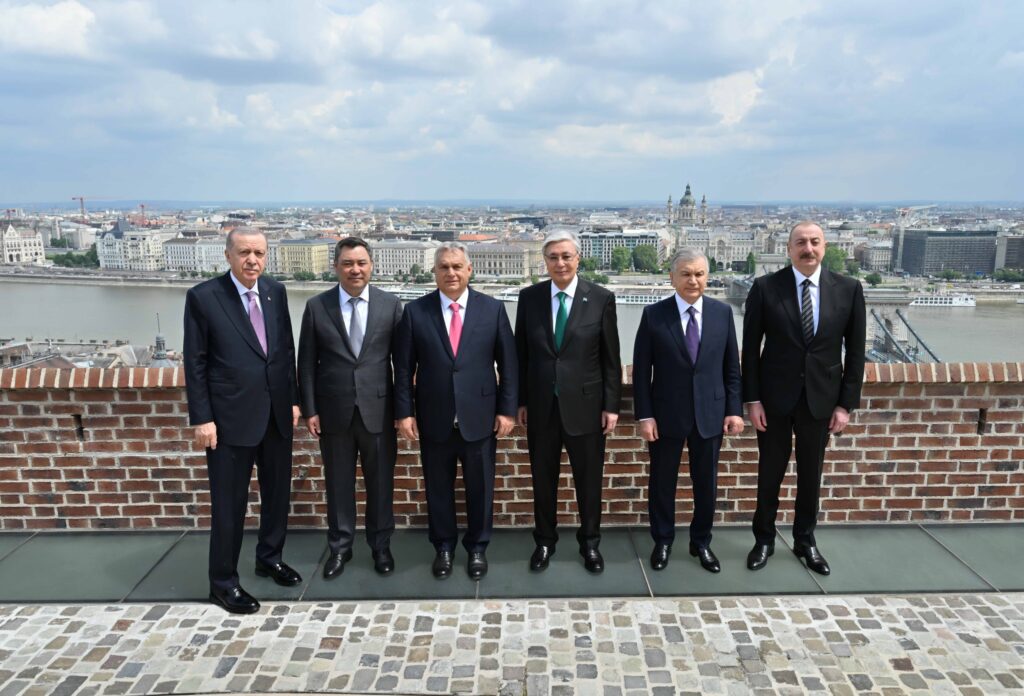
On May 21, 2025, an informal summit of the Organization of Turkic States (OTS) convened in Budapest, uniting leaders of member countries and observers in the symbolic heart of Europe. The heads of Kazakhstan, Turkey, Azerbaijan, Uzbekistan, and Kyrgyzstan, along with Hungarian Prime Minister Viktor Orbán, discussed key areas of cooperation, including the economy, transport, digitalization, and adherence to international agreements. The summit was held under the motto “Meeting Place of East and West.” Tokayev: Uniform Standards Could Boost GDP by 1% Annually Kazakhstan’s President Kassym-Jomart Tokayev emphasized the need for deeper economic integration among Turkic states and advocated for the rapid adoption of a model law to streamline exports among OTS members. “Uniform standards will ensure annual GDP growth of about 1%,” Tokayev said, highlighting that the collective GDP of OTS countries stands at approximately $1.4 trillion, with mutual trade already exceeding $22 billion. According to him, the potential exists to increase this figure by 1.5 times. Tokayev also stressed the importance of respecting existing agreements within the OTS framework. “The norms established in all agreements, whether procedural, political, or economic, must be strictly observed,” he said. He proposed intensifying joint infrastructure projects, particularly those aligned with the North-South and Middle Corridor transport routes connecting East and West. Kazakhstan, he noted, is modernizing border logistics with China, Kyrgyzstan, and Uzbekistan, including launching a new railway checkpoint. In addition, Tokayev highlighted the need to expand supply chains for oil, gas, uranium, and other resources. He thanked Azerbaijani President Ilham Aliyev for facilitating increased Kazakh oil exports to Europe via Azerbaijan. Unity and Vision from Member States Kyrgyz President Sadyr Japarov described the summit as laying a “solid foundation for sustainable development,” linking it to the November 2023 summit in Bishkek. President Aliyev emphasized Azerbaijan’s emerging role as a Eurasian logistics hub, stating that Baku has invested over $20 billion in the economies of OTS member states. An important development was the announcement that the Turkic Investment Fund, intended to foster economic cohesion, will begin operations soon. Several key documents were adopted at the summit, including the Budapest Declaration, a statement by the Council of Heads of State on Afghanistan, the decision on Uzbekistan’s accession to the Turkic Culture and Heritage Fund, and the extension of Secretary General Kubanychbek Omuraliev’s mandate. The Hungarian Dimension and Cultural Ties Hosting the summit for the first time, Hungary underscored its unique position as an OTS observer. Prime Minister Orbán, who promotes the notion of Turkic roots among Hungarians, has championed closer ties with the Turkic world. Kyrgyz historian Tyntchtykbek Chorotegin pointed out that Hungarian shares structural and grammatical features with Turkic languages, such as suffixation and the absence of prefixes. Cultural similarities extend beyond linguistics. Nomadic traditions persist in both regions, evident in culinary parallels like goulash and kuurdaq, shared housing styles, equestrian practices, and enthusiasm for folk games. European athletes' growing participation in the World Nomad Games further illustrates strengthening cultural bonds. The Budapest summit was more than a diplomatic gathering; it marked...

Uzbekistan Plans to Restore Khiva’s Outer Fortress, Draw Tourists

The walls of Dishan-Kala, the remnants of a 19th century fortress in the Uzbek city of Khiva, have been deteriorating for many years. Now the Uzbek government plans to restore destroyed sections of the walls, remove some nearby buildings that are cluttering the historical structure and turn the site into a major tourist attraction.  The goal is to transform Dishan-Kala, the outer fortress, into a landmark similar to Ichan-Kala, the walled inner town at Khiva that is a UNESCO world heritage site and home to multiple cultural sites, exhibition sites and artisan shops. Some 1 million foreign tourists and 3.5 million local people visited Ichan-Kala in 2024, and it is expected to draw 2 million foreigners and nearly 5 million domestic tourists by the end of this year, the Uzbek Ministry of Ecology, Environmental Protection and Climate Change said in a statement on Tuesday.  The new development campaign aims “not only to preserve Dishan-Kala but also to unlock and enhance its full tourism potential,” the ministry said.  Uzbekistan’s growing tourism industry depends in large part on its rich historical legacy in places such as Khiva, Bukhara and Samarkand, but the development of the industry has sometimes conflicted with concerns about the preservation of ancient sites. Last year, despite UNESCO’s concerns, Uzbekistan pushed ahead with plans for a big tourist complex next to the historical center of Bukhara, a jewel of medieval architecture in Central Asia. In 2021, UNESCO’s world heritage committee referred to development and tourism pressures in Khiva. It also said it regretted the demolition of large areas of Dishan-Kala, noting that it had served as the residential neighborhood for the fortified inner city and that the links between the two parts of ancient Khiva should be strengthened.   Built in 1842, the fortress walls of Dishan-Kala are currently in a state of neglect. Some 2,000 meters of its 6,200-meter wall have been destroyed, and another 2,500 meters are in “critical condition,” the ecology ministry said.  “For many years, illegal constructions sprang up around the wall, leaving virtually no space for access or movement along its perimeter,” it said.  Photos of Dishan-Kala show trash and piles of debris alongside crumbling walls, in contrast with the well-maintained Ichan-Kala area. The plan is to remove 55 residential and other buildings near the Dishan-Kala walls and install parks, landscaping and a pedestrian alley. 

From Classic to Avant-Garde: How “Night at the Museum” in Almaty Bridged Eras

Last Sunday evening marked a notable event in Almaty’s cultural calendar. The A. Kasteyev State Museum of Art opened its doors after hours for the annual “Night at the Museum,” coinciding with International Museum Day on May 18. This day traditionally underscores the importance of museums as spaces of memory, dialogue, and inspiration. This year’s theme, “Tradition and Modernity in a Changing World,” was embodied in a dynamic and multifaceted program that transformed the museum into a vibrant dialogue between different eras and cultural layers. [caption id="attachment_31947" align="aligncenter" width="1280"] @TCA/Andrey Alimov[/caption] Visitors entering the museum in the evening found themselves immersed in an atmosphere where classical art harmoniously coexisted with contemporary interpretations. The space itself took on a new dimension, allowing the audience to engage with art beyond its typical daytime context. The evening’s program catered to a wide audience. In addition to the museum’s permanent collection, which features masterpieces of Kazakh and global art, guests participated in a variety of special events. Themed tours exploring the interplay of tradition and modernity offered deeper insight into the works on display, revealing new dimensions in the creativity of both Kazakhstani and international artists. [caption id="attachment_31955" align="aligncenter" width="1280"] @TCA/Andrey Alimov[/caption] Musical performances added to the ambiance, with live music enhancing the emotional experience and reinforcing the power of artistic expression. A standout feature of the night was a fashion show held in the museum’s central hall, where models showcased traditional Kazakh costumes with hand embroidery and gold accents, reimagined with a modern flair. These designs underscored how elements of cultural heritage continue to inspire and evolve in contemporary settings. The Kasteyev Museum, Kazakhstan’s largest art institution and a key player in Central Asia’s cultural scene, was established in 1976 and named after Abylhan Kasteyev, a pioneering figure in Kazakh visual art. The museum’s collection exceeds 25,000 pieces, spanning ancient decorative and applied arts to works by 20th- and 21st-century masters. It features not only Kazakh artists, but also significant works from Russian, European, and Eastern traditions. Through exhibitions, educational initiatives, and cultural events, the museum plays a central role in preserving and promoting artistic heritage. [caption id="attachment_31953" align="aligncenter" width="960"] @TCA/Andrey Alimov[/caption] “Night at the Museum” has grown into more than just an event, it is a celebration of art that unites generations, perspectives, and creative approaches. For one night, visitors experienced a space where history meets the present, and art became more accessible, resonant, and profound. It is noteworthy that similar events took place across Kazakhstan’s major cities. Official data indicates the country is home to around 300 museums, which collectively receive approximately 6.5 million visitors each year.

How Orthodox Christians Celebrate Easter in Central Asia and Around the World

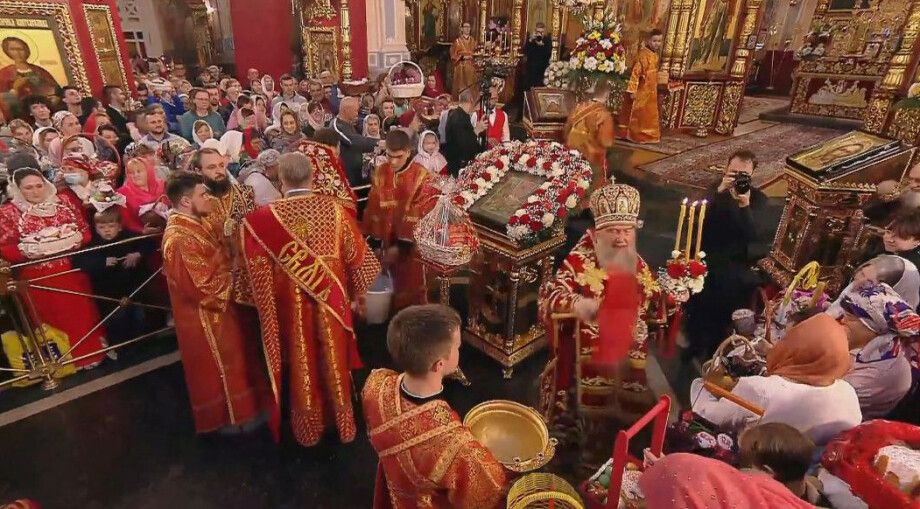
In 2025, Orthodox Christians will celebrate Easter on April 20. This central event in the Orthodox liturgical calendar is marked with solemnity and joy across Orthodox-majority countries such as Russia, Belarus, Georgia, Bulgaria, Greece, Romania, and others. In Central Asia, Orthodox Christian communities also observe the holiday, maintaining centuries-old traditions despite being religious minorities. Kazakhstan On the night of April 20, Easter services will be held in all Orthodox churches across Kazakhstan. According to the Semirechensk Metropolitanate, the Holy Fire from Jerusalem will be brought to the Ascension Cathedral in Almaty, where Metropolitan Alexander will lead the liturgy and Easter procession. The service will begin at 23:30 and will be broadcast live on the Metropolitanate's official YouTube channel. A ceremonial arrival of the Holy Fire is scheduled for 17:00 on Easter Sunday at the cathedral. Uzbekistan In Uzbekistan, the focal point of Easter celebrations is the Holy Dormition Cathedral in Tashkent. Each year, Metropolitan Vikenty of Tashkent and Uzbekistan brings the Holy Fire from Jerusalem. In 2024, he celebrated Easter Matins with Bishop Savvatiy of Bishkek and Kyrgyzstan. Earlier that year, Vikenty made another pilgrimage to the Holy Land to receive the flame. Tajikistan In Dushanbe, Easter is traditionally celebrated at St. Nicholas Cathedral. In 2024, dozens of worshipers, including members of the Russian diplomatic mission and the ambassador, attended the festive liturgy. Following the service, a traditional procession took place, and parishioners received blessings along with kulich (traditional Easter bread) and other Easter treats. Turkmenistan Turkmenistan is home to approximately 485,000 Orthodox Christians, around 9% of the population. The Russian Orthodox Church operates through 12 churches organized under a Patriarchal benefice. While official celebrations are relatively modest, traditional Easter practices are still observed, particularly in urban centers. Russia In Russia, Easter remains the most significant church holiday. Services begin on Saturday evening with a midnight vigil, followed by festive Matins and the Divine Liturgy. The faithful greet one another with “Christ is risen!” and respond “Truly risen!” In the morning, families gather around tables adorned with kulichi, paskha (a cheese dessert), and colored eggs, which are traditionally used for “egg battles.” Easter Traditions Worldwide Because Orthodox churches use the Julian calendar and most Western churches follow the Gregorian calendar, Easter dates typically differ. However, in 2025, both calendars align, and Easter will be celebrated on the same day. Traditions vary widely around the world. In Poland, congregants bring willow branches and blessed food to churches, and festivities continue with "Wet Monday," a water-splashing custom. Bulgarians dye eggs and enjoy family feasts. In Greece, fireworks mark the midnight celebration, and tables are filled with magiritsa soup and roast lamb. In France and Germany, the Easter bunny and chocolate eggs dominate the holiday. Italians serve colomba cakes and lamb dishes, while the British favor hot cross buns and organize egg hunts. In Spain and Poland, dyed eggs are used for games and decoration. In Australia, Easter is celebrated with countryside festivals and egg hunts. Sweden observes a four-day holiday beginning on...

How Nauryz Became a National Celebration in Kazakhstan: A History in Archival Photographs

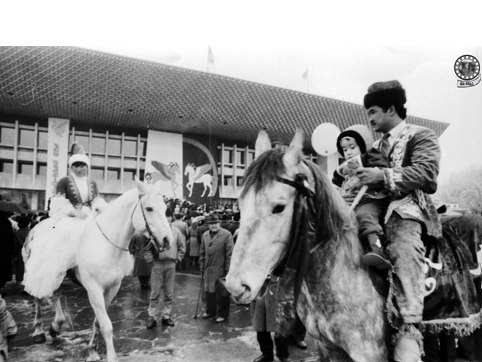
Spring solstice as an astronomical phenomenon was noticed by man in ancient times. It became associated with the rebirth of nature, the arrival of a new cycle. This cosmic phenomenon was especially honored in the cults of Indo-European tribes, ancient Slavs, and Celtic tribes. The holiday has taken its rightful place in the cultures of Central Asia - since ancient times it has been celebrated by Iranians, Afghans, Tajiks, Azerbaijanis, Uzbeks, Uighurs, Kyrgyz, and Kazakhs. It is worth noting that even Muslims in the region recognize the significance of the ancient holiday. Restoration of traditions With the advent of Soviet power, Nauryz was recognized as a relic of tribal rituals and banned. According to official sources, the ban was in effect from 1926 to 1987. In 1987, in the territory of the Kazakh Soviet Socialist Republic, which was part of the USSR, the holiday was resumed, albeit informally. This is evidenced by photos of springtime Almaty (then called Alma-Ata, the capital of the Union Republic). [caption id="attachment_30001" align="aligncenter" width="582"] The first celebration of Nauryz in Alma-Ata. Students of the Alma-Ata Zooveterinary Institute – participants of the theatrical performance. Alma-Ata 1987[/caption] [caption id="attachment_30002" align="aligncenter" width="530"] Horse racing at the Nauryz festival in the village of Narynkol. Alma-Ata region, 1988[/caption] [caption id="attachment_30003" align="aligncenter" width="538"] Participants and guests of the Nauryz holiday playing the Kazakh national game “Togyzkumalak”. Alma-Ata 1988[/caption] [caption id="attachment_30004" align="aligncenter" width="537"] A participant in an archery competition during the Nauryz holiday. Alma-Ata 1988[/caption] [caption id="attachment_30005" align="aligncenter" width="527"] Participants of the republican aitys dedicated to the celebration of the national holiday, Nauryz. Alma-Ata, 1988[/caption] [caption id="attachment_30006" align="aligncenter" width="428"] At the opening of the national holiday Nauryz. Alma-Ata, 1988[/caption] [caption id="attachment_30007" align="aligncenter" width="430"] "Altybakan" - national swing, installed by students of the Alma-Ata Pedagogical Institute of Foreign Languages for the Nauryz holiday. Alma-Ata, 1989[/caption] [caption id="attachment_30008" align="aligncenter" width="446"] People's Artist of the USSR Roza Baglanova (center foreground) with war veterans during the celebration of Nauryz. Alma-Ata region, Kegen district, 1989[/caption] Years of Independence In 1991 Nauryz in Kazakhstan gained official recognition. By the decree of the President of the Republic of Kazakhstan, the day of the vernal equinox - March 22 - was declared the day of the national spring holiday “Nauryz meiramy”. Ten years later - in 2001 - Nauryz became a public holiday and was included in the list of national holidays. Since 2009, three days have been set aside for its celebration in Kazakhstan, which were declared non-working days. This status has been maintained to this day. [caption id="attachment_30010" align="aligncenter" width="528"] Students performing national dances during the celebration of Nauryz at the Almaty branch of the St. Petersburg Humanitarian University of Trade Unions. Almaty, 2014[/caption] [caption id="attachment_30011" align="aligncenter" width="541"] Theatrical performance during the celebration of Nauryz. Almaty, 2018[/caption]

Tashkent Supermarket Expands to Manhattan, Bringing Central Asian Flavors and Culture to the West Village

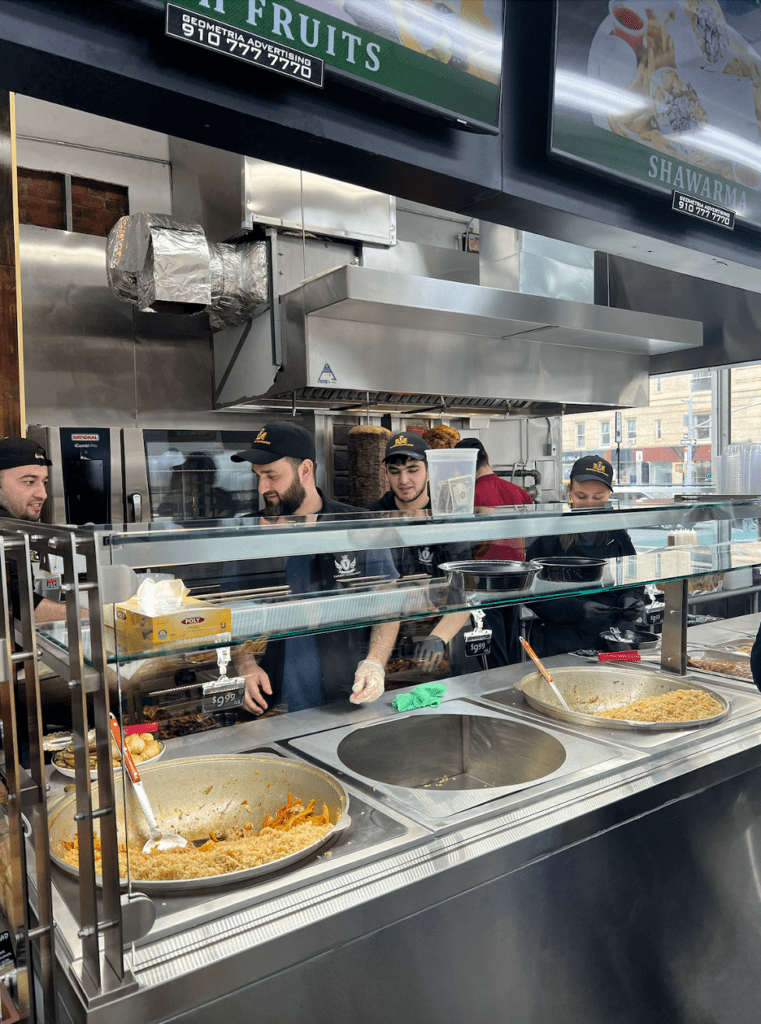
After years of the iconic Brighton Beach grocery store and its ever-fresh hot bar, Tashkent Supermarket announced it would open its first Manhattan location in 2022, spurring excitement and anticipation in the West Village. 378 Sixth Avenue is now home to an intoxicating array of fresh Central Asian foods, imported products, and friendly faces sharing incredible cultures. TCA went to the new Manhattan branch to talk to patrons about their thoughts on the new location, how the food tastes, and their knowledge of Uzbekistan and Central Asia. We first spoke with Margarita, an ethnic Russian who has lived in New York for the past three years. Before moving to New York, she lived in Tashkent for 16 years. [caption id="attachment_29912" align="aligncenter" width="936"] Located right at the West 4th Street-Washington Square subway stop, Tashkent Supermarket sees a lot of foot traffic[/caption] “I’ve been to this location a few times already; it’s good but not quite as big as the flagship store in Brighton,” she told me. “I go for the imported Russian food; their grechka (buckwheat) is the best, and their hot bar tastes exactly like the food I miss from Uzbekistan. I go to their stores thrice a week, and importantly, the prices are very competitive for New York, especially meat and produce.” Among the American produce and packaged products, Armenian juices, Russian cookies, and Uzbek seasonings line the shelves. Unfamiliar patrons pick up and inspect foreign products and inspect them. Two girls, who admitted they didn't know much about Uzbekistan or Central Asia, peered through the store's window, watching people place syrniki (cottage cheese pancakes) into plastic containers. "These pancakes really caught my eye," one said. "I've tried Afghan food before, but never Uzbek or other Central Asian cuisine. This supermarket in my neighborhood will help expand my palate and let me try new things." [caption id="attachment_29913" align="aligncenter" width="936"] Hot bar food includes fresh salads, chubereki, samsa, manty, and pastries[/caption] Ilona, a native of Vilnius, Lithuania, has lived in New York for over 25 years, and her whole family loves Tashkent Supermarket. “It is a slice of home in New York, and they have a great selection of products from the former Soviet Union. It is the only place in the city where I can find the ingredients I need to make my favorite food. Parsley root, dill, and other herbs are my main purchases here. I love this store and its community so much.” Aizhan, an ESL teacher from Almaty, has lived in New York for nine years. “It is my first time at the Manhattan location. It is excellent, and the prices are very reasonable. They are my go-to for catering orders, and everyone is always happy with the quality and taste of the food. They do a phenomenal job making [Central Asian] food. I have not been back [to Kazakhstan] in years, but coming to Tashkent Supermarket makes me feel like I have transported myself back to Almaty.” Michele, a New York native, traveled to Uzbekistan,...