Viewing results 49 - 54 of 92
The publication “Bolalar dunyosi” (“Children’s world”) reports that in one of the schools in the Andijan region of Uzbekistan, a teacher punished a 1st grader by stabbing a needle in her hand and locked the classroom door to prevent the pupil from visiting the toilet. In response, the girl's father filed a complaint with the Internal Affairs Department, accusing the teacher of applying psychological pressure. He explained that his daughter had missed an additional lesson after class, which cost 50,000 UZS (approximately $3.90). The Children’s Ombudsman of Uzbekistan, Surayyo Rahmonova, stated that following an examination of the girl's injury, the issue had been resolved. The case comes in the wake of a previous report by The Times of Central Asia concerning a Tashkent teacher who slapped a student for asking for the Russian language class to be taught in Russian; an event which caused broad public debate in Uzbekistan and a reaction from Russian politicians.
The Turkmen State University and the University of Perugia for Foreigners have signed a Memorandum of Understanding. The main areas of cooperation include introducing modern methods of teaching foreign languages and exchanging advanced pedagogical experience. Special attention will be paid to developing university relations, which involves exchanging curricula, programs, and methodological materials. Scientific publications and textbooks will also be exchanged, improving the quality of foreign language teaching in both educational institutions. A notable aspect of the agreement is the deployment of Italian language instructors from the University of Perugia to Turkmen State University. This initiative provides students with a unique opportunity to learn Italian directly from native speakers. The University of Perugia for Foreigners, founded in 1921, is one of Italy's oldest and most prestigious universities. It is the only institution of higher education in the country that specializes in teaching the Italian language and culture to international students. Located in the picturesque city of Perugia, the university offers a wide range of programs, from language courses to full degree programs in Italian language and culture.
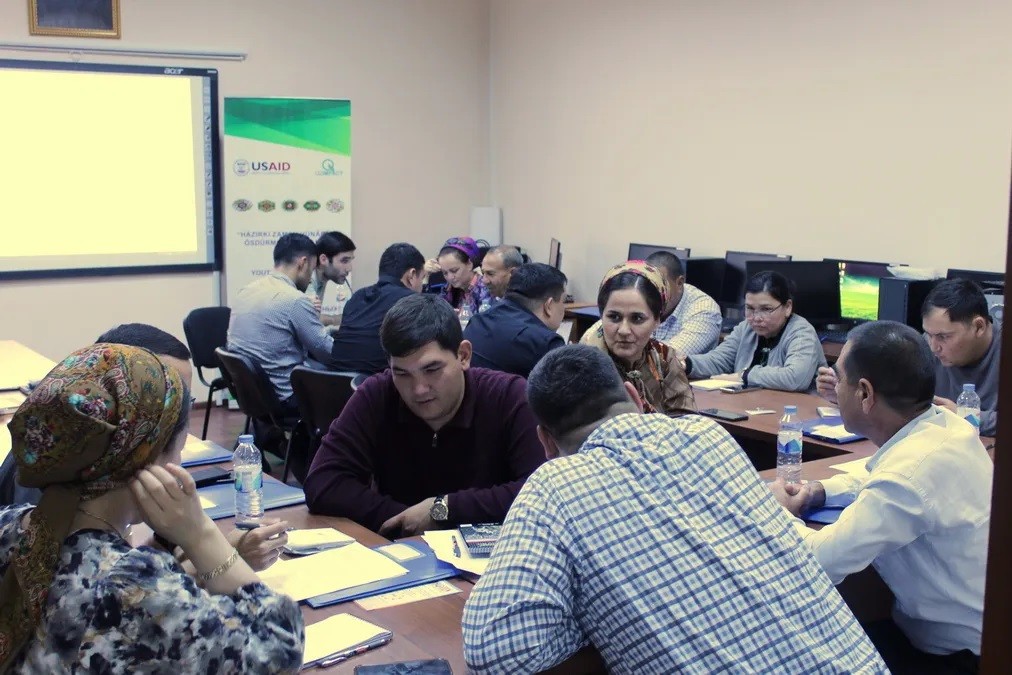
Turkmenistan has modernized its entrepreneurial education program. This was made possible through a partnership between the United States Agency for International Development's (USAID) Modern Skills Development Project (YDA) and the School of Entrepreneurs of the Union of Industrialists and Entrepreneurs of Turkmenistan. The updated program integrates modern teaching methods for practical learning and developing creative thinking and problem-solving skills - critical competencies for future entrepreneurs. From September 30 to October 4, 2024, the program held a training session for teachers, including representatives of regional branches. Participants learned new approaches to teaching through case studies, group work, and interactive methods. These innovations are expected to be introduced into the teaching process. The program aims to support young people with innovative business ideas by providing an opportunity to develop projects based on the Entrepreneurs' School branches. The final stage will be a business project competition, the winners of which will receive mentoring and access to investment to realize their ideas. This project is designed to foster a new generation of entrepreneurs and strengthen Turkmenistan's economy. USAID actively promotes youth development in Turkmenistan through various educational programs and initiatives. One of the main projects is the Youth Development Activity, a program to improve youth entrepreneurial competencies and professions. USAID also conducts training, seminars, and competitions for young people with promising business ideas, supporting their aspirations to become part of the country's economy.
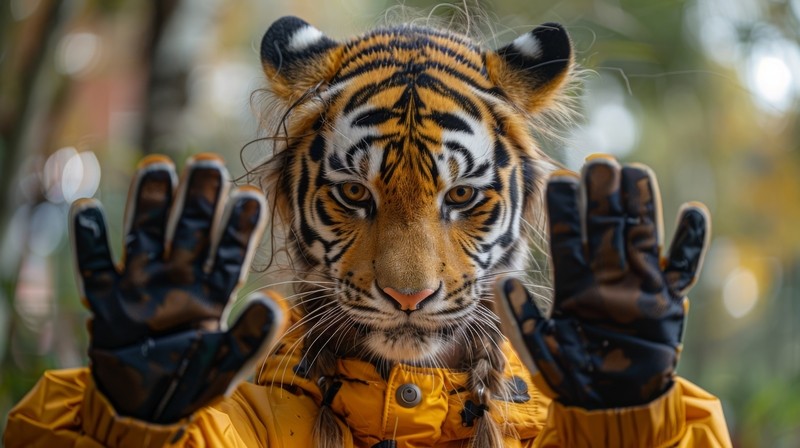
Parents in Uzbekistan have been threatened with fines for the inappropriate behavior of their children who belong to the quadrobika subculture. The Interior Ministry said failure to comply with parental duties will be punishable as parents are responsible for educating their children to respect social norms and preventing inappropriate behavior. The quadrobika subculture, which has emerged among young people, involves using masks and accessories to imitate animals and their habits. This movement has already been noticed in Kazakhstan, Russia, and Ukraine, and recently, cases of such behavior have been registered in Tashkent. On October 10, a teenager wearing an animal mask frightened people, and the next day, a quadrober imitating a dog attacked a person and frightened children. Specialists warn that such behavior can harm the mental health of minors, affect their social integration, and even lead to aggression. In this regard, the authorities are pressing home parents' legal obligations to ensure their children's upbringing and education under the Constitution and the Education Act of Uzbekistan. Violating these duties carries a fine of up to five times the basic calculation unit (up to 1.875 million UZS ($147). The Interior Ministry has urged parents to take care of their children's all-round development, reacting in time to the emergence of dangerous sub-cultural phenomena. If necessary, a psychological examination of children may be conducted to determine the impact of quadrobics on their emotional health. In Russia, the issue of administrative responsibility of parents who fail to oversee the upbringing of their children who are addicted to quadrobics has also been raised. The problem has not yet been resolved, a the request to the State Duma has been submitted calling for fines and criminal liability violations. In addition, Gennady Shkil, a priest of the Russian Orthodox Church, suggested in a sermon that mothers and fathers of quadrobers should be deprived of parental rights. Shkil believes that such “tough measures” are necessary as it is “for the salvation of mankind.”
A 21-year-old student studying at a university in Tashkent posted an advert on social media earlier this year, announcing that he would help citizens sell their kidneys, livers, and bone marrow. The student stated in his ad that he would buy a human kidney for $38,000, a liver for $43,000, and bone marrow for $23,000. Someone read the ad and said he wanted to sell one of his kidneys. The student said that the donor would be paid $38,000 for it, that the kidney transplant operation would take place in Germany, and that he would have to pay $350 before the trip. The student was caught while receiving this money. Law enforcement officers caught the student on April 26, when he received the agreed-upon $350 from the applicant. The police arrested him as a preventive measure. The student told the court that he did it because he needed money, but he had no acquaintances in Germany. He said he used the $350 for his own needs but wanted to return the sum to his acquaintance later. He also said that his brother, sister, and himself are students and asked the court not to punish him. The court sentenced him to three years in prison.
Turkey’s Ministry of National Education has unveiled significant changes to its history curriculum, replacing the phrase “Central Asia” with “Turkestan.” Experts say this shift reinforces national identity and instills stronger patriotism in future generations. President Recep Tayyip Erdogan stressed the importance of the unity of the Turkic world: “We will work shoulder to shoulder to make the coming period the era of the Turks by extending our vision of the ‘Turkish Century’ to the Organization of Turkic States.” Professor Ahmet Taşagıl explained the historical meaning of the term Turkestan to TRT Haber. “The word Turkestan, meaning ‘homeland of the Turks’, has been used since the earliest periods of history. In the second half of the 19th century, due to the Russian invasion, the concept of Central Asia was introduced and spread instead of the name Turkestan,” he mentions. Associate Professor Ramin Sadık commented on the decision of the Ministry of Education for TRT Haber. “Our appeal to the concept of Turkestan and its inclusion in textbooks by the Ministry of National Education is a very correct decision. Both Turkey and Turkestan mean a region where the Turks predominantly live,” Sadık said. The expert notes that during efforts to create a shared history, geography, literature, maps, and alphabet for the Turkic world, the Ministry of National Education’s decision to use “Turkestan” in textbooks, even for children, is a significant step. He believes this change is a crucial start and a valuable contribution to Turkey, the entire Turkic world, and its partner countries. Experts say the change is part of a broader strategy to strengthen ties in the Turkic world, including creating a shared history, literature, maps, and alphabet.