• KGS/USD = 0.01144 0%
  • KZT/USD = 0.00212 0%
  • TJS/USD = 0.10784 0%
  • UZS/USD = 0.00008 0%
  • TMT/USD = 0.28490 0%
  • KGS/USD = 0.01144 0%
  • KZT/USD = 0.00212 0%
  • TJS/USD = 0.10784 0%
  • UZS/USD = 0.00008 0%
  • TMT/USD = 0.28490 0%
  • KGS/USD = 0.01144 0%
  • KZT/USD = 0.00212 0%
  • TJS/USD = 0.10784 0%
  • UZS/USD = 0.00008 0%
  • TMT/USD = 0.28490 0%
  • KGS/USD = 0.01144 0%
  • KZT/USD = 0.00212 0%
  • TJS/USD = 0.10784 0%
  • UZS/USD = 0.00008 0%
  • TMT/USD = 0.28490 0%
  • KGS/USD = 0.01144 0%
  • KZT/USD = 0.00212 0%
  • TJS/USD = 0.10784 0%
  • UZS/USD = 0.00008 0%
  • TMT/USD = 0.28490 0%
  • KGS/USD = 0.01144 0%
  • KZT/USD = 0.00212 0%
  • TJS/USD = 0.10784 0%
  • UZS/USD = 0.00008 0%
  • TMT/USD = 0.28490 0%
  • KGS/USD = 0.01144 0%
  • KZT/USD = 0.00212 0%
  • TJS/USD = 0.10784 0%
  • UZS/USD = 0.00008 0%
  • TMT/USD = 0.28490 0%
  • KGS/USD = 0.01144 0%
  • KZT/USD = 0.00212 0%
  • TJS/USD = 0.10784 0%
  • UZS/USD = 0.00008 0%
  • TMT/USD = 0.28490 0%

Viewing results 1 - 6 of 32

Turkmenistan Introduces New Fines for Parents Over Children’s Misconduct

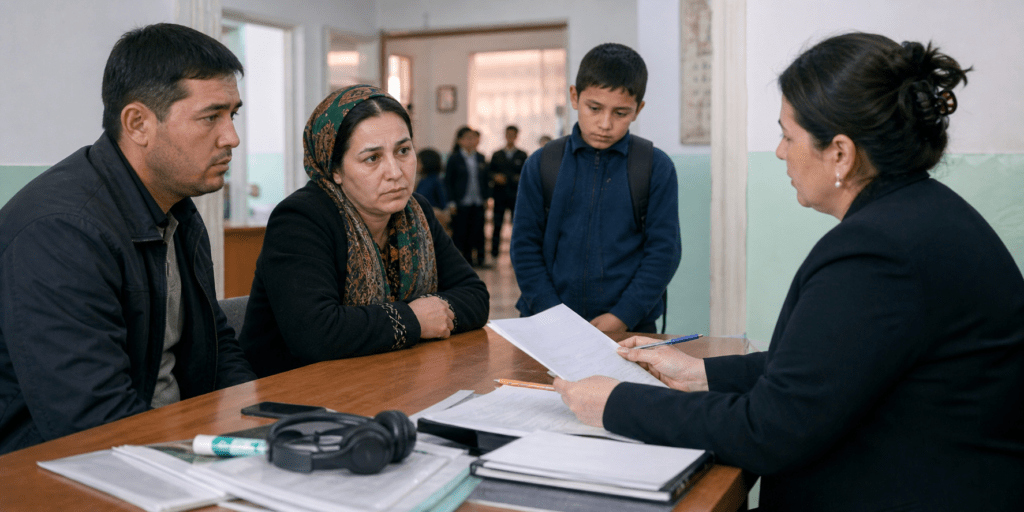
Turkmenistan has introduced new rules that tighten parental responsibility for children’s misconduct, while reports suggest that additional unofficial requirements are already emerging at the local level. The amendments to the administrative code, signed by President Serdar Berdimuhamedov, came into force on May 1. The updated legislation increases penalties for what is defined as “improper upbringing” and expands the range of situations in which parents of children under 16 can be held liable. In several cases, warnings have been eliminated entirely. Under the new rules, offenses such as drug use without a prescription or minor hooliganism now result in immediate fines of around $29. Penalties for traffic violations have risen from $11.6 to $14.5. The manufacture or possession of pyrotechnics can lead to fines ranging from $58 to $145, while smoking carries penalties of $29 to $58. Other sanctions have also been increased, including those related to alcohol and tobacco sales and various administrative violations. However, the implementation of the law appears to vary across regions. According to local sources, some authorities are interpreting the rules more broadly and introducing additional measures. In schools in the Lebap region, for example, there are reports of proposed fines for families if students arrive late to class ($29), possess smartphones or headphones ($290), or skip lessons. These measures have not been officially confirmed, and teachers in other regions say they have not received similar instructions. Some observers suggest the reports may be exaggerated or intended as a deterrent to improve discipline. Nevertheless, educators warn of potential corruption risks. Recorded violations could become grounds for informal payments, with smaller sums demanded instead of official fines, bypassing the state budget.

Turkmenistan Develops First Child Protection Program

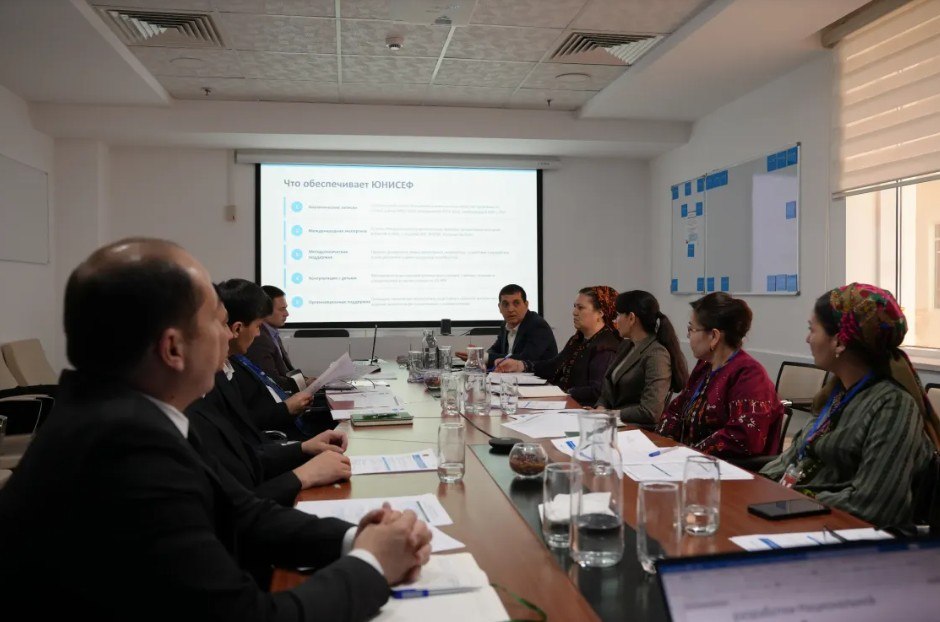
The government of Turkmenistan has begun developing its first National Program on Child Protection and Child-Friendly Justice, with technical support from UNICEF, according to a report published on April 15. Officials described the initiative as a major step toward strengthening systems that safeguard children’s rights. The process was formally launched during the first meeting of an interagency working group in Ashgabat. The group, coordinated by the Prosecutor General’s Office, includes representatives from 10 government bodies. Authorities said the program aims to establish a coordinated, cross-sectoral approach, focusing on family-based care for children without parental support, improving child justice systems, preventing violence, and strengthening overall protection mechanisms. “The development of this National Program demonstrates Turkmenistan’s commitment to protecting the rights of every child,” a representative of the Prosecutor General’s Office said. UNICEF’s representative in the country, Jalpa Ratna, welcomed the move, noting that it would help build “a more coordinated, family-oriented child protection system.” The draft program is expected to be completed by the end of the year following consultations with stakeholders, including children, families, and professionals. It will align with national legislation and international recommendations, including those from the UN Committee on the Rights of the Child. Meanwhile, in Uzbekistan, President Shavkat Mirziyoyev has approved a series of measures aimed at expanding social protection and improving services for vulnerable groups. The reforms focus particularly on people with disabilities, children, and women affected by violence. Among the new initiatives is the introduction of an “Early Intervention” service for children up to the age of three with developmental disorders, scheduled to begin by June 1. The program will provide specialized educational and therapeutic support through non-governmental organizations. Authorities also plan to launch several new services for adults with mental disabilities, including daycare programs, home-based care, and short-term support options designed to assist families. These services are expected to reach more than 8,300 people in 2026, with up to 600 NGOs and private providers involved. A monthly care allowance will also be introduced for guardians of adults with severe intellectual disabilities starting in September 2026. In addition, Uzbekistan plans to expand the role of its “Inson” Social Service Centers, integrating them into local government structures and strengthening oversight of guardianship arrangements. Further reforms include transforming state-run residential institutions into community-oriented care centers, expanding tax exemptions for families of children with disabilities, and introducing stricter legal measures to protect minors from exploitation.

Mirziyoyev: Violence Against Women and Children Will Not Be Tolerated in Uzbekistan

President Shavkat Mirziyoyev has announced tougher measures against violence toward women and children, and unveiled new economic and education programs aimed at expanding opportunities for women across Uzbekistan. Speaking on March 6 at a ceremony in Tashkent marking International Women’s Day, the president referred to a decree he signed on March 3 that strengthens the country’s response to domestic violence. According to remarks reported by Uzbek media and the presidential press service, the decree introduces a stricter system for addressing harassment and violence against women and minors. Mirziyoyev said Uzbekistan has adopted the creation of an uncompromising environment against violence as a strategic goal. “Anyone who raises a hand against women or children will either leave Uzbekistan or be forced to live according to the law,” he said during the event held at the Kuksaroy residence. Mirziyoyev also stated that the decree includes tougher penalties for certain crimes against minors. According to his remarks, in some cases crimes involving pedophilia will now carry life imprisonment. He noted that legal experts had raised objections during discussions but said he insisted on including the punishment in the decree. In addition to legal measures, Mirziyoyev outlined several initiatives focused on education, employment, and rehabilitation programs for women. According to statements made during the event, women serving sentences in correctional facilities will be given the opportunity to apply to universities and study remotely. Officials said many female inmates currently have only secondary education and lack professional skills, while some have expressed interest in pursuing higher education. To address this, the government plans to launch a program called “New Life,” which will provide vocational training for women in prisons. Participants will study for three to six months in professional training programs and receive certificates. Those who wish to enter universities will be able to take entrance exams inside correctional institutions. Women admitted to universities on a contract basis will be eligible for interest-free loans, repayable after completing their sentences and securing employment. The government also plans to expand economic support for women nationwide. According to Mirziyoyev's speech, 166,000 women will receive training in modern professions and entrepreneurship this year, while another 100,000 will study information technology skills. A separate initiative called “Daromadli Ayol” (“Profitable Woman”) will support home-based businesses. With the help of experienced entrepreneurs, the program aims to create employment for 50,000 women in areas such as handicrafts, poultry farming, beekeeping, and household agriculture. Officials also said that under the “Hamroh” program, around 1 trillion UZS (about $82,440,000) will be allocated to finance 3,000 business projects led by women. Overall, the government aims to help 1.5 million women generate income this year, including 400,000 who are expected to enter business activities. More than 25 trillion UZS (about $2,060,950,000) in financial resources will be directed toward these initiatives.

Tajikistan Teacher-Student Assault Case Referred to Court

The case of a teacher accused of assaulting a student, which sparked significant public debate in Tajikistan, has been formally referred to court. The Ministry of Education and Science has stated it will not abandon the teacher and will continue to monitor developments closely. The criminal case involves Farkhod Nazarov, a teacher accused of slapping an 11th-grade student. The case has been transferred to the Levakant City Court. In an interview with Asia-Plus, Nazarov confirmed that he has reviewed the case materials at the prosecutor’s office. “They gave me the case file, and I read it. The sequence of events was laid out clearly, and the staff were professional. They said the case would be sent to court,” Nazarov said. While a court date has not been set, the hearing is expected to take place in November. Nazarov has not yet hired legal representation. Unofficial sources report that the case falls under Article 174 of the Criminal Code of the Republic of Tajikistan, “Failure to fulfill obligations to educate and raise a minor.” The article carries penalties ranging from a fine of $5,672 to $8,103 or imprisonment for one to two years. “Yes, I admit that I hit the student, but it was not without reason. I simply do not have the means to pay the fine,” Nazarov previously stated. The family of the student involved, Mehmed Bozorov, has not responded to media inquiries and has yet to comment on the case’s transfer to court. The Ministry of Education and Science has confirmed that Minister Rakhim Saidzoda is personally overseeing the case. The ministry emphasized that while it is not interfering in the judicial process, it will continue to support Nazarov. The incident drew national attention after a video surfaced on social media on September 30, showing Bozorov losing consciousness. According to Bozorov, the incident occurred on September 6 at School No. 4 in the village of Bokhturobod. He claims he was struck on the back of the head by the teacher and subsequently hospitalized for two weeks. The Levakant education department has presented a different account, stating that Bozorov had shown disrespect, provoking an emotional reaction from the teacher. The department also reported that no serious injuries were documented. The case has generated widespread public discourse, with many teachers and public figures voicing support for Nazarov and calling for a systemic review of student-teacher relations in Tajikistan’s schools.

The Pressure of Tradition: Why Child Marriage Persists in Tajikistan

Although the legal age for marriage in Tajikistan is 18, courts may grant permission for girls to marry at 17 under “exceptional circumstances.” In reality, however, girls are often married off at even younger ages. Parents routinely petition courts with emotional appeals, citing poverty, orphanhood, or the wishes of elderly relatives, to secure early marriages for their daughters. Legal Loopholes and Judicial Discretion As explained by lawyers from PRO BONO DE JURE, applicants must justify their request to lower the marriage age and provide supporting evidence. Yet the law offers no clear definition of what qualifies as “exceptional,” leaving judges broad discretionary power. In practice, economic hardship is the most common justification. Sociologist Gulnora Beknazarova, who reviewed approximately 550 court cases on underage marriage, found that only one involved a couple in love. “The rest were applications from poor families or guardians claiming they couldn’t afford to care for the girl,” she said. In some instances, judges have approved marriages simply because wedding plans were already in motion and the bride’s age came to light only during registration. “These cases account for just 3%,” noted gender researcher Diana Ismailova, “but their very existence highlights a troubling precedent.” Social Pressures and Family Expectations In rural communities, many mothers fear their adolescent daughters may come under “bad influences” and lose their virginity before marriage. “After ninth grade, girls are impossible to control... they ruin their future,” said one woman who arranged her daughter’s marriage at 16, as quoted by Your.tj. Elder family members also play a significant role. In traditional Tajik households, their wishes often carry the weight of law. For some, marrying off a granddaughter is a final wish, one that younger family members feel obligated to fulfill. According to Beknazarova, societal expectations enforce a rigid timeline for girls. “There’s a ‘social clock’ that ticks faster for them. If a woman isn’t married by 22, she risks being labeled an ‘old maid,’” she explained. In contrast, men face far less societal pressure regarding marriage age. “Marriage at 16 isn’t rare,” she added. “Even if not officially registered until 18, society still views it as normal.” Cultural Norms vs. Practical Realities Early marriages are often poorly considered. Parents seldom ask: “What if she divorces?” or “How will she support herself?” Divorce rates are rising, but it is typically the woman who ends up raising the children alone. Beknazarova attributes these decisions to a traditional mindset in which a girl’s path is predetermined: marriage and motherhood. “You marry off your daughter because it’s time, because that’s what everyone does,” she said. Still, change is slowly taking root. In 2024, amendments to Tajikistan’s Education Act made schooling through grades 10-11 compulsory. More girls are completing their education, and awareness efforts by government and civil society groups are helping shift attitudes around women’s rights. “Young people are already thinking differently,” Beknazarova said. “And life will sort everything out in time.”

Kazakhstan’s Domestic Violence Law Brings Progress Amid Ongoing Challenges

Crimes against women and children have declined over the past year in Kazakhstan, a trend attributed to a sweeping new law on domestic violence. Despite these gains, authorities caution that women and children remain at significant risk from abuse. Persistent Challenge On June 16, 2024, Kazakhstan's Law on Ensuring the Rights of Women and the Safety of Children came into force, having been signed by President Kassym-Jomart Tokayev two months earlier. Since the outset of his presidency, Tokayev has identified combating domestic violence as a top policy priority. Children’s Ombudsman Dinara Zakieva reported that roughly 900 crimes against the sexual integrity of minors are recorded annually. Since the law’s enactment, at least 25 individuals convicted of sexual violence against children have received life sentences. Meanwhile, according to Marat Abishev of the General Prosecutor’s Office, at least 80 women die from domestic violence each year. Law enforcement officials stress that official statistics significantly underreport the true extent of domestic abuse. Surveys suggest that one in three women in Kazakhstan has experienced physical violence, threats, or psychological pressure. The new law has introduced tougher criminal penalties for domestic abuse, as well as protective and preventative mechanisms. Amendments to the Criminal Code now bar lenient sentences for crimes involving violence against minors and prohibit reconciliation between victims and perpetrators in such cases. The sole punishment for the murder or rape of a minor is now life imprisonment. The law also establishes liability for the sexual harassment of persons under 16 and introduces penalties for inciting or abetting suicide. Initial Results State Secretary Yerlan Karin recently shared data showing early progress under the new legislation. In the first five months of 2025, reports of domestic violence dropped by 20.5% compared to the same period in 2024. The number of serious domestic crimes fell by 29%, while particularly serious offenses declined by 44%. Crimes against the sexual integrity of minors decreased by 21.3%, and pedophilia-related offenses dropped by 40.7%. Karin noted that crimes against women have halved over the past five years, crediting stricter penalties and improved prevention efforts for the amelioration. He also highlighted a rise in the detection of domestic violence cases, facilitated by a new mechanism allowing authorities to launch investigations without a complaint from the victim. Between January and May 2025, more than 19,000 such cases were identified through mobile patrol units, police reports, witness statements, and social media monitoring. To improve reporting mechanisms, QR codes for the national 111 contact center are now displayed in schools. This has led to a spike in outreach: in the first five months of 2025, children sent more than 86,000 messages, with over 2,000 seeking help for violence or bullying. In 28 cases, potential suicides were prevented. Adults also placed over 62,000 calls to the center, many concerning domestic violence. Kazakhstan currently operates 20 psychological support centers and family support services in 112 districts and cities. A new prevention initiative, mandatory psychological counseling for aggressors, was introduced this year, with courts ordering 52 individuals...