• KGS/USD = 0.01144 0%
  • KZT/USD = 0.00206 0%
  • TJS/USD = 0.10415 -0.19%
  • UZS/USD = 0.00008 0%
  • TMT/USD = 0.28571 0%
  • KGS/USD = 0.01144 0%
  • KZT/USD = 0.00206 0%
  • TJS/USD = 0.10415 -0.19%
  • UZS/USD = 0.00008 0%
  • TMT/USD = 0.28571 0%
  • KGS/USD = 0.01144 0%
  • KZT/USD = 0.00206 0%
  • TJS/USD = 0.10415 -0.19%
  • UZS/USD = 0.00008 0%
  • TMT/USD = 0.28571 0%
  • KGS/USD = 0.01144 0%
  • KZT/USD = 0.00206 0%
  • TJS/USD = 0.10415 -0.19%
  • UZS/USD = 0.00008 0%
  • TMT/USD = 0.28571 0%
  • KGS/USD = 0.01144 0%
  • KZT/USD = 0.00206 0%
  • TJS/USD = 0.10415 -0.19%
  • UZS/USD = 0.00008 0%
  • TMT/USD = 0.28571 0%
  • KGS/USD = 0.01144 0%
  • KZT/USD = 0.00206 0%
  • TJS/USD = 0.10415 -0.19%
  • UZS/USD = 0.00008 0%
  • TMT/USD = 0.28571 0%
  • KGS/USD = 0.01144 0%
  • KZT/USD = 0.00206 0%
  • TJS/USD = 0.10415 -0.19%
  • UZS/USD = 0.00008 0%
  • TMT/USD = 0.28571 0%
  • KGS/USD = 0.01144 0%
  • KZT/USD = 0.00206 0%
  • TJS/USD = 0.10415 -0.19%
  • UZS/USD = 0.00008 0%
  • TMT/USD = 0.28571 0%

Viewing results 7 - 12 of 3200

Pannier and Hillard’s Spotlight on Central Asia: New Episode Out Now

As Managing Editor of The Times of Central Asia, I’m delighted that, in partnership with the Oxus Society for Central Asian Affairs, from October 19, we are the home of the Spotlight on Central Asia podcast. Chaired by seasoned broadcasters Bruce Pannier of RFE/RL’s long-running Majlis podcast and Michael Hillard of The Red Line, each fortnightly instalment will take you on a deep dive into the latest news, developments, security issues, and social trends across an increasingly pivotal region. This week, the team will be discussing a series of major developments across the region, from unusual trade figures linking Afghanistan and Central Asia to the expansion of border fencing and fortifications between two Central Asian states. We also look at the arrest of one country's anti-corruption chief on corruption charges, the suspicious death in custody of a man accused of attempted assassination, and Kazakhstan's shifting position on peacekeeper commitments in the Middle East. The episode also explores Turkmenistan's growing role in assisting foreign evacuations out of Iran, before turning to the main story: the war in Iran and the implications it may have for Central Asia, alongside renewed fighting between Afghanistan and Pakistan in some of the heaviest clashes seen since the U.S. withdrawal. On the show this week: Stephen M. Bland (The Times of Central Asia).

From Electricity to Fuel, Central Asia is Doing More Business with Afghanistan

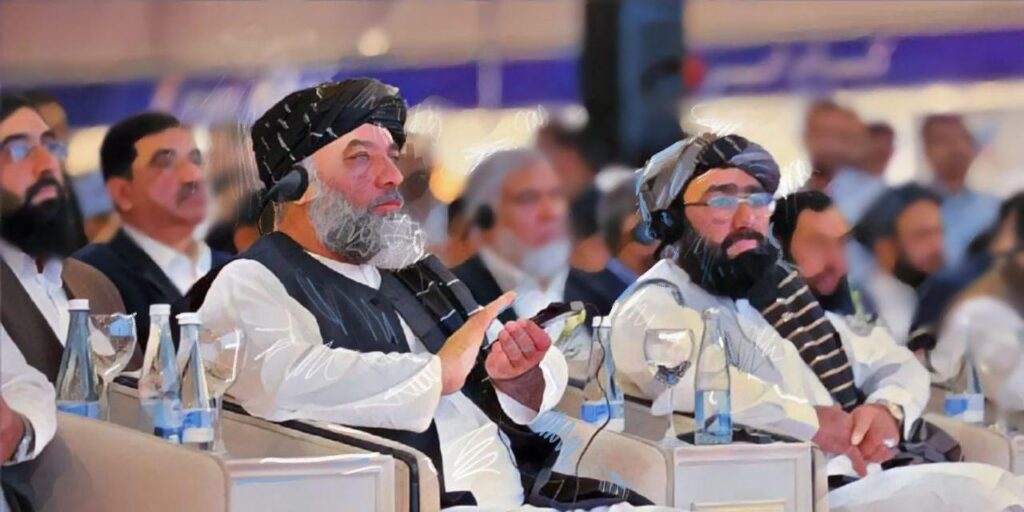
Central Asia is becoming even more important to Afghanistan. After the Taliban returned to power in August 2021, most of the countries of Central Asia established a dialogue with its leadership that focused on business potential, backed up by security promises. This understanding is more important than ever to the Taliban government, as events along Afghanistan’s eastern and western borders have left Central Asia as the only reliable import-export route for Afghanistan at the moment. Booming Trade At the start of March, Afghanistan’s Ministry of Industry and Commerce released figures for 2025 that showed trade with Central Asia increased from $1.79 billion in 2024 to $2.4 billion in 2025. While most of the trade is exports from Central Asia to Afghanistan, reports mentioned that Afghan exports to Central Asia -- mostly to Kazakhstan and Uzbekistan -- increased by 77 percent, from $122 million in 2024 to $216 million in 2025. A closer look shows that Uzbekistan-Afghanistan trade in 2025 totaled some $1.6 billion.  A full figure for Kazakh-Afghan trade in 2025 is not yet available. However, trade between Kazakhstan and Afghanistan amounted to some $525.2 million in 2024.  Kazakhstan's Deputy Prime Minister Serik Zhamangarin said at a Kazakh-Afghan business forum in Kazakhstan’s southern city of Shymkent in October 2025 that bilateral trade in the first eight months of 2025 had reached some $335.9 million. These figures are certain to have grown.  Fresh agreements worth more than $360 million were signed on the sidelines of the Kazakh-Afghan business forum. On March 6, Uzbekistan’s President Shavkat Mirziyoyev signed a decree ratifying the Preferential Trade Agreement between Uzbekistan and Afghanistan. Trade totals for Kyrgyzstan, Turkmenistan, and Tajikistan with Afghanistan are more modest, but, as in the cases of Kazakhstan and Uzbekistan, are set to grow.  Kyrgyz-Afghan trade for the 12 months to March 2025 came to some $66 million, but, during a Kyrgyz-Afghan business conference in Kabul commercial contracts worth some $157 million were signed.  There are no figures for Turkmen-Afghan trade in 2025, but Turkmen electricity exports to Afghanistan are increasing. Turkmenistan is also preparing to export natural gas to Afghanistan. A natural gas pipeline is slowly being constructed from the Turkmen border to the western Afghan city of Herat, which could start operation as soon as 2027. Tajikistan was the lone Central Asian country to shun contact with the Taliban after they returned to power. Representatives of the previous government of Ashraf Ghani continue to occupy the Afghan embassy in Dushanbe.  Tajik and Taliban authorities finally established contacts only in late 2024 but even to this day the two sides rarely meet face-to-face. However, Tajik-Afghan trade in 2025 still totaled some $120 million. Afghanistan’s Ministry of Industry and Commerce noted that most of Central Asia’s exports to Afghanistan are electricity, fuel products, and natural gas. Uzbekistan, Tajikistan, and Turkmenistan export electricity to Afghanistan via transmission lines that were built during the 20 years the Taliban were out of power. Some 80 percent of Afghanistan’s electricity is imported, and most of that (75-80 percent) comes...

Kazakh Parliament Backs Caspian Green Energy Corridor Linking Central Asia to Europe

Kazakhstan’s Mazhilis, the lower house of parliament, has ratified a strategic partnership agreement with Uzbekistan and Azerbaijan on cooperation in green energy production and transmission. The agreement involved the construction of a high-voltage power cable along the seabed of the Caspian Sea. Speaking at a plenary session, Energy Minister Yerlan Akkenzhenov noted that the document had been signed by the leaders of the three countries in November 2024 on the sidelines of the COP29 climate conference in Baku. According to the minister, the agreement lays the groundwork for one of the most ambitious energy initiatives in the history of independent Kazakhstan. The project involves the creation of a “Green Energy Corridor” designed to facilitate the export of environmentally friendly electricity, as well as green hydrogen and green ammonia, from Central Asian countries to European markets via the Caspian region. A key component of the initiative is the planned installation of a high-voltage direct current underwater cable system across the Caspian Sea. Officials say the project could provide Kazakhstan with direct access to the European Union’s energy market through interconnection with a similar energy infrastructure initiative being considered in the Black Sea region. The initiative reflects a broader effort by Central Asian governments to position the region as a supplier of low-carbon energy to Europe while developing east-west infrastructure that bypasses traditional Russian transit routes. For Kazakhstan and Uzbekistan in particular, exporting renewable electricity and related products such as green hydrogen could open new markets as global demand for cleaner energy continues to grow. Italian consulting company CESI has begun preparing a feasibility study, which is expected to define the project’s financial model and core technical parameters. The cost of preparing the feasibility study is estimated at around €1 million and will be fully covered by grant funding. The Asian Development Bank and the Asian Infrastructure Investment Bank have indicated their readiness to allocate up to $2 million in additional support. To coordinate implementation, the Green Corridor Alliance joint venture was established in July 2024. Ownership is divided equally among Kazakhstan, Uzbekistan, and Azerbaijan, with each country holding a 33.3% stake. The company is currently overseeing expert consultations and preparing subsequent phases of the project. According to Akkenzhenov, successful implementation would strengthen Kazakhstan’s position in global energy markets. “The project will help position Kazakhstan as a reliable partner in sustainable energy, capable of contributing to international energy corridors and implementing large-scale technological initiatives,” he stated. The initiative is also expected to expand export potential, stimulate the development of new energy technologies, and reinforce Kazakhstan’s role as a regional energy hub. Following the parliamentary debate, the Mazhilis deputies approved the agreement, emphasising its importance for enhancing regional energy security. The project is intended to deepen the interconnection between the power systems of Central Asia and Azerbaijan and create conditions for stable exports of green electricity. At the same time, the initiative highlights the growing role of the Caspian region in emerging energy corridors linking Central Asia with European markets. Alongside transport projects...

Growing Trade Disputes Test the Eurasian Economic Union

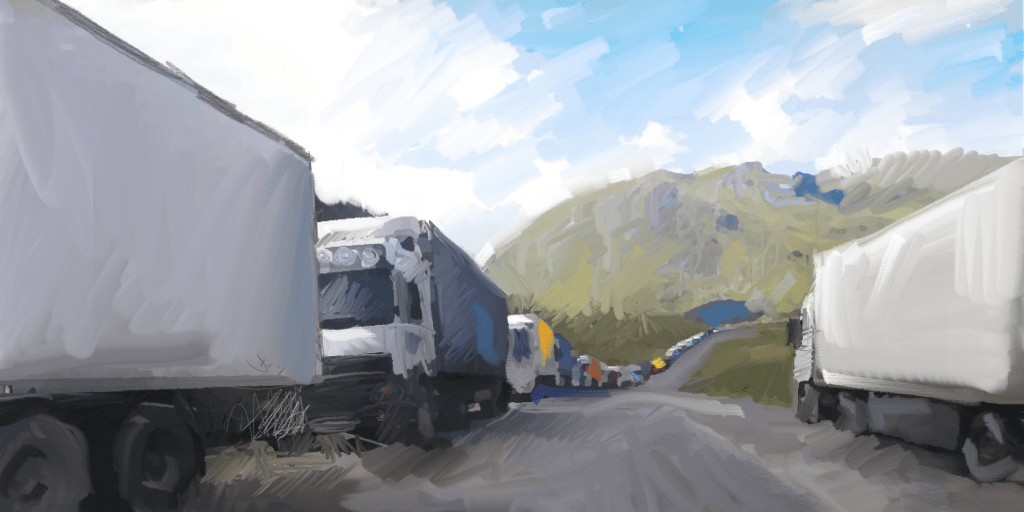
Trade disputes within the Eurasian Economic Union (EAEU) are as old as its creation. Restrictions on the import and export of certain goods have long been common practice. However, analysts increasingly warn that tensions have reached a point at which the organization risks losing its core function, ensuring the free movement of goods across borders and maintaining simplified conditions for migrant workers. Mounting Restrictions The EAEU currently comprises Armenia, Belarus, Kazakhstan, Kyrgyzstan, and Russia. Economic integration among several post-Soviet states began in 2000 with the establishment of the Eurasian Economic Community (EurAsEC), formed by Belarus, Kazakhstan, Kyrgyzstan, Russia, and Tajikistan. Uzbekistan joined in 2006, but suspended its participation in 2008. The foundation of this organization was the Customs Union agreement, intended to abolish customs duties among member states. The structure of the integration project has since evolved. The EAEU treaty was signed in 2014 and entered into force on January 1, 2015. Tajikistan and Uzbekistan did not join, while Armenia became a member in 2015. More than two decades after the first integration agreements, however, many of the bloc’s original promises remain only partially fulfilled. Experts have long argued that protectionist measures remain widespread within the bloc and that full freedom of movement for all categories of goods, including strategic products, has not been achieved. They also point to pronounced economic asymmetry: Russia accounts for approximately 85–87% of the union’s combined GDP, whereas Kazakhstan accounts for approximately 9–10%. Russia’s significantly larger population and political influence have further reinforced perceptions of structural imbalance. Moscow is now preparing new regulatory measures affecting its partners. From April 1, 2026, a national system for confirming the arrival of goods will be introduced for road imports from EAEU countries. According to the Russian authorities, shifting key control procedures to the pre-border stage is intended to improve transparency in the administration of indirect taxes. Previously, such checks were conducted after goods entered the country through desk and field audits. At the same time, Russia has intensified selective customs controls on its borders with Kazakhstan and Belarus, officially citing efforts to combat counterfeit goods. Particular scrutiny is being applied to product labelling and accompanying documentation. Controls were tightened last summer, when mobile checkpoints were established along the Kazakh-Russian border, followed by the inspections of vehicles leaving Belarus in the autumn. Full-scale checkpoints are now operating on the Kazakh-Russian border, while a simplified regime linked to the Union State and EAEU agreements continues to apply on the Belarusian-Russian border. Logistics industry representatives report that stricter controls on the Kazakh border have significantly increased transit delivery times. Carriers often face lengthy delays at checkpoints even when their documentation is in order. According to Alexandra Pokumeiko, head of a freight-forwarding department, the changes have created uncertainty in delivery schedules along Belarus-Russia transport corridors and on transit routes through Russia to Kazakhstan. The growing number of administrative restrictions has begun to spill into specific sectors of the economy, triggering retaliatory measures between member states. Escalating Tensions in the Automotive Sector A new dispute...

The Children of Kazakhstan Concept: Reality and Barriers to Implementation

The 2026-2030 Children of Kazakhstan Concept, approved by the Kazakh government, introduces new standards for the protection of children’s rights. The document is largely based on modern international approaches to social policy. However, its implementation may face a number of systemic barriers characteristic of Kazakhstan’s institutional environment. Honest Acknowledgment of Problems The authors of the concept do not attempt to downplay existing challenges. The document openly recognises serious issues in the field of child protection. In 2024, 2,693 crimes against minors were registered. In 2025, the figure stood at 2,603. Of these, nearly 900 cases involved sexual abuse. Particularly alarming is the fact that 60-70% of such crimes are committed by individuals close to the child, including parents, stepfathers, relatives, or neighbours. Another critical issue is the mental health of adolescents. Kazakhstan remains among the countries with high rates of youth suicide. According to psychologists cited in the Kazakh media, over the past two years, approximately 300 suicides among children have been recorded nationwide, while nearly 600 more adolescents have attempted suicide. The scale of the problem is reflected in the workload of the 111 national contact centre. In 2025, the service received 145,000 calls and 121,000 text messages. The high volume of messages sent via QR codes suggests that many children find it psychologically easier to report abuse in writing than in person. The state also acknowledges shortcomings in the healthcare system. Children’s hospitals face shortages of medical equipment, particularly in intensive care units. The situation is most difficult in remote regions, where insufficient equipment can directly affect children’s chances of survival in emergency situations. Another serious concern is the shortage of specialists. Kazakhstan lacks sufficient numbers of child psychiatrists and clinical psychologists. The deficit is particularly acute in regional areas. At the same time, many parents conceal their children’s psychological problems for fear of social stigma, leading to delayed diagnosis and complicating suicide prevention efforts. Staff Shortages Versus High Standards The concept emphasises early prevention. One of its key instruments is a case-management mechanism involving individual support for families and children by trained specialists. The intention is to shift from crisis response to systematic preventive work. However, the implementation of this model faces serious limitations. The main challenge is the acute shortage of personnel and insufficient levels of professional training among specialists in the field. Independent experts point to systemic weaknesses in the training of psychologists. Many public-sector employees lack the qualifications required to work with adolescents experiencing severe psychological distress. In addition, the professions of school psychologist and social pedagogue remain poorly paid. Experienced specialists often move to the private sector, where salaries can be three to four times higher. Digitalization Outpacing Infrastructure The government is placing a significant emphasis on digital tools. One of the flagship initiatives is the FSM Social system, known as the Digital Family Map. The system analyses dozens of socio-economic indicators and is designed to identify families at risk. However, digitalization is currently outpacing infrastructure development. Analysts caution that digital systems cannot...

China to Fund Construction of Nine Border Facilities in Tajikistan Near Afghanistan

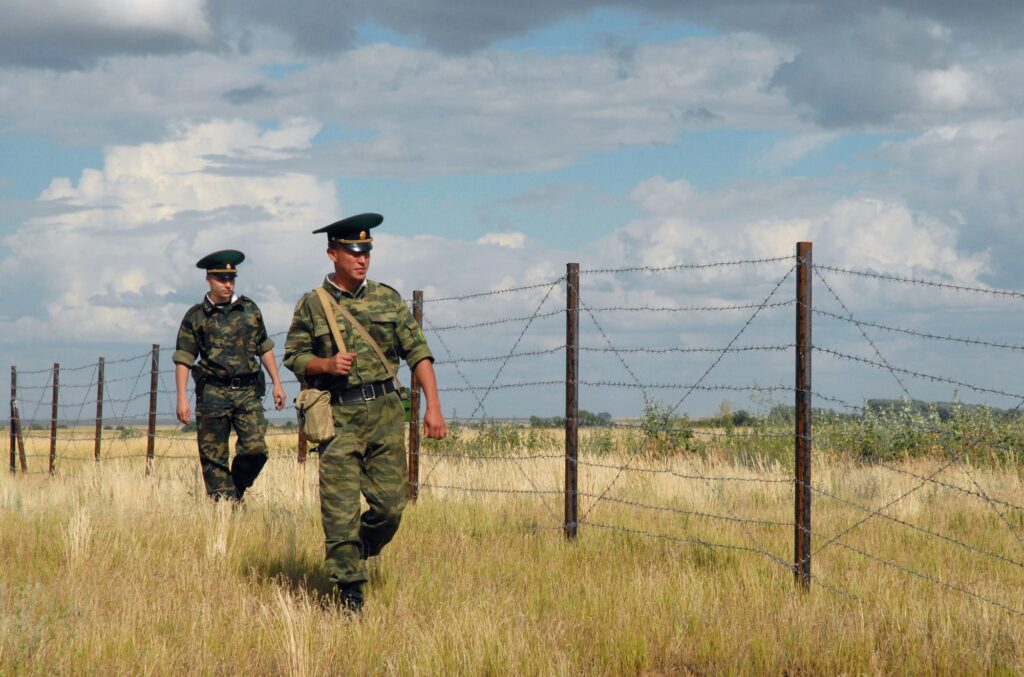
China will finance the construction of nine border facilities in Tajikistan’s frontier regions with Afghanistan, according to a project approved by Tajik lawmakers earlier this month. The plan was reviewed and adopted during a March 4 session of the Majlisi Namoyandagon, the lower house of Tajikistan’s parliament, Asia-Plus reported. The construction project, valued at more than 550 million Tajikistani somoni (approximately $57,425,000), will be fully funded by the Chinese government. In turn, Tajikistan will exempt the project from taxes, customs duties, and other mandatory payments. According to Muradali Rajabzoda, first deputy chairman of Tajikistan’s State Committee for National Security, the initiative is intended to strengthen the logistical and technical capabilities of the country’s border forces. Speaking during the parliamentary session, Rajabzoda said the project would be implemented in three phases, with exchange letters already signed to launch the second stage. The total construction area of the facilities is expected to reach 17,109 square meters. Rajabzoda said the Chinese government would provide the financing “on a grant basis,” meaning the funds will not need to be repaid. Although authorities have not disclosed the precise locations of the planned installations, they confirmed that the facilities will be built in Tajikistan’s border regions with Afghanistan. According to Bahriddin Ziyoi, a member of the parliamentary committee on law enforcement, defense, and security, the Chinese side will also carry out research and design work related to the project. In addition to financing construction, China is expected to supply equipment, building materials, and engineering specialists. Chinese engineers will travel to Tajikistan to install and configure technical systems at the sites. The project will also include office and residential furnishings, computers, and other equipment necessary for operating the facilities. Infrastructure development will form another component of the plan. China will assist in building access roads to the border facilities and installing water supply, drainage systems, and electricity connections. Funding from Beijing is expected to begin after internal procedures in China are completed. Tajik authorities say the exchange letters governing the project were approved by the government in November 2025 and later submitted to parliament following consultations with relevant ministries and agencies. Officials also stated that the documents underwent an anti-corruption review and no risks were identified. The new facilities follow earlier cooperation between the two countries. According to Tajik security officials, 12 border installations were constructed in 2017-2018 in Tajikistan’s frontier areas with Afghanistan with financial support from China. Security cooperation between the two countries has previously drawn international attention. In 2024, the British newspaper The Telegraph reported that China had built a secret military base in Tajikistan, citing satellite imagery and describing a facility in mountainous terrain where Chinese and Tajik forces allegedly conducted joint exercises. Tajik authorities have repeatedly rejected those claims. The Ministry of Foreign Affairs has stated that reports about a Chinese military base on Tajik territory “do not correspond to reality,” adding that the issue has not been part of bilateral discussions between the two countries. China and Tajikistan have expanded security...