• KGS/USD = 0.01144 0%
  • KZT/USD = 0.00191 -0%
  • TJS/USD = 0.10850 0%
  • UZS/USD = 0.00008 0%
  • TMT/USD = 0.28490 0%
  • KGS/USD = 0.01144 0%
  • KZT/USD = 0.00191 -0%
  • TJS/USD = 0.10850 0%
  • UZS/USD = 0.00008 0%
  • TMT/USD = 0.28490 0%
  • KGS/USD = 0.01144 0%
  • KZT/USD = 0.00191 -0%
  • TJS/USD = 0.10850 0%
  • UZS/USD = 0.00008 0%
  • TMT/USD = 0.28490 0%
  • KGS/USD = 0.01144 0%
  • KZT/USD = 0.00191 -0%
  • TJS/USD = 0.10850 0%
  • UZS/USD = 0.00008 0%
  • TMT/USD = 0.28490 0%
  • KGS/USD = 0.01144 0%
  • KZT/USD = 0.00191 -0%
  • TJS/USD = 0.10850 0%
  • UZS/USD = 0.00008 0%
  • TMT/USD = 0.28490 0%
  • KGS/USD = 0.01144 0%
  • KZT/USD = 0.00191 -0%
  • TJS/USD = 0.10850 0%
  • UZS/USD = 0.00008 0%
  • TMT/USD = 0.28490 0%
  • KGS/USD = 0.01144 0%
  • KZT/USD = 0.00191 -0%
  • TJS/USD = 0.10850 0%
  • UZS/USD = 0.00008 0%
  • TMT/USD = 0.28490 0%
  • KGS/USD = 0.01144 0%
  • KZT/USD = 0.00191 -0%
  • TJS/USD = 0.10850 0%
  • UZS/USD = 0.00008 0%
  • TMT/USD = 0.28490 0%
10 November 2025

Viewing results 13 - 18 of 1983

TCA Interview: Author Judith Lindbergh on Her Novel “Akmaral”, Set on the Kazakh Steppe

In recent years, many international writers have written books about Kazakhstan. One of these is the American author Judith Lindbergh, whose latest historical novel, Akmaral, is set on the Kazakh steppe. TCA: The story of Akmaral is related to Central Asia, and particularly, Kazakhstan... JL: Absolutely correct. Akmaral is about a nomadic woman warrior on the Central Asian steppes in the 5th century BCE. It’s based on archaeology that many of your readers are likely familiar with: the Siberian Ice Maiden discovered in Tuva and the Issyk Golden Warrior of Kazakhstan. These two burials were just the beginning of my research, which also included the writings of the Greek historian Herodotus about the Amazon warrior women who fought in the Trojan War. I delved deeply into the history, landscape, and cultures of Central Asia, both ancient and modern. In writing my novel, I worked hard to understand how people lived, and still live, on the steppes: their traditional nomadic ways of herding and hunting, and especially how this ancient, often-forgotten culture fits into the broader story of human civilization. [caption id="attachment_38735" align="aligncenter" width="349"] Judith Lindbergh[/caption] TCA: How did the idea to write such a novel come about? JL: It all started with a documentary about the Siberian Ice Maiden. I love ancient history and archaeology, especially when they reveal truths about women’s lives. The Ice Maiden burial was fascinating. Her body was so well preserved that I could almost imagine her standing before me. I wanted to understand how she might have lived, and to uncover the mystery of why she was buried in such an isolated place. As I continued my research, I realized that she was not the only important female burial from that era in Central Asia. There were, in fact, countless others. Many women who had died of war wounds were buried with weapons. I began combining these burials in my imagination to create my main character, Akmaral, which I learned means “White Deer.” The name felt connected to the Siberian Ice Maiden’s famous tattoo, which became an important spiritual symbol in my novel. I used extensive research to try to accurately represent what life might have been like for these ancient women. In historical fiction, as in history itself, women rarely play significant roles in public life. Yet these artifacts and burials show us that many nomadic women once held important military and spiritual positions.   There are almost no works written in English about nomadic peoples, including the real life and history of the Kazakhs. In fact, nomads were people who lived freely and truly in their time. And now we are not able to glorify their values, their way of life. What do you think about this? You’re right that there’s very little written in the West about the Sarmatians, or really much about Central Asia at all. I wanted to bring my fascination with this vital, “forgotten” part of history to new readers. In many ways, it can be hard for modern...

What’s Holding Back Kazakhstan’s Air Transport Market?

Kazakhstan’s aviation industry has posted steady growth in recent years. Over the past four years, passenger and cargo traffic have risen by more than 36% and 23% respectively, with an actively expanding route network. The state’s aviation development strategy prioritizes infrastructure upgrades, improved safety standards, and expanded international cooperation. Yet, despite these advances, several systemic barriers continue to prevent Kazakhstan from realizing its potential as a Central Asian aviation hub. These challenges were discussed at the New Silk Way International Transport and Logistics Business Forum and the annual TransLogistica Kazakhstan 2025 exhibition. Experts agree that Kazakhstan’s air transport market ranks among the fastest-growing globally, driven in part by geopolitical shifts that have boosted the volume of Chinese and European transit flights through its airspace. Industry Trends and Infrastructure Expansion A major airport modernization effort is underway, targeting key cities such as Astana, Almaty, Aktobe, Shymkent, and Karaganda. Renovations have already been completed in Aktau, Pavlodar, and Balkhash, while new terminals have opened in Almaty, Kyzylorda, and Shymkent. New airports are under construction in Kenderli, Zaisan, Katon-Karagai, and Arkalyk. Total investment in infrastructure has exceeded $2.9 billion. According to the Civil Aviation Committee, in 2025, Kazakh airlines transported a record 15 million passengers and 171,000 tons of cargo. Transit flights accounted for 414 million aircraft-kilometers. Deputy Chairman Sarsen Zharylgasov has stated that the country now operates 56 domestic routes, up 9% year-on-year, and maintains air links with 30 countries. International Routes and Regional Competition In 2025, 33 new international routes were launched, connecting Kazakhstan to cities including Budapest, Munich, Cairo, Shanghai, Phuket, and Delhi. Currently, 140 international routes operate under the Open Skies policy, which has applied to 15 airports since 2019. Looking ahead to 2026, new routes are planned to major global hubs, such as Singapore, Tokyo, Rome, Vienna, and New York. The long-anticipated direct U.S. flight hinges on a successful completion of the FAA's CAT-1 audit, following Kazakhstan’s passage of the preliminary technical assessment in August 2024. The 2022 air transport agreement between the U.S. and Kazakhstan remains a key step toward this goal. Air Astana plans to operate the route using a Boeing 787 Dreamliner, though delivery has been delayed to Q2 2026 due to production backlogs. Meanwhile, Uzbekistan is ramping up its own ambitions. During President Shavkat Mirziyoyev’s 2025 visit to the US, Tashkent signed a deal with Boeing for 22 Dreamliners. Analysts suggest this could intensify regional competition and enhance Uzbekistan’s appeal as a transit hub. Airport Bottlenecks and Tariff Issues Despite progress in large cities, many regional airports remain hampered by chronic underinvestment and outdated tariff policies. According to Zharylgasov, tariffs at several airports have not been updated in over two decades. “We are working to completely deregulate tariffs, but the Agency for the Protection and Development of Competition does not yet support us,” he noted. Eliminating state control over airport tariffs could introduce market-based pricing, attract investors, and improve profitability, particularly for regional hubs. Digitalization Drives Efficiency Digital transformation is another key priority. Kazakhstan...

Tajikistan Improves Ranking in U.S. Human Trafficking Report

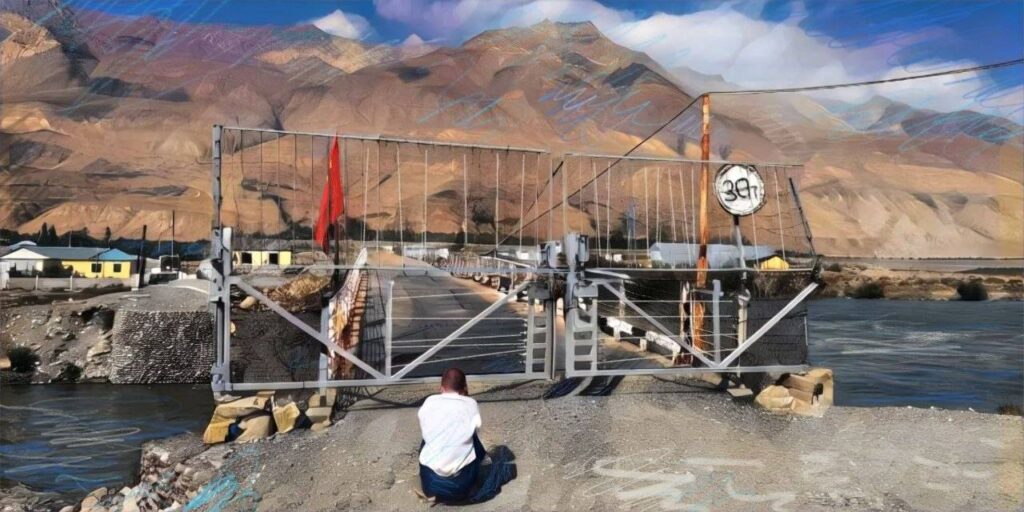
Tajikistan has improved its standing in the U.S. State Department’s 2025 Trafficking in Persons (TIP) Report, moving up from the Tier 2 Watch List to Tier 2. This designation means the country still does not fully meet the minimum standards for the elimination of human trafficking under U.S. legislation, but is making significant efforts to comply. According to the report, released on the State Department’s official website, Tajikistan’s progress reflects expanded anti-trafficking efforts in 2024. Authorities initiated 57 criminal cases related to human trafficking, down slightly from 60 in 2023 but the number of identified victims surged from 47 to 272. Of these, 238 were victims of forced labor, and 34 were victims of sexual exploitation. In the first half of 2025 alone, Tajik law enforcement registered 39 new cases, including five involving the sale of children. Tajikistan’s shift to Tier 2 signals a positive trajectory. However, the report notes persistent shortcomings. Authorities, for instance, often fail to clearly distinguish between labor exploitation and sexual violence, frequently conflating these with irregular migration or illegal adoption cases. Despite an official ban, the report highlights that schoolchildren and university students in Tajikistan continue to be mobilized for cotton harvesting under the guise of “hashar” or community work days. The TIP Report also raises concerns about coercive recruitment tactics used in military conscription, though it does not elaborate on specific methods. Refugees and stateless individuals are another focus of concern. According to the report, some citizens of Afghanistan and Bangladesh have been subjected to forced labor at construction sites in Tajikistan. U.S. estimates indicate that more than 12,000 refugees and asylum seekers live in the country, the majority of whom are Afghan nationals. Tajikistan’s Criminal Code criminalizes human trafficking-related offenses such as kidnapping, trafficking in persons, the sale of minors, and the use of children in the production of pornography. It also covers crimes such as organizing illegal migration, forging documents, and misusing official seals and stamps. While the U.S. report acknowledges improvements in victim identification and data collection, it emphasizes that Tajikistan must strengthen victim protection measures, improve transparency in investigations and expand its prevention strategies to continue advancing in the global anti-trafficking effort.

Opinion: A Trump Visit to Central Asia Would Deliver Results and Anchor a Corridor Strategy

On November 6, Washington will host the C5+1 leaders’ summit, marking the format’s 10th anniversary and signaling a rare alignment of political attention and regional appetite for concrete outcomes. The date is confirmed by regional and U.S.-focused reporting, with Kazakhstan’s presidency and multiple outlets noting heads-of-state attendance in the U.S. capital. This timing is decisive. Russia’s bandwidth is constrained by the war in Ukraine, China’s trade weight in Central Asia has grown, and European demand for secure inputs and routes has intensified. All these developments together create a window where a visible United States presence can meaningfully alter the deal flow. A visit sequenced off the November C5+1 will attach U.S. political attention to minerals, corridors, and standards that regional governments already prioritize, confirming the conversion of the summit's symbolism into leverage. Washington already has the instruments but has lacked a synchronized presence. Development finance, export credit, and C5+1 working groups exist, yet announcements have too often outpaced commissioning. A targeted tour could unveil named offtakes, corridor slot guarantees, and training compacts. This would move from the dialogue to bankable packages if paired with financing envelopes, posted schedules, and third-party verification. Deals, dates, and delivery would make operational signals clear to partners and competitors alike. Strategic Rationale and Operating Concept The United States has three clear goals. These are to diversify critical minerals away from single-point dependency on China, de-risk trans-Eurasian routes that connect Asian manufacturing to European demand, and reinforce the sovereignty of the states in the region without pressuring them to choose sides in great-power competition over other issues. These imperatives already guide the national-security strategies of Central Asian governments, which implement them according to multi-vector doctrines. A presidential visit that treats minerals, corridors, and standards as a single package would show that Washington is prepared to move forward on the same problem set that the region has defined for itself. The ways to do that are through finance-first diplomacy and an end-to-end corridor approach, including the Caspian crossing. Finance-first diplomacy pairs every political announcement with insurance, offtake letters, and term sheets (short non-binding summaries of key commercial and legal terms for a proposed deal). These signal the intention to convert declarations into commissioning. An end-to-end corridor approach accepts the physical reality that Central Asian outputs move west through Central Asia, across the Caspian Sea, and across the South Caucasus, with Azerbaijan functioning as the hinge that makes Europe reachable at scale. Each element of the “minerals–corridors–standards” triad reinforces the others when the whole is pursued as a single program. Reliable customs and traceability raise corridor credibility, which raises project bankability, which in turn attracts the private capital required for mineral processing. The instrumentalities for this already exist. The C5+1 framework can be tasked to track deliverables; the Development Finance Corporation (DFC) and the Export-Import Bank (EXIM) can cover risk and long-term debt; aid and technical programs of the Department of State and Commerce can align standards, procurement integrity, and traceable supply chains; U.S. universities and labs can...

New “Air Gates”: How Two Airports Will Transform Eastern Kazakhstan

The construction of new airports in the Katon-Karagai and Zaisan districts of eastern Kazakhstan is entering its final phase. For these remote region, once accessible only by winding mountain roads, the arrival of runways, terminals, and control towers marks a historic milestone. But these projects are more than just transportation infrastructure. They are poised to become engines of regional development, restoring the area's appeal to both tourists and investors. An Airport in the Mountains Katon-Karagai is the heart of Kazakhstan’s Altai region. Between the villages of Belkaragai and Ornek, a large-scale construction effort is underway to build a modern airport complex. Spanning 266 hectares, the project includes a 2,260 meter runway, a terminal, a command-and-control center, and state-of-the-art navigation and meteorological equipment. According to project manager Nurzhan Eskendirov, 80% of the work is now complete. “Next summer, we will lay the final layer of asphalt. This airport is not just a construction project, it’s a new chapter in the region’s history,” he told TSA. [caption id="attachment_38662" align="aligncenter" width="300"] @gov.kz[/caption] For local residents, the construction has become the event of the decade. Workers from across the country have joined the effort. “The nature here is simply amazing,” said one of the builders, Manash Baigonov. “I want people from all over the world to be able to see it.” Katon-Karagai is renowned for its pristine lakes, snow-covered peaks, and protected nature reserves. The airport will drastically reduce travel time, making the region far more accessible to tourists who previously faced hours of rugged road travel. Zaisan: The Eastern Gateway In the Zaisan district, another major airport project is nearing completion near the village of Satpay. The runway and apron are fully finished, the drainage system is being finalized, and terminal and control tower construction is ongoing. This airport is expected to play a vital role in expanding cross-border tourism and logistics. Currently, Zaisan receives about 20,000 tourists annually, a number that could increase four- to five-fold once the airport opens. Regular flights are planned to Ust-Kamenogorsk, Almaty, and Astana, with future international routes to Urumqi in China and Lake Kanass. This would position Zaisan as Kazakhstan’s “eastern gateway,” linking the country to China not only by road, but also by air. “The airport is creating new routes, but more importantly, it’s creating meaning,” said one of the project’s designers. “It’s not just a runway, it’s the take-off of a region.” [caption id="attachment_38663" align="aligncenter" width="300"] @gov.kz[/caption] From Roads to People Airport development is also driving broader infrastructure upgrades. A new road to the village of Urunkhaika on Lake Markakol, planned in partnership with China’s Heilongjiang Province Bada Road, will connect even more of Altai’s secluded landscapes to the broader transport network. Until now, many of these areas were accessible only by footpaths. These infrastructure projects are transforming not just the regional map, but daily life. In Katon-Karagai, which was once served only by narrow serpentine roads and sporadic buses, officials are now preparing for the arrival of investors, climbers, photographers, and nature lovers....

Kyrgyzstan Election 2025: New Rules, New Map, Same High Stakes

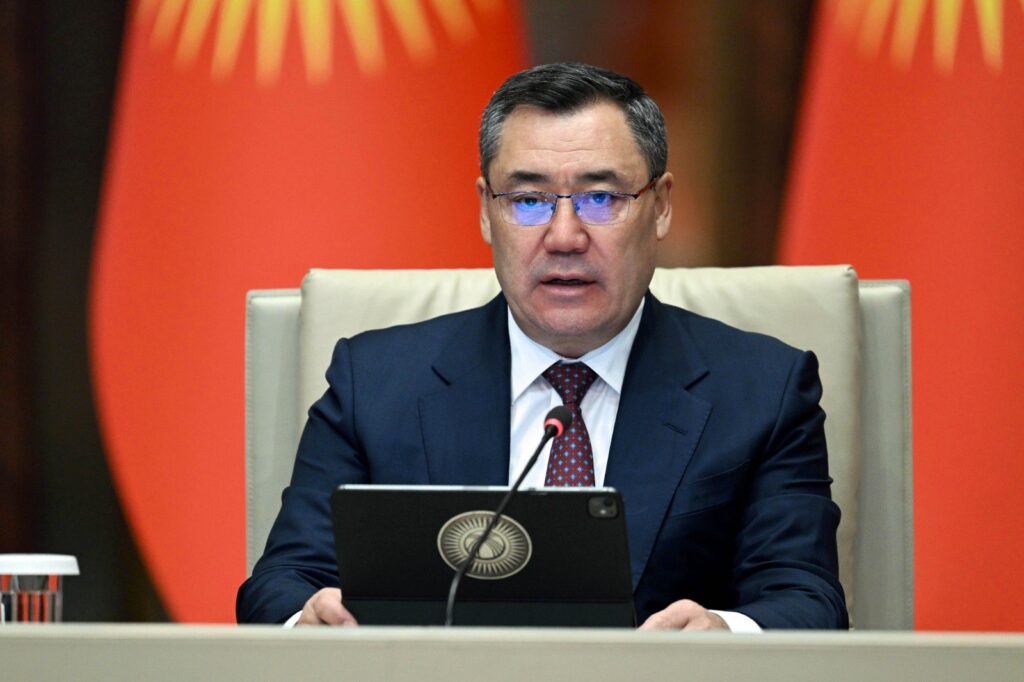
Kyrgyzstan is conducting snap parliamentary elections on November 30. The deadline for would-be candidates to hand in their forms was October 30. Nearly 600 prospective contenders have submitted registration forms to run for the 90 seats in parliament. The Central Election Commission (CEC) now has until November to process candidates’ applications to ensure they meet all the requirements to participate in the upcoming poll. Those who qualify will then have 18 days to convince voters in their districts to cast their ballots for them. The Basics These will be the ninth parliamentary elections held in Kyrgyzstan since the country became independent in late 1991. The reason officials gave for moving elections forward from November 2026 is that the next presidential election is scheduled for January 2027. However, in June 2025, amendments to the electoral system came into effect that changed the voting system and redivided electoral districts, opening the way to hold early elections. Parliament voted to dissolve itself in late September, and shortly after, the date of the forthcoming election was announced. To be eligible to run for a seat in parliament, a Kyrgyz citizen must be at least 25 years old, have a higher education, and have lived continuously in Kyrgyzstan for the last five years. Anyone with a criminal record is barred from participating. In Kyrgyzstan’s parliamentary elections in the 1990s and early 2000s, some prominent opposition figures were convicted of what appeared to be politically motivated charges and imprisoned to prevent them from taking part in elections. This happened to so many opposition politicians that after Kyrgyzstan’s first revolution, the Tulip Revolution of March 2005, a rule was introduced that allowed people with previous convictions to run for office. Now, an exception is made only for those whose convictions were later overturned. What’s New? These elections will be decided through single-mandate voting. That is not new. It was the way Kyrgyzstan’s parliamentary elections were conducted until 2007. The constitutional referendum of October 2007 changed the electoral system and introduced voting by party-list. Then-President Kurmanbek Baliyev formed the Ak-Jol party immediately after the referendum, and the party went on to win more than 60% of seats in parliament in the elections in December 2007. Bakiyev’s attempts to concentrate power into his hands eventually backfired and played a role in his ouster in the revolution of April 2010. Elections continued to be conducted by party list in 2010, 2015, and 2020. However, the elections of 2020 were plagued by allegations of rigging and vote-buying during the campaign, and when two pro-government parties won the majority of seats, it sparked another revolution that saw current President Sadyr Japarov come to power. The deputies elected in 2015 remained in their posts for more than another year. The last parliamentary elections in November 2021 were held using a mixed system, whereby 36 seats were decided by single-mandate voting, and 54 by party lists. President Japarov signed amendments to the election laws in June 2025, one of which was to decide the...