• KGS/USD = 0.01144 0%
  • KZT/USD = 0.00214 0%
  • TJS/USD = 0.10508 0.48%
  • UZS/USD = 0.00008 0%
  • TMT/USD = 0.28571 0%
  • KGS/USD = 0.01144 0%
  • KZT/USD = 0.00214 0%
  • TJS/USD = 0.10508 0.48%
  • UZS/USD = 0.00008 0%
  • TMT/USD = 0.28571 0%
  • KGS/USD = 0.01144 0%
  • KZT/USD = 0.00214 0%
  • TJS/USD = 0.10508 0.48%
  • UZS/USD = 0.00008 0%
  • TMT/USD = 0.28571 0%
  • KGS/USD = 0.01144 0%
  • KZT/USD = 0.00214 0%
  • TJS/USD = 0.10508 0.48%
  • UZS/USD = 0.00008 0%
  • TMT/USD = 0.28571 0%
  • KGS/USD = 0.01144 0%
  • KZT/USD = 0.00214 0%
  • TJS/USD = 0.10508 0.48%
  • UZS/USD = 0.00008 0%
  • TMT/USD = 0.28571 0%
  • KGS/USD = 0.01144 0%
  • KZT/USD = 0.00214 0%
  • TJS/USD = 0.10508 0.48%
  • UZS/USD = 0.00008 0%
  • TMT/USD = 0.28571 0%
  • KGS/USD = 0.01144 0%
  • KZT/USD = 0.00214 0%
  • TJS/USD = 0.10508 0.48%
  • UZS/USD = 0.00008 0%
  • TMT/USD = 0.28571 0%
  • KGS/USD = 0.01144 0%
  • KZT/USD = 0.00214 0%
  • TJS/USD = 0.10508 0.48%
  • UZS/USD = 0.00008 0%
  • TMT/USD = 0.28571 0%

Viewing results 1135 - 1140 of 3235

AIIB Approves $250 Million to Support Uzbekistan’s Climate Transition

The Asian Infrastructure Investment Bank (AIIB) has approved a $250 million program to support Uzbekistan’s transition to a green and sustainable economy. The funding will help Uzbekistan achieve its goal of reducing greenhouse gas emissions per unit of GDP by 35% by 2030, compared to 2010 levels, and foster sustainable economic growth. The program focuses on three key areas. First, it aims to strengthen governance by improving climate policies and integrating climate goals into national decision-making processes. Second, it addresses better management of water and land resources, reduces climate risks, and supports economic development. Finally, the program promotes low-carbon solutions in energy, transportation, and e-mobility, with a strong emphasis on energy efficiency and sustainable practices. The initiative encourages state-owned enterprises to adopt climate risk disclosure practices and expand renewable energy projects. AIIB Vice President Konstantin Limitovskiy emphasized the importance of the collaboration between AIIB, the Asian Development Bank (ADB), and Uzbekistan. “By integrating climate priorities into economic planning, enhancing adaptation measures, and driving decarbonization in critical sectors like energy and transport, this program plays a key role in supporting Uzbekistan’s efforts to implement its 2030 national strategy and fulfill its Nationally Determined Contribution under the Paris Agreement,” he said. Kanokpan Lao-Araya, the ADB Country Director for Uzbekistan, highlighted that climate change presents a substantial challenge to the country’s long-term economic stability. She emphasized that the Asian Development Bank (ADB) and the Asian Infrastructure Investment Bank (AIIB) are collaborating to support Uzbekistan in achieving resilient, inclusive, and low-carbon economic growth. Uzbekistan’s Ministry of Economy and Finance will lead the program, with support from other government agencies. AIIB and ADB will oversee its implementation to ensure it aligns with Uzbekistan’s broader development goals.

Kyrgyzstan Faces Electricity Deficit of 3.9 Billion Kilowatt-Hours

Kyrgyzstan is grappling with an electricity deficit of 3.9 billion kilowatt-hours as authorities struggle to resolve recurring winter energy shortages despite the construction of new hydroelectric power plants and electricity imports from neighboring countries. President Sadyr Japarov addressed the issue in a recent interview with the state news agency. Japarov acknowledged that the electricity shortfall remains unresolved, attributing it to the growing demand driven by an increasing number of social and infrastructure projects. “Our electricity is cheap. At a production cost of 2.7 Kyrgyz som (KGS) [approximately $0.031] per kilowatt-hour, consumers purchase it for 1.1 KGS. Additionally, under the Family Assistance program, we supply electricity to 69,000 families at a subsidized rate of 0.5 KGS per kilowatt-hour. Moreover, 186,000 consumers in mountainous areas receive electricity at 1.1 KGS without restrictions,” Japarov explained. The president also criticized wasteful electricity consumption in both public and private sectors, citing a lack of awareness and accountability. “Employees and heads of public institutions, schools, and kindergartens irresponsibly leave lights on in workspaces, assuming the state will pay for it. Similarly, street lighting remains on unnecessarily,” Japarov said. For the past 30 years, Kyrgyz citizens have endured periodic electricity blackouts. Japarov urged them to remain patient for another three to four years, assuring that the energy deficit would be resolved with the completion of the Kambarata Hydroelectric Power Plant-1 project, which is expected to stabilize the country's power supply.

Transforming Kazakhstan’s Railways: Strategic Infrastructure for Regional and Global Connectivity

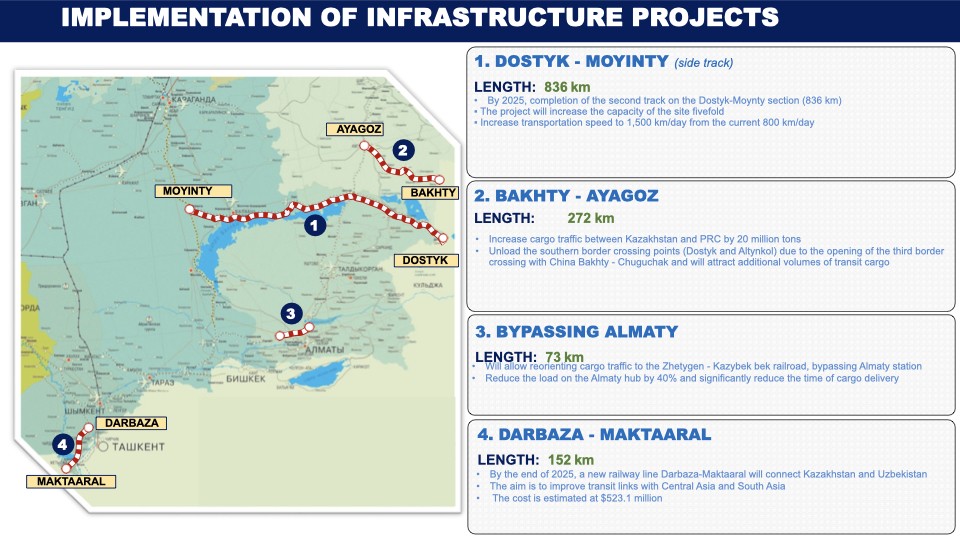
Kazakhstan’s rail network is a strategic national asset, vital for a country of its vast size and landlocked geography. Without direct access to the world’s oceans, railways serve as critical arteries for trade and transit. Under new geopolitical and logistical conditions, the importance of modernizing and expanding this network has become increasingly urgent. Spanning 21,000 kilometers, Kazakhstan’s railroads form the backbone of its transportation infrastructure. By 2030, the country plans to modernize 11,000 kilometers of highways and construct over 5,000 kilometers of new railways. Among these ambitious projects are the construction of second tracks on the Dostyk-Moyinty railway section, a bypass railway line around Almaty, and two new lines: Darbaza-Maktaaral and Bakhty-Ayagoz. Expanding Trade with China: Increased Cargo Traffic The Dostyk border station has become a key hub for exports to China and a vital transit point for East-West trade. In recent years, growing cargo volumes and limited capacity have placed immense pressure on its infrastructure. The Dostyk-Alashankou junction point, with a current capacity of 20 million tons annually, handled 15.2 million tons in the first 10 months of this year alone - a 15% increase compared to the same period last year. To address these challenges, construction of second railroad tracks on the Dostyk-Moyinty section began in November 2022. Part of the National Project: Strong Regions - Driver of the Country's Development, this project aims to increase the section’s capacity fivefold, from 12 to 60 train pairs per day. Transportation speeds between China and Europe are also set to improve significantly, from the current 800 kilometers per day to 1,500 kilometers per day. Official data indicates that 635 kilometers of the planned 836 kilometers have already been completed. The project involves 62 bridges, 242 pipelines, and a workforce of 24 construction companies and over 440 units of equipment. Completion is expected by late 2025. Private Investments Driving New Railway Lines Kazakhstan’s second major rail crossing with China, Altynkol station, has also reached its maximum capacity. Together with Dostyk, the two stations handle 28 million tons annually. This makes the development of the new 272-kilometer Bakhty-Ayagoz railway line essential. Connecting the border to the Semey-Aktogay section and the China-Europe corridor, the new line is expected to boost goods transportation to and from China by an additional 20 million tons. This project, realized under a public-private partnership model, will feature the construction of 11 stations, 47 bridges, 23 railroad overpasses, and eight highway overpasses. It will also include five pedestrian bridges and 16 observation structures, utilizing over 500,000 locally manufactured sleepers and 36,000 rails. Approximately 1,700 jobs will be created during the construction phase, with priority given to local residents. Alleviating Traffic in Almaty: A New Bypass Line The 73-kilometer bypass railway line around Almaty is set to increase cargo capacity by 17 million tons annually. By redirecting traffic to the Zhetygen-Kazybek Bey line, this project will reduce congestion at the Almaty junction by 40%. Faster delivery times for goods and passengers - up to 24 hours shorter - are among...

Uzbekistan Energizes Growth with $7 Billion in New Energy Projects

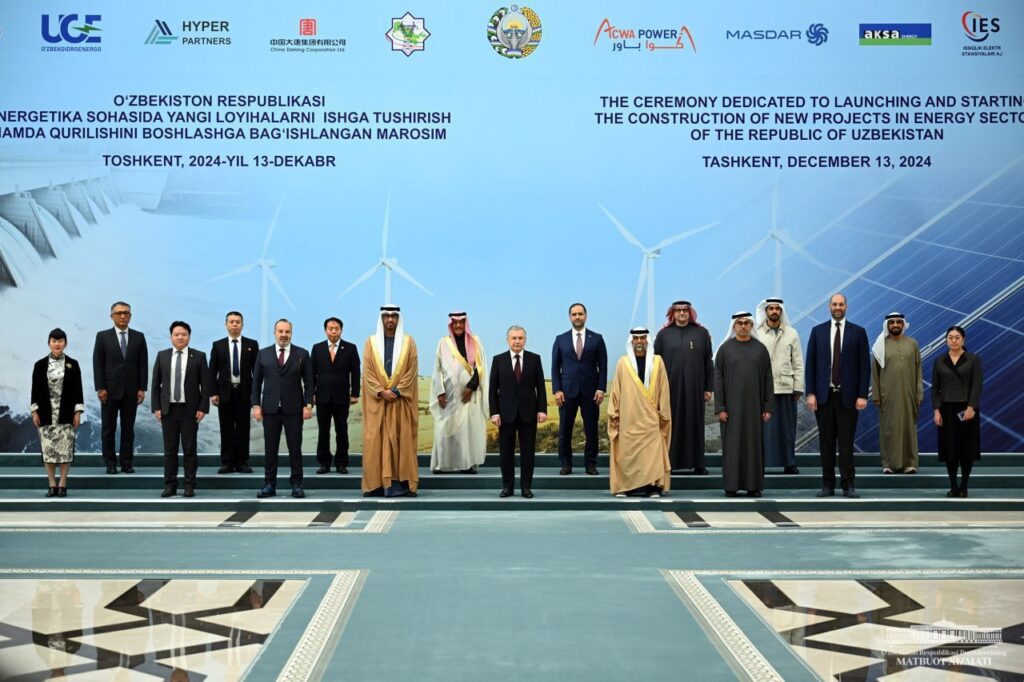
On December 13, Uzbekistan’s President Shavkat Mirziyoyev inaugurated operations for 18 new energy facilities and launched the construction of six additional projects. Together, the 24 initiatives represent an investment of over $7 billion. The ceremony marked a significant milestone for Uzbekistan’s energy sector, connecting the national power grid to five solar and wind power plants with a combined capacity of approximately 2,300 megawatts. Additionally, five high-voltage substations were commissioned in the Bukhara, Navoi, Namangan, and Tashkent regions. The country’s first energy storage system, with a capacity of 300 megawatts, began operations in the Andijan and Fergana regions. New power facilities launched include a 400-megawatt plant in Kashkadarya, a modern cogeneration plant in Tashkent, and four small hydroelectric power plants in Andijan, Surkhandarya, and Tashkent regions. Mirziyoyev also initiated construction on six power-generating facilities with a total capacity of 2.5 gigawatts in the Fergana, Samarkand, Navoi, and Tashkent regions, as well as in the city of Tashkent. These projects will collectively produce an additional 9.5 billion kilowatt-hours of electricity, sufficient to power more than 4 million households. They are also expected to save 2.5 billion cubic meters of natural gas and reduce emissions by 4.6 million tons annually. Foreign Investment Fuels Energy Transformation Mirziyoyev highlighted the pivotal role of foreign investment in these initiatives. Companies from the United Arab Emirates, Saudi Arabia, Turkey, China, and Germany are leading the projects, supported by international financial institutions such as the Asian Development Bank, the Islamic Development Bank, the European Bank for Reconstruction and Development, and the World Bank. Uzbekistan aims to produce 84 billion kilowatt-hours of electricity in 2025—an increase of 25 billion kilowatt-hours compared to 2016. Over the past five years, the energy sector has attracted $20 billion in foreign direct investment. Solar and wind power plants with a total capacity of 3,500 megawatts have already been launched, producing 10 billion kilowatt-hours annually and raising the share of "green" energy to 16% of the total energy mix. The country’s GDP reached a historic $100 billion last year, and plans are underway to double this to $200 billion by 2030. Such economic growth will drive a 1.5-fold increase in electricity demand over the next five years. Key Priorities for Uzbekistan’s Energy Sector Mirziyoyev outlined three strategic priorities for the energy sector: Expansion of Renewable Energy By 2030, Uzbekistan plans to add 19,000 megawatts of renewable energy capacity, increasing the share of "green" energy to 54%. In 2025, the country will commission 18 solar and wind power plants with a combined capacity of 3,400 megawatts, along with energy storage systems totaling 1,800 megawatts. This is expected to boost "green" energy production to 12 billion kilowatt-hours annually. Liberalization of the Electricity Market Uzbekistan will continue to liberalize its electricity market, with plans to establish a competitive wholesale electricity market by the end of 2025. Public-private partnerships will be introduced in energy distribution, and $4 billion will be invested to modernize power grids across the country. Expanding International Cooperation The government will enhance international collaboration in...

Kyrgyz Entrepreneurs Urged to Legalize Income

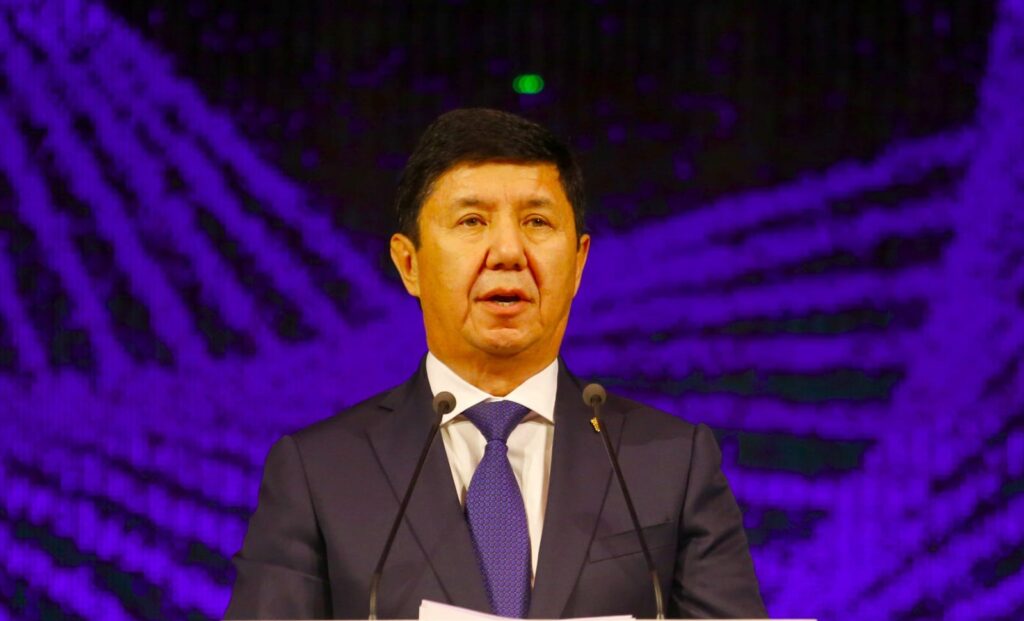
Kyrgyz entrepreneurs have been reminded to legalize their assets as the period for voluntary declaration of income and property nears its end on December 31, 2024. From January 2025, authorities are set to launch extensive inspections of businesses, prompting Temir Sariev, head of the Chamber of Commerce and Industry (CCI) of Kyrgyzstan, to call on business owners to act promptly. The law on voluntary legalization and amnesty of assets, introduced in 2023, offers citizens a chance to declare their assets with state guarantees of protection against criminal prosecution. By participating in the program, individuals and businesses can secure the preservation of their declared assets. As previously reported by The Times of Central Asia, in an effort to accelerate this process, President Sadyr Japarov set a public example in early 2024 by legalizing a multi-story building in Bishkek valued at $20 million. Temir Sariev emphasized that legalizing assets will improve economic transparency, protect citizens’ social and economic rights, and enhance Kyrgyzstan’s attractiveness to investors. “An obvious benefit of asset legalization is the reduction of the shadow economy,” Sariev noted. According to the Ministry of Economy and Commerce, the shadow economy accounted for approximately 20% of GDP in 2023, although unofficial estimates suggest it could be twice as high. International examples indicate that asset and income legalization reduces the size of the informal sector, increases transparency, fosters competition, and attracts new investments. While the potential advantages include increased tax revenues and improved public infrastructure, Sariev acknowledged the challenges for businesses transitioning out of the shadow economy. Small and medium-sized enterprises (SMEs) accustomed to operating informally may face difficulties adjusting to legal frameworks and potentially higher tax burdens. To address these challenges, Sariev highlighted the need for new accounting systems, staff training, and significant government investment in modernizing tax administration. This summer, the Kyrgyz government introduced changes to the taxation system, replacing voluntary patents - used by hundreds of thousands of businesses and individuals - with a mandatory payment system based on cash register accounting. The shift aims to increase transparency and accountability in the private sector. The Chamber of Commerce and Industry continues to encourage businesses to take advantage of the current voluntary declaration period to ensure smoother compliance with the evolving economic landscape.

AI in Central Asia: Kazakhstan Unveils Multilingual GPT Model

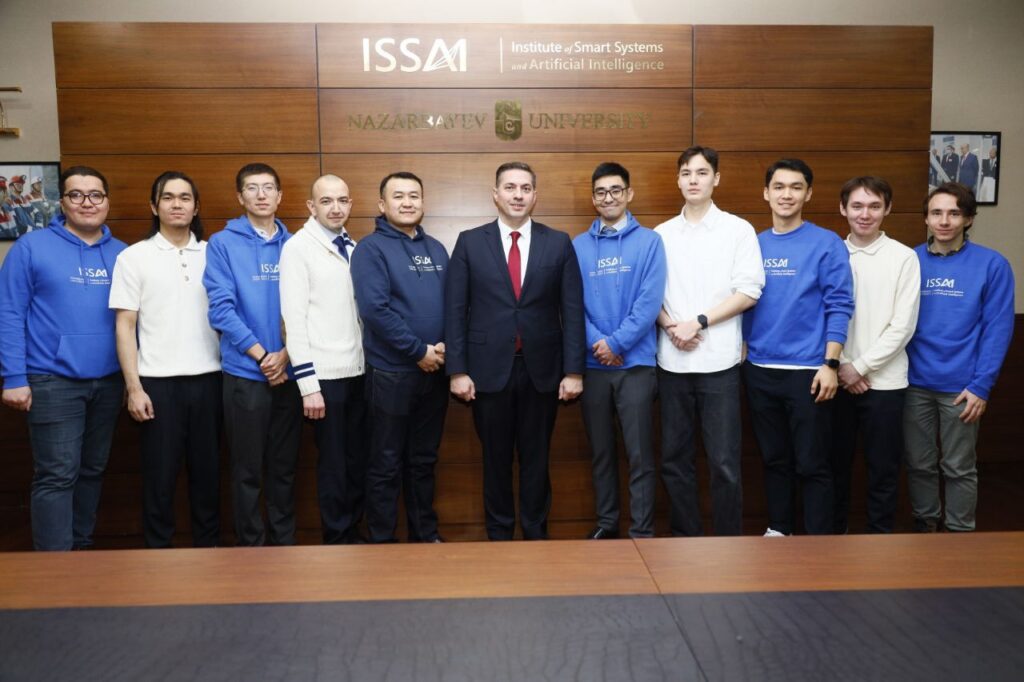
Researchers at the Institute of Intelligent Systems and Artificial Intelligence (ISSAI) at Nazarbayev University in Astana have introduced ISSAI KAZ-LLM, a large language model (LLM) specifically designed for the Kazakh language. Built on advanced neural network technology, the model serves as the foundation for Kazakhstan’s version of a generative AI system similar to GPT. ISSAI KAZ-LLM is tailored to Kazakhstan’s multilingual and multicultural environment, supporting Kazakh, Russian, and English, with additional functionality for Turkish. The model addresses language barriers and advances the field of generative artificial intelligence for resource-limited languages. The development team processed and synthesized over 150 billion tokens to ensure high-performance language capabilities. Beyond creating an AI tool, the project also fostered local expertise, involving Kazakhstani researchers at every stage, from data preparation to model implementation. Collaboration with international institutes enabled the creation of language-specific datasets and comparative analysis tools, utilizing input from linguists and state-of-the-art machine translation techniques. KAZ-LLM has a wide range of applications, including Kazakh language translations, content generation, and bulk text processing. Training data was sourced exclusively from publicly available materials, such as Kazakh websites, news articles, and online libraries, supplemented by contributions from various organizations. ISSAI director, Prof. Hussain Atakan Varol, told The Times of Central Asia: “This model reflects Kazakhstan's commitment to innovation, self-reliance, and the growth of its technology ecosystem. Our team developed two versions of ISSAI KAZ-LLM: one with 8 billion parameters and another with 70 billion parameters. Both are built on the Meta Llama architecture, optimized for use on high-performance systems as well as resource-constrained environments. Released under a CC-BY-NC license, the models are available for non-commercial use on the Hugging Face platform.” The ISSAI team is already exploring next-generation AI systems, including language-vision models, while expanding support for additional Turkic and regional languages. These initiatives aim to strengthen regional ties, promote linguistic integration, and create substantial economic and technological opportunities in Kazakhstan and beyond. Remarkably, this groundbreaking development was accomplished without government funding, with significant contributions from Kazakhstani IT companies. Kazakhstan is also gearing up to launch the International Center for Artificial Intelligence alem.ai. The center is set to become a hub for transforming the country into an AI-driven economy, fostering innovation, attracting investments, and supporting startups. By 2029, the export of Kazakhstani AI solutions is expected to reach $5 billion.