• KGS/USD = 0.01144 0%
  • KZT/USD = 0.00214 0%
  • TJS/USD = 0.10508 0.48%
  • UZS/USD = 0.00008 0%
  • TMT/USD = 0.28490 -0.28%
  • KGS/USD = 0.01144 0%
  • KZT/USD = 0.00214 0%
  • TJS/USD = 0.10508 0.48%
  • UZS/USD = 0.00008 0%
  • TMT/USD = 0.28490 -0.28%
  • KGS/USD = 0.01144 0%
  • KZT/USD = 0.00214 0%
  • TJS/USD = 0.10508 0.48%
  • UZS/USD = 0.00008 0%
  • TMT/USD = 0.28490 -0.28%
  • KGS/USD = 0.01144 0%
  • KZT/USD = 0.00214 0%
  • TJS/USD = 0.10508 0.48%
  • UZS/USD = 0.00008 0%
  • TMT/USD = 0.28490 -0.28%
  • KGS/USD = 0.01144 0%
  • KZT/USD = 0.00214 0%
  • TJS/USD = 0.10508 0.48%
  • UZS/USD = 0.00008 0%
  • TMT/USD = 0.28490 -0.28%
  • KGS/USD = 0.01144 0%
  • KZT/USD = 0.00214 0%
  • TJS/USD = 0.10508 0.48%
  • UZS/USD = 0.00008 0%
  • TMT/USD = 0.28490 -0.28%
  • KGS/USD = 0.01144 0%
  • KZT/USD = 0.00214 0%
  • TJS/USD = 0.10508 0.48%
  • UZS/USD = 0.00008 0%
  • TMT/USD = 0.28490 -0.28%
  • KGS/USD = 0.01144 0%
  • KZT/USD = 0.00214 0%
  • TJS/USD = 0.10508 0.48%
  • UZS/USD = 0.00008 0%
  • TMT/USD = 0.28490 -0.28%

Viewing results 1351 - 1356 of 3237

Kyrgyzstan Removes Restrictions on Sale of Gold

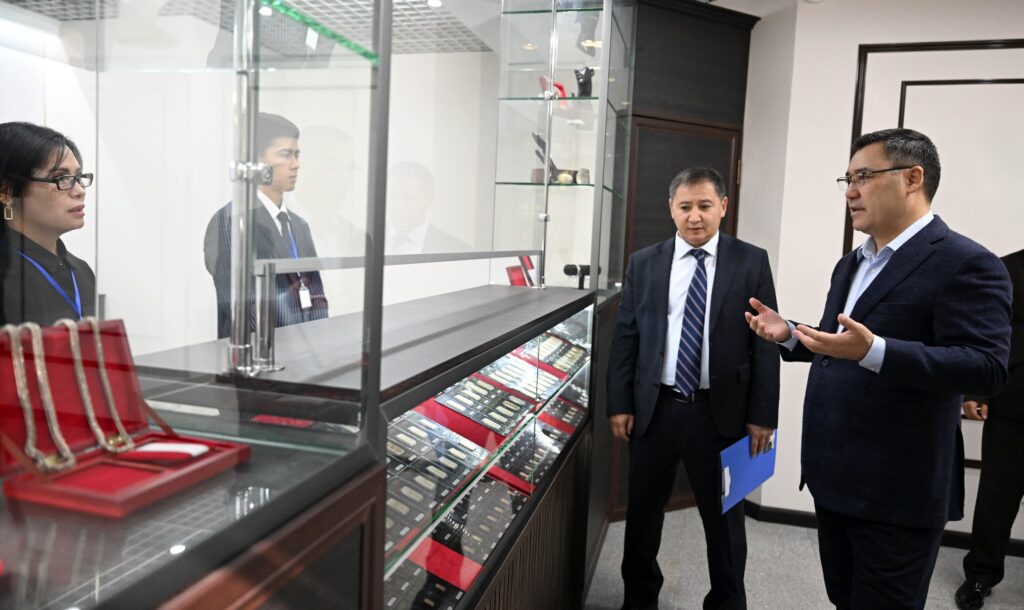
In early September, a state-owned store selling gold bars opened in Bishkek where gold can be bought without the presentation of a passport. Kyrgyzaltyn OJSC has already reported record sales, topping 50 million KGS ($585 thousand), and providing the store with a net income of 3 million KGS ($35 thousand). Changes in the law which previously allowed gold bars to only be bought in limited amounts through the National Bank of Kyrgyzstan, were instigated by President Sadyr Japarov of Kyrgyz, who explained: “The National Bank does not sell bullion without a passport. Businessmen and rich people approached me -  worried that if they started showing their documents - the whole of Kyrgyzstan would know about it, including robbers. Businessmen said they would have to stay in their houses and guard the gold,” Having lifted restrictions, Sadyr Japarov called on citizens to buy domestic gold, recommending it as a reliable and profitable investment. The Kyrgyzaltyn store sells gold bars weighing from 1 to 100 grams, each carrying an individual QR code confirming the gold's origin. Prices for the sale and repurchase of gold are set daily, based on London Bullion Exchange quotations. Kyrgyz economists believe that the growth of investment in gold indicates an increase in confidence in this asset. “In Kyrgyzstan, this trend is influenced by several factors. Global instability and fluctuations in currency markets make people look for more reliable assets. Declining yields on bank deposits are also pushing for alternatives. In addition, inflation expectations encourage people to convert their savings into gold,” economist Nurgul Akimova told The Times of Central Asia. Kyrgyzstan has about 380 gold deposits, the largest of which is Kumtor in Issyk-Kul Oblast. The republic's mining sector produced over 20 tons of gold in 2023.
Kuwaiti Companies Invited to Participate in Privatization of State-Owned Companies in Uzbekistan

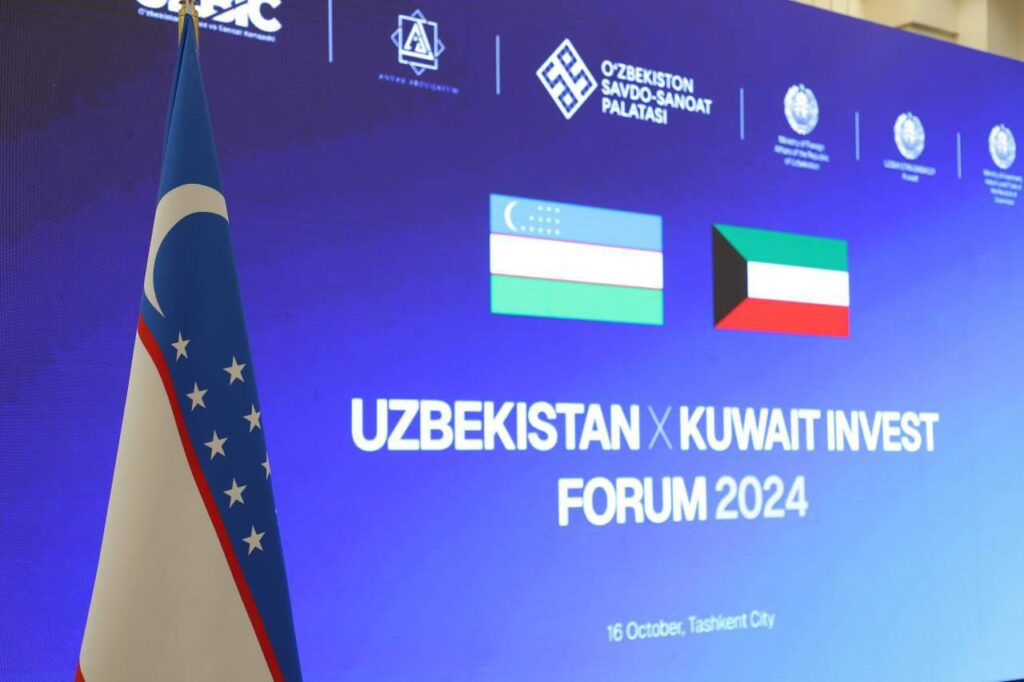
At a business forum dedicated to strengthening ties between Uzbekistan and Kuwait, in Tashkent on October 16, Deputy Minister of Investment, Industry, and Trade of Uzbekistan Akram Aliyev noted the importance of partnership with Kuwaiti businessmen, especially in healthcare, agriculture, and tourism. The forum focused on prospects for joint projects mining, energy, textile industry, and logistics. Proposals were also mooted for Kuwaiti investors to participate in the privatization program of over 1,000 state-owned companies in Uzbekistan and improve logistics infrastructure to turn Central Asia into an international trade hub. Over recent years, there have been several developments in cooperation between Uzbekistan and Kuwait. At an investment and trade forum hosted by Kuwait in August and attended by business and ministry representatives from both countries, Uzbek Foreign Minister Bakhtiyor Saidov encouraged Kuwaiti investors to explore prospects for partnership in agriculture, light industry, medical products, and renewable energy. The foreign ministers then met again, in New York in September 2024, to discuss further steps to strengthen bilateral cooperation, including the establishment of joint trade committees and new initiatives in logistics and infrastructure.

Decrease Expected in Central Asia’s Economic Growth

According to the World Bank, economic growth in Europe and Central Asia (ECA) is expected to slow to 3.3% this year, down from 3.5% in 2023. This is much lower than the average growth of 4.1% seen between 2000 and 2019, and is not enough for many of the region's middle-income countries to become high-income. Growth in the region has mainly been driven by an increase in people's spending, rising wages, and government policies, while demand from outside the area, especially from the EU, remains weak. Although the average yearly inflation rate had dropped to 3.6% by August 2024, from 4.6% at the end of last year, it is still higher than the 2.7% average seen in 2018-2019. Prices of goods have grown more slowly in most countries, but prices for services remain high because of rising labor costs. Some central banks have lowered interest rates as inflation has slowed, but are cautious. Government spending has not been reduced in most of the region's countries and indeed, has dramatically increased, especially on public wages, pensions, social benefits, and defense. The economies of Central Asia are expected to grow by 4.3% in 2024; slower than the 5.6% growth seen last year. In Kazakhstan, growth is predicted to slow to 3.4%, down from 5.1% in 2023, mainly because the expansion of the Tengiz oil field is taking longer, and the government is spending less. For other Central Asian countries, growth estimates have been raised by an average of nearly one percentage due to increased consumer spending, more government spending, and ongoing support from money sent home by workers in Russia and trade with Russia. However, despite these improvements, the growth per capita GDP (the average income per person) in Central Asia is only expected to be 2.7% this year, making it the slowest in the region, apart fromTurkey. The Central Asian sub region, with growth expected at 5%, will outpace all other sub regions in 2025. This is driven primarily by renewed strong growth in Kazakhstan amid rising oil production. However, growth in the rest of Central Asia is projected to slow as trading and remittance flows from Russia normalize. The lowest median consumer price growth rate was recorded in the South Caucasus, at 1.5% year-on-year in August 2024. In contrast, Central Asia had the highest median consumer price inflation rate, at 6.1%. This rate reflects 10% inflation in Uzbekistan, driven by removing energy subsidies in May 2024.

Chinese Investment in Major Trade and Logistics Center in Northern Kyrgyzstan

On October 17, the Chairman of the Cabinet of Ministers of Kyrgyzstan, Akylbek Japarov, and the Chinese Ambassador to Kyrgyzstan, Du Dewen, attended a capsule-laying ceremony for the construction of a large trade and logistics center in the village of Leninskoye in the country’s northern Chui region. Located just north of the capital, Bishkek, and a few kilometers from the border with Kazakhstan, the Manas Trade and Logistics City, will include a trading hub, an international exhibition center, a warehouse and logistics center with bonded areas, retail marketplaces, hotels, and residential compounds. The facility will be built in partnership between a Chinese investor and a management company in which the Kyrgyz Cabinet of Ministers will have a 49% share. In his address at the ceremony, the Cabinet’s head, Japarov, stated: "We are launching a major project—not just the construction of a trade and logistics center, but an entire town. It will have 30,000 retail outlets, -cover-700 hectares, and a total investment of $4.2 billion. $700 million will be invested in the first stage of construction. This center can be compared with the largest sea ports in terms of its importance and functions." Japarov added that the creation of the facility will significantly contribute to the expansion of regional and international trade, the creation of new jobs, and the improvement of conditions for product exports. China is now one of Kyrgyzstan's largest trading partners. According to official statistics, bilateral trade reached $20 billion in 2023, 32% more than in 2022.

Soar in Lithuania’s Central Asian Migrant Population

Lithuanian intelligence reports that the number of Central Asian migrants in the country has increased 14-fold since 2021. According to Prime Minister Ingrida Šimonytė, the number overall is still relatively small and is not a cause for concern. She explained that the labor market, once filled by workers from Ukraine and Belarus, has shifted following the call for Ukrainian men to fight in the war. As a result, more Central Asian workers are being hired. Darius Jauniškis, head of Lithuania’s State Security Department, told LNK News that his agency cannot screen all migrants, raising counter-intelligence and terrorism concerns, and because the government is working on next year’s budget, his remark is perceived as a request for more funding for the VSD (State Security Department). In response, the Prime Minister said the growth in migrants, though large, isn't particularly high. She stated that only a few hundred foreign nationals had been issued with temporary residence permits in Lithuania this year, but added: “There were indeed problems. These problems were already partially regulated by existing  laws- and - from 2025 onwards, when the quota [for workers from third countries] who can come to Lithuania will be in force, it will be possible to impose additional regulations on these issues." Data from the Migration Department shows that as of October 1, around 10,600 Uzbeks were living in Lithuania, compared to 8,200 at the start of the year, and the 998 recorded in early 2022. Thus, Uzbeks now make up the fourth-largest foreign community in Lithuania. The number of migrants from Tajikistan also increased from 5,700 to 7,200 in the first nine months of 2024.

Almaty to Host Exhibition of Afghan Products

Kazakhstan’s Ministry of Trade and Integration has announced that an exhibition of Afghan carpets, jewelry, construction materials, household and industrial chemicals, vegetables, fruit, and food products will run from October 20 -22, at the Atakent Exhibition Center in Almaty. Afghanistan’s TOLOnews reported that a delegation led by the Taliban Minister of Industry and Commerce and 250 Afghan traders will participate in the exhibition. Akhundzada Abdul Salam Jawad, spokesperson for the Afghan Ministry of Industry and Commerce, further confirmed that 69 companies from Afghanistan will participate in the exhibition, with displays promoting various products, including carpets, dried fruit, saffron, and precious and semi-precious stones. Early in June, Kazakhstan’s President Kassym-Jomart Tokayev announced that his country had removed the Taliban from its list of terrorist organizations, in a move to develop trade and economic ties with Afghanistan. In late August, Kazakhstan’s Foreign Ministry then accredited a chargé d’affaires of Taliban-led Afghanistan to expand trade, financial, and humanitarian cooperation between the two countries.