• KGS/USD = 0.01144 0%
  • KZT/USD = 0.00216 0%
  • TJS/USD = 0.10456 0%
  • UZS/USD = 0.00008 0%
  • TMT/USD = 0.28571 0%
  • KGS/USD = 0.01144 0%
  • KZT/USD = 0.00216 0%
  • TJS/USD = 0.10456 0%
  • UZS/USD = 0.00008 0%
  • TMT/USD = 0.28571 0%
  • KGS/USD = 0.01144 0%
  • KZT/USD = 0.00216 0%
  • TJS/USD = 0.10456 0%
  • UZS/USD = 0.00008 0%
  • TMT/USD = 0.28571 0%
  • KGS/USD = 0.01144 0%
  • KZT/USD = 0.00216 0%
  • TJS/USD = 0.10456 0%
  • UZS/USD = 0.00008 0%
  • TMT/USD = 0.28571 0%
  • KGS/USD = 0.01144 0%
  • KZT/USD = 0.00216 0%
  • TJS/USD = 0.10456 0%
  • UZS/USD = 0.00008 0%
  • TMT/USD = 0.28571 0%
  • KGS/USD = 0.01144 0%
  • KZT/USD = 0.00216 0%
  • TJS/USD = 0.10456 0%
  • UZS/USD = 0.00008 0%
  • TMT/USD = 0.28571 0%
  • KGS/USD = 0.01144 0%
  • KZT/USD = 0.00216 0%
  • TJS/USD = 0.10456 0%
  • UZS/USD = 0.00008 0%
  • TMT/USD = 0.28571 0%
  • KGS/USD = 0.01144 0%
  • KZT/USD = 0.00216 0%
  • TJS/USD = 0.10456 0%
  • UZS/USD = 0.00008 0%
  • TMT/USD = 0.28571 0%

Viewing results 1573 - 1578 of 3223

Why Kyrgyzstan and China Are Reporting Different Figures on Bilateral Trade

At a press conference in Bishkek, Azamat Jumabekov, a representative of Kyrgyzstan's Chamber of Commerce and Industry, explained the significant difference in Kyrgyzstan-China trade statistics reported by Kyrgyz and Chinese authorities. According to Jumabekov, this happens because significant parts of goods that arrive in Kyrgyzstan from China are intended for further transit to other countries. Still, the owners register their goods as exports to Kyrgyzstan; hence, the Chinese statistics are incorrect. For instance, according to the National Statistical Committee of Kyrgyzstan, the volume of Chinese goods imported to Kyrgyzstan in 2023 was $5.4 billion; the Chinese Customs Administration reported the figure as $19.7 billion. Kyrgyz statistics show that in the first half of this year, Kyrgyzstan imported $3.1 billion worth of Chinese goods, a 42.5% increase compared to the same period last year. According to the Chinese Customs Administration, in the first half of 2024, China exported goods worth $9.4 billion to Kyrgyzstan and imported $95.5 million. According to Chinese statistics, China's trade turnover with Central Asian countries increased by 11.3% in the first half of 2024 compared to the same period in 2023, reaching $44.32 billion. Trade with Kazakhstan increased by 19.4%, amounting to $21.7 billion. Trade with Uzbekistan increased by 2.5%, amounting to $6.25 billion. Trade with Tajikistan decreased by 14.2%, amounting to $1.81 billion. Trade with Turkmenistan decreased by 4.9%, amounting to $5.28 billion. During the first half of 2024, China's exports to Central Asian countries increased by 14.6% to $30.21 billion. Exports from Central Asia to China increased by 4.8% to $14.11 billion. Turkmenistan was the only exception, showing a positive balance in trade with China. Exports to China amounted to $4.82 billion (mainly Turkmen natural gas), while imports from China amounted to $460.2 million.

Kazakhstan and Turkey to Increase Agricultural Trade

During Kazakh Minister of Agriculture Aidarbek Saparov's visit to Turkey on August 12, agreements were signed for Turkish investments of $2 billion in Kazakhstan’s agro-industrial sector and trade in agricultural products Six projects have already been implemented in Kazakhstan with participation of Turkish investors.  The imminent launch of a further ten projects totaling $553 million, include the construction of greenhouse complexes, plants for deep processing of wheat and beans, and vegetable storage facilities. Armada Gıda, one of  Turkey's leading companies in producing and exporting agricultural products, is to increase the import of lentils from Kazakhstan, while Tiryaki Holding, is to import of 250 thousand tons of Kazakh wheat. According to Minister Saparov, in 2023, the volume of Kazakh-Turkish trade in agricultural products increased by 13%. Kazakhstan has long exported crop products to Turkey and following the abolishment of restrictions in June, Kazakh agricultural producers can now begin exporting livestock products. Minister Saparov stated that Kazakhstan expects a good crop harvest this year and is ready to increase the export of high-quality agricultural products to Turkey.

ADB Grants $71 million for Business Reforms and HPP Reconstruction in Tajikistan

As reported by the Avesta Information Agency, Minister of Finance of Tajikistan, Faiziddin Kahkhorzade, and Shani Campbell, the permanent representative of the Asian Development Bank (ADB) in the country, have signed contracts for two grants totaling $71 million. The first grant of $50 million is aimed at improving  Tajikistan's business environment, including digitization, reforms to boost exports, improved infrastructure management, and increased financial transparency. Small and medium-sized enterprises will also be supported in adapting to climate change. The second grant of $21 million will replace the fourth unit at the Head HPP located near the city of Levakant (formerly Sarband) in Tajikistan's Khatlon region, which failed in 2019. As a result of the upgrade, the installed capacity of hydropower is expected to increase from 240 megawatts in 2012 to 274 megawatts by 2026. Since Tajikistan became a member of the ADB in 1998, the bank has provided more than $2.6 billion in assistance to the country, including more than $2 billion in grants. These funds were directed to the development of transport and energy infrastructure, healthcare, education, agriculture, and other important sectors of the economy.

Uzbekistan and UAE to Build Modern Wastewater Facility

The United Arab Emirates company “Sustainable Water Solutions” (SWS) is to cooperate with Uzbekistan on the construction of a modern wastewater facility in Tashkent. The project includes building a facility with a daily capacity of 1.0 million cubic meters of water and a 42-kilometer wastewater collector in the territory of the Surum mahalla, an administrative centre in Tashkent's  Lower Chirchik district. Regarding the scheme, Ahmed Al-Shamsi, head of the SWS company announced: “Our next initiative will prevent water wastage in Uzbekistan. The capacity of the joint facility will be 1,000,000 cubic meters per day at the first stage and 1.5 million cubic meters later. The estimated project cost is one billion dollars." According to reports, the quality of wastewater service provided to 1.5 million people will increase, and more than 500,000 residents and over a hundred enterprises and organizations will be provided with centralized wastewater service. The construction of a 42-kilometer collector allows efficient collection and transportation of wastewater for further treatment. SCADA, a data management and collection system, and GIS,a geographic information system, will be introduced, ensuring effective monitoring and management of cleaning and transportation processes. As a result of this large-scale project, 10 million kilowatts of electricity will be saved, and the sanitary-epidemiological and ecological situation in the Sergeli, Bektemir, and Yangi Hayot districts of Tashkent city will be improved.

Kazakhstan Delivers Oil to Europe via Russia

Kazakhstan has begun supplying oil to Europe via the Druzhba oil pipeline system through Russia. The first oil shipments have already arrived in Germany, where amid current geopolitical challenges, it has become an important part of the country's energy security . Acting through its Kazakh subsidiary Agip Caspian Sea, the Italian company Eni, has shipped the first 20,000 tons of oil as part of a test delivery via the Atyrau-Samara route, with further transportation via the Druzhba pipeline. Kazakhstan now plans to deliver up to 1.2 million tons of oil to Germany via this system this year, following an agreement with the Russian side, to ensure uninterrupted supplies to Europe despite the sanctions restrictions on Russian oil. Historically, the pipeline has been one of the largest routes for Russian oil supplies to Europe, but its use has undergone significant changes in recent years due to sanctions. Faced with these changes, Kazakhstan's proposals to increase oil supplies through this route, could not only play a key role in ensuring energy stability in the region but also demonstrate the country's strategic importance as a major player in the global oil market and its ability to adapt to changes in global energy policy.

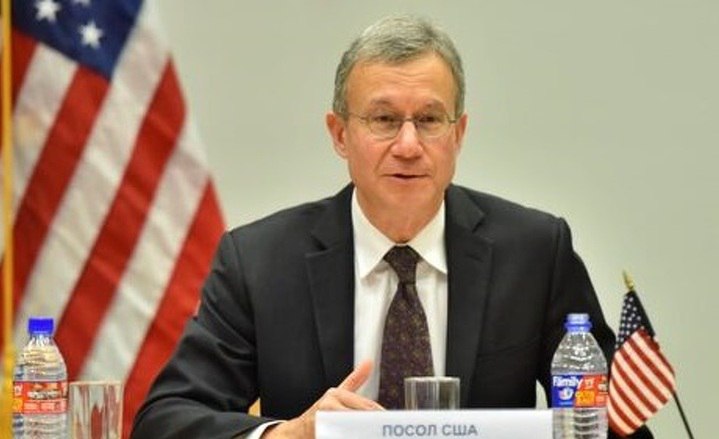
U.S. Ambassador to Kazakhstan: We Never Make Kazakhstan Choose Between “Us Or Them”

In an interview with the KazTAG agency, U.S. Ambassador to Kazakhstan Daniel Rosenblum discussed relations between the U.S. and Kazakhstan. In the two years since his appointment, Rosenblum noted significant progress in developing diplomatic and economic ties between the countries. In particular, he emphasized the importance of Kazakhstani President Kassym-Jomart Tokayev's visit to New York for the C5+1 platform summit, as well as the visits of the U.S. Secretary of State to Kazakhstan and the Kazakhstani Foreign Minister to the United States. Rosenblum also highlighted key support programs initiated by the U.S. in Kazakhstan, including USAID projects to resolve commercial disputes and decentralize public administration. These initiatives help strengthen the business environment and increase foreign investors' confidence in Kazakhstan, which, he said, helps attract more investment. Economic relations between the U.S. and Kazakhstan have shown steady growth, with trade exceeding $4 billion in 2023, a 30% increase over the previous year. The U.S. remains one of the largest investors in Kazakhstan, second only to the Netherlands. In recent years, U.S. companies have shown interest in new sectors, including transportation and critical minerals. For example, Wabtec has invested in locomotive production in Kazakhstan, and Pepsi Co. has invested $160 million to build a plant to produce potato chips and other snacks in Almaty region. The ambassador also discussed democratization and human rights, noting positive developments in Kazakhstan, such as the establishment of the Constitutional Court, and the expanded role of the ombudsman institution. He emphasized that Kazakhstan has worked to improve freedom of speech, assembly, and fair elections. On security issues, the ambassador reiterated the U.S.' commitment to protecting Kazakhstan's independence and sovereignty. He emphasized the importance of joint exercises and programs to strengthen defense and law and order in Kazakhstan. Regarding sanctions against Russia, Rosenblum said that the U.S. respects President Tokayev's position of adhering to international sanctions but does not apply its sanctions against Russia. The U.S. is engaging with the Kazakh government to minimize the impact of these sanctions on the country's economy and to find alternative markets for Kazakh goods. "We know that Kazakhstan needs to maintain good relations with its neighbors. It is natural to have positive trade relations and other types of relations to ensure peace and stability. We recognize and respect that it is not only the right but probably the duty of Kazakhstan to maintain such relations. We never put Kazakhstan before "either us or them" situations; we do not have such an approach to relations. Kazakhstan pursues a multi-vector policy, and we count on being one of the right vectors," the ambassador said. U.S. policy toward Kazakhstan is unlikely to change significantly, even if a Republican president wins the next U.S. election, Rosenblum said. The basic principles of supporting sovereignty and stability in Central Asia will remain unchanged, regardless of the political administration in Washington.