• KGS/USD = 0.01144 0%
  • KZT/USD = 0.00215 0%
  • TJS/USD = 0.10599 -0.28%
  • UZS/USD = 0.00008 0%
  • TMT/USD = 0.28571 0%
  • KGS/USD = 0.01144 0%
  • KZT/USD = 0.00215 0%
  • TJS/USD = 0.10599 -0.28%
  • UZS/USD = 0.00008 0%
  • TMT/USD = 0.28571 0%
  • KGS/USD = 0.01144 0%
  • KZT/USD = 0.00215 0%
  • TJS/USD = 0.10599 -0.28%
  • UZS/USD = 0.00008 0%
  • TMT/USD = 0.28571 0%
  • KGS/USD = 0.01144 0%
  • KZT/USD = 0.00215 0%
  • TJS/USD = 0.10599 -0.28%
  • UZS/USD = 0.00008 0%
  • TMT/USD = 0.28571 0%
  • KGS/USD = 0.01144 0%
  • KZT/USD = 0.00215 0%
  • TJS/USD = 0.10599 -0.28%
  • UZS/USD = 0.00008 0%
  • TMT/USD = 0.28571 0%
  • KGS/USD = 0.01144 0%
  • KZT/USD = 0.00215 0%
  • TJS/USD = 0.10599 -0.28%
  • UZS/USD = 0.00008 0%
  • TMT/USD = 0.28571 0%
  • KGS/USD = 0.01144 0%
  • KZT/USD = 0.00215 0%
  • TJS/USD = 0.10599 -0.28%
  • UZS/USD = 0.00008 0%
  • TMT/USD = 0.28571 0%
  • KGS/USD = 0.01144 0%
  • KZT/USD = 0.00215 0%
  • TJS/USD = 0.10599 -0.28%
  • UZS/USD = 0.00008 0%
  • TMT/USD = 0.28571 0%

Viewing results 85 - 90 of 934

China’s Expanding Electric Bus Footprint in Central Asia

In recent years, there has been a visible increase in electric vehicle exports from China to Central Asia. Although much public attention goes to electric cars, the spread of Chinese electric buses across the region is equally meaningful. Kyrgyzstan provides a clear example of this trend, where manufacturers such as Yutong and Anhui Ankai Automobile have become important actors in the country’s effort to modernize its public transport system. Through the Asian Development Bank-funded Urban Transport Electrification Project, Kyrgyzstan purchased 120 battery electric buses from Anhui Ankai Automobile. A complementary initiative by the European Bank for Reconstruction and Development under its Green City program is supporting the delivery of 95 new 12-meter Yutong buses. The first batch of 20 Yutong vehicles reached the country in November 2025, marking a practical step forward in Kyrgyzstan’s shift toward cleaner transportation. Mutual Benefits and Strategic Alignment Cooperation in the electric bus sector offers advantages for China and Kyrgyzstan in different but interconnected ways. For Chinese companies, emerging markets such as Kyrgyzstan present new commercial openings at a time when access to some advanced markets faces stricter regulatory conditions. Exporting electric buses to Central Asia allows Chinese manufacturers to diversify revenue streams while strengthening their global presence. The growing visibility of Chinese green technologies also fits within the broader vision of the Green Silk Road, which aims to reinforce an image of China as a partner in sustainable development. China’s involvement in Kyrgyzstan’s electric mobility market broadens the scope of bilateral engagement. Previous cooperation often focused on large infrastructure and energy projects. The addition of electric mobility creates a more diversified framework that touches directly on urban life and community-level benefits. Opportunities for Kyrgyzstan’s Green Transition Kyrgyzstan stands to gain significantly from the expansion of electric public transport, especially with the support of multilateral development banks. Access to affordable and modern electric buses enables cities to renew outdated fleets and reduce their reliance on conventional diesel-powered vehicles. Environmental and public health benefits are among the most important outcomes. The transportation sector accounts for an estimated 28% of Kyrgyzstan’s national greenhouse gas emissions, making a transition to cleaner mobility essential for meeting sustainability goals. Electric buses can reduce air pollution in densely populated areas and improve overall urban health. Kyrgyzstan’s electricity mix relies heavily on domestically generated renewable energy, particularly hydropower. This makes the shift to electric mobility even more beneficial. When electric buses are powered by renewable sources, the overall carbon footprint of the fleet is significantly lower. Reduced dependence on imported fossil fuels further strengthens national energy security. A Gradual but Meaningful Transformation The growing presence of Chinese electric buses in Kyrgyzstan reflects a broader regional transformation. Public transport electrification is becoming an important element of Central Asia’s green development path. While challenges remain in finance, maintenance, and charging infrastructure, the overall direction is clear. Partnerships that bring together Chinese manufacturers, multilateral development institutions, and Central Asian governments are creating new opportunities for sustainable mobility. For Kyrgyzstan, these developments support cleaner cities and...

Journal Retracts Climate Study After Discovering Errors in Uzbekistan’s Economic Data

The scientific journal Nature has retracted a high-profile article on the economic impacts of climate change after significant inaccuracies were discovered in economic data related to Uzbekistan. The study, originally published online on April 17, 2024, examined how rising global temperatures could affect economic output by mid-century. According to the retraction notice, the dataset contained serious errors in Uzbekistan’s economic indicators from 1995 to 1999, which substantially altered the study’s findings. The authors acknowledged that the results were highly sensitive to the inclusion of Uzbekistan. Upon review, they found the country’s reported economic figures during that period were inaccurate. They also noted additional complications, including inconsistencies caused by transitions between data sources, and the failure to fully account for long-term economic trends. Another methodological issue, spatial auto-correlation, which affects uncertainty estimates, had not been incorporated into the original analysis. Once the authors corrected the dataset and adjusted their methodology, the study’s conclusions changed significantly. Specifically, the projected range of climate-related economic damages by 2050 shifted from 11-29% to a broader 6-31%. The statistical likelihood that damages would differ significantly under various emissions scenarios by mid-century also fell, from 99% to 90%. Due to the scale of these changes, the authors concluded that a simple correction was insufficient and opted for a full retraction. A revised version of the study, updated with corrected data and improved methodology, has been made publicly available but has not yet undergone peer review. The authors plan to resubmit the article, and Nature has stated it will update the retraction notice if the revised version is accepted for publication. The researchers thanked the members of the scientific community who identified the discrepancies, and emphasized the importance of transparent corrections in climate science.

Central Asian Countries Agree on 2026 Water Allocations from Amu Darya and Syr Darya

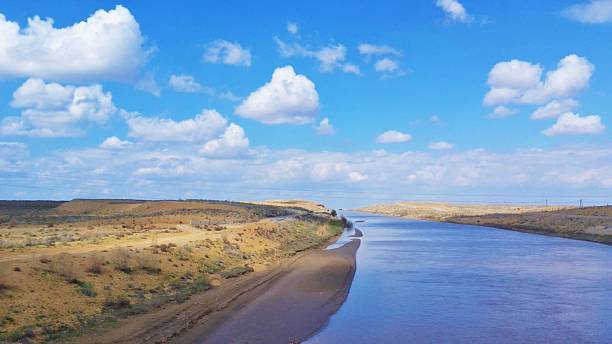
Central Asian states have reached an agreement on water allocations from the Amu Darya and Syr Darya rivers for 2026. The decision was made during the 91st meeting of the Interstate Coordination Water Management Commission (ICWC), held in Ashgabat on November 13, 2025, according to Kun.uz. At the meeting, the countries agreed on how water resources will be managed during the 2025–2026 non-growing season, the period when agricultural demand is low. For the Amu Darya, the total allocation from October 2025 to October 2026 is set at approximately 55.4 billion cubic meters, with 15.9 billion cubic meters designated for the cold months from October through April. Under the agreement, Tajikistan will receive 9.8 billion cubic meters, while Turkmenistan and Uzbekistan will each receive 22 billion. A key provision is that roughly 44 billion cubic meters of the Amu Darya’s flow must reach the Kerki hydrological station in Turkmenistan to sustain downstream areas. Additionally, 4.2 billion cubic meters is allocated to support the Aral Sea and the Amu Darya delta, with half to be delivered in winter and early spring. Another 800 million cubic meters will be used for irrigation in Dashoguz, Khorezm, and Karakalpakstan. These allocations are crucial for both communities living in water-scarce regions and for preserving fragile river ecosystems. For the Syr Darya, the total allocation for the non-growing season is 4.219 billion cubic meters. Of this, Uzbekistan will receive the majority share, 3.347 billion cubic meters. Kazakhstan will receive 460 million cubic meters through the “Dustlik” canal, Tajikistan 365 million, and Kyrgyzstan 47 million. These figures are based on projected river inflows, reservoir capacities, and the need to maintain ecological flows. The ICWC also approved operational plans for key reservoirs. In Tajikistan, the Nurek Reservoir is expected to enter the non-growing season with 10.5 billion cubic meters and decline to around 9.7 billion by spring. The Tuyamuyun reservoir, located on the Uzbekistan–Turkmenistan border, will start with 4.5 billion cubic meters and reduce to 3.4 billion. Both will gradually release water to support irrigation and sustain the Amu Darya’s flow. In the Syr Darya basin, total water volume in the Toktogul, Andijan, and Charvak reservoirs at the beginning of the season is approximately 10.6 billion cubic meters, slightly below average. Tajikistan’s Bahri Tojik reservoir is expected to contain 2.6 billion cubic meters, while Kazakhstan’s Chardara reservoir will hold about 1.65 billion. Collectively, the Syr Darya basin will have around 14.9 billion cubic meters of water at the start of winter, roughly 90% of the long-term seasonal average. The 92nd ICWC meeting is scheduled to take place in Dushanbe, where officials will assess reservoir performance and water usage during the 2025-2026 season. The agenda will also include strategies to strengthen regional water security in the face of escalating climate pressures.

Russia Revives Plan to Redirect Siberian Rivers as Central Asia Faces Worsening Water Crisis

The long-contested idea of diverting Siberian rivers to Central Asia has re-emerged after the Russian Academy of Sciences announced on November 14 that it is studying a new version of the project. The updated proposal revives elements of a Soviet-era plan from the 1970s and 1980s that aimed to channel water from the Ob River basin to arid regions of Central Asia. This time, however, the focus is on a closed pipeline system, rather than open canals, to transport large volumes of water to countries facing acute shortages, particularly Uzbekistan, according to Fergana News. Discussions within the Russian Academy had reportedly already begun prior to the announcement. Researchers are now calling on Russia’s Ministry of Science and Higher Education to include a full study of the project in its state research plan. They argue that Central Asia is entering a critical phase of water scarcity that demands long-term strategic solutions. The renewed interest comes amid escalating water stress across the region. Rapid population growth, retreating glaciers, and intensifying irrigation demands have pushed existing water systems to their limits. While some view the proposed pipeline as a potential lifeline for stabilizing regional water supplies, environmental concerns remain central to the debate, echoing the very reasons the original project was shelved. A Long History of Controversy The idea of redirecting northern rivers is not new. It was first proposed in the 19th century by Ukrainian-born engineer Yakov Demchenko, who envisioned transferring water from the Ob and Irtysh rivers to replenish the shrinking Aral Sea. In the Soviet period, the concept gained political traction. By the late 1960s, it had entered official planning discussions, prompting detailed studies by the Academy of Sciences, the State Planning Committee, and the Ministry of Water Resources. In 1970, the project was formally designated a state priority, with plans for transferring up to 25 cubic kilometers of water annually. Extensive technical documentation was produced, and construction began on supporting infrastructure, including the Irtysh-Karaganda canal. Designs for the main channel envisioned a span of more than 2,500 kilometers and a capacity exceeding 1,000 cubic meters per second. However, by 1986, the project was halted due to mounting economic pressures, scientific opposition, and growing awareness of potential environmental risks. Experts warned of large-scale flooding, disruptions to groundwater, damage to fish stocks, displacement of Indigenous communities, and unpredictable impacts on permafrost and regional climate systems. Renewed Debate in a Region Under Stress Though shelved in the late Soviet era, the project has resurfaced multiple times since the collapse of the USSR. Former Moscow mayor Yuri Luzhkov advocated for its revival in 2002, and Russian and Kazakh presidents discussed it publicly in 2010. Yet concerns about environmental and geopolitical ramifications have consistently stalled progress. Meanwhile, the water crisis in Central Asia has only deepened. Glaciers in the Tien Shan and Pamir mountains which feed the Amu Darya and Syr Darya rivers have shrunk by more than 25% in recent decades. The region’s population has grown to approximately 80 million, nearly 50% higher...

Kyrgyzstan Launches Environmental Strategy for Lake Issyk-Kul

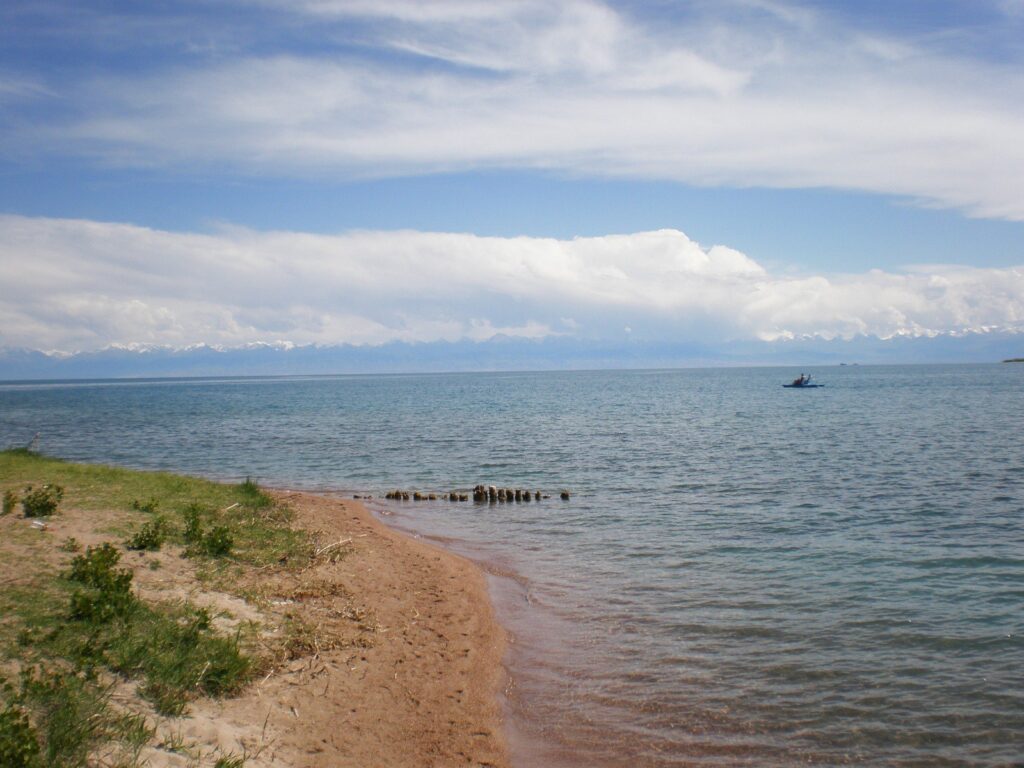
On December 2, Kyrgyzstan’s Cabinet of Ministers approved the Concept for the Sustainable Development of the Ecological and Economic System of Lake Issyk-Kul until 2030, along with a corresponding Action Plan. The initiative aims to protect the lake and its surrounding biosphere from intensifying environmental and human pressures, while ensuring long-term economic resilience in the region. Located in northeastern Kyrgyzstan, Issyk-Kul is the country’s largest lake, a unique ecological reserve, and one of Central Asia’s main tourist destinations. However, the newly adopted Concept reflects growing concerns over environmental degradation and the urgent need for coordinated management. Based in part on a government technical assessment, the strategy outlines a comprehensive roadmap to stabilize the lake’s ecosystem, modernize critical infrastructure, and mitigate climate risks. Climate Threats and Water Imbalance A key priority of the Concept is enhanced monitoring of Lake Issyk-Kul and its surrounding basin, particularly its water and energy resources. Climate change, including glacial retreat and reduced river inflow, has placed the basin under mounting stress. Of the 957 glaciers in the Issyk-Kul basin, covering 560.8 square kilometers, many are melting at an accelerated rate. Although roughly 120 rivers flow into the lake, only 80 reach it during summer due to irrigation withdrawals. To restore hydrological balance, the government plans to introduce modern irrigation technologies across 100,000 hectares of farmland. Officials estimate this could redirect up to 200 million cubic meters of water back into the lake each year. Between 1927 and 2003, Issyk-Kul’s water level fell by 2.75 meters, driven by declining inflow, outdated monitoring systems, and inefficient water use. The new Concept calls for restoring hydrological infrastructure, including groundwater observation stations and river hydro-posts. It also proposes strict accounting of irrigation water and a shift toward water-saving technologies in agriculture. Combatting Wastewater and Pollution Untreated wastewater remains one of the most severe threats to the lake’s ecosystem. Discharges from settlements, hotels, and tourism facilities have polluted the lake for years. The Concept aims to modernize wastewater treatment plants, expand sewage networks, and promote the reuse of treated water for irrigation purposes. Over the past five years, 47 new treatment facilities have been constructed in the Issyk-Kul region. The government now plans to reduce untreated wastewater discharge by 40%. Industrial Risks and Waste Management Environmental oversight of industrial activity, particularly at the Kumtor gold mine, the country’s largest, is another priority. The Concept calls for stricter regulation of hazardous waste and the rehabilitation of mining tailings to protect soil, groundwater, and the lake itself. Solid waste management is also being addressed. In October 2025, China’s Hunan Junxin Environmental Protection Co. Ltd. began building a waste-to-energy incineration plant in Karakol, the region’s administrative center. This will be the company’s third facility in Kyrgyzstan, following earlier projects in Bishkek and Osh. The introduction of separate waste collection systems is seen as key to reducing landfill pressure and minimizing environmental damage. To address air quality, the Concept promotes modernization of outdated heating systems, emission controls on industry and transport, and the adoption of...

Kazakhstan’s Ecology Ministry Says Saiga Population May Surpass Five Million in 2026

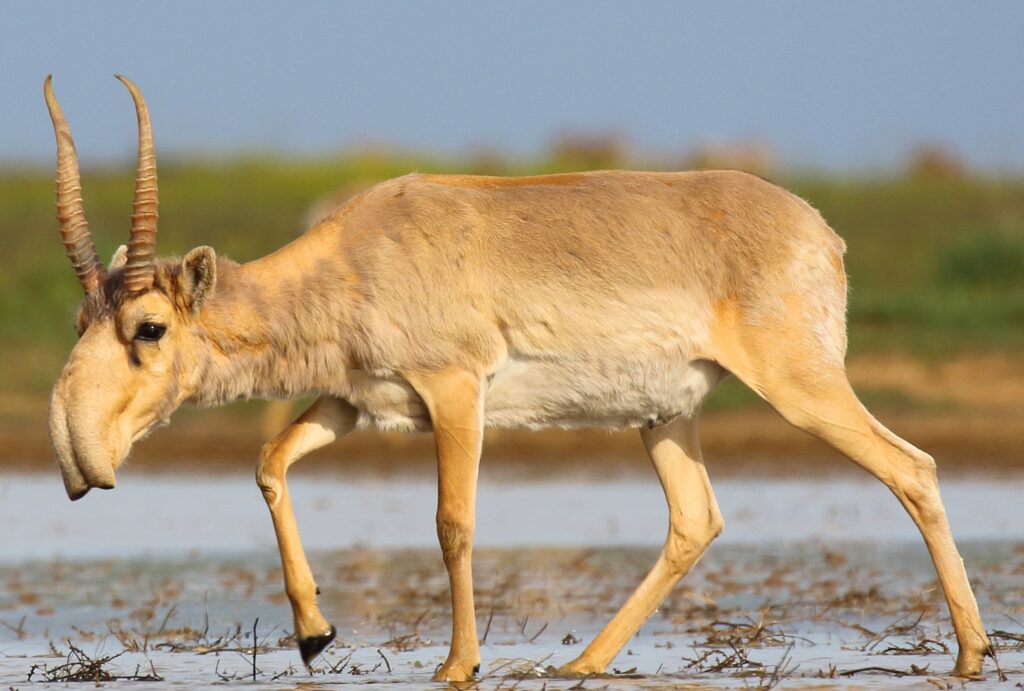
Kazakhstan's saiga antelope population, a key indicator of steppe ecosystem health and a globally vulnerable species, has reached unprecedented levels. According to the Ministry of Ecology and Natural Resources, the population now numbers approximately four million. Following the 2026 calving season, that figure could rise to nearly five million, cementing Kazakhstan’s role as the primary global habitat for the species. At a recent meeting on sustainable saiga population management, Minister of Ecology Yerlan Nyssanbayev highlighted the dramatic recovery of the species. In 2005, the population had dwindled to fewer than 40,000. Thanks to a nationwide hunting ban, increased protection measures, and targeted monitoring programs, Kazakhstan has achieved one of the most notable wildlife conservation success stories in recent history. However, the rapid rebound has brought new challenges. Ecologists warn that rising saiga densities are increasing competition with agricultural activities and contributing to pasture degradation. In response, the government has begun implementing controlled population management strategies. Between July 1 and November 30, 2025, around 196,000 saigas were culled, with carcasses processed by domestic enterprises. “The work was carried out in strict accordance with scientific recommendations,” Nyssanbayev stated. A separate concern is the trade in saiga derivatives, particularly male horns, which are in high demand in traditional Eastern medicine. According to the ministry, all horns are marked and securely stored by the Okhotzooprom State Enterprise. A digital traceability system, developed in partnership with Kazakhtelecom JSC, is currently being piloted to ensure full transparency in horn origin tracking. This technology, supported at the CITES International Conference, is under consideration as a mechanism for potentially easing current restrictions on derivative exports. First Deputy Prime Minister Roman Sklyar has instructed the Ministry of Ecology and other relevant agencies to finalize regulatory frameworks for labeling and circulation of saiga products, and to develop comprehensive measures for managing the growing population in 2026. The dramatic saiga recovery has also drawn international attention. As previously reported by The Times of Central Asia, Kazakhstan has agreed to transfer 1,500 saiga antelopes to China in 2026 to support efforts to reintroduce the species beyond its historical range in Central Asia.