• KGS/USD = 0.01144 0%
  • KZT/USD = 0.00215 0%
  • TJS/USD = 0.10641 0%
  • UZS/USD = 0.00008 0%
  • TMT/USD = 0.28530 0%
  • KGS/USD = 0.01144 0%
  • KZT/USD = 0.00215 0%
  • TJS/USD = 0.10641 0%
  • UZS/USD = 0.00008 0%
  • TMT/USD = 0.28530 0%
  • KGS/USD = 0.01144 0%
  • KZT/USD = 0.00215 0%
  • TJS/USD = 0.10641 0%
  • UZS/USD = 0.00008 0%
  • TMT/USD = 0.28530 0%
  • KGS/USD = 0.01144 0%
  • KZT/USD = 0.00215 0%
  • TJS/USD = 0.10641 0%
  • UZS/USD = 0.00008 0%
  • TMT/USD = 0.28530 0%
  • KGS/USD = 0.01144 0%
  • KZT/USD = 0.00215 0%
  • TJS/USD = 0.10641 0%
  • UZS/USD = 0.00008 0%
  • TMT/USD = 0.28530 0%
  • KGS/USD = 0.01144 0%
  • KZT/USD = 0.00215 0%
  • TJS/USD = 0.10641 0%
  • UZS/USD = 0.00008 0%
  • TMT/USD = 0.28530 0%
  • KGS/USD = 0.01144 0%
  • KZT/USD = 0.00215 0%
  • TJS/USD = 0.10641 0%
  • UZS/USD = 0.00008 0%
  • TMT/USD = 0.28530 0%
  • KGS/USD = 0.01144 0%
  • KZT/USD = 0.00215 0%
  • TJS/USD = 0.10641 0%
  • UZS/USD = 0.00008 0%
  • TMT/USD = 0.28530 0%

Viewing results 91 - 96 of 934

Mirziyoyev Orders Crackdown on Pollution and Waste

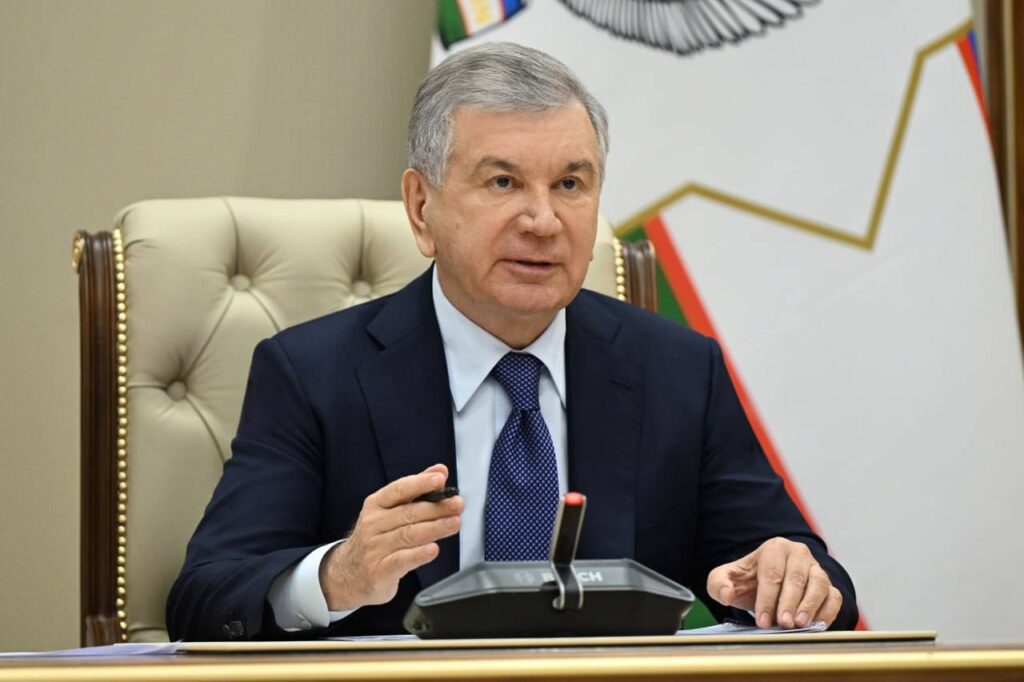
Uzbekistan is intensifying its environmental oversight as President Shavkat Mirziyoyev convened a high-level government meeting on December 1 to address mounting pollution, delays in waste-to-energy infrastructure, and preparedness for the winter season. The session highlighted the rising social and economic risks of air-quality deterioration in Tashkent, and chronic failures in waste management nationwide. Officials attributed recent spikes in air pollution in the capital not only to industrial emissions and construction activity but also to a severe cold anticyclone blanketing much of the country. This weather system caused high atmospheric pressure and temperature inversions, trapping fine particulate matter and inhibiting air circulation. In response, authorities launched inspections of construction sites, greenhouses, and vehicle emissions, while emergency measures, such as watering streets, cleaning canals, and activating fountains, were deployed to stabilize air quality. Mirziyoyev ordered regional officials to enforce stricter environmental compliance, eliminate violations promptly, and take proactive steps to prevent further degradation. He emphasized that growing public frustration demands “decisive and coordinated action” from all levels of government. Stalled Waste-to-Energy Projects Under Scrutiny Waste-to-energy development, a cornerstone of Uzbekistan’s sustainability agenda, also came under fire. Although $933 million in investment has been pledged, several regions have yet to launch projects. Existing facilities in Andijan, Namangan, Ferghana, Samarkand, Kashkadarya, and Tashkent continue to face critical infrastructure deficiencies, including inadequate roads, electricity, and water supply. Mirziyoyev instructed officials to remove these bottlenecks and ensure the nationwide rollout of waste-to-energy projects in 2026. The government has set a target of reducing household waste disposal areas by 50% by 2030. To date, 47 landfill sites have been closed and rehabilitated, restoring over 240 hectares of land for environmental use. Yet the majority of Uzbekistan’s 132 active landfills still lack protective barriers, green belts, and basic safety systems. The president ordered the transformation of these sites into “environmentally safe zones” and called for greater public engagement through environmental education. Starting in 2026, the government will allocate at least 150 billion soums annually from the state budget for this initiative. Hazardous Waste and Digital Tracking Industrial and hazardous waste management also remains underdeveloped. Processing rates have improved but still fall short of international norms. Mirziyoyev demanded a full inventory of hazardous waste generation and storage sites and directed each region to launch its own recycling or disposal initiatives. A unified digital platform will be introduced to monitor hazardous waste nationwide. Winter Readiness and Public Safety Winter preparedness was another major focus. Persistent issues with liquefied gas distribution prompted the president to order operational reforms and faster responses to citizen complaints. Authorities reported substandard repairs along 1,800 kilometers of power lines; the Prosecutor General’s Office will investigate, and the Energy Inspectorate has been tasked with strengthening oversight to ensure stable electricity supply during the winter. Mirziyoyev also called for updated fire-safety standards in residential buildings, including a ban on highly flammable façade materials. Presidential Decree and Long-Term Strategy The December 1 meeting followed a presidential decree issued on November 25 introducing emergency environmental measures and creating a special...
Samarkand’s CoP20 Opens with High-Stakes Debates on Wildlife Trade and Species Protection

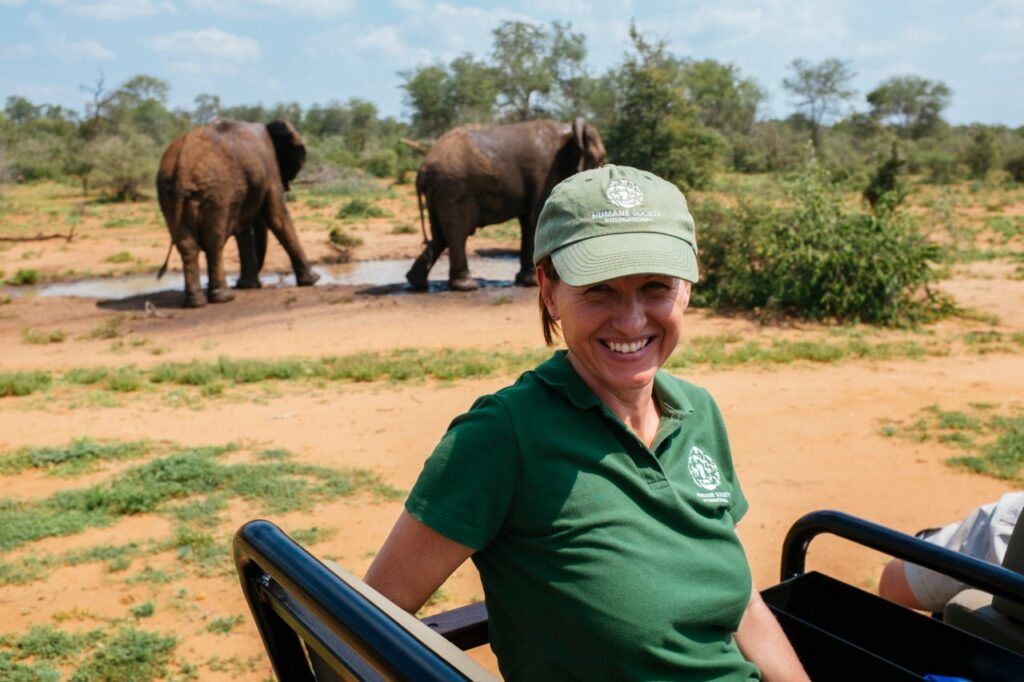
The world’s largest conference on wildlife trade opened last week in Samarkand, drawing nearly 3,000 delegates to Uzbekistan for two weeks of critical negotiations that could reshape global conservation policy. The 20th meeting of the Conference of the Parties to the Convention on International Trade in Endangered Species of Wild Fauna and Flora (CITES CoP20) is being held in Central Asia for the first time, a region increasingly impacted by transcontinental wildlife trafficking routes connecting Africa and Asia. Hosted by Uzbekistan’s National Committee on Ecology and Climate Change, CoP20 carries the theme “CITES at 50 in Samarkand: Bridging Nature and People,” commemorating five decades of global conservation under the Convention and echoing the city’s legacy as a historic crossroads of commerce and ideas. One of the central issues dominating this year’s meeting is a series of proposals concerning African megafauna, particularly elephants, rhinos, and giraffes. These proposals, submitted by several African range states, challenge the extent to which legal trade in vulnerable species should be permitted, given decades of poaching and habitat degradation. Audrey Delsink, Senior Director at Humane World for Animals, warned of the dangers these proposals pose. “All the species proposals concerning African megafauna are highly concerning because of the impact they will have on the respective species and the repercussions on illegal trade should the proposals be accepted,” she told The Times of Central Asia. Among the most controversial is a joint proposal by Namibia, South Africa, Tanzania, and Zimbabwe to remove most southern African giraffe populations from CITES Appendix II. Delsink cautioned that this would create a fragmented regulatory regime, complicating enforcement. “It is very difficult to differentiate bones and pelts of the different species and subspecies, making it easy to launder endangered giraffe species through the system,” she said. With wild giraffe populations estimated at fewer than 120,000, any weakening of controls could prove disastrous. Similar concerns surround Namibia’s proposal to sell ivory from registered government stockpiles. Delsink warned that the legal ivory trade has historically masked illicit flows and could trigger renewed poaching. “Legal trade provides a cover for illegal ivory and fuels illegal trade, poaching, and consumer demand,” she said, noting that CITES members have rejected such proposals for nearly two decades. Central Asian countries, increasingly used as transit corridors for high-value wildlife contraband, are becoming key players in enforcement. Smuggling networks exploit Eurasian air, rail, and road links to move products such as ivory, rhino horn, and exotic animals. Delsink highlighted the “Samarkand Declaration and Action Plan (2025-2032),” signed this week by Kazakhstan, Kyrgyzstan, Tajikistan, Turkmenistan, and Uzbekistan, as a major step toward regional coordination. The agreement commits signatories to harmonize laws and improve intelligence-sharing mechanisms. [caption id="attachment_40166" align="aligncenter" width="2560"] Image: National Committee on Ecology of Uzbekistan[/caption] “Intelligence-led operations and rapid information exchange between agencies can disrupt organized crime networks that exploit porous borders,” Delsink said. She also underscored the need for customs modernization and officer training, supported by organizations such as TRAFFIC and the UN Office on Drugs and Crime. Beyond...

UN Meeting on Wildlife Trade Rules on Saiga, Striped Hyena

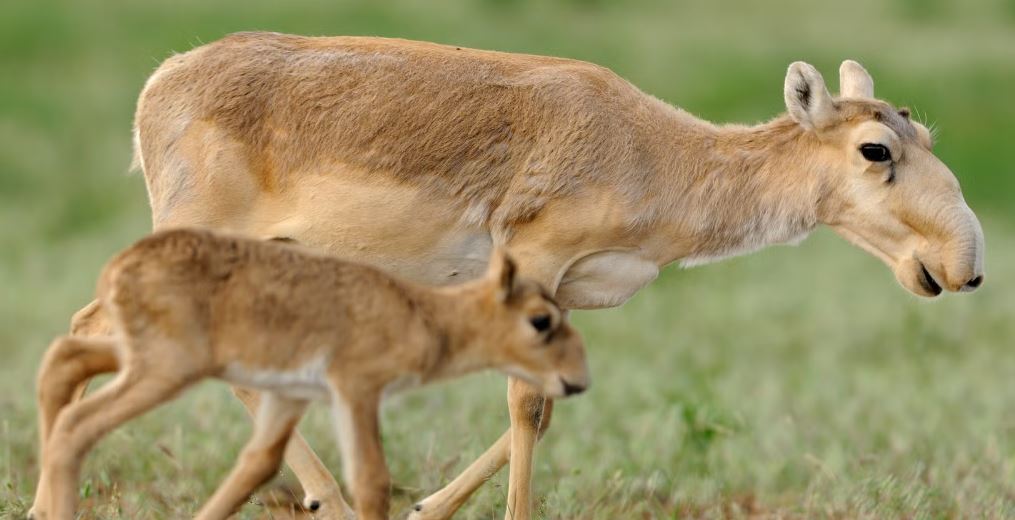
Delegates to a United Nations meeting on global wildlife commerce have approved a proposal by Kazakhstan to loosen trade restrictions on the saiga antelope, while rejecting a move by Tajikistan to tighten protections for the striped hyena. The decisions came in Samarkand, Uzbekistan, where several thousand representatives from around the world have gathered for a meeting of the Convention on International Trade in Endangered Species of Wild Fauna and Flora, or CITES. The conference, which runs from November 24 to December 5, was last held in Panama in 2022. The decision to relax trade in saigas, whose horns are used in traditional medicine, is a response to the spectacular recovery of the species after it was close to extinction. Kazakhstan presided over this conservation success story, and the CITES decision amends a “zero export quota” to exclude saigas only from populations Kazakhstan. A CITES committee adopted the proposal by a vote of 111 in favor, 7 against, and 14 abstentions, reported the Earth Negotiations Bulletin, which covers U.N. environment and development negotiations. A proposal needs a two-thirds majority vote to be approved. More saiga safeguards were added in an amendment backed by Britain, the European Union and the United States, and the situation will be reviewed at the next CITES meeting in a few years. Mongolia, which has a smaller, more vulnerable population of saigas, had opposed Kazakhstan’s initiative. Some groups, including the New York-based Wildlife Conservation Society, said the reopening of commercial trade in Kazakhstan’s saigas could increase consumer demand, promote poaching and put pressure on enforcement mechanisms. In the case of the striped hyena, Tajikistan unsuccessfully sought to persuade delegates to the wildlife trade meeting to place the species on Appendix I, a CITES designation that would effectively bar trade aside from with a few exemptions. The species, labeled “near threatened” by the global IUCN Red List of Threatened Species, is currently on the much less restrictive Appendix III. Algeria, Iran and Kazakhstan were among countries that backed Tajikistan’s proposal, while Britain, the European Union, Zambia and Tanzania said the proposal doesn’t meet Appendix I criteria, according to the Earth Negotiations Bulletin. A CITES committee rejected Tajikistan’s proposal in “a secret ballot of 75 for, 47 against and 13 abstentions,” the bulletin said, indicating that proponents did not pass the two-thirds threshold. The striped hyena has a vast range that includes Africa, the Middle East, and Central Asia, but there is difficulty in obtaining data on the solitary, noctural species. Additionally, while habitat degradation and human-wildlife conflict are factors in the population’s decline, uncertainty over how much the illegal trade in the striped hyena is affecting its numbers may have raised questions about whether Tajikistan’s proposal was justified.  

Kazakhstan Trades Electricity for Water in Bid to Mitigate Summer Drought Risks

Central Asia is entering a new phase in the management of its water-energy nexus, moving from declarations to practical coordination. A trilateral protocol signed in Almaty by Kazakhstan, Kyrgyzstan, and Uzbekistan marked a significant step toward stabilizing the region’s water regime amid escalating climate risks. Brokered under Kazakhstan’s chairmanship, the agreement aims to balance the load on the Toktogul Reservoir, the main regulating structure of the Syr Darya basin. Kyrgyzstan typically increases winter water discharges to generate electricity, which reduces irrigation water availability downstream during summer. Under the new deal, Kazakhstan and Uzbekistan will supply Kyrgyzstan with electricity during winter, in return for Kyrgyzstan's commitment to store water and ensure its release during the 2026 growing season. The Almaty Protocol complements the existing plan for filling the Shardara Reservoir, which aims to accumulate 11 cubic kilometers of water by April 1, 2026. Achieving this target hinges on Toktogul’s operations. Without external support, Kyrgyzstan’s energy infrastructure would struggle to meet the requirement. Supplemental electricity from Astana and Tashkent thus forms the economic backbone of this arrangement. Longstanding disparities in regional water and energy needs remain a source of instability. Kyrgyzstan requires water in winter for hydropower, while Kazakhstan, especially its Turkestan and Kyzylorda regions, relies on it in summer for irrigation. Recent water shortages have pushed the countries toward more pragmatic coordination. Uzbekistan has committed to managing the technical conditions for transit and balancing inter-system flows. Despite facing its own energy shortfall and aging infrastructure, Kazakhstan is participating in regional stabilization to avert socio-economic risks in its southern provinces. External factors are adding urgency to regional cooperation. Afghanistan’s construction of the Qosh-Tepa Canal is expected to reduce the Amu Darya’s water balance by 20-25%. Although Uzbekistan is most directly affected, the resulting pressure on water systems could also impact the Syr Darya, on which southern Kazakhstan heavily depends. Internally, Kazakhstan faces persistent challenges. Water loss during transport reaches up to 40-50% due to outdated canal infrastructure. Rice cultivation continues in the water-intensive Kyzylorda region, while water-saving technologies are used on only about 30% of irrigated land. These new agreements suggest that Central Asian countries can rapidly implement collective mechanisms in response to shared threats. In effect, elements of a regional Water and Energy Consortium are already operating in a de facto, ad hoc manner. Water, energy, and food security are increasingly seen as interconnected resources requiring coordinated governance. For Kazakhstan, the priority now is to institutionalize these provisional agreements. If the “electricity-for-water” model can be formalized into a durable framework, it could stand as one of the most significant accomplishments of the country’s regional diplomacy.

Turkmenistan Identified as World’s Largest Source of Methane Super-Emitters

Turkmenistan has emerged as the top global source of major methane emissions in the oil and gas sector, according to new data published by the U.S.-based Stop Methane project. The findings, widely reported by Central Asian media, are based on satellite observations collected between January 1 and November 12 of this year. Researchers at the University of California, Los Angeles, which leads the project, compiled the ranking using satellite data to identify sites with the highest methane emissions over specific time intervals. The list includes locations where emissions ranged from 3.7 to 10 tons per hour, levels deemed significant contributors to atmospheric pollution. Industrial facilities in Turkmenistan, particularly near Esenguly and Turkmenabat in the Balkan province, accounted for the majority of high-emission events. Out of the 25 entries in the ranking, 17 are located in Turkmenistan, far more than any other country. The remaining positions are held by a handful of other states, including Venezuela, Iran, Pakistan, and the United States. Decades-old Soviet-era infrastructure is widely cited by independent energy analysts as one of the main reasons Turkmenistan dominates global methane-leak rankings. Much of the country’s gas production network relies on older pipelines, compressors, and separation units that were never modernized to international leak-prevention standards. Because methane is colorless and odorless at industrial concentrations, these failures can persist unnoticed for long periods without satellite monitoring. Experts note that relatively inexpensive upgrades - such as replacing valves, improving maintenance, and installing continuous monitoring - could sharply reduce emissions if implemented. Stop Methane analysts based their assessment on over 3,000 methane plumes detected at approximately 2,000 oil and gas sites worldwide. The data was collected using the U.S.-operated Tanager-1 satellite, which monitors key oil and gas extraction zones. The satellite’s capabilities allow for the detection of large leaks that are often invisible from the ground. The surge in methane detection over the past two years reflects not a sudden rise in leaks but a leap in the resolution of satellite instruments now able to spot plumes previously undetectable. Earlier monitoring systems could identify only massive blowouts, whereas newer platforms - including Tanager-1 and NASA’s EMIT - can map medium-sized leaks in near-real time. This technological shift has revealed a methane footprint far larger than governments and companies had reported, making emissions visible to the international community and accelerating calls for transparency and mitigation. The organization highlighted the serious environmental impact of methane, emphasizing its role in both air pollution and climate change. Beyond the climate implications, methane leaks represent a direct economic loss for Turkmenistan. The International Energy Agency estimates that most methane emissions in the oil and gas sector can be avoided at little or no net cost because the captured gas can be sold. For a country whose budget relies heavily on gas exports, the volume of methane escaping from super-emitter sites translates into millions of dollars of lost revenue annually. Addressing these leaks, therefore, offers both environmental and fiscal benefits. For context, a site emitting five tons of methane...

Tashkent Launches Emergency Measures as Air Pollution Worsens

Tashkent is experiencing a significant decline in air quality, prompting President Shavkat Mirziyoyev to sign a decree on November 25 implementing urgent environmental measures. According to the presidential press service, the decree establishes a special commission to take immediate steps to stabilize the situation. The decision follows a high-level meeting on November 24 chaired by Saida Mirziyoyeva, head of the Presidential Administration, to discuss “urgent measures to improve the ecological situation in Tashkent.” Experts at the meeting presented a series of short, medium, and long-term proposals, ranging from immediate restrictions to structural reforms aimed at preventing future pollution spikes. The new plan includes enhanced environmental monitoring, stricter controls on major polluters, tighter regulations for construction sites, and citywide greening initiatives. Authorities also intend to develop a modern air quality assessment system supported by new scientific infrastructure. A key component of the initiative is the establishment of a specialized laboratory under the State Committee for Ecology to analyze sources of PM2.5 pollution, one of the primary contributors to the current smog. To expedite the process, the decree exempts a broad range of imported equipment from customs duties. These exemptions apply to automated monitoring stations, dust-gas filtration systems, localized water-treatment devices, and thousands of quartz filters required for sampling. The measure also extends to household air purifiers brought into the country by individuals and businesses, as demand for such devices has surged. In response to the prolonged dry conditions, the Muslim Board of Uzbekistan announced the performance of istisqo, a traditional Islamic prayer for rain, to be held on November 28 following Friday prayers in mosques nationwide. “In Islamic history, istisqo has been performed during periods of drought, and its benefits have been noted in hadith literature,” the Board stated. Teachers and students from Islamic institutions will also recite the entire Sahih of Imam al-Bukhari before the prayer. This call for collective prayer comes as climate change continues to intensify environmental stress in Uzbekistan. According to a newly released Atlas of Environmental Change by the UN Environment Programme (UNEP), Uzbekistan’s average annual temperature has risen by 1.6°C over the past 60 years, nearly three times the global average of 0.6°C. In the Aral Sea region, warming has reached 1.8 to 2.5°C, contributing to more frequent droughts, particularly in summer and autumn, and placing further strain on already limited water resources. UNEP describes Uzbekistan’s water resources as “among the country’s most valuable and vulnerable,” noting that they depend almost entirely on sources located outside its borders. The atlas highlights the increasing importance of integrated water-resource management and cross-border cooperation, which officials say have already helped address local water-security issues. The agency also points to the adoption of water-saving technologies such as drip irrigation, which are critical to sustaining the country’s irrigated agricultural sector, the backbone of many rural economies. Despite demographic and environmental pressures, the report finds that Uzbekistan has achieved near self-sufficiency in food production. Reforestation is also a national priority. UNEP praises the Yashil Makon (Green Space) initiative, launched in 2021...