• KGS/USD = 0.01144 0%
  • KZT/USD = 0.00211 0%
  • TJS/USD = 0.10523 0%
  • UZS/USD = 0.00008 0%
  • TMT/USD = 0.28530 0%
  • KGS/USD = 0.01144 0%
  • KZT/USD = 0.00211 0%
  • TJS/USD = 0.10523 0%
  • UZS/USD = 0.00008 0%
  • TMT/USD = 0.28530 0%
  • KGS/USD = 0.01144 0%
  • KZT/USD = 0.00211 0%
  • TJS/USD = 0.10523 0%
  • UZS/USD = 0.00008 0%
  • TMT/USD = 0.28530 0%
  • KGS/USD = 0.01144 0%
  • KZT/USD = 0.00211 0%
  • TJS/USD = 0.10523 0%
  • UZS/USD = 0.00008 0%
  • TMT/USD = 0.28530 0%
  • KGS/USD = 0.01144 0%
  • KZT/USD = 0.00211 0%
  • TJS/USD = 0.10523 0%
  • UZS/USD = 0.00008 0%
  • TMT/USD = 0.28530 0%
  • KGS/USD = 0.01144 0%
  • KZT/USD = 0.00211 0%
  • TJS/USD = 0.10523 0%
  • UZS/USD = 0.00008 0%
  • TMT/USD = 0.28530 0%
  • KGS/USD = 0.01144 0%
  • KZT/USD = 0.00211 0%
  • TJS/USD = 0.10523 0%
  • UZS/USD = 0.00008 0%
  • TMT/USD = 0.28530 0%
  • KGS/USD = 0.01144 0%
  • KZT/USD = 0.00211 0%
  • TJS/USD = 0.10523 0%
  • UZS/USD = 0.00008 0%
  • TMT/USD = 0.28530 0%

Viewing results 781 - 786 of 3379

Turkmenistan Tightens Internet Blocks to Promote State-Controlled VPNs

Internet restrictions in Turkmenistan have intensified sharply in recent weeks, according to sources who spoke with turkmen.news. Authorities have reportedly expanded the national IP blacklist by adding numerous /16 subnets, each covering over 65,000 IP addresses. While such sweeping blocks might appear politically motivated, insiders claim the real motive is commercial: corrupt officials are using the restrictions to market and sell VPN services and “whitelist” access they control themselves. In July 2024, Turkmen authorities briefly restored access to around 3 billion previously blocked IP addresses, raising hopes of a more open digital environment and a boost to the stagnant online economy. However, that reprieve proved temporary. The blocks soon returned, initially targeting smaller /24 subnets (255 IP addresses each). This summer, the government's cybersecurity department escalated efforts by blocking entire /16 subnets, cutting off hundreds of thousands of websites in a matter of weeks. Restrictions Without Justification Turkmenistan already ranks among the most digitally isolated nations. Independent media, global social networks, and any platforms perceived to host criticism of the government have long been inaccessible. However, the latest wave of blocks is not driven by political considerations, as most politically sensitive platforms were already restricted. Instead, the scale and targets of the new blocks suggest other motivations. According to turkmen.news, even benign and essential online services, such as update servers for antivirus software like Bitdefender and some Google utilities, have been caught in the dragnet. Experts warn that this poses a growing cybersecurity risk in a country with limited digital literacy and inadequate access to software updates. Selling Access in a Closed System Sources allege that Turkmen officials are using the crackdown to corner the market for virtual private networks. VPN keys now cost around 1,000 manats (roughly $50) per month, while access to a whitelist, ensuring uninterrupted connectivity, can run up to $2,000 monthly. The officials reportedly behind the scheme are said to be deliberately blocking alternatives to force users into purchasing their products. Last year, turkmen.news identified several figures allegedly involved in this scheme: Maksat Geldyev, Allanazar Kulnazarov, and Didar Seyidov. While these individuals reportedly profit from the artificial scarcity they create, the broader economy suffers. Analysts estimate that Turkmenistan loses millions of dollars daily due to the constraints on digital development, which is a key factor in modern GDP growth. Official Denials Amid International Scrutiny Despite mounting evidence, the Turkmen government continues to deny the severity of the situation. The Foreign Ministry recently issued a statement condemning Ukrainian television channel FreeDom for what it described as “biased and false” coverage of the country’s internet restrictions. Nonetheless, experts warn that unless the government reverses course, Turkmenistan’s digital isolation will continue to hinder economic development, deepen cybersecurity vulnerabilities, and further disconnect its population from the global information space.

Tennis Revolution in Kazakhstan: How Systemic Investment Is Creating Champions

Over the past decade, Kazakhstan has evolved from a promising tennis nation into a formidable contender on the global stage. Elena Rybakina’s Wimbledon triumph, Alexander Bublik’s steady rise, and a new wave of top-ranked juniors are no coincidence; they are the product of a long-term, meticulously executed strategy. In an interview with The Times of Central Asia, Yuriy Polskiy, President of the Asian Tennis Federation and Vice President of the Kazakhstan Tennis Federation (KTF), explains how strategic investment, public-private partnerships, and a grassroots approach have fundamentally reshaped the country's tennis landscape. TCA: Kazakhstani tennis players have recently made headlines at top international tournaments. How would you assess Kazakhstan’s current standing on the global tennis map? Are the successes of Elena Rybakina and Alexander Bublik, as well as the emergence of top juniors, the result of systemic work or just coincidence? Polskiy: Luck plays a role in any athlete’s career, but it's fleeting. Kazakhstan’s results, among both professionals and juniors, are consistent, which points to a system that delivers. Over the past decade, we’ve seen numerous players ranked in the world’s top 30: Shvedova, Voskoboeva, Kukushkin, Golubev, Korolev, Nedovyesov, and more recently, Diyas, Putintseva, Danilina, Bublik, and, of course, Rybakina. Together, they’ve secured four Grand Slam titles, reached multiple singles and doubles finals, and won WTA 1000, 500, and ATP/WTA 250 tournaments. Among the juniors, talents like Dastanbek Tashbulatov, Amir Omarkhanov, and Sonya Zhienbayeva have ranked in the ITF Top 5 and Top 20. Our Under-14 and Under-18 national teams have reached the world’s top four and consistently defeated traditional powerhouses such as Australia, France, Italy, and Argentina. These results underscore the strength of Kazakhstan’s national coaching program and the Federation’s long-term vision. In 2024, Kazakhstan had six players in the ITF junior Top 100, including three in the Top 50. Seven more under-14s were ranked in the Tennis Europe Top 100, more than Italy, currently the leader in that category. Notably, all 13 of these top-ranked juniors were born and raised in Kazakhstan, highlighting the success of a nationwide, structured development model that blends public support with private initiative. TCA: What is the Federation’s strategic outlook for the next five to ten years? How extensive is the infrastructure, and are there plans to expand into smaller cities? Polskiy: Since 2007, when businessman and philanthropist Bulat Utemuratov became the KTF president, Kazakhstan has built 38 major tennis centers, each with at least six courts, totaling 364 hard and clay courts nationwide. Over the past 17 years, more than $150 million has been invested in infrastructure. Hundreds of coaches have been trained, particularly for early childhood programs. The number of certified ITF coaches has nearly doubled in five years, now surpassing 400. Infrastructure growth has significantly reduced training costs: hourly court rental has dropped from $50 in 2007 to just $10 today. Facilities now exist in 16 of the 18 regional capitals and smaller cities like Lisakovsk. Major complexes in Astana, Almaty, Shymkent, Karaganda, Aktobe, and Ust-Kamenogorsk each include six indoor and...

Kazakhstan Reaffirms OPEC+ Commitment While Seeking to Renegotiate Investor Contracts

Kazakhstan has confirmed it will remain a part of the OPEC+ agreement on oil production cuts, despite persistently exceeding its allocated quotas. Prime Minister Olzhas Bektenov made the announcement at a press conference on Tuesday, while also revealing that the government is initiating negotiations to revise production sharing agreements (PSAs) with foreign investors operating in the country’s largest oil and gas fields. The OPEC+ agreement, an alliance between OPEC members and non-OPEC oil-producing countries, including Kazakhstan, aims to coordinate output to stabilize global energy markets. Under the current deal, signed in December 2023, member states voluntarily committed to cutting combined oil production by 2.17 million barrels per day through the end of 2026. However, Kazakhstan has consistently exceeded its quota in recent months. According to the Ministry of Energy, oil exports in June 2025 reached 1.86 million barrels per day, 80,000 more than in May and nearly 500,000 barrels above the country’s voluntary limit. The surge is primarily attributed to the expansion of the Tengiz oil field, one of Kazakhstan’s largest energy projects. The $49 billion Future Growth Project is already operational and is expected to boost annual output by 12 million tons, or roughly 260,000 barrels per day, an increase of nearly 40%. Acknowledging the challenges of meeting OPEC+ targets, Bektenov emphasized Kazakhstan’s continued commitment to the deal: “We are not considering withdrawing from the OPEC+ agreement, as we believe it is useful and contributes to stability in the oil market,” Bektenov stated. “We will strive to fulfill our obligations, but with national interests in mind.” At the same time, Bektenov underscored the government’s limited control over production levels at key fields such as Tengiz, Karachaganak, and Kashagan, where foreign investors hold substantial stakes. “We cannot demand that our partners reduce production, as they have made significant investments and are counting on a return,” he said. To address this issue, Kazakhstan has begun discussions with investors to revise existing PSAs, aiming to secure a greater share of national revenues from energy production. “There is a view that the country’s interests are not fully reflected in the existing agreements. We are starting a dialogue on new agreements for a new period,” Bektenov said. “At the same time, we will act carefully to maintain the investment climate.” This dual strategy, upholding international commitments while seeking more favorable terms, illustrates Kazakhstan’s intent to balance global cooperation with national economic priorities. PSAs for the country’s three main oil fields are due to expire in the coming decades: Tengiz in 2033, Karachaganak in 2037, and Kashagan in 2041. Together, these fields account for approximately two-thirds of Kazakhstan’s total oil output, 67 million out of 90 million tons annually. As previously reported by The Times of Central Asia, President Kassym-Jomart Tokayev instructed the government in January to begin seeking revisions to the PSA terms well ahead of their expiration.

Melting Mountains, Drying Futures: Central Asia Confronts Water Emergency

Central Asian countries are mobilizing against an emerging water crisis as a United Nations report highlights the vulnerability of mountain water systems to climate change. Identifying ranges like the Tien Shan and the Pamirs, the UN World Water Development Report 2025 – Mountains and Glaciers: Water Towers – warns that rapid glacier melt and erratic snowfall are threatening vital freshwater supplies worldwide. According to the report, mountains provide up to 60% of the world’s annual freshwater flows, with over two billion people depending directly on water from mountain sources. This risk is particularly acute in Central Asia: a UN drought outlook noted that rising temperatures and shrinking snowpack in the high mountains of Tajikistan and Kyrgyzstan are accelerating glacier retreat, posing a “long-term threat to the region’s water security.” Half of rural mountain communities in developing countries already face food insecurity, and receding glaciers could impact two-thirds of all irrigated agriculture globally – a dire scenario for Central Asia’s irrigation-dependent economies. Rivers like the Amu Darya and Syr Darya are fed by glacier runoff and support downstream agriculture, hydropower, and municipal needs in Uzbekistan, Kazakhstan, and Turkmenistan. But climate-driven glacial retreat, inefficient irrigation, and aging infrastructure have already pushed the region toward a breaking point. [caption id="attachment_33952" align="aligncenter" width="2560"] Lake Karakul in Tajikistan is expanding due to melting glaciers; image: TCA, Stephen M. Bland[/caption] Kazakhstan Steps Up Leading the regional response, Kazakhstan has launched sweeping reforms to modernize its water infrastructure and governance. The country has committed to building 42 new reservoirs, refurbishing 14,000 kilometers of irrigation canals, and investing heavily in digital water monitoring and conservation. Established in September 2023, the Ministry of Water Resources and Irrigation is coordinating the overhaul under an updated national Water Code. The government has also launched an integrated water portal, hydro.gov.kz, and pledged to digitize more than 3,500 kilometers of canals for precise flow tracking. In an address at the Astana International Forum, Deputy Prime Minister Kanat Bozumbayev framed water as a “powerful driver of cooperation, sustainable development and regional stability,” urging closer regional coordination. Kazakhstan is also leading environmental restoration efforts. As the current chair of the International Fund for Saving the Aral Sea (IFAS), it is overseeing projects to rehabilitate the North Aral Sea, including raising the Kokaral Dam to restore water levels and fisheries. In 2024 alone, local irrigation reforms in Kyzylorda saved 200 million cubic meters of water, which was redirected toward the shrinking sea. [caption id="attachment_12017" align="aligncenter" width="2560"] The Kokaral Dam in Kazakhstan; image: TCA, Stephen M. Bland[/caption] International Support and Financing Kazakhstan’s strategy has been backed by a plethora of international partners. The European Bank for Reconstruction and Development (EBRD) has financed over €255 million in water and wastewater projects in Kazakhstan, including a €96.4 million sovereign loan for a new treatment plant in Aktobe. Meanwhile, the Eurasian Development Bank (EDB) and UNDP have launched a regional partnership to expand access to modern irrigation, digitize water flows, and establish training centers. “We must act very quickly and...

Trump’s Tariffs May Hurt Kazakhstan’s Economy, Expert Warns

On July 7, U.S. President Donald Trump informed Kazakh President Kassym-Jomart Tokayev that Washington will impose a 25% tariff on goods from Kazakhstan, effective August 1, 2025. Tokayev responded on July 10, affirming Kazakhstan’s commitment to "developing fair, predictable, and mutually beneficial trade relations" with the United States. He emphasized Kazakhstan’s readiness for “constructive dialogue aimed at finding a rational solution to trade issues,” expressing his hope that a compromise will be reached. While officials and analysts in Kazakhstan have downplayed the potential economic impact, citing limited trade volume and the exclusion of key exports such as oil and metals, economist Olzhas Baidildinov has challenged this optimism. In an interview with The Times of Central Asia, he outlines the potential long-term damage to Kazakhstan's economy and investment climate. TCA: What is the situation following the announcement of the increased tariffs? Baidildinov: The immediate damage is minimal, which is why many in the media and expert circles remain optimistic. Kazakhstan exports about $2 billion in goods to the U.S., of which $1.8 billion are raw materials, oil, metals, rare earth elements, silver, and precious metals, all previously exempt from duties. The remaining $200 million, mostly manufactured goods and agricultural products, will now be subject to the 25% tariff. Though small in macroeconomic terms, this is a significant blow to exporters and a deterrent for future investors. TCA: What are the broader implications of these tariffs for Kazakhstan? Baidildinov: The most serious consequence will be on investment. Domestic experts often lack a long-term view, rarely looking beyond a few months. But consider this: if you were an investor planning to produce in Kazakhstan and export to the U.S., would you proceed under these conditions? A 25% tariff today could become 50% or 100% tomorrow. This unpredictability will scare off potential investors. Trump’s message is clear: produce in the U.S. or face penalties. For Kazakhstan, there is little upside. The country’s oil and gas sector has made strides in localizing production of goods that could replace Western imports, but these products will now face higher entry barriers into the U.S. market. American companies may also become more cautious about engaging with Kazakh suppliers. More broadly, this signals that the U.S. does not regard Kazakhstan as a partner in high-tech manufacturing. Even American firms considering setting up production in Kazakhstan to benefit from low costs would now find the economics less favorable. Other countries, including EU members, may follow the U.S. example, reinforcing the perception of Kazakhstan as merely a source of raw materials. TCA: Do you expect further pressure from the U.S. or its allies? Baidildinov: This marks the beginning of a global tariff war. Other countries will likely adopt similar protectionist policies to defend their industries, especially in light of escalating U.S.-China trade tensions. European manufacturers, for example, may pressure their governments to implement similar tariffs. This trend could shape global trade for years to come, with Kazakhstan potentially caught in the crossfire. TCA: In your opinion, is the U.S. tariff increase...

Ancient Khuttal in Tajikistan Added to UNESCO World Heritage List

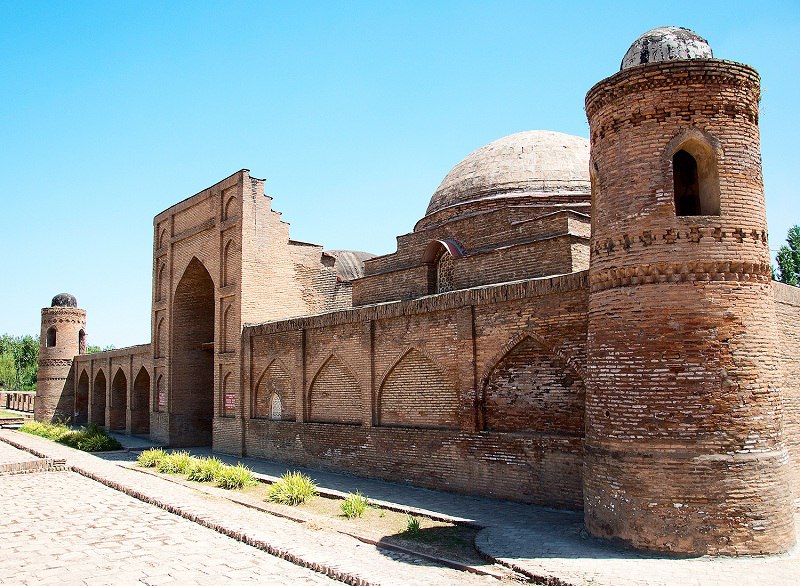
On July 12, Tajikistan celebrated a major cultural milestone: at the 47th session of the UNESCO World Heritage Committee in Paris, the ancient monuments of Khuttal were officially inscribed on the UNESCO World Heritage List. This marks the fifth site in Tajikistan to receive such international recognition. A Historical Crossroads of Culture and Architecture The newly recognized World Heritage site encompasses 11 archaeological and architectural monuments across the districts of Vose, Danghara, Jaloliddin Balkhi, Farkhor, and Khovaling in Tajikistan’s Khatlon region. Among these are Kalai Khulbuk, Adzhina-Teppa, Khishtepa, Shakhratepa, Manzarteppa, the Mausoleum of Mavlon Tojiddin, and the ancient fortresses of Zoli Zard and Kofirkala. The Kalai Khulbuk complex, once the residence of Khuttal’s rulers, is of particular historical importance. The medieval state of Khuttal flourished from the 7th to the 16th century in southern Tajikistan and played a key role in cross-border trade along the Great Silk Road. According to UNESCO, the monuments “illustrate the diversity of the region's culture and its significant role in the exchange of cultural values.” At its peak, Khuttal included up to 12 cities. Its capital, Khulbuk, featured advanced infrastructure in the 9th-12th centuries, including a palace, citadel, and urban systems well ahead of their time. As Tajik archaeologist Tatyana Filimonova has noted, “the urban culture of Hulbuk was several centuries ahead of Europe,” citing innovations such as centralized heating, sewage systems, and water supply. The listed monuments span various historical periods and artistic traditions from the 7th-century Buddhist monastery Ajina-Teppa, where a 13-meter-long reclining Buddha statue was discovered, to the intricately carved gancha and frescoes of the Hulbuk Palace. Other highlights include Zoli Zard, believed to be the legendary fortress of the Persian hero Rustam, and Manzarteppa, where archaeological excavations continue to yield pottery fragments and cultural artifacts. A Collaborative Effort in Preservation and Recognition The nomination of Khuttal began in 2023, spearheaded by the Ministry of Foreign Affairs and the Ministry of Culture of Tajikistan, in collaboration with the Institute of History of the National Academy of Sciences, the International Institute for Central Asian Studies, and the CAAL project at University College London. UNESCO commended the scientific rigor and collaborative approach of the submission. Restoration efforts have been ongoing since the early 2000s. Kalai Khulbuk was opened to visitors in 2006, and Ajina-Teppa underwent restoration with UNESCO support in 2008. These sites, along with Kofirkala, Zoli Zard, and Manzarteppa, remain active locations for archaeological and conservation work under the State Program for the Protection of Cultural Heritage. The inscription of Ancient Khuttal on the World Heritage List not only affirms its global significance but also paves the way for increased cultural tourism, international research cooperation, and long-term development of Tajikistan’s rich historical legacy.