• KGS/USD = 0.01144 0%
  • KZT/USD = 0.00213 0%
  • TJS/USD = 0.10456 0.19%
  • UZS/USD = 0.00008 0%
  • TMT/USD = 0.28490 0%
  • KGS/USD = 0.01144 0%
  • KZT/USD = 0.00213 0%
  • TJS/USD = 0.10456 0.19%
  • UZS/USD = 0.00008 0%
  • TMT/USD = 0.28490 0%
  • KGS/USD = 0.01144 0%
  • KZT/USD = 0.00213 0%
  • TJS/USD = 0.10456 0.19%
  • UZS/USD = 0.00008 0%
  • TMT/USD = 0.28490 0%
  • KGS/USD = 0.01144 0%
  • KZT/USD = 0.00213 0%
  • TJS/USD = 0.10456 0.19%
  • UZS/USD = 0.00008 0%
  • TMT/USD = 0.28490 0%
  • KGS/USD = 0.01144 0%
  • KZT/USD = 0.00213 0%
  • TJS/USD = 0.10456 0.19%
  • UZS/USD = 0.00008 0%
  • TMT/USD = 0.28490 0%
  • KGS/USD = 0.01144 0%
  • KZT/USD = 0.00213 0%
  • TJS/USD = 0.10456 0.19%
  • UZS/USD = 0.00008 0%
  • TMT/USD = 0.28490 0%
  • KGS/USD = 0.01144 0%
  • KZT/USD = 0.00213 0%
  • TJS/USD = 0.10456 0.19%
  • UZS/USD = 0.00008 0%
  • TMT/USD = 0.28490 0%
  • KGS/USD = 0.01144 0%
  • KZT/USD = 0.00213 0%
  • TJS/USD = 0.10456 0.19%
  • UZS/USD = 0.00008 0%
  • TMT/USD = 0.28490 0%

Viewing results 961 - 966 of 3334

Kazakhstan’s Lower House Passes Controversial New Tax Code Amid Public Backlash

On April 30, the Mazhilis, the lower house of Kazakhstan’s parliament, approved a new Tax Code by majority vote. The draft law, part of President Kassym-Jomart Tokayev’s broader economic reforms, has triggered intense public and political debate. While proponents highlight its emphasis on modernization and fairness, critics warn of increased pressure on businesses and potential inflation. The final decision now rests with the president, following Senate review. Key Reforms and Adjustments According to Berik Beisengaliyev, head of the Mazhilis working group, the final version of the Tax Code diverges significantly from the original draft submitted in August 2024. One of the major changes concerns VAT (value-added tax). The government’s initial proposal to raise the VAT rate to 20% was scaled back to 16%. The threshold for mandatory VAT registration has been raised from 15 million to 40 million tenge. Reduced VAT rates are set for medical services and medicines, 5% from 2026 and 10% from 2027. Goods and services tied to guaranteed free medical care, compulsory health insurance, and treatment of orphan and socially significant diseases will be VAT-exempt. Additionally, the VAT exemption will extend to socially significant food items, books published domestically, and related publishing services. Agricultural producers will benefit from a higher VAT offset, increased from 70% to 80%. Other reforms include a shift from a permissive to a prohibitive activity list, with a unified 4% tax rate that regional maslikhats can adjust by ±50%. Special tax regimes for business-to-business transactions are also being expanded. Corporate income tax (CIT) has been reduced to 5% from 2026 and 10% from 2027 for social sector organizations. The social tax deduction for people with disabilities has increased to 5,000 MCI (19.6 million tenge in 2025). Meanwhile, the CIT rate for banks and the gambling industry has been raised to 25%, though a 20% rate remains on banks’ business lending income. A progressive income tax scale will be introduced: 10% on annual wages up to 8,500 MCI (33.5 million tenge or roughly $65,000), and 15% on income above that threshold. For dividends, the rate will be 5% on income up to 230,000 MCI (1 billion tenge, or $2 million), and 15% thereafter. The code also proposes higher excise taxes on alcohol, tobacco, and heated tobacco products, along with a new excise on energy drinks as part of a health initiative. Land use provisions have been amended to penalize inefficient use of agricultural land, with payment rates increasing up to 100-fold. Mineral resource usage rates will vary based on license duration and the number of plots held. Political Dissent and Criticism The Ak Zhol party opposed the code in both readings, citing disproportionate fiscal burdens on SMEs while sparing large extractive firms. The party also criticized the VAT hike as inflationary and warned about the opaque nature of the risk management system (RMS), which they say allows for discretionary actions by tax authorities. “The code is bloated with over 100 new articles, making it more difficult for entrepreneurs to navigate. This is not...

Soviet-Era Spacecraft May Crash to Earth This Week, Uzbekistan Among Monitored Zones

As previously reported by The Times of Central Asia, a Soviet spacecraft launched from Baikonur more than five decades ago is expected to re-enter Earth’s atmosphere between May 9 and 11, 2025. Known as Kosmos-482, the probe was part of the Soviet Union’s Venera program aimed at exploring Venus. However, due to a launch failure in 1972, it never escaped Earth’s orbit and has been circling the planet ever since. Kosmos-482 was engineered to endure the extreme conditions of Venus, making it significantly more robust than typical satellites. Its descent module, weighing around 495 kilograms (approximately 1,100 pounds), features a durable titanium shell, raising the possibility that parts of the spacecraft could survive re-entry and reach the Earth's surface. Experts estimate the spacecraft will re-enter at speeds of up to 27,000 kilometers per hour (around 17,000 miles per hour). The potential impact zone spans between 52 degrees north and south latitude, covering much of the inhabited world. Despite this wide range, the risk to human life is regarded as minimal. Most likely, the spacecraft will either disintegrate in the atmosphere or fall into the ocean. In Uzbekistan, the national space agency Uzcosmos has assessed the probability of debris landing within the country at between 0.3% and 0.5%. Ahror Agzamov, head of the New Technologies Department at Uzcosmos, stated that while the risk is low, the agency is closely monitoring the situation. “While most of the spacecraft will burn up upon re-entry, the nearly half-ton titanium sphere, designed to operate under Venus’s harsh conditions, poses a particular concern,” Agzamov explained. “It is expected to survive re-entry, and despite being equipped with a parachute, that system may not function after 53 years in space. The object could strike the Earth at speeds up to 500 kilometers per hour.” Agzamov cautioned the public against interacting with any debris. Due to the possibility of hazardous chemical residues in the spacecraft’s components, any discovered fragments should be reported immediately to local authorities, he stated. Uzbekistan’s Role in the Venera Program Uzbekistan has a historical connection to the Soviet space program. The former Tashkent Mechanical Engineering Design Bureau contributed to the later stages of the Venera missions by developing soil sampling and drilling equipment used on Venera-13 and Venera-14 (1982), and Vega-1 and Vega-2 (1985). These devices were tested at a facility in the village of Nevich in the Tashkent region. As Kosmos-482 begins its final descent, space agencies around the world continue to track its trajectory to provide timely updates and ensure public safety.

Kazakhstan’s Astana Forum Offers Global South a New Multi-Vector Platform

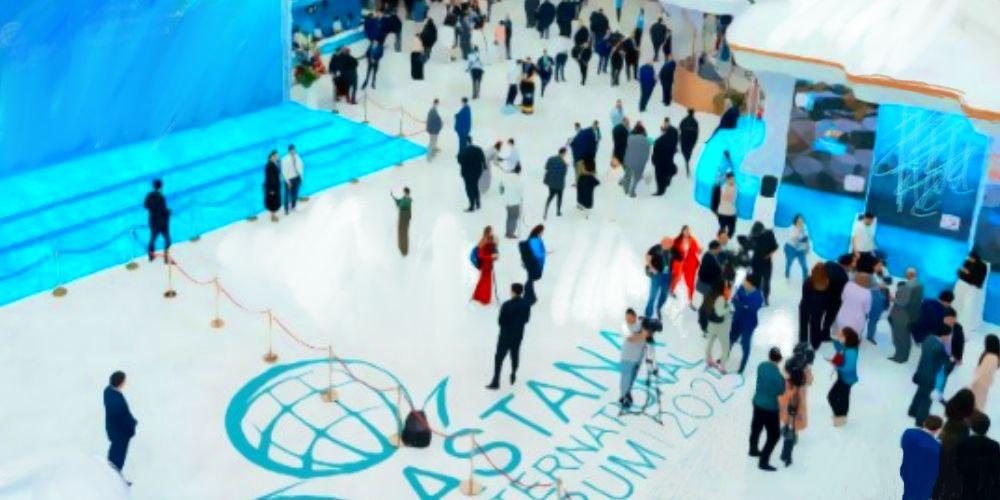
Kazakhstan will convene the Astana International Forum (AIF) later this month, on May 29–30, emphasizing its profile as an active mediator in the evolving architecture of global diplomacy. The AIF began in 2008 as the Astana Economic Forum, originally conceived as a technocratic venue focused on macroeconomic development, fiscal strategy, and public-sector reform. In its early iterations, it drew regional economists, central bankers, and international development agencies together to discuss Kazakhstan’s integration into global financial institutions. While modest in its geopolitical profile, the Forum reflected Astana’s broader ambitions to participate in the global rules-based order without overt alignment. In 2023, the AIF was reconstituted with its new, broader mandate in response to international demands for such forums, given the evident erosion of consensus in multilateral governance structures. President Kassym-Jomart Tokayev has invoked Kazakhstan’s unique geopolitical position to advocate for the AIF as a new platform of balanced engagement, to serve as a “bridge between East and West,” reflecting Astana’s accumulated experience in dialogue facilitation and its ambition to ameliorate the deepening fragmentation of the international system. The rebranding of the Forum was more than cosmetic. It marked a deliberate effort by Kazakhstan to reach out beyond its customary Eurasian frame of reference. The Forum aspires to be a diplomatic innovation, seeking to complement existing institutions like the UN or OSCE without replacing them: a more flexible platform that would be more responsive to emergent global dynamics. This aspiration is of a piece with Kazakhstan’s growing participation in multilateral forums, serving different geopolitical functions, such as the Conference on Interaction and Confidence Building Measures in Asia (CICA) and its engagements within the Shanghai Cooperation Organisation (SCO) and Organization of Turkic States (OTS). The AIF is envisioned as a complementary structure that transcends bloc affiliations, facilitating fluid dialogue among ideologically diverse actors. The 2024 edition of the Forum was intended to be larger-scale than the 2023 version, but it was abruptly canceled after catastrophic flooding struck several regions, an event President Tokayev described as the most devastating natural disaster in the country in eight decades. The state redirected its attention and resources toward recovery, and the Forum was deferred. The 2025 iteration, now reactivated, has adopted the banner message, “Connecting Minds, Shaping the Future.” This reflects an underlying logic in Kazakhstan’s foreign policy that privileges "multi-vectorialism" as a structure for autonomy. Within that structure, the AIF is seeking to create space for engagement among actors that often find themselves excluded from the inner circles of traditional diplomacy: the so-called "Global South," mid-sized Western powers, and immediate regional stakeholders. The agenda of the 2025 AIF consolidates four previous thematic streams into three: Foreign Policy and International Security, Energy and Climate Change, and Economy and Finance. This thematic restructuring signals an intention to deepen the Forum’s analytical focus while retaining general breadth across domains characterizing Kazakhstan’s long-term strategic interests. These interests are conditioned by the continuing development of Kazakhstan's economy. Domestic economic growth is projected to reach 4.5 to 5.0% in 2025, driven by...

Central Asian Perspectives Take Center Stage in Milan

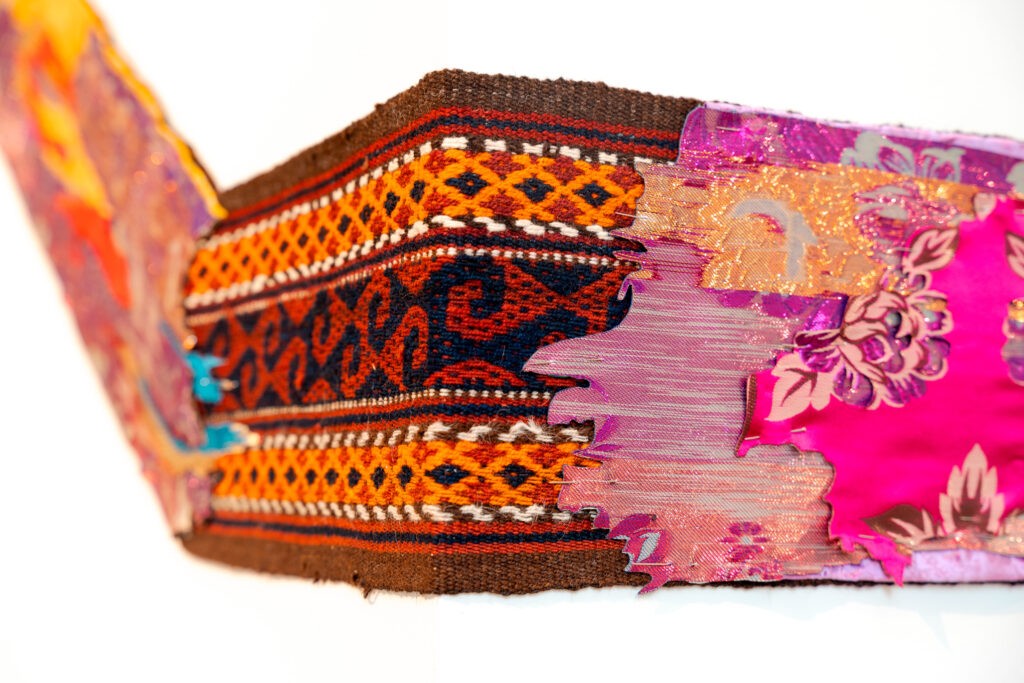
A pale Milanese dawn draped the city in shifting greys, as visitors crossed the threshold into the space of Fondazione Elpis, a foundation created to promote dialogue with emerging geographies and young artists. This time, it was Central Asian artists who were in the spotlight, claiming a shared history fractured by Soviet rule and global currents. The show YOU ARE HERE: Central Asia redraws a regional map, allowing artists to redraw the borders of their belonging beyond nation-states. At the same time, it invites each visitor to relate to the works by locating its place within these stitched, erased, and reconfigured narratives. Curators Dilda Ramazan and Aida Sulova orchestrated twenty-seven artists into a living constellation: from Munara Abdukakharova’s rolled patchwork, its golden hammer-and-sickle motifs softened by the hand-stitched curves of Kyrgyz kurak korpe, to Vyacheslav Akhunov’s furious erasures of scraped notes, the show reassembled in unexpected patterns stories of resilience, resistance, and reimagined belonging. YOU ARE HERE not only reframed Central Asia for a European audience but asserted that the region’s histories are neither static nor singular, they are stitched, erased, reconfigured, and claimed anew by the very people who live them. The Times of Central Asia spoke with Kazakh curator, Dilda Ramazan. [caption id="attachment_31541" align="aligncenter" width="2560"] "YOU ARE HERE. Central Asia", installation view, primo piano, Fondazione Elpis, Milano © Fabrizio Vatieri Studio[/caption] TCA: Can you tell us about the genesis of the show? The show emerged after the invitation of the Fondazione Elpis, whose founder, Marina Nissim, became interested in the region and its artists after seeing one of the Central Asian pavilions at the Venice Biennale. By presenting the complex Central Asian landscape to a European public who might not know it very well, we wanted to give artists the platform for free expression without framing the region from the stereotypical perspective, as is often the case in the Western context. We wanted the artists to reflect on the idea of space and belonging through the idea of locating oneself. TCA: Do you feel there is a growing awareness of Central Asia in Europe? Yes, I can feel and see it, but it is a natural process one should expect within the logic of globalization. The exhibition addressed the impact of Soviet and post-Soviet transitions on the cultural identities of Central Asian nations by showcasing artists of several generations. Some of them had a direct experience of living under the Soviet regime, so again the artists spoke for themselves and the region’s past through their works. [caption id="attachment_31542" align="aligncenter" width="2560"] Emil Tilekov, Traces and Shadows, 2024 © Fabrizio Vatieri Studio[/caption] TCA: How is the theme of migration explored in the exhibition, particularly concerning its economic and emotional implications for Central Asian communities? Migration was one of the key aspects evoked in the show because it is still an experience lived by the artists and/or their relatives and families. Two Kyrgyz artists, for example, raised this issue in their projects. This was the case in the video by Chingiz...

Kazakhstan Signals Early Review of Oil Production Sharing Agreements

The question of revisiting Kazakhstan’s production-sharing agreements (PSAs) with foreign oil companies is once again gaining prominence both within the country and internationally. While the Ministry of Energy is formally responsible for managing these contracts, growing pressure is coming not only from civil society but also directly from President Kassym-Jomart Tokayev, who has publicly questioned the long-standing terms of these deals since 2022. Confidential Terms, Public Scrutiny Recent revelations have further fueled this debate. The International Consortium of Investigative Journalists (ICIJ) recently detailed the ongoing arbitration dispute between Kazakhstan and the North Caspian Operating Company (NCOC), which manages the Kashagan field. The stakes are high: $160 billion is under contention. Yet what shocked the Kazakh public most was not the litigation itself, but that the state receives just 2% of the field’s profits, with a staggering 98% flowing to foreign stakeholders. Such findings offer context for why the Ministry of Energy is reluctant to release details of these 1990s-era agreements, originally negotiated with significant involvement from Kazakhstan’s first president, Nursultan Nazarbayev. In a recent court case, the ministry successfully blocked a lawsuit by Vadim Ni, founder of the Save the Caspian Sea movement, who demanded public disclosure of PSA terms affecting environmental interests in the Caspian. The ministry argued that Kazakhstan’s adherence to international confidentiality clauses is essential to avoid multibillion-dollar lawsuits and maintain its reputation as a stable investment destination. However, the ministry also emphasized that confidentiality does not shield violators from environmental penalties. Calls for transparency and revision have come from various quarters. Members of the Ak Zhol party and the Parasat Business Alliance have joined the chorus, urging the government to review the PSAs. In this context, President Tokayev’s consistent remarks suggest a coordinated state policy shift. A Change in Presidential Tone Tokayev first broached the subject in a 2022 interview with Russia 24, reflecting on the constraints Kazakhstan faced during the early years of independence. At the time, the country had no legal framework for foreign investment and had to rely on companies like Chevron to develop its energy sector. The president acknowledged the success of some ventures but also suggested the need for a “correction” to reflect current realities. Fast forward to 2023, and the government launched a $5 billion lawsuit against NCOC over alleged environmental violations. Although Kazakhstan has been temporarily barred from collecting the fines pending arbitration, the case marks a significant escalation. In April 2024, the Parasat Business Alliance held a public briefing demanding more local participation in procurement contracts tied to oil fields such as Karachaganak, Kashagan, and Tengiz. Kazakh companies reportedly receive less than 5% of $12 billion in annual procurements, a figure viewed as unacceptable by domestic businesses. By January 2025, Tokayev’s rhetoric had hardened. Speaking at an expanded government meeting, he instructed his cabinet to actively renegotiate PSA terms before their expiration. "The implementation of these agreements has helped Kazakhstan become a reliable global energy supplier,” he said, “but large investments require updated terms that benefit our nation.”...

Central Asia’s Green Energy Dream: Too Big to Achieve?

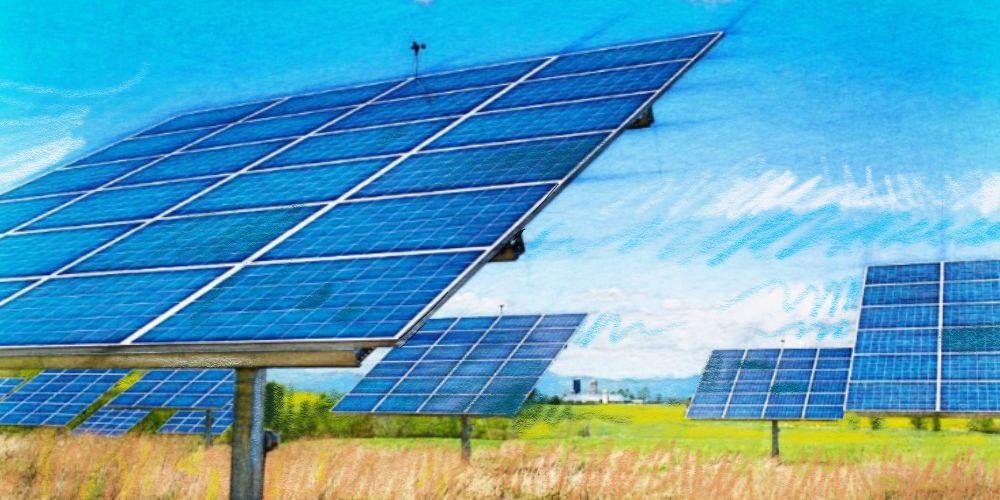
Although most Central Asian nations are heavily dependent on fossil fuel production and exports, they are aiming to significantly increase the use of renewable energy, hoping to eventually become crucial suppliers of so-called green electricity to Europe. Achieving such an ambitious goal will be easier said than done, given that developing the green energy sector in the region requires massive investment. What Central Asian states – struggling to attract long-term private capital into clean energy projects – need is financing for projects that modernize power networks, improve grid stability, and enable cross-border electricity flows. These upgrades are essential for large-scale renewable energy deployment and regional trade in power. Most actors in Central Asia seem to have taken major steps in this direction. In November 2024, at the COP29 climate conference held in Baku, Kazakhstan signed several deals worth nearly $3.7 billion with international companies and development institutions to support green energy projects. Neighboring Uzbekistan, according to reports, has attracted more than €22 billion ($23.9) in foreign investment in renewable energy, while Kyrgyzstan, Turkmenistan, and Tajikistan – which is aiming to generate all its electricity from green energy sources by 2032 – have developed strategies to help increase their renewable potential. But to turn their goals into reality, all these nations will need funding – whether from oil-rich Middle Eastern countries, China, the European Union, or various international financial institutions. Presently, the development of the Caspian Green Energy Corridor – which aims to supply green electricity from Central Asia to Azerbaijan and further to Europe – remains the region’s most ambitious project. According to Yevgeniy Zhukov, the Asian Development Bank's (ADB) Director General for Central and West Asia, this initiative is a strategic priority for Kazakhstan, Uzbekistan, and Azerbaijan. “While the prospect of exporting green electricity to Europe is part of the long-term vision, the core goal of the initiative is to accelerate green growth within the region,” Zhukov told The Times of Central Asia. Together with the Asian Infrastructure Investment Bank, the ADB is funding a feasibility study for this proposed transmission corridor. The study will assess the technical and economic viability of such a system, along with the environmental and regulatory requirements. In the meantime, the ABD is expected to continue funding other green energy projects in the region. The financial entity, according to Zhukov, invested $250 million in Uzbekistan in 2023 to support renewable energy development and comprehensive power sector reforms, while in other Central Asian countries, it remains “firmly committed to driving the green energy transition.” “For instance, in Tajikistan we are exploring the potential to co-finance the Rogun Hydropower Project alongside the World Bank and other international partners. In Kyrgyzstan, our focus has been on supporting foundational reforms in the energy sector, including strengthening the policy and regulatory environment to attract private investment in renewables. In Turkmenistan, we’ve launched a total of $1.75 million technical assistance initiative to help lay the groundwork for future renewable energy development,” Zhukov stressed, pointing out that these efforts are part...