• KGS/USD = 0.01144 0%
  • KZT/USD = 0.00210 0%
  • TJS/USD = 0.10454 -0.1%
  • UZS/USD = 0.00008 0%
  • TMT/USD = 0.28571 0.28%
  • KGS/USD = 0.01144 0%
  • KZT/USD = 0.00210 0%
  • TJS/USD = 0.10454 -0.1%
  • UZS/USD = 0.00008 0%
  • TMT/USD = 0.28571 0.28%
  • KGS/USD = 0.01144 0%
  • KZT/USD = 0.00210 0%
  • TJS/USD = 0.10454 -0.1%
  • UZS/USD = 0.00008 0%
  • TMT/USD = 0.28571 0.28%
  • KGS/USD = 0.01144 0%
  • KZT/USD = 0.00210 0%
  • TJS/USD = 0.10454 -0.1%
  • UZS/USD = 0.00008 0%
  • TMT/USD = 0.28571 0.28%
  • KGS/USD = 0.01144 0%
  • KZT/USD = 0.00210 0%
  • TJS/USD = 0.10454 -0.1%
  • UZS/USD = 0.00008 0%
  • TMT/USD = 0.28571 0.28%
  • KGS/USD = 0.01144 0%
  • KZT/USD = 0.00210 0%
  • TJS/USD = 0.10454 -0.1%
  • UZS/USD = 0.00008 0%
  • TMT/USD = 0.28571 0.28%
  • KGS/USD = 0.01144 0%
  • KZT/USD = 0.00210 0%
  • TJS/USD = 0.10454 -0.1%
  • UZS/USD = 0.00008 0%
  • TMT/USD = 0.28571 0.28%
  • KGS/USD = 0.01144 0%
  • KZT/USD = 0.00210 0%
  • TJS/USD = 0.10454 -0.1%
  • UZS/USD = 0.00008 0%
  • TMT/USD = 0.28571 0.28%

Viewing results 967 - 972 of 3316

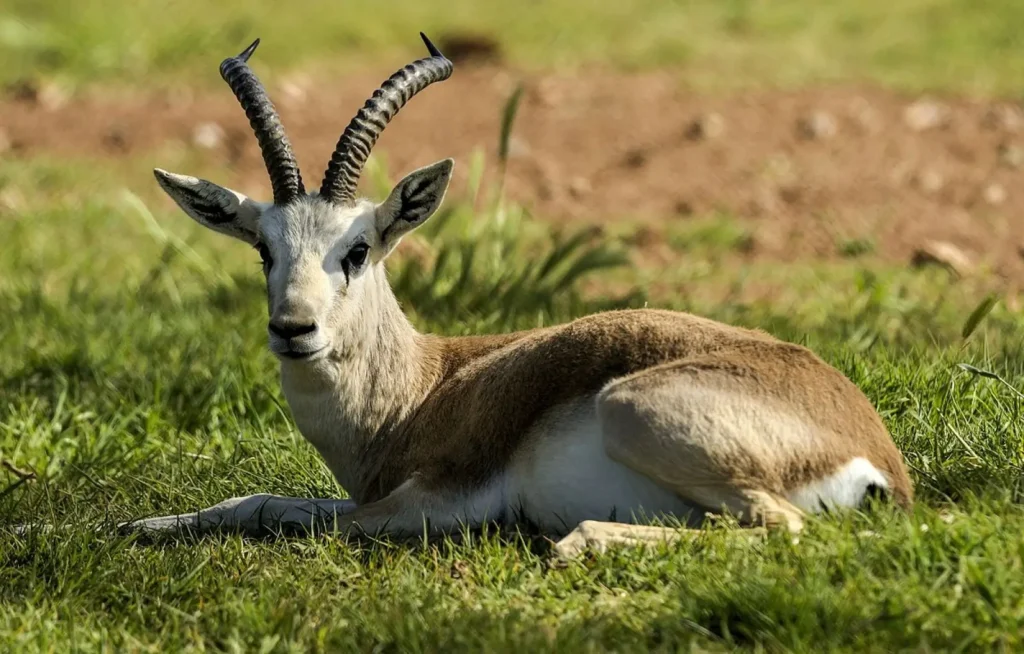
Despite USAID Funding Cuts, Kyrgyzstan Plans to Reintroduce Goitered Gazelle at Issyk-Kul

Kyrgyzstan has launched an ambitious project to restore the population and natural habitat of the goitered gazelle on the southern shore of Lake Issyk-Kul, a region once home to these graceful creatures. Led by the Argali Public Fund, Ilbirs Fund, and the Gulistan farm, the reintroduction effort marks a significant step toward reversing the species' decline and restoring balance to the local ecosystem. Reviving a Lost Species The goitered gazelle, an elegant herbivore from the bovid family, was once abundant in the Issyk-Kul region. However, its population collapsed after the 1930s due to widespread poaching and the conversion of natural landscapes for agricultural and economic development. Today, the species is listed in Kyrgyzstan's Red Book of endangered species, making their conservation an urgent priority. Found across Central Asia — from Kazakhstan and Uzbekistan to Iran and beyond — the gazelle is integral to maintaining the balance of steppe and desert ecosystems. On the southern shore of Issyk-Kul, conditions remain favorable for the return of the goitered gazelle. However, decades of human activity and habitat loss have driven them away, leaving reintroduction as the most viable path to restoration. The project employs a “soft release” approach, starting with a semi-free adaptation phase. Animals are first acclimatized and allowed to breed in a controlled environment before being released back into the wild. This method reduces the risks associated with sudden release and ensures a higher survival rate. The Project in Action Currently, the Gulistan farm houses a herd of 43 gazelles. By the end of the year, the number is expected to grow to 60, with the first batch of 25 animals scheduled for release in 2025. Organizers aim to release an additional 15-20 gazelles annually, slowly building a self-sustaining wild population. If conservation measures, particularly anti-poaching efforts, prove successful, the gazelle population in Issyk-Kul could reach 500 within the next decade. Gazelles play an essential role in their environments, feeding on thorny and toxic plants that other species avoid. This behavior helps control invasive vegetation and supports the overall health of the ecosystem. Their presence also benefits predators such as wolves and snow leopards, creating a natural chain of biodiversity. Broader Impact on Biodiversity and Ecotourism The reintroduction of the goitered gazelle represents more than just species preservation; it is a step toward restoring the ecological integrity of the Issyk-Kul landscape. A thriving population of gazelles can boost biodiversity by fostering healthier, more balanced ecosystems. Their grazing patterns promote plant regeneration, which in turn supports a variety of other species, from insects to birds of prey. Furthermore, the project has significant potential to bolster Kyrgyzstan's ecotourism sector. Issyk-Kul is already a popular destination for outdoor enthusiasts, and the presence of rare and protected wildlife like the goitered gazelle could attract even more visitors. Eco-friendly tourism initiatives could offer guided safaris to observe the gazelles in their natural habitat, providing educational opportunities while generating revenue for local communities. President Japarov has underscored the importance of halting illegal hunting, urging communities to see...

Soviet Space Probe to Fall to Earth 50 Years After Baikonur Launch

In 1972, the Soviet Union launched a Venus-bound lander probe called Cosmos 482 from the Baikonur Cosmodrome in Kazakhstan, which was then a Soviet republic. The probe, which never got out of Earth's orbit, is expected to re-enter Earth’s atmosphere in a week or so. “Because the probe was designed to withstand entry into the Venus atmosphere, it is possible the probe (or parts of it) will survive reentry at Earth and reach the surface,” U.S. space agency NASA said on Friday. “It is thought that a malfunction resulted in an engine burn which did not achieve sufficient velocity for the Venus transfer and left the payload in this elliptical Earth orbit. The lander probe orbit has been decaying over time and it is expected to reenter Earth's atmosphere around 10 May 2025,” NASA said. Right now, it’s hard to say where the lander will make its return. It’s possible that the spacecraft, or chunks of it, could survive reentry through the Earth’s atmosphere instead of burning up. After all, it has a titanium protective shell originally designed to get through the extreme atmosphere of Venus, which has the hottest surface of any planet in the solar system. Dr. Marco Langbroek, a scientist based in the Netherlands, said on the SatTrackCam Leiden (b)log that he doesn’t think the lander’s parachute deployment system will work during the “uncontrolled” reentry. “There are many uncertain factors in this though, including that this will be a long shallow reentry trajectory, and the age of the object,” Langbroek said. “The risks involved are not particularly high, but not zero: with a mass of just under 500 kg and 1-meter size, risks are similar to that of a meteorite impact.” Today, Russia operates the Baikonur Cosmodrome, which retains a popular allure for its role in early space exploration and is still a vital part of the Russian space program. On April 20, one NASA astronaut and two Russian cosmonauts made a parachute-supported landing on the steppes of Kazakhstan after a journey back to Earth from the International Space Station. The three men had launched from Baikonur and docked at the station on Sept. 11 last year, spending 220 days in space on that trip.

U.S. Cuts Funding for Uzbek Cotton Transparency Project

On April 30, during a cabinet meeting at the White House attended by President Donald Trump, U.S. Labor Secretary Lori Chavez-DeRemer announced the cancellation of more than $38 million in foreign aid programs, including funding for a project aimed at improving transparency and labor practices in Uzbekistan’s cotton industry. “We have saved $250 million by canceling foreign aid programs under ‘America Last,’” said Chavez-DeRemer, referring to initiatives the Trump administration believes do not align with U.S. interests. “It makes no sense for our funds to be spent on such things. Thank you DOGE for the savings. What we found was fraud.” Chavez-DeRemer's reference to DOGE, the Department of Government Efficiency, led by Elon Musk, drew laughter in the room. Musk added, “Some of these things are so ridiculous you can't believe it! Uzbek cotton farmers?! It sounds like a comedy sketch.” The targeted Uzbek cotton project began in August 2022 and was initially scheduled to run through 2026. It received $2 million in its first year, with a further $1 million planned for 2025. The project aimed to improve labor conditions and prevent forced labor in Uzbekistan’s cotton sector, while helping workers and employers meet international standards. In a video statement posted on X (formerly Twitter), Chavez-DeRemer reinforced the administration’s shift in aid priorities: “On day one, I promised that putting American workers first will be our top priority. At the direction of President Trump, we have wasted no time. Last week, we terminated several foreign aid grants, saving over $38 million... I bet you didn’t even know your hard-earned tax dollars were being spent on things like enhancing transparency in Uzbekistan’s cotton industry, supporting labor standards in Congo, or climate change programs in Brazil and Colombia.” Uzbekistan’s cotton industry has long been under international scrutiny for the systemic use of forced labor. In recent years, however, the government has undertaken reforms and introduced strict monitoring systems to address these concerns with support from international partners, leading to organizations such as Cotton Campaign ending its call for a global boycott of Uzbek cotton. Additionally, the industry is being modernized through privatization and investments in technology, aiming to boost efficiency and sustainability.

Turkmen Cultural Workers Fired Over Refusal to Fund Presidential TV Monitor

Another case of forced financial contributions among civil servants has emerged in Turkmenistan. In early April, four employees of the Kerki district's cultural department were dismissed after protesting salary deductions. The funds were intended to finance the purchase of a television monitor designated to display images of President Serdar Berdimuhamedov. Salary Deductions Without Consent According to an order from local authorities, 230 Turkmenistan Manat (TMT) was deducted from the March salaries of employees at urban and rural cultural centers to pay for a large monitor at the Kerki Palace of Culture. Given that average monthly salaries range between 1,800-2,100 TMT (officially $514-$600, unofficially $92-$108), the deduction represented a significant portion of income. The monitor was meant to display the president's image against a national flag backdrop during official events. At other times, it remained unused. Several employees independently refused the deduction and were subsequently dismissed. Among them was a cleaning staff member. Coercion and Unofficial Duties One of the dismissed workers, a resident of Taze Usul village, reported that such deductions are routine. Employees are also compelled to engage in activities beyond their job descriptions, such as growing silkworm cocoons, harvesting cotton, and cleaning streets ahead of official visits. These tasks often occur on weekends and public holidays. Following their refusal to pay, the dismissed workers were allegedly visited by police, who pressured them into signing resignation letters citing “health reasons.” “I wrote several letters to the etrap and velayat hakims, and to the Minister of Culture in Ashgabat. No action was taken, except my dismissal,” said one of the affected employees. As a result of the dismissals, only two individuals remain at each cultural center in the Kerki district, now personally bearing the costs of maintenance, repairs, and event organization. Pattern of Enforced Contributions This incident is part of a broader pattern. In January 2025, civil servants in the newly built city of Arkadag, including teachers and librarians, were reportedly pressured to purchase homes on mortgage, with down payments ranging from 75,000 to 80,000 TMT ($21,428-$22,857). In May 2024, state agency heads in Balkan velayat were ordered to purchase souvenir watches featuring portraits of former President Gurbanguly Berdimuhamedov and his son, President Serdar Berdimuhamedov. Prices ranged from 1,500 to 3,000 TMT ($428-$857) depending on seniority. Similar practices go back years. In August 2020, civil servants in Farap were compelled to buy domestically manufactured televisions, with 2,400 TMT ($685) deducted from their salaries in advance. Delivery was delayed by months. In February 2018, state employees had to pay for bicycles to join a mass bike ride, with contributions per worker depending on the institutional size. The cost of a bicycle reached 4,000 TMT ($1,142). According to civil servants, refusal to participate in such initiatives increasingly results in job loss, a sign of deepening authoritarian control in Turkmenistan's public sector.

Kazakhstan Seeks to Mitigate Impact of U.S. Tariffs

Kazakhstan is working to minimize the economic damage from newly imposed U.S. tariffs, the highest levied on any Central Asian country. The government is assessing the scope of potential losses and pursuing diplomatic efforts to reverse or reduce the trade measures. A New Front in the Trade War On April 2, U.S. President Donald Trump announced sweeping new tariffs on imports from over 180 countries. Kazakhstan was subjected to a 27% tariff rate. In contrast, most other post-Soviet countries, including Uzbekistan, Kyrgyzstan, Armenia, and Tajikistan, were assigned a 10% tariff, described by the U.S. administration as the “base rate” for countries that “trade fairly” with the United States. Russia and Belarus, whose trade with the U.S. is effectively suspended due to sanctions, were exempt from the increase. Only Moldova, which reportedly imposes a 61% duty on U.S. goods, received a higher rate than Kazakhstan. According to Washington, Kazakhstan applies a 54% tariff on U.S. imports, prompting a reciprocal response, though the methodology behind the administration’s calculations has been questioned by many analysts. Moldova’s higher rate of 61% led to a 31% U.S. tariff. Limited Exposure for Key Exports U.S. President Trump announced a 90-day reprieve for affected countries on April 9, allowing time for negotiations to take place. While the move signals potential flexibility, the economic impact remains uncertain. Kazakh Trade Ministry representative Serik Ashitov stated on April 29 that only 4.8% of Kazakhstan’s exports to the U.S. would be affected by the tariffs. Crucially, major exports, such as oil, uranium, silver, and ferroalloys stand to remain untouched. These commodities account for approximately 90% of Kazakh shipments to the U.S. Despite fears of a broader economic fallout, Kazakhstan's stock market showed resilience in the first quarter of 2025, according to financial news channels. However, the trade conflict has had a deflationary effect on key exports. Oil prices have dropped below projected baselines amid concerns about declining global demand driven by slowing industrial activity, especially in Asia. “We’re observing falling oil prices and reduced global trade. The tariffs are cutting into industrial output in China and other key consumers of raw materials, which affects oil demand directly,” noted a representative of the Kazakhstan Stock Exchange. As of late April, Brent crude was trading at approximately $64 per barrel. Negotiations and Constraints In response, Kazakhstan has initiated diplomatic talks with the United States and plans to raise the issue at the World Trade Organization (WTO). “At present, there is no reason to believe these measures will significantly affect our exports. Nonetheless, we will continue working with American counterparts to mitigate the consequences of these unilateral measures,” Ashitov said during a press briefing. However, analysts caution that Kazakhstan may face structural limits in attempting to resolve this dispute. As a member of the Eurasian Economic Union (EAEU), Kazakhstan does not set its tariff policy independently. “Our customs duties are EAEU duties,” economist Almas Chukin explained. “If we wanted to unilaterally lower tariffs for the U.S., as Israel did, it would require the approval...

Kazakhstan Has a Deal for Tajik Electricity, Now the Wait Begins

In the latest sign of Central Asian regional cooperation, Kazakhstan has signed a long-term deal to import electricity from Tajikistan. However, that electricity might not reach Kazakhstan anytime soon, as there are some important details that need to be worked out by Tajikistan before supplies can begin. Kazakhstan’s energy problems Kazakhstan has been experiencing severe energy deficits for several years now, particularly during winter months. Kazakh Senator Suyindik Aldashev said in late February this year that Kazakhstan would be short some 5.7 billion kilowatt hours (kWh) of electricity in 2025, which would be a 46% increase in the country’s electricity deficit compared to 2024. Kazakhstan was forced to import electricity from Russia during the winter of 2024 to help alleviate energy shortages. These shortages contributed to Kazakhstan's decision to hold a referendum to approve the construction of the country’s first nuclear power plant (NPP). To date, however, there has been no announcement of which company will build the NPP, so additional electricity from that source could be a decade or more away. This has led Kazakhstan to explore importing energy resources from its Central Asian neighbors. The head of Turkmenistan’s Halk Maslahaty (People’s Council) Gurbanguly Berdimuhamedov just visited Kazakhstan and met with Kazakh President Kassym-Jomart Tokayev with Turkmen gas exports to its northern neighbor high on the agenda. Kazakhstan has been in discussions with Tajikistan about electricity shipments for months, and the agreement was finalized toward the end of April. Rogun The source of the electricity Tajikistan intends to export to Kazakhstan is the Rogun Hydropower Plant (HPP) on the Vakhsh River, some 110 kilometers east of the Tajik capital Dushanbe. The Rogun HPP has a history of controversy. It was conceived in the 1960s when Tajikistan was a Soviet Republic. Construction on the project started in 1976, but not much had been done by the time the USSR collapsed in late 1991, and work ground to halt shortly thereafter. Russian company RUSAL signed an agreement in 2004 to invest more than $1 billion and finish building Rogun, but disputes over the project led the Tajik government to cancel the contract in 2007. One of the main differences between the two parties was RUSAL’s insistence the dam wall at Rogun be no higher than 285 meters, whereas the Tajik authorities wanted the original height of 335 meters. At 285 meters, the HPP’s output would have been 2400 megawatts (MW), while at 335 meters, the output would be 3600 MW. Russia’s Inter RAO EES was in talks with Tajikistan about the Rogun project in 2008, but in the end, nothing came from those negotiations. With no hope of foreign backing, Tajik President Emomali Rahmon started portraying Rogun as a project of national salvation, the key to energy independence. Rahmon’s government called on citizens to help finance construction of the HPP and when public support in the poorest country in Central Asia proved insufficient, citizens were pressured into buying shares in the project. The government in neighboring Uzbekistan objected to Rogun’s construction,...