• KGS/USD = 0.01144 0%
  • KZT/USD = 0.00203 0%
  • TJS/USD = 0.10429 -0.38%
  • UZS/USD = 0.00008 0%
  • TMT/USD = 0.28490 0%
  • KGS/USD = 0.01144 0%
  • KZT/USD = 0.00203 0%
  • TJS/USD = 0.10429 -0.38%
  • UZS/USD = 0.00008 0%
  • TMT/USD = 0.28490 0%
  • KGS/USD = 0.01144 0%
  • KZT/USD = 0.00203 0%
  • TJS/USD = 0.10429 -0.38%
  • UZS/USD = 0.00008 0%
  • TMT/USD = 0.28490 0%
  • KGS/USD = 0.01144 0%
  • KZT/USD = 0.00203 0%
  • TJS/USD = 0.10429 -0.38%
  • UZS/USD = 0.00008 0%
  • TMT/USD = 0.28490 0%
  • KGS/USD = 0.01144 0%
  • KZT/USD = 0.00203 0%
  • TJS/USD = 0.10429 -0.38%
  • UZS/USD = 0.00008 0%
  • TMT/USD = 0.28490 0%
  • KGS/USD = 0.01144 0%
  • KZT/USD = 0.00203 0%
  • TJS/USD = 0.10429 -0.38%
  • UZS/USD = 0.00008 0%
  • TMT/USD = 0.28490 0%
  • KGS/USD = 0.01144 0%
  • KZT/USD = 0.00203 0%
  • TJS/USD = 0.10429 -0.38%
  • UZS/USD = 0.00008 0%
  • TMT/USD = 0.28490 0%
  • KGS/USD = 0.01144 0%
  • KZT/USD = 0.00203 0%
  • TJS/USD = 0.10429 -0.38%
  • UZS/USD = 0.00008 0%
  • TMT/USD = 0.28490 0%

Viewing results 1183 - 1188 of 3126

Massive Reserve for Red-Listed Animals to Be Created in Southern Kyrgyzstan

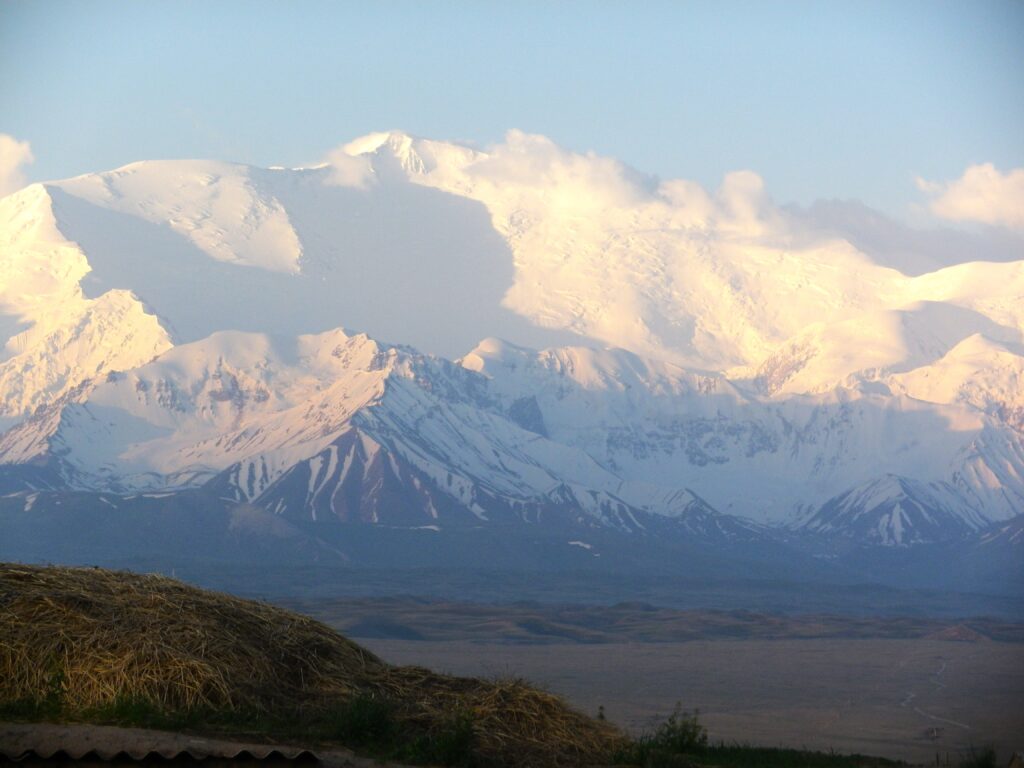
Kyrgyzstan’s Ministry of Natural Resources, Ecology, and Technical Supervision has proposed the creation of a new state natural park, Chon-Alai, in the southern region of Osh oblast. The planned park, covering an area of 66,830.79 hectares, aims to protect unique natural ecosystems and conserve endangered species of flora and fauna. A draft resolution has been published for public discussion. Land Reallocation for the Park To establish the Chon-Alai Nature Park, the government plans to reallocate 23,473.79 hectares of land from the “Reserve Land” category in the Chon-Alai district, as well as 43,357 hectares from the “State Forest Fund” under the Alai Forestry Administration. The combined area will be designated as a specially protected natural area. According to the Ministry of Natural Resources, the proposed territory meets all the criteria for protected areas, as it contains rare ecosystems and populations of endemic species. The park will span three sites on the southern macro-slope of the Alai Ridge and two sites on the northern slope of the western Zaalai Ridge, including part of the Kyzyl-Suu-Zapadnaya River valley. This region has been recognized for its environmental significance for years. As far back as 2004, there have been plans to establish a transboundary Pamir-Alai Nature Park in this area. Protecting Red-Listed Species The primary purpose of the Chon-Alai Nature Park is to ensure the protection of species listed in the Red Book of Kyrgyzstan and the International Union for Conservation of Nature (IUCN). The park will help preserve habitats for rare and endangered species, including: Mammals: Snow leopard, brown bear, Central Asian otter, Turkestan lynx, and warthog; Birds: Golden eagle, black vulture, and Alayan shieldbill; Fish: Turkestan catfish; Flora: Christoph's jaundice, Romanov's parnassus, evasive alaya, and Kostychev's prostrel. The creation of the park will provide a safe haven for these species, many of which are threatened by habitat loss, climate change, and human activity. A Milestone for Conservation The establishment of the Chon-Alai Nature Park represents a significant step forward in Kyrgyzstan's efforts to preserve its natural heritage. By protecting critical habitats and endangered species, the park will contribute to both national and global conservation goals.
Afghanistan as Part of Central Asia: Expectations, Reality, Challenges, and Threats

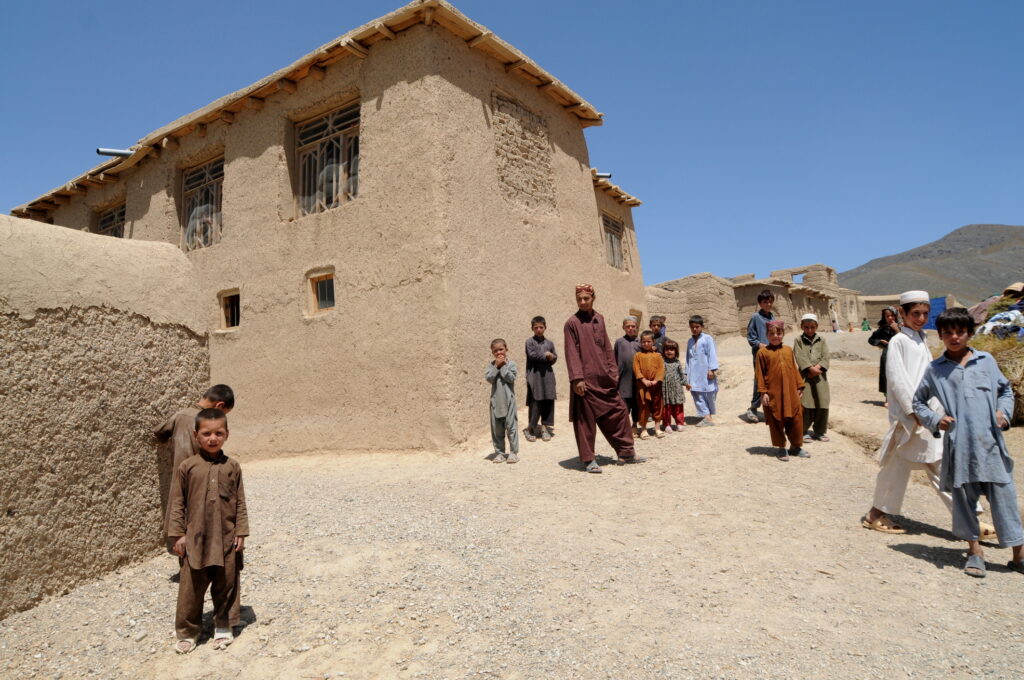
Afghanistan has increasingly been regarded in expert and journalistic circles as part of Central Asia, which is justifiable from a physical-geographical perspective. However, given current regional realities, it is still premature to classify the country as part of Central Asia in terms of being internationally recognized as such. The outcome of the 19th-century rivalry between the British and Russian Empires for influence in Central Asia, known as the "Great Game," not only established the modern southern borders of the region but also set Afghanistan and its northern neighbors on entirely different social and historical paths. The countries differ in value systems, ideologies, public consciousness, and, of course, economic development. At the same time, experts from the Russian Institute for Central Asian Studies note that "In the early 21st century, approaches to analyzing regional realities shifted towards geo-economics. The spatial dimension of Central Asia began to be seen as a zone for pipeline transit." This perspective is hard to argue against — Afghanistan’s current geopolitical interests and challenges are largely tied to the economic interests of countries at the regional level. This includes India, Iran, China, the UAE, Pakistan, Russia, Turkey, and the Central Asian states, for whom Afghanistan's prospects are evident. Chiefly, these prospects concern its transit potential as a territory connecting various parts of Asia. Four out of the six logistics corridors under the Asian Development Bank’s Central Asia Regional Economic Cooperation Program (CAREC) pass through Afghanistan into Uzbekistan, Tajikistan, and Turkmenistan. Other relevant projects include the "China–Pakistan Economic Corridor" under the "One Belt One Road" initiative, the "Trans-Afghan Corridor," and the TAPI Gas Pipeline. However, Afghanistan's current situation, particularly given the stagnant Afghan-Pakistani conflict, casts doubt on the feasibility of these and other major projects involving Afghanistan. As previously stated by TCA, the future of these large-scale projects involving Central Asian countries, as well as regional stability, a fundamental condition for steady economic development, depends directly on whether an understanding is reached between these two nations. Thus, a geo-economic approach to redefining Central Asia’s new boundaries still requires a different reality. Meanwhile, within Central Asia itself, there is little enthusiasm for political rapprochement with Taliban-ruled Afghanistan. The primary focus is on trade/economic and humanitarian cooperation, with no broader agenda, particularly at a regional level. Tajikistan’s position is significant here, as its authorities continue to view the Taliban as a threat and tread cautiously in building relations with them.  What Prevents Central Asian Countries from Accelerating Relations with Afghanistan? The answers lie not only in different developmental trajectories and scenarios. First and foremost, Afghanistan is still associated with "uncertainty" and numerous risks, particularly in terms of security. According to many assessments, the Afghan-Pakistani zone will, in the long term, remain a source of terrorist and religious-extremist threats to Central Asia. These conclusions are based on a retrospective analysis of escalating tensions, current processes in Afghanistan, and the geopolitical confrontation of global powers in the area. For example, the Soviet invasion in 1979 fostered the consolidation of the Afghan mujahideen,...

Uzbekistan: 17 Nationals Among Dead from Alcohol Poisoning in Türkiye

Seventeen Uzbek citizens have died after drinking illegally made alcohol in Türkiye and another five are being treated in intensive care, Uzbekistan’s consulate in Istanbul said Saturday. Nearly 40 people have died of alcohol poisoning in Türkiye’s biggest city in recent days. The consulate said on Telegram that the death toll rose on Friday after three more Uzbek nationals died. It said it was preparing documents so that the bodies can be sent back to Uzbekistan, and that consulate staff are visiting the sick Uzbeks in hospitals and staying in touch with their relatives and Turkish authorities. “It was also discovered that some compatriots, despite being poisoned, attempted to treat themselves at home and did not seek hospital care. When approached, they explained that hospitalization might be financially burdensome. However, such decisions have subsequently led to kidney failure, deteriorating vision, and respiratory issues,” the consulate said. Some 38 out of the 92 people who went to hospitals died, according to Anadolu, Türkiye’s state-run news agency. At least two dozen people had to be intubated, and eight others were later discharged, the agency said Saturday. The Istanbul governor’s office said on Thursday that it had been stepping up efforts to combat the sale of illegal alcohol, which can have high levels of dangerous substances such as methanol. It said it had detained about a dozen people, including four on homicide charges; seized 29 tons of counterfeit alcohol since the beginning of the year; and closed 64 businesses that were selling it.

19th-Century Historic Building Under Demolition in Turkmenistan

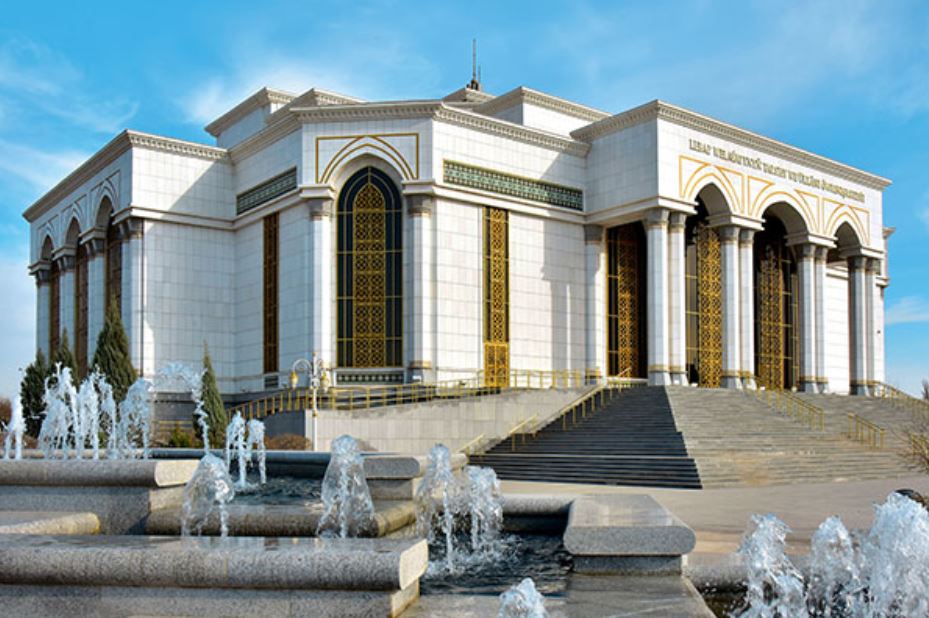
The demolition of a 19th-century historic building, formerly the History and Local History Museum and originally a Shiite mosque named after Haji Myalik, has begun in the city of Turkmenabat. Constructed in the 19th century, this architectural landmark was a vital part of Turkmenabat's cultural heritage for decades. The building served as a museum starting in 1967, but in 2011, after more than 40 years, its exhibitions were relocated to a new facility built specifically for that purpose. Despite the building’s historical significance, local authorities opted against restoration or handing it over to the Muftiyat (the official Islamic authority) and instead decided to demolish it. A Unique Architectural Legacy The architectural design of the former Haji Myalik Mosque was distinctive and highly regarded in the region. Tourist guides described it as one of Turkmenabat's most striking landmarks. The facade featured intricate brickwork, three semicircular arches, a prominent high portal, and two small towers capped with pointed domes in Ottoman architectural style. On the right side of the facade stood a minaret with a metal dome, once the tallest vantage point in Chardjui (the historic name of Turkmenabat). Today, this iconic structure is being dismantled piece by piece. The roof has already been removed, and the demolition process is ongoing. A Worrying Trend The demolition of historic buildings in Turkmenistan is not a new phenomenon and has raised alarm among residents and cultural heritage experts. In Ashgabat, the capital, numerous old buildings of historical and cultural importance have been destroyed over the years. Notable examples include the buildings of Karakumstroy, Hotel Turkmenistan, the Turkmenhovayollary Department, and the public garden featuring a monument to N. Aitakov. [caption id="attachment_27727" align="aligncenter" width="2560"] Ashgabat- A row of marble towers in Berzengi; image: TCA, Stephen M. Bland[/caption] A moderately young metropolis, its appellation meaning "City of Love" in Persian, Ashgabat developed around a Russian garrison during the 1880s. Leveled in the earthquake of 1948, prefab Soviet blocks soon sprung from the debris. Shaping his vision, former President Niyazov had these kommunalkas torn down and replaced by boxy, flat-topped marble towers with dazzling, reflective windows. Largely of a uniform eleven storys, their showy ostentation lacks any semblance of functionality, with endless ministry buildings standing unoccupied, overpriced residential blocks home to the affluent few. In 2021, authorities began demolishing four-story residential buildings at the intersection of Turkmenbashi and Atamurat Niyazov avenues, a move that drew criticism from citizens. Experts warn that such actions could result in the irreversible loss of the country’s unique architectural heritage. As the dismantling of the former Haji Myalik Mosque continues, concerns grow about the preservation of Turkmenistan's historic and cultural landmarks, many of which are disappearing under the pressure of modernization.

Tajikistan Opens Its First Digital Art Gallery Highlighting Local Activists’ Work

The Khujand branch of the NGO Office of Civil Liberties has launched Tajikistan's first digital art gallery, which showcases the work of local activists. The digital gallery features art that addresses pressing social issues, such as domestic violence, discrimination, and environmental threats. It includes a diverse range of art forms, including digital works, photography, stories, and videos. [caption id="attachment_27723" align="aligncenter" width="1296"] Sad Dollar by Timur Shapirov; image: tut-gallery.tilda.ws[/caption] Prominent Artists and Initiatives The platform features contributions from prominent Tajik artists, including Zilola Imomova and Amina Ayyubi. It also includes works by winners and participants of art "hackathons" previously organized by the Office of Civil Liberties in Dushanbe and Khujand. Representatives of the organization explained the gallery’s purpose: “We aim not only to support art activists, but also to draw society's attention to pressing problems.” [caption id="attachment_27720" align="aligncenter" width="642"] Motherlandy by Muharram Buranova; image: tut-gallery.tilda.ws[/caption] Art with a Message Each work in the gallery is accompanied by a description explaining the idea behind it. Many of the featured pieces delve into topics such as gender inequality and social stereotypes, reflecting the personal stories and lived experiences of the artists. "Motherlandy" by Muharram Buranova, for example reimagines a powerful heroine as a positive, feminine counterpart to Homelander. Motherlandy radiates strength and courage as she shields a young girl from harassment, standing tall amidst a menacing crowd of zombie-like men, embodying the oppression and cruelty faced by girls in Tajikistan. With her steadfast presence, Motherlandy becomes a beacon of hope, inspiring belief that justice is not only needed but possible. Through this initiative, the digital gallery is seeking to amplify the voices of activists and provoke meaningful conversations about social issues in Tajikistan.

Kazakhstan’s Nuclear Power Move and Implications for the West

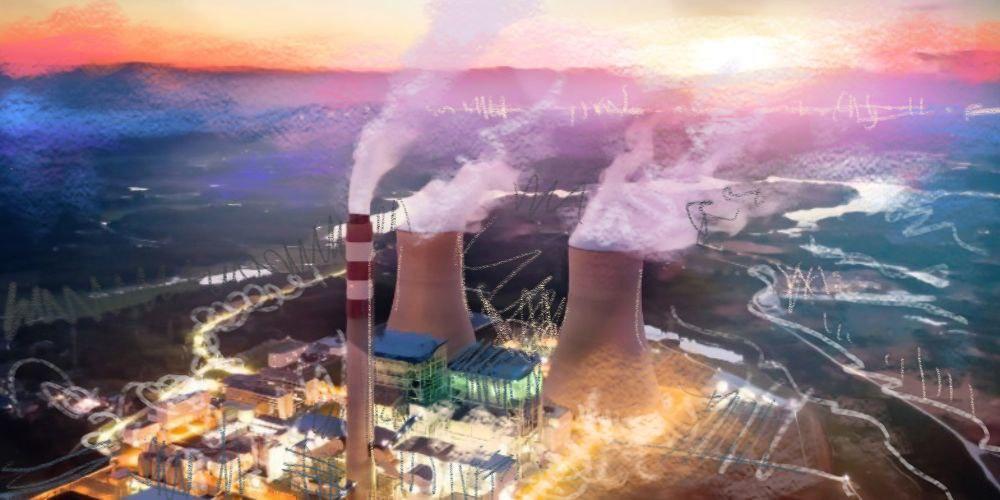
Kazakhstan’s recent referendum approving the construction of its first nuclear power plant (NPP) is a watershed moment. More than a domestic policy decision, this move puts into relief Kazakhstan's strategy for positioning itself as a linchpin in the diversification of global energy supply chains, with the world's largest uranium reserves accounting for nearly 40% of the global supply and a key geographic location. The country's ambitions align with the broader resurgence of nuclear power as an indispensable component of a sustainable energy future, countering decades of stagnation in the West and challenging the dominance of Russia and China. The renewed attention on nuclear energy arises from a convergence of systemic and technological factors. Environmental pressures to reduce reliance on fossil fuels such as gas and coal have left energy producers searching for scalable, reliable alternatives. Renewable energy sources like wind and solar, while important, remain limited by intermittency and storage challenges. At the same time, safety concerns rooted in historical disasters — Chernobyl, Three Mile Island, and Fukushima — have been mitigated by advances in reactor technology. A growing public recognition of nuclear power's viability has resulted. In this context, Kazakhstan's entry into the nuclear power arena is logical. Enhancing its ability to integrate uranium extraction with downstream nuclear fuel production would underscore its potential to play a central role in addressing global energy needs. By fostering international partnerships, Kazakhstan can leverage its resource wealth to become a critical supplier for advanced economies looking to diversify their energy mix. Kazakhstan's move comes at a time of shifting geoeconomic dynamics in the nuclear energy sector. Over the past three decades, Russia and China have consolidated their dominance, exploiting the West’s inertia. Russia has used NPP construction as a geoeconomic tool, creating dependence in such countries as Turkey and Uzbekistan. China, meanwhile, has aggressively developed its domestic nuclear infrastructure while securing global uranium supplies, particularly through investments in Africa and Central Asia. By contrast, Western nations have lagged behind, plagued by fragmented project management, skilled labor shortages, and political resistance. Anti-nuclear movements, many of which gained momentum during the Cold War with Soviet backing, have continued to stymie development in Europe and North America. The resulting industrial inertia has left Western economies vulnerable, with insufficient capacity to meet rising energy demands or counterbalance Russian and Chinese influence. Kazakhstan's emergence offers the West a rare opportunity to reverse this trend. The country’s multi-vector diplomatic strategy, emphasizing balanced relations with global powers, makes it an ideal partner for rebalancing energy supply chains. Kazakhstan’s role in global energy extends beyond uranium. The country’s geological resources overlap with deposits of rare-earth elements (REEs), which are vital for advanced defense technologies, renewable energy systems, and high-tech manufacturing. The shared extraction technologies and logistical infrastructure for uranium and REEs present opportunities for integrated resource development. NATO’s Partnership for Peace (PfP) program could play a pivotal role in this regard. By incorporating rare-earth mining and supply chain security into NATO’s Critical Energy Infrastructure Protection (CEIP) framework, member states could...