• KGS/USD = 0.01144 0%
  • KZT/USD = 0.00215 0%
  • TJS/USD = 0.10456 0%
  • UZS/USD = 0.00008 0%
  • TMT/USD = 0.28490 0%
  • KGS/USD = 0.01144 0%
  • KZT/USD = 0.00215 0%
  • TJS/USD = 0.10456 0%
  • UZS/USD = 0.00008 0%
  • TMT/USD = 0.28490 0%
  • KGS/USD = 0.01144 0%
  • KZT/USD = 0.00215 0%
  • TJS/USD = 0.10456 0%
  • UZS/USD = 0.00008 0%
  • TMT/USD = 0.28490 0%
  • KGS/USD = 0.01144 0%
  • KZT/USD = 0.00215 0%
  • TJS/USD = 0.10456 0%
  • UZS/USD = 0.00008 0%
  • TMT/USD = 0.28490 0%
  • KGS/USD = 0.01144 0%
  • KZT/USD = 0.00215 0%
  • TJS/USD = 0.10456 0%
  • UZS/USD = 0.00008 0%
  • TMT/USD = 0.28490 0%
  • KGS/USD = 0.01144 0%
  • KZT/USD = 0.00215 0%
  • TJS/USD = 0.10456 0%
  • UZS/USD = 0.00008 0%
  • TMT/USD = 0.28490 0%
  • KGS/USD = 0.01144 0%
  • KZT/USD = 0.00215 0%
  • TJS/USD = 0.10456 0%
  • UZS/USD = 0.00008 0%
  • TMT/USD = 0.28490 0%
  • KGS/USD = 0.01144 0%
  • KZT/USD = 0.00215 0%
  • TJS/USD = 0.10456 0%
  • UZS/USD = 0.00008 0%
  • TMT/USD = 0.28490 0%

Viewing results 1489 - 1494 of 3334

Kyrgyzstan Reports Growing Return Migration

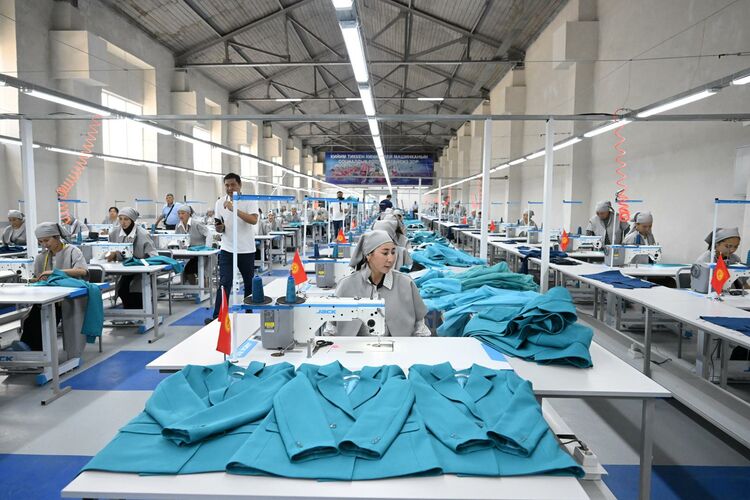
Kyrgyzstan’s Ministry of Labor, Social Security and Migration and the International Organization for Migration (IOM) announced the results of their assessment of the country’s migration trends on October 15. The statistics show that return migration increased from 2020 to April 2024, and the number of migrants returning to Kyrgyzstan is continuing to grow. The number of returning migrants increased by 85% in 2023 compared to the previous year. Kyrgyzstan’s southern Osh and Batken regions and the northern Chui region lead the figures in the number of returning labor migrants. According to the report, the number of Kyrgyz citizens who plan to migrate once again to the country from which they have just returned has decreased by half. In June, the Speaker of the Kyrgyz Parliament, Nurlanbek Shakiyev said that more Kyrgyz people are returning from abroad, and over the past two years, the numbers have reached 241,000. Shakiyev cited the opening of many new industrial enterprises in Kyrgyzstan in recent years as a reason for growing return migration, emphasizing that Kyrgyz citizens can now earn more at home. Over the past 30 years, hundreds of thousands of Kyrgyz citizens have left their homeland as labor migrants, mainly for Russia. In the last couple of years, however, there has been a growing trend of return migration largely caused by Russia's deteriorating economic situation, depreciation of the ruble, stricter rules and harsher attitudes toward Central Asian immigrants, and increasing attempts by the Russian authorities to recruit Central Asian immigrants (with or without Russian passports) to join Russian troops fighting in Ukraine. According to a 2022 census by Kyrgyzstan’s National Statistics Committee, more than 876,000 Kyrgyz citizens (close to 15% of the country’s population) migrated abroad. The top five destination countries for Kyrgyz migrants were Russia (870,304), Kazakhstan (2,158), Turkey (1,828), Germany (336), and South Korea (240). The IOM report states that 328,458 Kyrgyz nationals have lived abroad since 2020. As of 2023, 79% live in Russia, 4.5% in Kazakhstan, and 4% in Turkey. According to the report, the primary drivers of migration were dissatisfaction with wages in Kyrgyzstan (26%), lack of job opportunities (17%), financial difficulties and debts (16%), and a perceived lack of prosperity in their homeland (10%). According to the National Bank of the Kyrgyz Republic, in 2023, remittances from Kyrgyz labor migrants totaled $2.144 billion, compared to $1.873 billion in 2022.

Uzbekistan to Fine Parents of Quadrobers

Parents in Uzbekistan have been threatened with fines for the inappropriate behavior of their children who belong to the quadrobika subculture. The Interior Ministry said failure to comply with parental duties will be punishable as parents are responsible for educating their children to respect social norms and preventing inappropriate behavior. The quadrobika subculture, which has emerged among young people, involves using masks and accessories to imitate animals and their habits. This movement has already been noticed in Kazakhstan, Russia, and Ukraine, and recently, cases of such behavior have been registered in Tashkent. On October 10, a teenager wearing an animal mask frightened people, and the next day, a quadrober imitating a dog attacked a person and frightened children. Specialists warn that such behavior can harm the mental health of minors, affect their social integration, and even lead to aggression. In this regard, the authorities are pressing home parents' legal obligations to ensure their children's upbringing and education under the Constitution and the Education Act of Uzbekistan. Violating these duties carries a fine of up to five times the basic calculation unit (up to 1.875 million UZS ($147). The Interior Ministry has urged parents to take care of their children's all-round development, reacting in time to the emergence of dangerous sub-cultural phenomena. If necessary, a psychological examination of children may be conducted to determine the impact of quadrobics on their emotional health. In Russia, the issue of administrative responsibility of parents who fail to oversee the upbringing of their children who are addicted to quadrobics has also been raised. The problem has not yet been resolved, a the request to the State Duma has been submitted calling for fines and criminal liability violations. In addition, Gennady Shkil, a priest of the Russian Orthodox Church, suggested in a sermon that mothers and fathers of quadrobers should be deprived of parental rights. Shkil believes that such “tough measures” are necessary as it is “for the salvation of mankind.”

Inside Kazakhstan’s Nuclear Power Play

Kazakhstan recently held a referendum in which approximately 71% of voters supported the initiative to construct the country's first nuclear power plant (NPP). This project is part of Kazakhstan's broader strategy to diversify its energy mix, reduce dependence on coal, and address chronic energy shortages that have affected the country for years. As the world's largest uranium producer, Kazakhstan has abundant natural resources that make nuclear power a viable and strategic option. The government views nuclear power as crucial for enhancing energy independence and security, while also contributing to environmental sustainability by reducing greenhouse gas emissions. The goal is for nuclear energy to contribute about 5% of the national generation mix by 2035, marking a significant shift towards cleaner energy sources.   A strategic opportunity for Kazakhstan The NPP project is expected to be undertaken by an international consortium, the members of which are yet to be selected. Kazakhstan's balanced multi-vector foreign policy encourages the involvement of various potential partners, such as Russia's Rosatom, China's National Nuclear Corporation, South Korea's Hydro & Nuclear Power, and France's EDF. Kazakhstan's strategy for involving an international consortium aims to reduce potential geopolitical risks, particularly concerning Russia's Rosatom. Rosatom is a key player in the nuclear energy sector, but Western sanctions against Russian companies raise concerns about its involvement in Kazakhstan's project. By involving multiple international partners, Kazakhstan aims to prevent overreliance on any single country, such as Russia, and maintain a diversified approach to foreign relations. This approach allows Kazakhstan to leverage advanced technologies from multiple sources, foster innovation, improve efficiency, and reduce risks associated with the NPP's construction and operation. It also ensures that the best practices from leading global enterprises can be integrated into the project, enhancing overall safety and performance. Moreover, the involvement of international partners is likely to facilitate knowledge transfer, enabling Kazakhstan to build domestic expertise in nuclear energy. The estimated cost for the NPP is between $10 and $12 billion, with the expectation that contractors will secure financing. An international consortium could attract investment from multiple sources, including their own countries, thereby reducing Kazakhstan's financial burden for the project, inculcating resilience against uncertainties such as currency fluctuations, and distributing the risks among several stakeholders. As sanctions against Rosatom and broader economic concerns make sole reliance on Russian intolerably risky, attracting investment from multiple international stakeholders will also enable Kazakhstan to spread financial risks, thus enhancing the project's viability. A key strategic opportunity for Kazakhstan is to develop self-sufficiency in uranium enrichment. As the world's largest producer of uranium, Kazakhstan has the potential to enrich its own yellowcake, i.e., impure uranium obtained by processing uranium ore. Developing this capability would reduce Kazakhstan's dependence on Russia for enriched uranium imports and significantly enhance its energy independence. Japan serves as a relevant model for this, as it enriches uranium domestically under international safeguards for civilian nuclear use. Kazakhstan could pursue a similar approach under International Atomic Energy Agency (IAEA) supervision, ensuring compliance with its non-proliferation commitments under the Nuclear Non-Proliferation...

Silk Roads Curators Push Boundaries in London

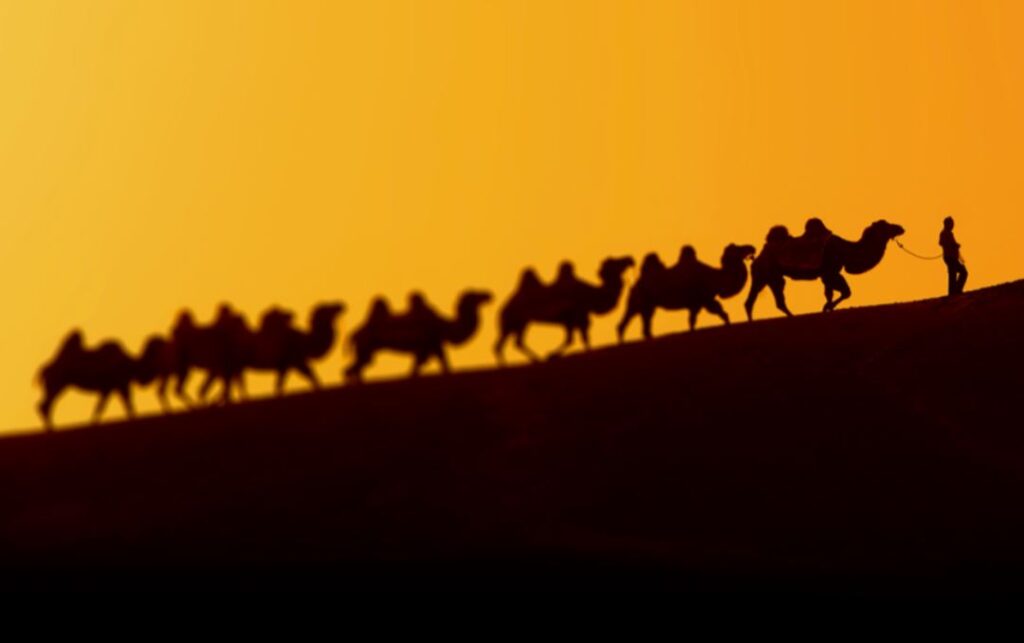
The curators of the Silk Roads exhibition at the British Museum got out of their comfort zones to create the show, which traces the intricate ties and overlapping networks linking Asia, Europe and Africa centuries ago. The lead image of the exhibition is the silhouette of a camel caravan that evokes romanticized notions of Silk Road trade, but the curators wanted to go further, exploring the geographic sweep of the routes along which people, objects and ideas moved over many generations. The London show, which opened in late September and runs until Feb. 23, 2025, includes objects from nearly all the museum’s collection departments as well as items on loan from Uzbekistan, Tajikistan and other places. Silk Roads has received generally positive reviews and some raves. There are a few critics. William Dalrymple, a prominent historian whose most recent book is “The Golden Road: How Ancient India Transformed The World,” said the show didn’t give enough attention to India. Last week, the curators said in a presentation that the connectivity and expansiveness of the project could be a model for exhibitions on other topics even as it hewed to rigorous scientific research involving British Museum experts and international specialists from other institutions. The Silk Road exhibition “goes beyound the norm in its experimental approach to tell big stories in a museum setting,” curator Luk Yu-ping said, adding that it was the first major show at the British Museum led by a team of three curators from different departments and with different fields of knowledge. “Each of us has had to step beyond our comfort zones and stretch well beyond our areas of expertise,” said Luk, an expert in Chinese paintings and prints as well as Central Asia collections. The result, she said, is an exhibition that “shows the potential for reimagining permanent displays and further developing partnerships and future projects” involving the British Museum. Another curator, Sue Brunning, said the layout of the Silk Roads show tries to evoke a winding journey through distant lands. “The design of the exhibition is quite open with no walls and  few barriers, and this is also to emphasize the connectivity between the different regions,” said Brunning, an archaeologist who specializes in early medieval European collections. Visitors can see for long distances down the gallery, and the different heights of the displays give an idea of the terrain, according to Brunning. There are also large images of the sea, mountains and other natural environments that give a sense of what people were traversing at the time, as well as an “ambient soundscape of environmental and travel sounds,” she said. The third curator is Elisabeth R. O'Connell, a specialist in ancient Egypt and the Byzantine period. She did not participate in the talk. While the Silk Roads network lasted for millennia, the British Museum is focusing on a relatively narrow slice of it - the period between AD 500 and AD 1,000, when contacts accelerated and flourished. Luk said museums in Uzbekistan and Tajikistan loaned...

Kyrgyz Government Adopts Strategic Task to Construct Eco-City

On October 14, Kyrgyzstan's President Sadyr Japarov signed a Decree to construct the eco-city "Asman" near the village of Toru-Aigyr on the northern shore of Lake Issyk-Kul, the country's  main region for tourism and recreation. Spanning 4,000 hectares, some 200km southeast of the capital Bishkek and dubbed a "smart city", Asman aims to become the country’s new economic and tourist hub and home to modern business, recreational and sports facilities, hi-tech parks, and financial institutions. It will also provide homes for around  500,000 residents. From a bird's eye view, Asman (the Kyrgyz word for "sky") will resemble a komuz, a traditional Kyrgyz string musical instrument and one of Kyrgyzstan's national symbols. According to Kyrgyz officials, the new city financed by foreign investors, will be built over the next 7-10 years but although the capsule-laying ceremony took place in June 2023, construction has yet to begin. Speaking at the ceremony, President Japarov remarked that “the city of Asman will become a financial hub connecting East and West, North and South.” As reported by the presidential press service, the construction of the eco-city is a “strategic task” for the country’s Cabinet of Ministers and local authorities of the Issyk-Kul region, with a key objective to protect the biosphere territory adjacent to the lake. According to the decree, the Cabinet of Ministers should develop and approve a concept for the construction of Asman by March 1, 2025, ensuring the preservation and protection of the environment during the city’s construction. It has also been recommended that a ban be placed in the city on hydrocarbon-fueled (gasoline, diesel, gas) transport in preference for electric transport and bicycles. For this purpose, the decree orders the creation of electric transport infrastructure and charging stations, as well as necessary conditions for the use of bicycles to ensure mobility of the city's population. In addition, the decree orders the use of energy-saving solutions and smart home technologies in the construction of buildings, and compliance with the World Health Organization's environmental standards for greening cities and introducing an environmentally safe waste management system. The realization of such a mega project has inevitably raised questions regarding finance, with construction costs currently estimated at around $20 billion. The Asman project shares similarities to the city of Arkadag in Turkmenistan. Unveiled in June 2023, the “smart” city of Arkadag was built from scratch 30 km south of Turkmenistan’s capital, Ashgabat. Designed to accommodate a population of  70,000, it cost billions of dollars to construct.

Murder and Arson in Talgar: Kazakhs Fear Rising Tide of Organized Crime

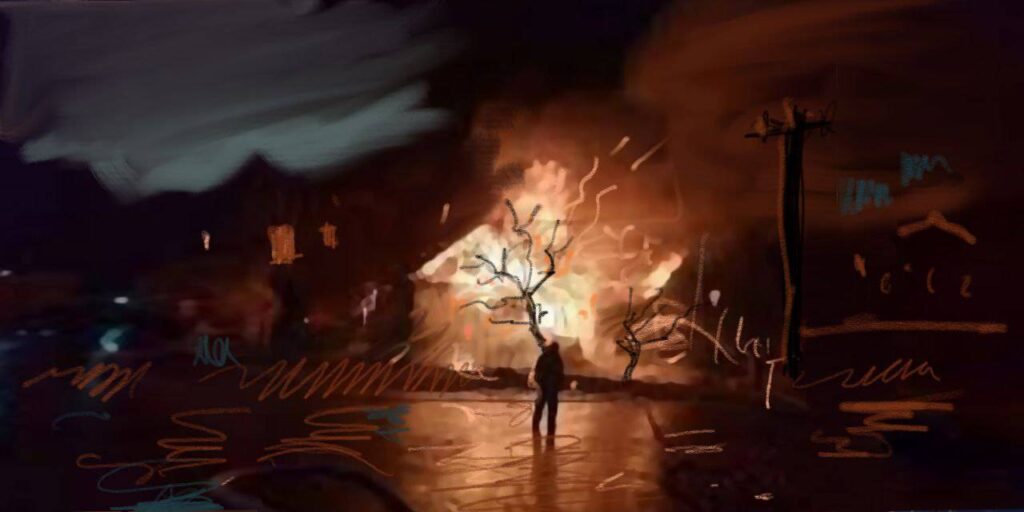
On the night of October 4, 16-year-old Sherzat Bolat was killed in the town of Talgar, located in Almaty Oblast near the city of Almaty. The father of the victim blamed the incident on a gang - allegedly operating in Talgar and the surrounding area for many years - with connections to the government and law enforcement agencies. Later, unknown people burned down the family's house, and National Guard troops were brought into Talgar. The situation brings to mind the darkest pages of recent history, when criminal groups held cities and entire neighborhoods in a state of fear. The Talgar tragedy Sherzat Bolat was murdered in front of his father and mother after an incident occurred involving young people who entered the store the Bolat family rented. As stated by the boy's father, the customers refused to pay for a can of beer, and a fight broke out. According to other relatives, the group had knives and firearms. Sherzat's uncle was also injured during the fight and is recovering in hospital. Police initially claimed that all those involved in the incident had been detained, but the parents of the deceased later said that only seven had been arrested, while there were many more attackers. Fearing that the perpetrators would not be brought to justice, on October 7 Sherzat's relatives and concerned citizens of Talgar staged a rally at which Sherzat's father, Karzhaubai Nurymov, claimed that the so-called “Khutorskie” group was responsible for the boy's death. According to multiple reports, the Khutorskie have been terrorizing Talgar and its surroundings areas for many years. Businessman Hasan Kasymbayev allegedly runs the group, whilst sources also mention his brothers, including Yerzhan Kasymbayev, who was sentenced to 14 years for the murder of customs officer Medet Zhamashev, and Aslan Kasymbayev, head of the Talgar district Akim's (mayoral) office. In addition, the Kasymbayevs are said to be related to an official who once held high positions in law enforcement agencies. According to concerned residents of Talgar, the perpetrators of the boy's murder may be able to avoid justice due to their connections. In a statement, the acting head of the regional police department denied the involvement of any organized crime groups in the murder; the investigation has now been taken over by the Ministry of the Internal Affairs, which has dispatched a team to the scene of the crime. In an interview, Hasan Kasymbayev, who posted controversial photos on social networks, categorically denied his involvement in the murder of the teenager and any participation in an organized crime group. Despite assurances from officials, on October 12, the house of Sherzat's family in the village of Azat, Yenbekshikazakh district, Almaty region, was burned down. Police opened a criminal case and took the murdered teenager's family into protective custody. The house was empty at the time of the fire. The murder and arson have caused a sharp reaction in Talgar and led to a wider reverberations throughout Kazakhstan. Former Minister of Education and Mazhilis deputy, Askhat Aimagambetov, stated...