• KGS/USD = 0.01144 0%
  • KZT/USD = 0.00212 0%
  • TJS/USD = 0.10456 0%
  • UZS/USD = 0.00008 0%
  • TMT/USD = 0.28490 0%
  • KGS/USD = 0.01144 0%
  • KZT/USD = 0.00212 0%
  • TJS/USD = 0.10456 0%
  • UZS/USD = 0.00008 0%
  • TMT/USD = 0.28490 0%
  • KGS/USD = 0.01144 0%
  • KZT/USD = 0.00212 0%
  • TJS/USD = 0.10456 0%
  • UZS/USD = 0.00008 0%
  • TMT/USD = 0.28490 0%
  • KGS/USD = 0.01144 0%
  • KZT/USD = 0.00212 0%
  • TJS/USD = 0.10456 0%
  • UZS/USD = 0.00008 0%
  • TMT/USD = 0.28490 0%
  • KGS/USD = 0.01144 0%
  • KZT/USD = 0.00212 0%
  • TJS/USD = 0.10456 0%
  • UZS/USD = 0.00008 0%
  • TMT/USD = 0.28490 0%
  • KGS/USD = 0.01144 0%
  • KZT/USD = 0.00212 0%
  • TJS/USD = 0.10456 0%
  • UZS/USD = 0.00008 0%
  • TMT/USD = 0.28490 0%
  • KGS/USD = 0.01144 0%
  • KZT/USD = 0.00212 0%
  • TJS/USD = 0.10456 0%
  • UZS/USD = 0.00008 0%
  • TMT/USD = 0.28490 0%
  • KGS/USD = 0.01144 0%
  • KZT/USD = 0.00212 0%
  • TJS/USD = 0.10456 0%
  • UZS/USD = 0.00008 0%
  • TMT/USD = 0.28490 0%

Viewing results 1507 - 1512 of 3334

Kazakhstan Referendum Approves First Nuclear Power Plant

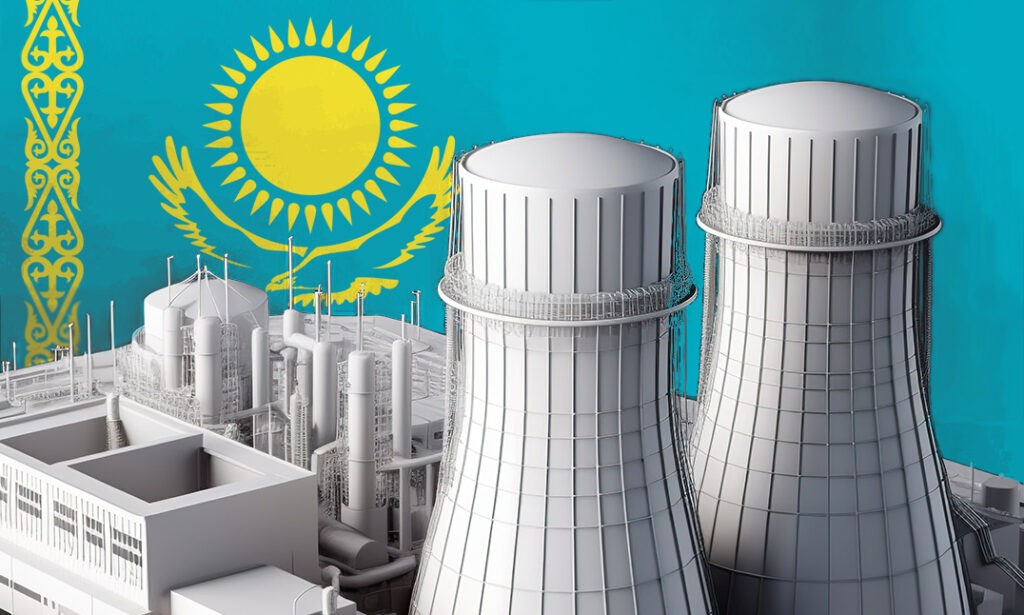
More than 71 percent of voters have approved the October 6 referendum for constructing Kazakhstan’s first nuclear power plant (NPP). Turnout was over 63 percent, easily surpassing the 50-percent barrier for validation. This result closely tracks the results of a telephone survey conducted by the Democracy Institute on September 30 and released by the Kazakhstan Institute for Strategic Studies. That survey found 73 percent of those asked to favor construction of a nuclear power plant. It also found that 62 percent of respondents intended to vote, not far from the actual participation rate.  President Kassym-Jomart Tokayev had announced the referendum initiative in a message to the public in September 2023. In that address, he emphasized that Kazakhstan, as the world's largest producer of uranium, should also have its own nuclear-power generation capabilities. Following this announcement, a series of meetings between representatives of various government agencies and the public were organized across all regions of the country. During these meetings, the plans for constructing an NPP were discussed in detail, with an emphasis on the potential benefits of nuclear energy for Kazakhstan’s energy independence. Kazakhstan has held a significant position in the global nuclear-energy market since the late 2000s, accounting for approximately 40 percent of global uranium production. Despite this advantageous position, the country faces severe electricity shortages, which are projected to worsen by 2025, especially in the rapidly growing southern regions. Reliance on aging thermal power plants, many of which are equipped with components that have been in service for over 50 years, has only exacerbated the problem. Frequent energy shortages in multiple regions have left citizens without heat during harsh winter conditions, often with temperatures dropping well below zero. The proposed site for the nuclear power plant is in Ulken, located in the Almaty region. The shortlist of potential builders for the NPP includes companies from China, South Korea, Russia, France, and the United States. The inclusion of companies from multiple countries is aimed at ensuring competitive bidding and securing the best possible technology for the project. Tokayev has indicated a personal preference for an “international consortium made up of global companies equipped with cutting-edge technologies.” Developing an NPP will help the country to achieve energy independence and meet carbon-neutrality goals. Without an NPP, rolling blackouts will be necessary and dependence on electricity imports from Russia will continue. However, the legacy of the Semipalatinsk test site looms large, creating a challenging decision for Kazakh citizens. Kazakhstan's nuclear history spans from Soviet-era testing to present-day energy challenges. The Semipalatinsk nuclear test site, established in 1947, was where the Soviet Union conducted over 468 nuclear tests, leaving long-lasting environmental and health impacts on the local population. The fallout from these tests has burdened the national health-care system for decades, exacerbated by nuclear fallout from Chinese testing at Lop Nor. In response to these consequences, then-President Nursultan Nazarbayev closed the Semipalatinsk site in 1991, and by 1994, Kazakhstan had relinquished its nuclear arsenal and became a non-nuclear state. Nazarbayev’s rise to power...
Referendum for Nuclear Power in Kazakhstan Passes

Kazakhstan's nuclear energy referendum on October 6 passed with a 71.12 % majority, marking a pivotal shift in the country's energy strategy. The nation has faced significant challenges with an aging energy infrastructure and a reliance on Russia to fill the gaps. The decision comes with historical sensitivities as Kazakhstan continues to grapple with the legacy of Soviet-era nuclear tests that caused widespread harm. The referendum offered citizens a direct voice in shaping their energy future, reflecting both the urgency of addressing the country’s current needs and the deep-seated concerns over nuclear safety. On the referendum ballot, Kazakhstanis were asked, “Do you agree to the construction of a nuclear power plant in Kazakhstan?”. The voter turnout was high, according to the Central Referendum Commission, with 7,820,918 Kazakhstan citizens receiving ballots, amounting to a 63.87% voter turnout. The voter turnout for the referendum on the new constitution in Kazakhstan, held on June 5, 2022, was similarly high at 68.44%. As the world's largest uranium producer, Kazakhstan is well-positioned to leverage its rich resources to transition towards more sustainable energy solutions. President Kassym-Jomart Tokayev has emphasized the critical importance of nuclear energy, not only in meeting the immediate electricity needs amidst frequent power outages but also in aligning with global environmental commitments. At the Convention on Climate Change (COP28) held in Dubai on December 1, 2023, Tokayev made a Global Methane Pledge to reduce methane emissions by 30 percent by 2030. The nuclear power plant is expected to reduce Kazakhstan's reliance on fossil fuels, thus decreasing greenhouse gas emissions. Uzbekistan has already begun construction of a nuclear power plant 55km from the Kazakhstan border. Kyrgyzstan may also build a nuclear power plant in the Chui region, which is less than 300km south of the planned Kazakhstani plant in Ulken on Lake Balkash. International observers from the Shanghai Cooperation Organization (SCO), the Organization of Turkic States (OTS), and the Conference on Interaction and Confidence Building Measures in Asia (CICA) have all affirmed that the recent referendum was conducted in accordance with current legislation, describing it as open, free, and legitimate. Kazakhstan’s Deputy Foreign Minister Roman Vassilenko noted the participation of over 200 foreign journalists during the referendum, underscoring the transparency and openness of the voting process. Radio Free Europe, through its affiliate Azattyk, was critical of the referendum. An incident of ballot stuffing at a Turkestan poll station was reported, as were accessibility issues for the disabled voters in the Uralsk region. One observer witnessed a suspicious busload of voters in Turkestan. RFE correspondents reported difficulty in getting voter turnout results throughout the afternoon at a station in Karganda and Aktobe. With that in mind, the irregularities seem to be few and far between overall: The League of Young Voters, a vigilant group of local observers, identified a total of 20 technical violations across the country’s 10,249 polling stations. The referendum day proceeded without significant issues, shifting attention to Kazakhstan's urgent energy shortfalls. With the nuclear power plant expected to be operational in 2034,...

Kazakhstan Awaits Results of Nuclear Referendum; Exit Polls Indicate a “Yes” Vote

Kazakhstan is awaiting the official results of a referendum on whether to build its first nuclear power plant, though exit polls showed “yes” voters were in the majority, according to state-run media reports. The project could ease chronic energy shortages and reduce reliance on coal-fired facilities but is fraught with concerns about costs, transparency, and the legacy of the human and environmental cost of Soviet nuclear weapons testing decades ago. Led by President Kassym-Jomart Tokayev, Kazakhstan’s political establishment has backed the idea of peaceful nuclear power as a way to move the country forward and the referendum appears aimed partly at giving people a sense of agency after the trauma of Soviet testing at Semipalatinsk. But some opponents allege that authorities restricted their efforts to organize a “no” campaign with detentions and other pressure designed to lock in an expected vote in favor. Officials results had not been announced as of early Monday morning. Voting at polling stations in Kazakhstan ended at 8 p.m. on Sunday and turnout among eligible voters was 63.87%, according to the Central Election Commission. The highest turnout was in the Kyzylorda region (82.48%) and the lowest turnout was in the city of Almaty (25.39%). Turnout in Astana, Kazakhstan’s capital, was 50.81%. “The precinct referendum commissions have begun counting the votes. The counting process at each polling station must not exceed twelve hours from the start of the count,” the commission said. Additionally, more than 7,358 Kazakh citizens voted at polling stations abroad, including in Asia, South America, Europe, and the United States, according to Roman Vassilenko, Kazakhstan’s Deputy Minister of Foreign Affairs. He noted at a briefing on Sunday night that the referendum had been monitored by observers from regional organizations, including the Shanghai Cooperation Organization, the Organization of Turkic States, and the Astana-based Conference on Interaction and Confidence-Building Measures in Asia. The heads of the observer missions said the referendum was “open, free, and legitimate, with no violations detected at any polling stations,” Vassilenko said. Kazakhstan also invited observers from the Organization for Security and Cooperation in Europe, but the OSCE declined to send a delegation “due to heavy workload,” reported the state-run Kazinform news agency. The OSCE sent a mission to observe a 2022 referendum on constitutional changes in Kazakhstan and concluded that it took place “in an environment short of genuine political pluralism.” One critic of the rules surrounding the nuclear referendum is Tamara Yeslyamova, editor-in-chief of the Uralskaya Nedelya, a newspaper that has sparred with the government over the years. A judge issued her with a fine for 110,760 tenge ($230) after she conducted video interviews about the referendum on nuclear power with half a dozen people on the street, the newspaper reported. It said the judge concluded that the interviews amounted to a public opinion survey; the law says such a poll can only be done by a state-sanctioned entity.

Laughter Amidst Ruins: Rediscovering Tajikistan’s Resilience Through Comedy and Cultural Exchange

The UN General Assembly's Human Rights Council recently condemned the government of Tajikistan for its failure to implement the recommendations of a 2019 study by UN representatives. The study focused on the unreconciled atrocities and societal wounds caused by the civil war that swept through the republic after the collapse of the Soviet Union. More than 60,000 people died in this war, and more than 250,000 fled the republic. Reading this news, I was reminded of and reflected on post-war Tajikistan, which I visited in the late summer of 2000. At that time, the country had been in a state of fragile peace for two years, and you could still feel the tension in the air. Since my visit to the country in 2000, the Tajik Civil War has been reflected on by many people in the arts. In the same year that UN researchers were raking up the old tragedy, the film Kazbat was released in Kazakhstan. This movie is a military drama about the real deaths of 17 soldiers of the Internal Troops of the Ministry of Internal Affairs of the Republic of Kazakhstan (now the National Guard), who fell into an ambush in Tajikistan on April 7, 1995. A little earlier, in 2017, Russian writer Vladimir Medvedev released the novel Zakhok, which talks about the horrors of that six-year war through the struggles of a single family, where the mother is Russian, and the children are half Tajik. My visit to this war-torn country was for a reason most wouldn’t have expected - a comedy festival. The group that I traveled with consisted of my teammates, Almaty residents, as well as people from other Kazakh, Uzbek, and Kyrgyz cities. Despite coming from all over Central Asia, we ended up in Tajikistan for the first international СVN festival (СVN - Club of the Funny and Inventive) in Central Asia. СVN is an improv and sketch comedy competition involving students that originated in Soviet times, the point of which is to satirize the surrounding reality through theatrical skits and question-based improv. Due to its satirical nature, СVN was banned for two decades during the Soviet-era. It was later revived during Perestroika, and, in the shortest possible time, became a phenomenon in all universities in Russia and across almost all of post-Soviet space. In Kazakhstan, СVN was developed immediately after the collapse of the USSR. Alma-Ata, which was the capital city back then, organized its own league, which included teams from the leading national universities of that time - Kazakh State University, Narkhoz, Almaty Institute of Transport Engineers, and Almaty State Medical Institute. I belong to the second generation of СVN players. Our task was to popularize this game throughout the republic and attract not only universities but also colleges and schools. Later, the new СVN league went beyond Kazakhstan, starting with friendly meetings with universities from Bishkek, Tashkent, and other Central Asian cities. Then, the International League of СVN, which was created and headed by Alexander Maslyakov, who passed...

Kyrgyz President Applauds Son’s Golf Project Despite Questions

Kyrgyzstan is building the biggest golf course in Central Asia, President Sadyr Japarov says. The man building the golf course? Japarov’s son, Rustam. Japarov has often said that his friends and family won’t get involved in politics and government, though some media reports and critics say that he hasn’t kept his word in a country where corruption has been a longstanding concern. In an interview this week with the state-run Kabar news agency, the president stuck to his position that family members won’t get mixed up in state affairs. “I always tell them not to do business with the state. We must learn from the past,” said Japarov, who has previously said that critical media coverage of his government amounted to slander and trafficking in rumors. “Rustam is busy attracting investors. He is building a golf course in Issyk-Kul. God willing, we plan to open it next year,” said Japarov, who didn’t offer details about the project other than that “it will be the largest golf course in Central Asia.” The president also praised his son for a project that he started last year to build a football field with lighting in every village in the country. The area around Lake Issyk-Kul, where the golf course is being built, is one of Kyrgyzstan’s main tourist sites. Its attractions include beaches, hiking and ancient petroglyphs showing deer, leopards and hunting scenes. There are restaurants, wellness centers and conference facilities catering to international delegations. Telegram founder Pavel Durov was spotted there earlier this year. Japarov’s son, Rustam, drew attention in 2022 when a photo circulating on social media appeared to show him with leaders at a meeting of the Shanghai Cooperation Organization, a regional security group, in Samarkand, Uzbekistan. At the time, the 24.kg news service questioned why he was there since he didn’t hold any government position and wasn’t part of the official Kyrgyz delegation. In June, President Japarov apologized when news emerged that the fiancé of his niece had proposed marriage after the pair traveled on a rented government helicopter to the mountains near Bishkek. The scandal got worse when the fiancé, Aftandil Sabyrbekov, was arrested on drug charges. In the Kabar interview that was published on Wednesday, Japarov also disputed any suggestion that the involvement of Taimuras Tashiev, son of a high-ranking government official, in a road project in the town of Özgön was inappropriate. Tashiev’s father is Kamchybek Tashiev, chairman of the State Committee for National Security. “Why not say thanks to Taimuras,” said the president, who regularly gives interviews to state-run Kabar while some more critical media have faced state prosecutions. “Would Taimuras introduce the company he founded if it would harm the state?”

Navigating Diplomacy: Central Asia’s Strategic Balancing Act Amid Middle East Tensions

The five Central Asian republics are actively building ties with the outside world, trying to balance the influence of China and Russia in the region. For the former Soviet republics, the Middle East was, until recently, a kind of terra incognita since Moscow carried out all contacts with the area. However, since the nineties, thanks to a growing friendship with Turkey, Kazakhstan, followed by other Central Asian republics, have begun establishing diplomatic, cultural, and trade ties with the Middle East and North African countries. Another escalation in the Middle East has forced the diplomatic departments of the Central Asian countries, whilst avoiding any accusations against either side in the conflict, to inform their citizens about and the address the fate of their compatriots who have found themselves at the epicenter of events. Kazakhstan In Kazakhstan, law enforcement agencies reacted before diplomats. Shyngys Alekeshev, head of the Interior Ministry's Information Policy Department, said in response to journalists' inquiries that police in the republic have brought their patrol routes closer to synagogues and Israeli diplomatic facilities. Later, official representative of the Ministry of Foreign Affairs of Kazakhstan, Aibek Smadiarov, said that no Kazakh citizens were injured as a result of the armed escalation between Iran and Israel, and urged Kazakh citizens in the Middle East to exercise caution. “The Kazakh Foreign Ministry expresses deep concern about the increasing escalation of tensions in the Middle East. We call on all parties involved to exercise restraint and refrain from using forceful methods to avoid civilian casualties and further escalation of the situation in the region, which could provoke a full-scale war. In this regard, we note the importance of taking early measures to resolve differences exclusively through political and diplomatic means within the framework of the principles of the UN Charter and international law,” said Smadiarov. According to the representative, 120 citizens of the Republic of Kazakhstan, including diplomats and their family members, are registered as being present in Israel, 102 in Iran, and 139 in Lebanon. “Communication channels have been created with citizens who are in these countries. Constant communication is maintained with them, and necessary recommendations are given depending on the development of the situation in one country or another. Several times, embassies have announced the need to leave the country due to the aggravation of military and political situations. At the same time, the Ministry and authorized bodies are monitoring the situation to work out possible repatriation flights. The evacuation of our citizens is still under consideration and the special control of the Ministry of Foreign Affairs,” said Smadiarov. Kyrgyzstan The Kyrgyz Foreign Ministry stated on October 2 that it is deeply concerned about events taking place in the Middle East, stating that it is calling on “the conflicting parties to respect the fundamental principles and norms of international law, including refraining from actions leading to an escalation of the situation in the region. The Kyrgyz Republic urges the global community to completely stop military action as soon as possible, and start...