• KGS/USD = 0.01144 0%
  • KZT/USD = 0.00212 0%
  • TJS/USD = 0.10456 0.19%
  • UZS/USD = 0.00008 0%
  • TMT/USD = 0.28490 0%
  • KGS/USD = 0.01144 0%
  • KZT/USD = 0.00212 0%
  • TJS/USD = 0.10456 0.19%
  • UZS/USD = 0.00008 0%
  • TMT/USD = 0.28490 0%
  • KGS/USD = 0.01144 0%
  • KZT/USD = 0.00212 0%
  • TJS/USD = 0.10456 0.19%
  • UZS/USD = 0.00008 0%
  • TMT/USD = 0.28490 0%
  • KGS/USD = 0.01144 0%
  • KZT/USD = 0.00212 0%
  • TJS/USD = 0.10456 0.19%
  • UZS/USD = 0.00008 0%
  • TMT/USD = 0.28490 0%
  • KGS/USD = 0.01144 0%
  • KZT/USD = 0.00212 0%
  • TJS/USD = 0.10456 0.19%
  • UZS/USD = 0.00008 0%
  • TMT/USD = 0.28490 0%
  • KGS/USD = 0.01144 0%
  • KZT/USD = 0.00212 0%
  • TJS/USD = 0.10456 0.19%
  • UZS/USD = 0.00008 0%
  • TMT/USD = 0.28490 0%
  • KGS/USD = 0.01144 0%
  • KZT/USD = 0.00212 0%
  • TJS/USD = 0.10456 0.19%
  • UZS/USD = 0.00008 0%
  • TMT/USD = 0.28490 0%
  • KGS/USD = 0.01144 0%
  • KZT/USD = 0.00212 0%
  • TJS/USD = 0.10456 0.19%
  • UZS/USD = 0.00008 0%
  • TMT/USD = 0.28490 0%

Viewing results 1501 - 1506 of 3334

New Report From World Bank Condemns Tashkent Air Quality

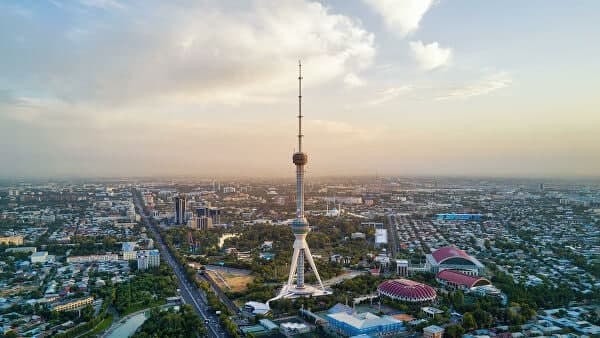
A new World Bank report entitled "Air Quality Assessment for Tashkent and the Roadmap for Air Quality Management Improvement in Uzbekistan" gives a frightening assessment of the air quality in the country’s capital. The report finds that ambient PM2.5 concentrations in Tashkent, which peak in winter, substantially exceed international air quality standards. The annual average concentration exceeds six times the WHO’s average yearly guideline of 5 µg/m3. In Tashkent, PM2.5 ambient air pollution has considerable health and economic costs. It can be linked to health costs equivalent to 0.7% of Uzbekistan’s gross domestic product (GDP). Most air quality-related diseases and premature deaths in Uzbekistan and worldwide are linked to PM2.5, which the World Health Organization (WHO) has identified as the pollutant with the gravest health risk. According to IQAir, Tashkent, like other Central Asian cities, frequently ranks among the world's most polluted urban areas. According to the report, the primary sources of human-caused PM2.5 pollution in Tashkent are the heating (28%), transport (16%), and industrial sectors (13%). Cross-boundary sources like windblown dust (36% PM2.5 pollution) dominate in the summer, while commercial and residential heating is the primary source of PM2.5 pollution in the winter. The report’s AQM roadmap for Uzbekistan formulates priority actions such as updating air quality standards and legislation, developing a national AQM strategy and coordination mechanism, and taking measures in the industrial, transport, and heating sectors, which are most responsible for air pollution. The AQM roadmap recommends investments in emission reduction measures. The roadmap suggests that emissions from the heating sector can be reduced by improving the quality of fuels used and the efficiency of heating appliances, implementing energy efficiency measures, and switching to cleaner heating alternatives. At a government meeting on October 9, Uzbekistan’s President Shavkat Mirziyoyev reviewed a draft master plan for the city of Tashkent until 2045. Today the population of Tashkent is more than 3 million people, and it keeps growing. Over the past ten years, the average air temperature in Tashkent has increased by 1 degree Celsius. The number of cars is rising, and traffic is becoming increasingly congested. The new master plan takes these aspects into account. It plans to increase green areas in Tashkent and its suburbs threefold to 25,000 hectares, which will increase per capita green area from the current 3 to 6 square meters. Mirziyoyev emphasized the need to turn Tashkent into a city where at least 7.5 million people can live and work.

Kazakhstan Prepares to Introduce Digital Currency

At this week's Central Asia Fintech Summit in Almaty, the Digital National Bank of Kazakhstan presented its vision for a digital version of the country's currency, the tenge. The digital tenge is an electronic version of Kazakhstan's national currency issued by the National Bank. It is designed to complement cash and non-cash forms of money by making financial services available in digital format. Digital tenge can be used for instant payments and transfers, settlements between individuals and businesses, and payment for goods and services through mobile banking applications. This currency is particularly useful in e-commerce, government services, financial technologies, and cashless settlements. It also supports the development of smart contracts, allowing for the automation of financial transactions. The introduction of the digital tenge promotes transparency in financial transactions and improves access to financial services in remote and rural areas. Advisor to the Chairman of the National Bank, Binur Zhalenov, said that the project is planned to be completed within five years. Some components, such as the digital tenge and a single QR in pilot mode, are already being implemented. Full implementation of the digital tenge, including the connection of all second-tier banks, is expected by 2025. Zhalenov noted that the platform is ready and operates based on the National Payment Corporation. In the coming years, it is planned to actively connect financial organizations and expand the digital tenge's capabilities. Last year, Zhalenov explained that using the digital tenge will require an existing banking app for one of the project participants. Thus, users will be able to link a digital tenge account to their current payment card without the need to install additional programs.

Anniversary of the Ashgabat Earthquake Tragedy

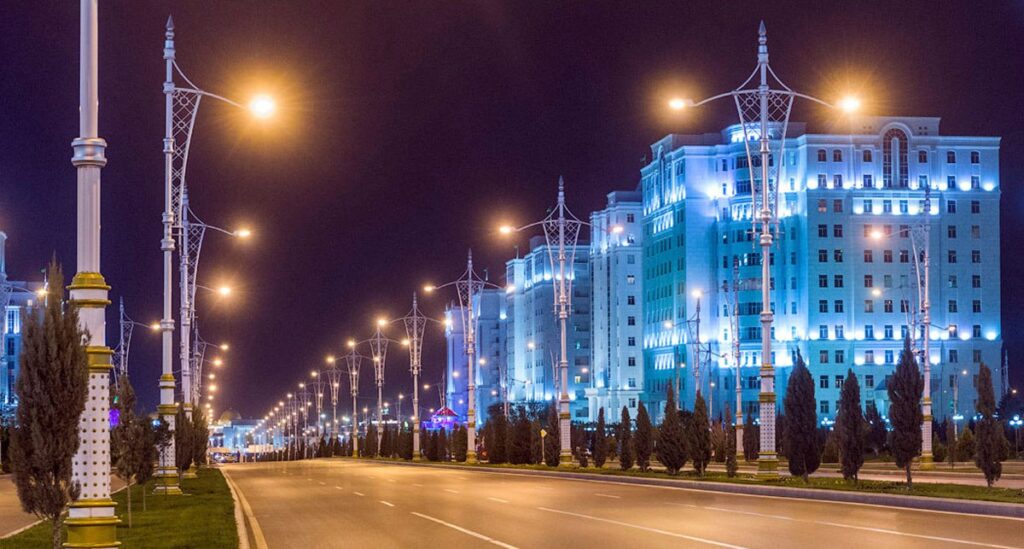
In every city's history, there are events that forever change its image and the fate of its inhabitants. The night of October 5-6, 1948, marked a turning point for Ashgabat, with a tragic event which still resonates in the hearts of those who lived through it. On that warm October evening, no one in Ashgabat could ever have predicted that the next few hours would forever change the fates of tens of thousands of people. Life in the city continued as usual, music played in the parks, lovers strolled along the streets, and students prepared for classes. The starry sky promised a peaceful night... Founded in 1881, when seismology was still young, Ashgabat grew and developed, oblivious to any impending danger. Traditional adobe construction —a mixture of clay and straw—seemed ideal for the dry climate. Year on year, residents renewed their clay roofs, adding new layers without considering that the increasing weight could be a death trap. “Only the stone building of the Central Committee of the Communist Party of Turkmenistan and a few other important buildings were made of quality bricks,” recalled one eyewitness. “It was these buildings, though damaged, that survived, while virtually the rest of the city was reduced to rubble.” [caption id="attachment_24231" align="aligncenter" width="300"] @mchs.gov.ru[/caption] “In the middle of the night - we heard- a menacing rumble, then rumbling and cracking as the ground shook and shimmered...” said one of the survivors, recalling the beginning of the tragedy. At 1.14 am on October 6, 1948, something happened that many Ashgabat residents believed was the start of a new war. Within but a few seconds, the city was a ruin. Academician Dmitry Nalivkin, who was at the epicenter of events, describes the harrowing event: “There was something incredible, impossible outside the window. Instead of a dark transparent starry night, there was an impenetrable milky-white wall in front of me, and behind it - horrible moans, screams, cries for help.” [caption id="attachment_24232" align="aligncenter" width="300"] @mchs.gov.ru[/caption] According to Nalivakin, the city was completely paralyzed. Telephone communications were interrupted, the train station turned into a pile of rubble, and the airfield was destroyed. Overnight, the capital of the republic was cut off from the outside world. In a matter of seconds, 98% of the city was rubble. Lieutenant Colonel of Medical Service Tikhon Boldyrev describes the first minutes after the catastrophe: “A deafening noise like a deep sigh swept through the city, and immediately there was dead silence. The air was filled with thick, suffocating dust. There was no sound, no cries for help, no animal sounds; it was as if every living thing had perished beneath the ruins.” In the darkness, in a dense veil of dust, survivors raked through the rubble with their bare hands, trying to save their loved ones. Alevtina Dubrovskaya, a resident of Ashgabat, recalls, “I found myself covered from head to toe with a mat hanging over my bed, but there was some space with air under it, which saved me from suffocation...” [caption...

Leading UAE Hotel Chain Explores Options in Uzbekistan

A world-famous chain of hotels in the UAE is exploring entering the Uzbekistan market. The announcement  follows talks between Uzbek diplomats and Phillip Crouse, vice president of the United Arab Emirates' Jumeirah Group, and an introduction of the company's team to the recent reforms implemented in Uzbekistan, as well as programs and regulations to increase the country's tourist attractiveness, existing tourist routes, flights between the two countries, and hotels. Representatives were also presented with options to privatize or reconstruct large hotel complexes in the country. The entry of the Jumeirah brand into the Uzbekistan market will further increase the country's number of luxury hotels and enhance its ever-expanding tourist market. Over the past seven years, the number of foreign tourists visiting Uzbekistan has tripled, the volume of tourism services has increased fivefold, and the number of hotels and accommodation facilities has increased tenfold. Last year, more than 6.6 million tourists visited the country, providing a revenue of some 2.1 billion dollars, and according to recent reports, Uzbekistan aims to increase the number of foreign tourists to 15 million by 2030. Jumeirah, part of Dubai Holding, is a global luxury hotel company with 26 properties, including resorts, city hotels, and serviced residences across the Middle East, Europe, and Asia.

Kazakhstan Enters Era of Peaceful Nuclear Energy

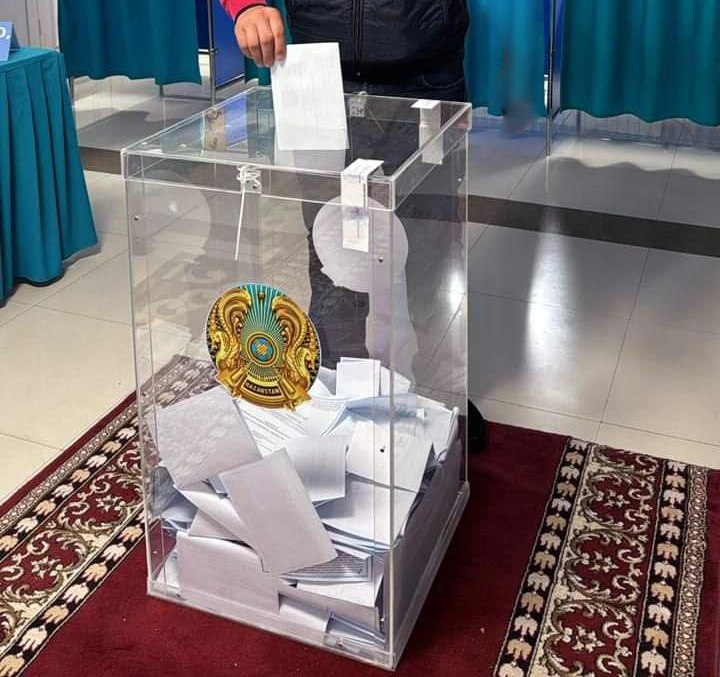
Kazakh President Kassym-Jomart Tokayev's bet on a referendum to secure citizens' consent to construct a nuclear power plant has worked. The Central Election Commission of Kazakhstan announced the final results of the referendum held last Sunday, in which 63,66% of citizens eligible to vote showed up at the polling stations. 71.12 % answered “Yes” to the question on the ballot paper about consent to constructing the nuclear power plant. Organizations engaged in sociological surveys of voters at the exit polls announced similar results on Sunday night and Monday. “The exit poll of the Institute of Complex Social Studies - Astana (SOCIS-A) called the referendum participants' decision to favor the construction of nuclear power plants in Kazakhstan. 'For' voted 69.8%, ‘Against’ - 30.2%. Similar figures were shown by the Institute of Eurasian Integration exit poll ('For' - 71.8%, 'Against' - 28.2%). According to the Institute of Public Policy of the Amanat party, 72.3% of referendum participants voted in favor of the NPP construction. In comparison, 27.7% voted against,” Kazakhstani political analyst Eduard Poletayev said on his Facebook account. His colleague Daniyar Ashimbayev, commenting on the exit poll data, emphasized that Kazakhstanis have managed to overcome old phobias related to Chernobyl and tests at the Semipalatinsk nuclear test site, as well as “enemy propaganda.” By 'propaganda', he means the agitation work of opponents to NPP construction. [caption id="attachment_24131" align="alignnone" width="300"] @ТСА/Kubaizhanov[/caption] “For many years, projects to return to nuclear energy were discussed, but there was always a lack of political will, and powerful foreign pressure prevented the decision necessary for the country. And even now, during the campaign period, we have seen the active work of propagandists paid from abroad to not only disrupt the plans for the construction of nuclear power plants but also to try to destabilize the situation in the country,” said Ashimbayev. Ashimbayev implies that the United States is putting sticks in the wheels of the development of Kazakhstan's nuclear industry. And the point here is not that American nuclear corporations were left off the shortlist, which Kazakhstan is considering, but in the usual policy of containment. Not Kazakhstan, of course, but Russia and China - Washington's main geopolitical rivals and competitors. Realizing this, Tokayev, after voting in the referendum and answering journalists' questions afterward, said that he would like the NPP to be built by an international consortium, presumably from the companies of those countries that were on the shortlist: Russia, China, South Korea, and France. “This is not an easy question. The government should engage in analysis and conduct appropriate negotiations. My vision for this issue is for an international consortium to work in Kazakhstan, consisting of global companies with the most advanced technologies. Further, as they say, life will show,” Tokayev said. Kazakhstan has turned another significant page in its history. In 400 days of discussing nuclear power plants - how long it took from when Tokayev first mentioned atomic power to the end of the campaign period - the president's team has managed the...

Tajikistan Expresses Concerns over Violations of its Citizens’ Rights in CIS Countries

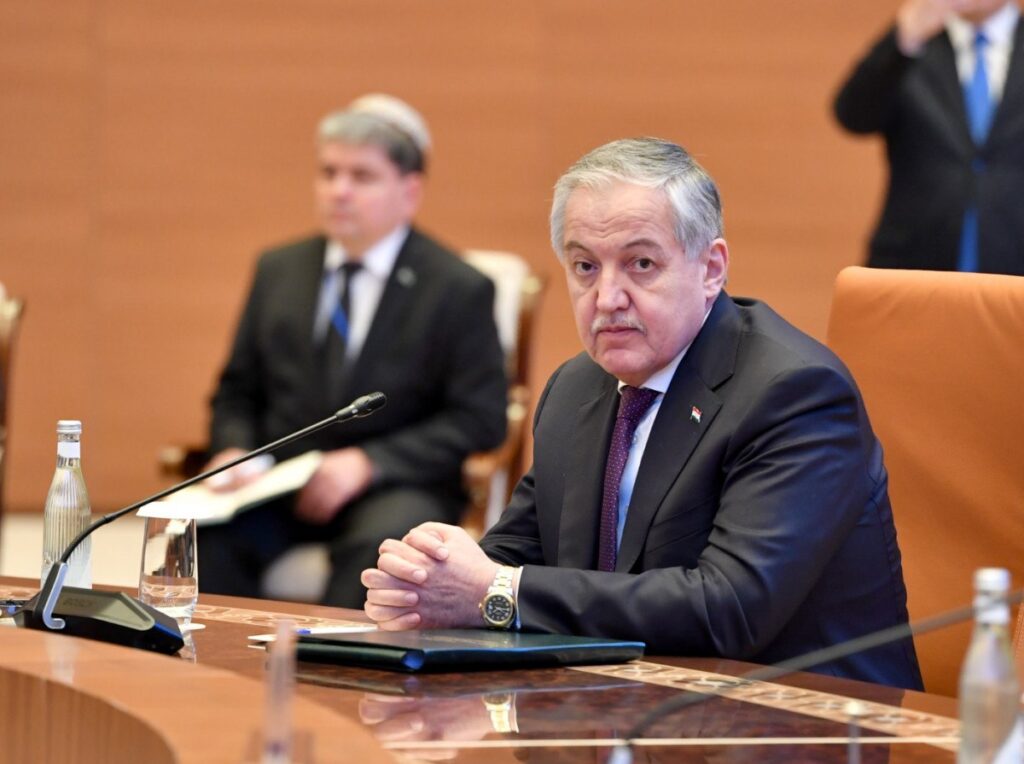
The most recent meeting of the Council of Foreign Ministers of the Commonwealth of Independent States (CIS) was hosted by Moscow on October 7. During the meeting,  Minister of Foreign Affairs of Tajikistan, Sirojiddin Muhriddin, expressed his concern about the violation of the rights of the republic's citizens on the territory of some CIS countries. Emphasizing the need for a comprehensive approach to solving migration issues in the countries of the Commonwealth of Nations, he called for consideration of all parties' interests: host countries, migrant-sending countries, foreign citizens, and the local population. The Minister also addressed urgent security issues and stressed the need to strengthen the fight against terrorism, extremism, illegal drug trafficking, and transnational crimes. He invited the CIS states to participate in the international conference on counterterrorism, scheduled for early November in Kuwait City as part of the Dushanbe process.