• KGS/USD = 0.01144 0%
  • KZT/USD = 0.00213 0%
  • TJS/USD = 0.10456 0.19%
  • UZS/USD = 0.00008 0%
  • TMT/USD = 0.28490 0%
  • KGS/USD = 0.01144 0%
  • KZT/USD = 0.00213 0%
  • TJS/USD = 0.10456 0.19%
  • UZS/USD = 0.00008 0%
  • TMT/USD = 0.28490 0%
  • KGS/USD = 0.01144 0%
  • KZT/USD = 0.00213 0%
  • TJS/USD = 0.10456 0.19%
  • UZS/USD = 0.00008 0%
  • TMT/USD = 0.28490 0%
  • KGS/USD = 0.01144 0%
  • KZT/USD = 0.00213 0%
  • TJS/USD = 0.10456 0.19%
  • UZS/USD = 0.00008 0%
  • TMT/USD = 0.28490 0%
  • KGS/USD = 0.01144 0%
  • KZT/USD = 0.00213 0%
  • TJS/USD = 0.10456 0.19%
  • UZS/USD = 0.00008 0%
  • TMT/USD = 0.28490 0%
  • KGS/USD = 0.01144 0%
  • KZT/USD = 0.00213 0%
  • TJS/USD = 0.10456 0.19%
  • UZS/USD = 0.00008 0%
  • TMT/USD = 0.28490 0%
  • KGS/USD = 0.01144 0%
  • KZT/USD = 0.00213 0%
  • TJS/USD = 0.10456 0.19%
  • UZS/USD = 0.00008 0%
  • TMT/USD = 0.28490 0%
  • KGS/USD = 0.01144 0%
  • KZT/USD = 0.00213 0%
  • TJS/USD = 0.10456 0.19%
  • UZS/USD = 0.00008 0%
  • TMT/USD = 0.28490 0%

Viewing results 1525 - 1530 of 3334

The Ferghana Valley: Navigating Complex Challenges in Central Asia’s Most Volatile Region

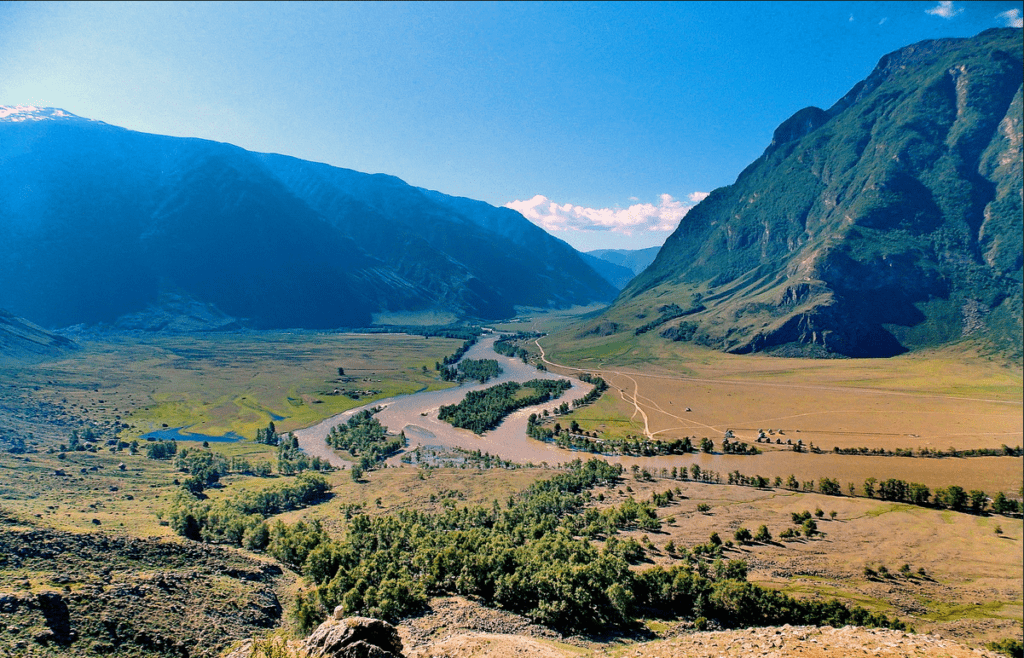
The Ferghana Valley is one of Central Asia’s most fertile and densely populated areas, but it is also among the most volatile. Spanning Uzbekistan, Kyrgyzstan, and Tajikistan, this landlocked region has long been a hotbed of ethnic tension, water disputes, and political instability. These challenges are deeply rooted in the geography, history, and sociopolitical landscape, making the valley a key focal point for understanding broader regional dynamics in Central Asia.   Geographical Importance and Ethnic Diversity Nestled between the towering Tien Shan and Pamir Mountain ranges, the Ferghana Valley covers over 22,000 square kilometers. It is fertile land nourished by the Syr Darya River, making it a critical area for cultivating cotton, fruits, and vegetables. These natural resources have historically drawn diverse populations, creating a vibrant ethnic mosaic. The valley is home to Uzbeks, Kyrgyz, and Tajiks, as well as smaller ethnic groups. While ethnic Uzbeks form the majority, significant Kyrgyz and Tajik minorities inhabit border regions. The ethnic diversity of the Ferghana Valley is both a strength and a source of tension. Soviet-era border policies exacerbated these divisions by creating artificial boundaries that crisscrossed the valley, leaving behind ethnic enclaves — pockets of one nationality surrounded by the territory of another. These enclaves have complicated governance and territorial integrity, making border management a persistent challenge.   The Soviet Legacy and Border Disputes During Soviet rule, the Central Asian republics were organized under Stalin’s divide-and-rule strategy, which deliberately created complex borders to weaken local identities and prevent regional unity. The Ferghana Valley, divided among three Soviet republics, is a prime example of this approach. After the Soviet Union's collapse in 1991, the administrative boundaries became international borders overnight between Uzbekistan, Kyrgyzstan, and Tajikistan. The lack of clearly defined borders has sparked numerous conflicts over territory, water, and land. A notable clash between Kyrgyzstan and Tajikistan in 2021 resulted in over 40 deaths and the destruction of homes and infrastructure. Many disputes revolve around access to scarce resources like water and arable land. These issues have escalated into violent confrontations, leading to casualties and the displacement of local populations.   Water: A Scarce and Contested Resource Water is the lifeblood of the Ferghana Valley, but disputes over its allocation are a major source of tension. The valley depends heavily on irrigation for its agricultural productivity, and the Syr Darya River, along with its tributaries, plays a crucial role in supplying water to the region. However, the division of the valley among the three countries complicates water management. Uzbekistan, the most populous of the three, relies on the valley’s water resources for its cotton industry, a cornerstone of its economy. Meanwhile, Kyrgyzstan and Tajikistan, which control the headwaters of the Syr Darya, often use their upstream position to leverage water access. This dynamic has led to frequent disagreements over water usage. For instance, Kyrgyzstan has at times threatened to withhold water unless it receives compensation, either through payments or electricity.   Ethnic Tensions and Political Instability Ethnic tensions further complicate the Ferghana Valley’s already volatile...
Kazakh Zhuz and Rus: From History to the Modern Day

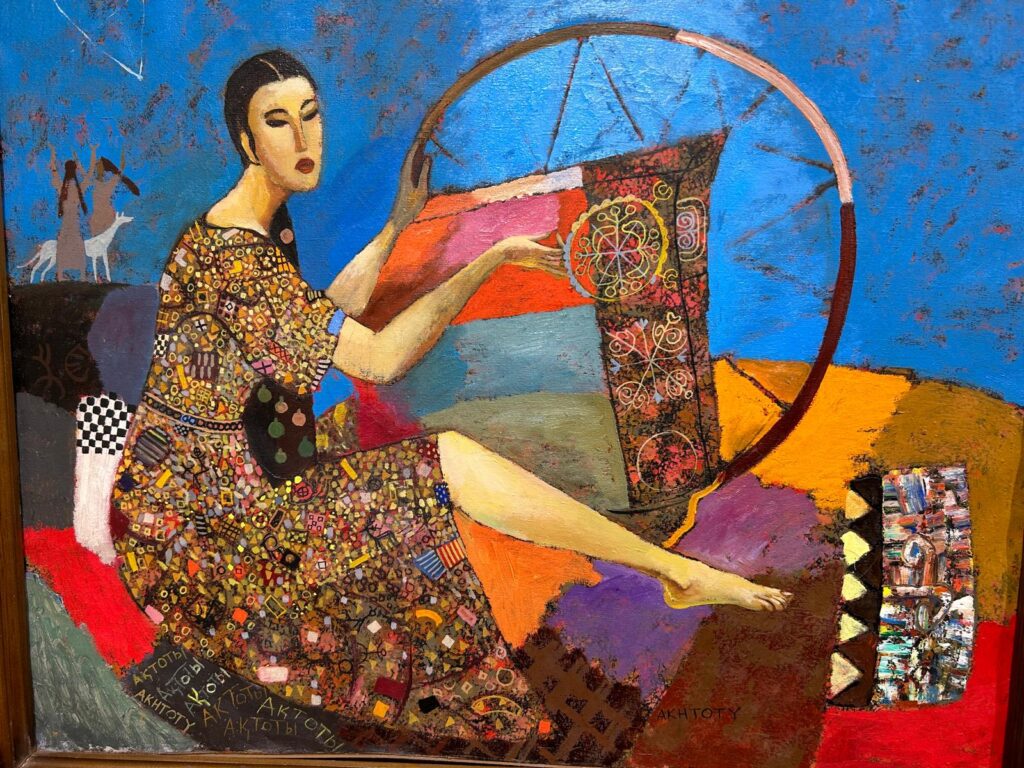
The zhuz are tribal unions that have played an important role in the history and culture of the Kazakh people. There are three main zhuzes in Kazakhstan: the Senior Zhuz, the Middle Zhuz, and the Younger Zhuz. Each includes several tribes which have their own unique traditions and customs. In general, zhuz began to form in the XVI-XVII centuries, when Kazakhs united to protect their lands from external threats. The Senior Zhuz occupied the southern and southeastern regions, the Middle Zhuz occupied the central and northern regions, and the Younger Zhuz occupied the western and northwestern territories of Kazakhstan. Each zhuz had its own system of governance and societal norms. In addition, each zhuz had its own ru, which in Kazakh means patriarchal clan, descended from one ancestor of the seventh tribe or more. Some of the most common ru include: Dulat: One of the largest clans of the Senior Zhuz, known for its historical significance and large numbers. Naiman: An important clan of the Middle Zhuz, which has played a significant role in the history of the Kazakh people. Argyn: Another major clan of the Middle Zhuz, known for its warriors and cultural traditions. Adai: A clan of the Younger Zhuz which is famous for its traditions and history. Today, zhuz continue to play an important role in the life of Kazakhstan. People remain proud to belong to a particular zhuz and ru, passing on its culture to their children. For example, Kamila, a 20-year-old student from Almaty says she is honored to belong to the Argyny ru, and she and her family try to preserve its traditions. “Our tamga, which in Kazakh means ancestral family sign, is a sign of infinity, and everyone in our family has a sign of the clan hanging. We are very proud of it, and I feel a connection to this symbol.” Yerzhan, a 27-year-old, programmer and student of photography from Taraz, is proud of his Naiman background. “They often say about us that we’re brave, courageous and strong-willed, because our ancestors fought with the armies of Genghis Khan,” he told TCA. Asel from Shymkent, a 21-year-old student at the Taraz State University, an aspiring musician who plays the dombra, feels a connection with her ancestors from the Younger Zhuz, namely the Adai ru, and tries to follow their example. “My grandfather told me that many batyrs, Sufis, biys and akyns came from Adai. Beket-ata is especially famous. Perhaps that's why I began to study music. There is a story that it was Adai ru who developed a special technique of playing the dombra which is known as the Mangistau school.” Kazakh zhuz and rus remain an important part of the history and culture of Kazakhstan, and continues to live in the hearts and minds of people, preserving their traditions for future generations.

Tajikistan’s Rahmon: No Military Solution to Palestinian Conflict

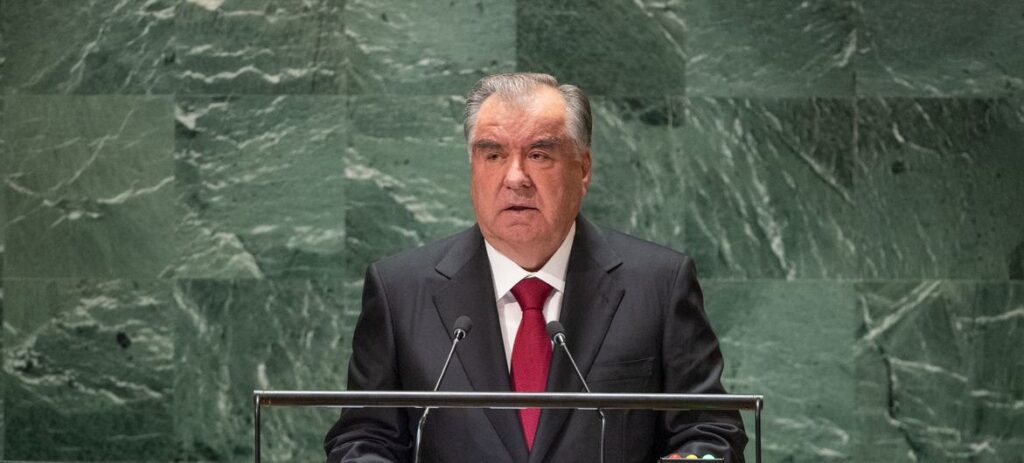
The President of Tajikistan, Emomali Rahmon, has said that the current situation in the Middle East proves that there is no military solution to the Palestinian conflict. Speaking at the 79th session of the UN General Assembly in New York, Rahmon said that the Palestinian crisis is a deep concern among Tajikistan's people. “Tajikistan believes that the final and real solution of this issue is possible only by fulfilling the decisions of the United Nations on the creation of an independent Palestinian state based on the borders of 1967,” the Tajik leader said. He hopes the parties will stop fighting, work on peace talks, and take adequate measures to restore stability in Palestine. He added that Dushanbe supports global stability and socio-economic development in Afghanistan. “For this purpose, Tajikistan is always ready to contribute to restoring and developing various aspects of a peaceful life in Afghanistan,” Rahmon said. Rahmon called on the international community to help the “long-suffering people of Afghanistan, including those affected by natural disasters,” to prevent a humanitarian crisis. The Times of Central Asia has reported that Kyrgyz President Sadyr Japarov addressed the 79th session of the UN General Assembly and called on the world community to reduce weapons and international tension.

Fallout From Assault on Tashkent Schoolboy Reaches Russian Foreign Ministry

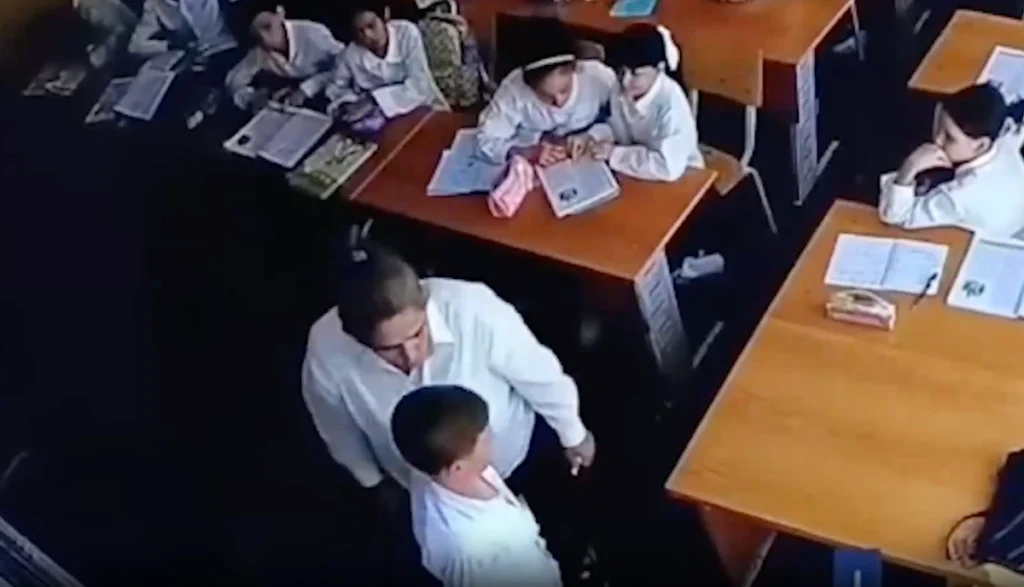
On September 23 a teacher at a school in Tashkent's Chilonzor district slapped a student when the child asked for the Russian language class to be taught in Russian. The Children’s Ombudsman of Uzbekistan, Surayyo Rahmonova, has begun an investigation into the incident -- but not before news of the assault reached Russia. Maria Zakharova, the spokesperson for the Russian Ministry of Foreign Affairs, said that she was concerned about the content of a video of the slap that was posted on social media. “We have requested official clarification from the Uzbek side,” Zakharova commented. “The Uzbek side is urgently asked to give the media material a legal assessment and, if justified, to take action against the perpetrator of cruel treatment of the child. We are keeping this issue under the closest attention.” The leader of Uzbekistan’s Milli Tiklanish (National Revival) party and deputy speaker of the lower house of parliament, Alisher Qodirov commented on Telegram that “it would be better for [Russia] to deal with their own affairs [which are] full of problems than to deal with our internal issues. The violation of rights of an Uzbek child at a school in Uzbekistan will be investigated in accordance with Uzbek laws.” A vocal critic of Russian influence, earlier this year Qodirov proposed a ban on the provision of public services to persons who don’t speak the Uzbek, and the promotion of Soviet ideology and symbols in Uzbekistan.

Central Asian Economies to See Continued Growth in 2024 and 2025

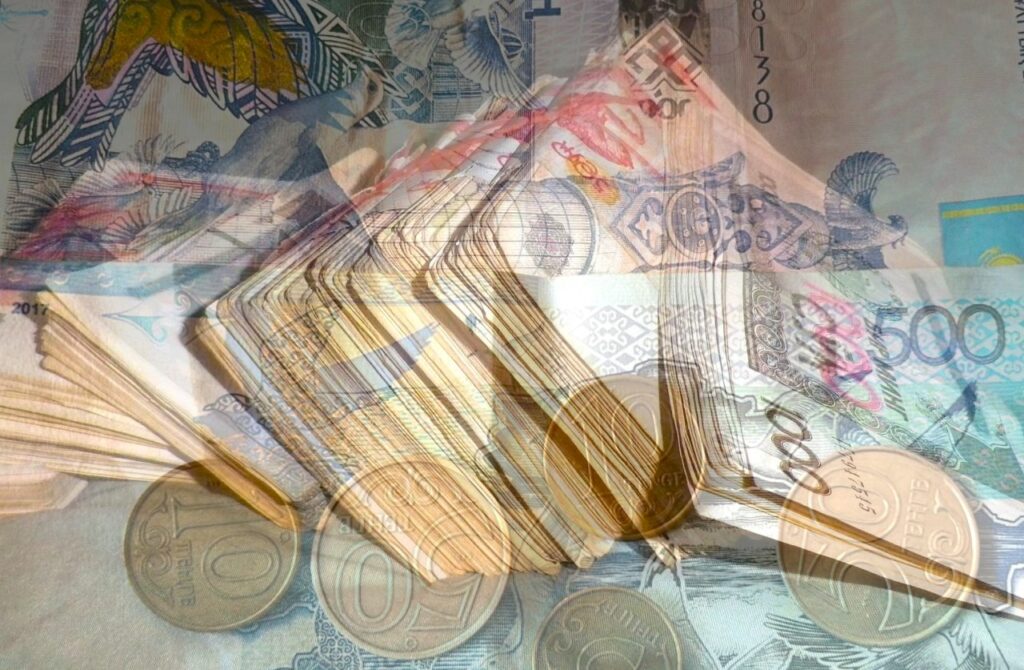
The latest economic outlooks from the European Bank for Reconstruction and Development (EBRD) and Asian Development Bank (ADB) project continued economic growth in the five Central Asian countries in 2024 and 2025. According to the latest edition of the EBRD’s Regional Economic Prospects report, Kazakhstan’s economy will grow by 4% in 2024, with upside from public spending to restore flood-affected infrastructure and housing. The trade, transport, warehousing, services, and IT sectors were the main growth drivers for Kazakhstan in the first half of the year. The EBRD forecasts that in 2025, the country’s real GDP will likely grow by 5.5% amid the planned expansion of the Tengiz oil field. The Asian Development Bank’s (ADB) Asian Development Outlook (ADO) September 2024 projects 3.6% growth of Kazakhstan’s gross domestic product (GDP) this year, slightly lower than the bank’s previous forecast of 3.8% in April 2024. The reason is a weaker service expansion in the first half of the year, lower oil outputs, massive spring floods, and a slowdown in investment. ADB forecasts Kazakhstan’s economic growth to accelerate to 5.1% in 2025. The government of Kazakhstan anticipates the country’s economic growth at 5.6% in 2025. The EBRD report forecasts Kyrgyzstan’s GDP growth to reach 9% in 2024 before moderating slightly to 7% in 2025. The country’s growth potential stems from the expansion of tourism, investment in infrastructure, and gold exports. Both remittances and real wages have remained elevated, helping retail and wholesale trade grow. ADB projects 6.3% growth for Kyrgyzstan in 2024 and 5.8% in 2025. Kyrgyzstan’s Ministry of Economy forecasts economic growth of 6.3% in 2024 and 6% in 2025. Kyrgyzstan’s Minister of Economy, Daniyar Amangeldiev, has explained why the economic forecasts from international financial institutions sometimes differ from those of the Kyrgyz Ministry of Economy. According to Amangeldiev, the forecasts differ because international financial organizations often do not take into account specific measures and actions that the government plans, each of which would potentially impact the country’s economic growth. He added that international forecasts can be skeptical, based on data that may not reflect all the government's actions. According to the EBRD report, Tajikistan’s GDP growth is projected to reach 8% in 2024 and 7% in 2025. Hikes in public-sector salaries, pensions, and minimum wages drove domestic demand in the year's first half, boosting the retail and wholesale trade sectors. The resumption of precious and semi-precious metal exports increased public infrastructure spending, and fixed capital investment was a major growth factor. However, fluctuations in remittances from Tajik labor migrants working in Russia present a significant downside risk for the Tajik economy. ADB forecasts Tajikistan’s economy to grow 6.5% in 2024 and 2025. The EBRD report says Turkmenistan’s economy has shown stability in recent years, citing investment in public infrastructure projects, production facilities, and fixed capital investment as key growth factors. Launching a new single window for export-import operations has improved Turkmenistan’s customs efficiency and simplified transit procedures, enabling higher freight turnover. This has led to the expansion of the country’s transportation sector. The EBRD forecasts...

Tigers Return to Kazakhstan: A New Home for Bogdana and Kuma

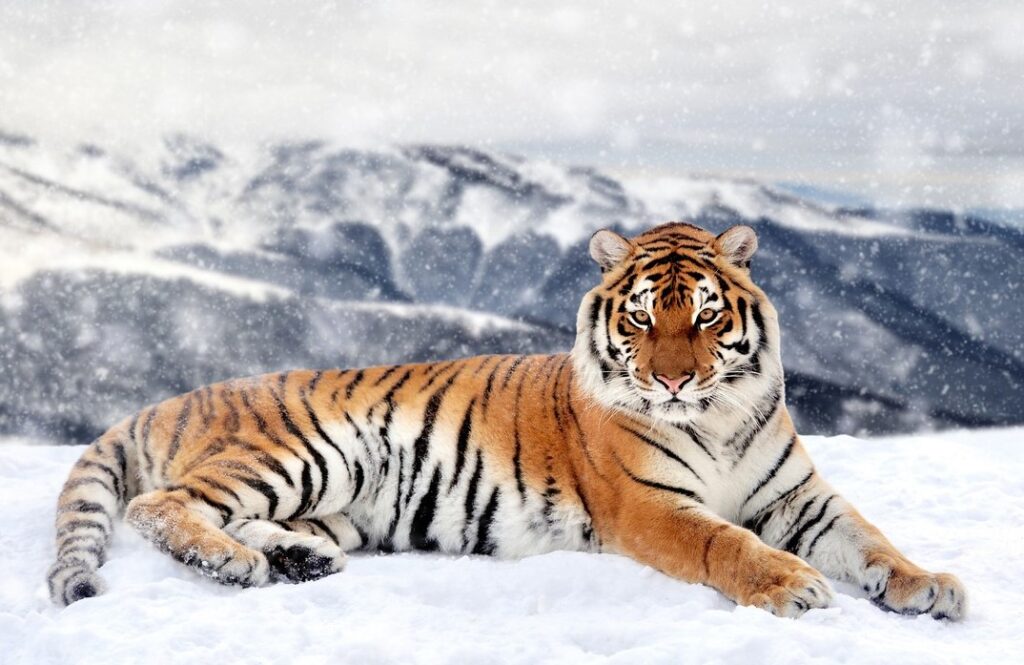
A pair of Amur tigers from the Netherlands has been brought to Kazakhstan; tigers are not the only animals that Kazakhstan is getting back. A few days ago, a long-awaited pair of tigers, bred in a special reserve in the Netherlands, arrived in Kazakhstan. Online, some worried that the tigers would not survive in the harsh climate, or would attack livestock and people. According to WWF Netherlands wildlife expert, Geert Poleta, these fears are unfounded. For several years now, the international NGO, the World Wildlife Fund (WWF), together with the Government of Kazakhstan, has been implementing a program to return tigers to Pribalkhashye. The Amur tiger is a relative of the extinct Turanian breed. Historically, the habitat of the Turanian tiger in the country was reed thickets and floodplain forests along the banks of the Ili and Syr Darya rivers. The extermination of the animal began during the time of the Russian Empire, and the last Kazakh tiger was killed in 1948. Decades later, wild cats are returning to Kazakhstan. As experts point out, this event is an essential step in restoring the ecosystem and lost biodiversity. Bogdana and Kuma, the names of the Amur tigers, flew for more than a day from the Dutch Holy Lion specialized center for predators at the Landgoed Hoenderdaell Zoo to the Ile-Balkhash State Nature Reserve. Permanent caretakers accompanied them. At the Dutch zoo, “the animals were kept in separate spacious enclosures with minimal contact with visitors," Gert Polet, a wildlife expert at WWF Netherlands explained. "Thanks to the spacious territory of the center, the tigers had their own area to live in the most natural conditions possible. In the summer of 2024, a Memorandum was signed between the Committee of Forestry and Wildlife of the Republic of Kazakhstan and the Dutch center, which provides for the free transfer of two tigers to Kazakhstan for further breeding and the release of their offspring.” There is no need to fear that the big cats will harm residents in their new and unfamiliar conditions, as they will be kept under strict supervision. “Zoo tigers cannot be returned to the wild. The arriving tigers will never leave the territory of their enclosure. They were brought in for breeding and raising offspring. If the tiger's birth project is successful, the adults will be moved to another enclosure, located at a center of the reserve which will be open to visitors,” Polet stated. He believes that Bogdana and Kuma have a 60% chance of having cubs. Tiger cubs born in the enclosure of the Ile-Balkhash reserve will be reared following international standards and protocols. At one and a half to two years old, they will be prepared for release into the wild. In addition, the new residents of the reserve will be monitored constantly by video and cared for by a dedicated member of staff. “Over the past year, a veterinarian from the Zholbarys Association has been trained in various clinics and zoos in Russia. She also visited the...