• KGS/USD = 0.01144 0%
  • KZT/USD = 0.00212 0%
  • TJS/USD = 0.10456 0.19%
  • UZS/USD = 0.00008 0%
  • TMT/USD = 0.28490 0%
  • KGS/USD = 0.01144 0%
  • KZT/USD = 0.00212 0%
  • TJS/USD = 0.10456 0.19%
  • UZS/USD = 0.00008 0%
  • TMT/USD = 0.28490 0%
  • KGS/USD = 0.01144 0%
  • KZT/USD = 0.00212 0%
  • TJS/USD = 0.10456 0.19%
  • UZS/USD = 0.00008 0%
  • TMT/USD = 0.28490 0%
  • KGS/USD = 0.01144 0%
  • KZT/USD = 0.00212 0%
  • TJS/USD = 0.10456 0.19%
  • UZS/USD = 0.00008 0%
  • TMT/USD = 0.28490 0%
  • KGS/USD = 0.01144 0%
  • KZT/USD = 0.00212 0%
  • TJS/USD = 0.10456 0.19%
  • UZS/USD = 0.00008 0%
  • TMT/USD = 0.28490 0%
  • KGS/USD = 0.01144 0%
  • KZT/USD = 0.00212 0%
  • TJS/USD = 0.10456 0.19%
  • UZS/USD = 0.00008 0%
  • TMT/USD = 0.28490 0%
  • KGS/USD = 0.01144 0%
  • KZT/USD = 0.00212 0%
  • TJS/USD = 0.10456 0.19%
  • UZS/USD = 0.00008 0%
  • TMT/USD = 0.28490 0%
  • KGS/USD = 0.01144 0%
  • KZT/USD = 0.00212 0%
  • TJS/USD = 0.10456 0.19%
  • UZS/USD = 0.00008 0%
  • TMT/USD = 0.28490 0%

Viewing results 1531 - 1536 of 3334

British Museum Opens Silk Roads Show – With Help from Uzbekistan, Tajikistan

The British Museum opened Silk Roads to the public on Thursday, delivering a highly anticipated exhibition about the vast, interlocking routes that connected cultures across Asia, Africa and Europe for centuries and includes ancient chess pieces and other items on loan from Uzbekistan as well as Tajikistan. The show, which runs until Feb. 23, 2025, aims to get beyond traditional notions of spices, camels and sand dunes, as well as the misconception that there was one “Silk Road” - a single pathway that ran across Central Asia, linking traders in the West with those in the East. While the Silk Roads network lasted for millennia, the British Museum is focusing on the period between AD 500 and 1,000, when contacts accelerated and religions and technology flourished across far-flung regions. “Rather than a single trade route from East to West, the Silk Roads were made up of overlapping networks linking communities across Asia, Africa and Europe, from East Asia to Britain, and from Scandinavia to Madagascar,” the museum says in its introduction to the London show. The British Museum worked with 29 national and international partners on the exhibition, which includes objects from Uzbekistan and Tajikistan that have never been on display in Britain and highlight the importance of Central Asia to the continent-sweeping saga of the Silk Roads. Uzbekistan, home to Khiva, Bukhara and Samarkand and other sites associated with the ancient network, is a big player in the exhibition. It is lending “the oldest group of chess pieces ever found” and a six-meter-long wall painting from the ‘Hall of the Ambassadors’ in Afrasiab, an ancient spot in Samarkand, according to the Uzbekistan Art and Culture Development Foundation. “The painting evokes the cosmopolitanism of the Sogdians from Central Asia who were great traders during this period,” the state foundation said. Saida Mirziyoyeva, a daughter of Uzbek President Shavkat Mirziyoyev and a senior presidential aide, attended the exhibition roll-out this week. “A must-see for anyone passionate about Silk Road history!” she said on X. The National Museum in Tajikistan, which started working with the British Museum on plans for Silk Roads in 2022, has said it is lending items “related to the Buddhist culture of the 7th and 8th centuries, found in the monuments of Ajinateppa, Kafarnihon, and Vakhsh.” Objects on display include a Buddha figurine found in Sweden; an Islamic-style map drawn for the Christian king of Sicily; a Chinese ceramic dish found in a shipwreck in Indonesia; a gilded silver cup whose components indicate links between Scotland and West Asia; a gold shoulder clasp with Indian garnets that was found at the Sutton Hoo ship burial in Suffolk; and a gold bowl found in Romania that was linked to the Avars, an originally nomadic group from the northeast Asian steppe. The exhibition is not just about physical objects. There are also stories about an African king, a Chinese princess and other characters whose lives were connected to the Silk Roads, and insights into religious encounters and the spread of...
Mirziyoyev Proposes Green Energy Development Program for Central Asia

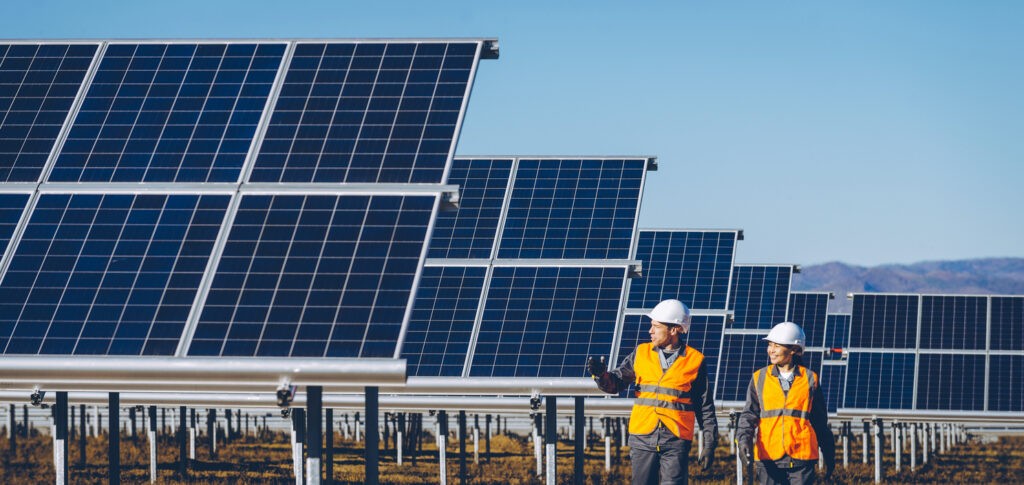
On September 25-26, the annual meeting of the Board of Directors of the Asian Infrastructural Investment Bank (AIIB) was held in Samarkand, Uzbekistan. The ninth meeting of the Board was devoted to the theme “Creating Sustainable Infrastructure for All.” Current issues on the agenda of the global economy were considered, and strategic programs and plans for infrastructure development in Asia and other regions of the world were discussed. About 2,000 representatives from more than 100 countries participated in the summit. Uzbekistan became a member of AIIB in November 2016, and in recent years, it has become one of the bank's biggest beneficiaries. Uzbek President Shavkat Mirziyoyev gave a speech on the first day of the meeting. “The complex geopolitical situation, global economic instability, food and energy resources scarcity, poverty, and environmental problems are becoming increasingly acute. For instance, the average global temperature is projected to rise by 1.5 degrees Celsius by 2040; however, we are concerned that, based on current trends, this could happen as early as 2030. A quarter of the world’s population lacks clean drinking water. As climate change accelerates, food shortages have become a global threat. As a result, about 800 million people in the world live in extreme poverty,” Mirziyoyev said. Mirziyoyev noted that the poverty rate in Uzbekistan has been reduced from 23% to 11%. This year, the aim is to reduce this indicator to 9%, and by 2030, it will be halved. Furthermore, in the last eight years, the enrollment of children in preschool education has increased from 27% to 74%, and higher education has increased from 9% to 38%. It plans to invest $2 billion to open 100 new schools of the most advanced standards in all cities and villages yearly. Another issue that Mirziyoyev paid attention to is logistics, interruptions in the product supply chain, and the increase in the price of raw materials and consumer goods. The head of state noted that all this will sharply increase the load on the existing infrastructure and will be a significant obstacle to global economic development. According to experts, by 2030, the world will need $15 trillion of investment for new infrastructure. Also, foreign investments have decreased by 10% over the past two years, and the value of financial resources globally has almost doubled. Mirziyoyev said that projects worth $200 million for developing medium-sized cities and $130 million for improving infrastructure in rural areas are launched in cooperation with the AIIB. To develop the “green” economy, it is aimed to reach 40% of “green” energy sources by 2030. In the coming years, another 18 gigawatts of solar and wind power, 3 gigawatts of hydropower plants, 5 gigawatts of energy storage capacity, and $5 billion worth of power grids will be implemented. “I would like to note that neighboring countries have also started major projects on renewable energy. We are taking great steps to make Central Asia, a rich renewable energy source, a major exporter of ‘green’ energy into world energy markets in the coming years....

The Illusion of Influence: The CSTO’s Journey From Symbolic Maneuvers To Real Challenges

Accompanied by a picture of military hardware - though in reverse gear as if symbolically - today, the CSTO (Collective Security Treaty Organization) website announced that “From 26 to 30 September, formations participating in the command-staff exercise 'Unbreakable Brotherhood-2024' with the CSTO Peacekeeping Forces are regrouping in the Republic of Kazakhstan. Contingents of CSTO troops are being sent from the Republic of Belarus, the Kyrgyz Republic, the Russian Federation, and the Republic of Tajikistan to the exercise area in accordance with the plan.” In reality, the history of the CSTO is one of refusals, inaction, and sometimes unexpected successes. On August 31, Armenia announced it had frozen its participation in the CSTO. Prime Minister Nikol Pashinyan said he would not name the day when Armenia would leave the CSTO and called the decision to freeze the republic's participation in all structures of the organization correct “at this stage.” In many ways, this half-hearted decision reflects a certain amorphousness that originally characterized the CSTO.   History The history of the structure's emergence reflects this lack of crystalline form. The Collective Security Treaty (CST) was signed in Tashkent between Armenia, Kazakhstan, Kyrgyzstan, Russia, Tajikistan and Uzbekistan on May 15, 1992. Azerbaijan, Belarus and Georgia later joined in 1993. The treaty came into effect in 1994 and was set to last five years. During the 1990s and the disintegration of Soviet-era institutions, organizations such as the CSTO or the previously created Commonwealth of Independent States (CIS), whose founding protocol was signed in Almaty, were created to facilitate a smooth “divorce” between the newly independent states. The CSTO was also seen as a force capable of curbing the regional conflicts which were boiling over, such as the Mujaheddin in Afghanistan. Tashkent's bet on Russian weapons in case of conflicts with the Taliban did not work out, however. From the turn of the 1990s into the 2000s, two serious fissures across the borders of Uzbekistan and Kyrgyzstan took place; the republics fought back with their own military and weapons, in addition to Kazakhstan coming to the rescue. The Collective Security Treaty expired in 1999, with Uzbekistan, Azerbaijan, and Georgia withdrawing, whilst Armenia, Belarus, Kazakhstan, Kyrgyzstan, Russia, and Tajikistan soldiered on under a new pact. The remaining states later transformed the CST into the Collective Security Treaty Organization in 2002. Uzbekistan joined as a full member of the CSTO in 2006 but then flip-flopped and suspended its membership in 2012.   A powerless organization While the CSTO was still developing, with President Vladimir Putin coming to power in Russia, the Kremlin's foreign policy changed substantively from that of the Yeltsin era, when Moscow remained indifferent to Nursultan Nazarbayev's integration initiatives. The new direction of Russian foreign policy was expressed in the concepts of “Russia rising from its knees” and the "gathering of lands.” Over time, this evolved into joint war games and military operations with the West in the Middle East and Africa, and for a period the Kremlin seemed to lose interest in Central Asia....

Kazakhstan to Cooperate with China and Russia in Combating Floods

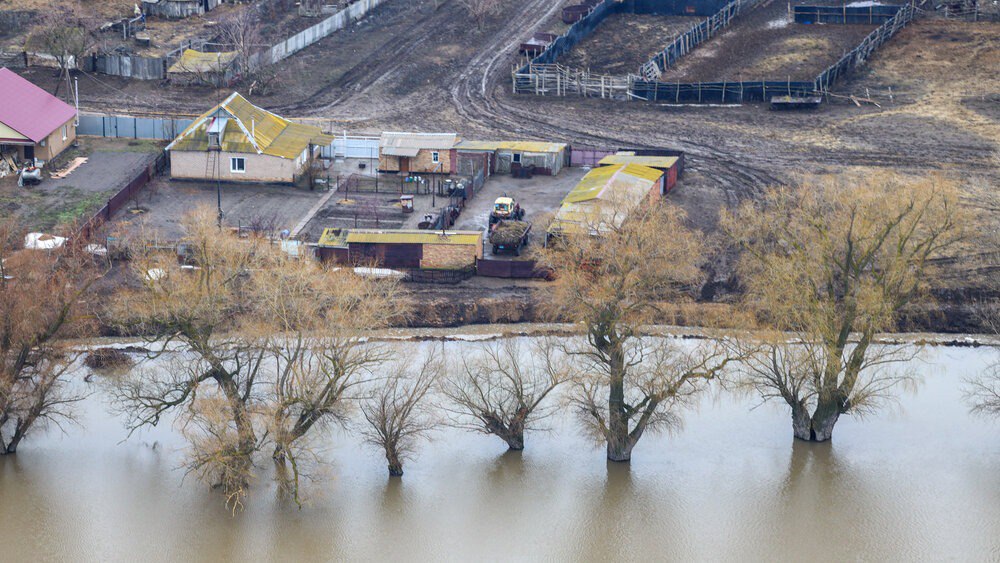
Kazakhstan’s Ministry of Water Resources and Irrigation will sign a memorandum of cooperation with the Ministry of Water Resources of China to combat future spring floods together. The Kazakh ministry has also agreed with Russia to create a joint working group to coordinate actions during spring flood periods. Kazakhstan’s Minister of Water Resources and Irrigation, Nurzhan Nurzhigitov, announced this at a government meeting on September 24. The conference addressed eliminating the consequences of unprecedented spring floods in the country’s northern and western regions and preparing for future spring floods. Massive floods in the spring of 2024, caused by the rapid snow-melt, destroyed thousands of homes and forced almost 100,000 people to evacuate from flood zones. Much of the spring flood water comes to Kazakhstan via trans-boundary rivers flowing from Russia and China. "To ensure the collection and safe passage of flood water in the future, the ministry plans to build 42 new reservoirs with a total capacity of 2.6 billion cubic meters, as well as to reconstruct 37 reservoirs with a total capacity of 3.7 billion cubic meters and about 14,500 km of irrigation canals. This year, the construction of two reservoirs in the Turkestan region and the reconstruction of three reservoirs in the Aktobe, Turkestan, and West Kazakhstan regions began," Nurzhigitov stated, adding that the spring floods led not only to negative consequences, but also allowed reservoirs to collect more than twelve billion cubic meters of water used for economic needs. As of the beginning of September 2024, 8.4 billion cubic meters of that water were used for agricultural purposes. Nurzhigitov reported that the reservoirs of Kazakhstan's northern, central, eastern, and western regions are now 80% full and added that the spring floods have also helped improve the environmental situation by directing excess water to places where it had not flowed for a long time. For example, 80 million cubic meters of flood waters were directed to the Kamysh-Samar lakes of the West Kazakhstan region. For the first time in decades, water arrived in the lakes of the Kyzylorda region through the Sarysu River. Since the beginning of the year, twelve billion cubic meters of water have been sent to Lake Balkhash, and 7.4 billion cubic meters to the Caspian Sea. Nurzhigitov also stated that, together with the Ministry of Digital Development, Innovation, and Aerospace Industry, work is underway to create an information system for forecasting and modeling floods, which will be launched before the end of the year. "This information system will allow for flood forecasting to make strategic decisions. It will show potential flood risk zones on the map," Nurzhigitov explained. At the same meeting, Deputy Prime Minister Kanat Bozumbayev reported that the 2024 spring floods had affected more than 120,000 people across 12 regions. Bozumbayev emphasized that new housing for families affected by the flood was constructed in an unprecedentedly short space of time. In under four months, 2,576 new houses were built, and 5,767 houses and apartments were purchased on the secondary market. In addition,...

Woman in Uzbekistan Tries to Exchange Daughter for a House

A 41-year-old woman who tried to exchange her 13-year-old daughter for a house in Samarkand has been sentenced to 5 years and two months in prison. The woman, who had come to Samarkand to work, said that the family had no housing when she received an offer to exchange one of her three children for a house worth $25,000. She agreed and gave the person her middle daughter. After receiving some money, the woman went to a restaurant to celebrate the deal, where she was apprehended by law enforcement. This is the woman's second conviction. As a result, her children, including the 13-year-old girl, were put into under state guardianship. This case has had repercussions around the country, with citizens raising questions about the need to strengthen child protection and anti-trafficking measures in Uzbekistan. Child trafficking in Uzbekistan remains a severe problem, despite government efforts to reduce it. According to the Trafficking in Persons Report, in 2019-2020, about 43% of reported trafficking offenses involved children. These cases often include the sale of infants and the involvement of medical personnel in illegal schemes. There has also been an increase in child trafficking in recent years due to economic hardship, especially in rural areas.

Ethnic Kazakhs Continue To Return to Kazakhstan

In 2024, a total of 12,325 ethnic Kazakhs returned to their ancestral homeland, gaining the status of "Kandas," a term for ethnic Kazakhs and/or members of their families of Kazakh nationality who have not previously held citizenship of the Republic of Kazakhstan. Since independence, Kazakhstan has welcomed 1.14 million returnees. This year, 45.6% of the arrivals came from China, 39.2% from Uzbekistan, and the remainder almost exclusively from Turkmenistan, Mongolia, and Russia. As of September 1, 2024, the majority of these individuals are working-age adults (58.2%) with higher or secondary education. Many have secured employment and received support for resettlement in labor-deficient regions, such as Akmola and Kostanay. Kazakhstan actively supports these returnees with relocation subsidies of 258,400 tenge ($540) per family member, and offers housing and utility subsidies for a year. Economic mobility programs also provide assistance towards purchasing housing and obtaining favorable mortgage rates. Furthermore, the process to obtain Kandas status has been streamlined, allowing applications through Kazakhstani embassies without the need to enter the country. This pilot program, started in 2023, has already processed 17,158 applications. Since 2020, the term "Kandas," meaning "tribesman" or "one-brother," has replaced "Oralman," reflecting a more positive and respectful connotation. This change is part of a broader effort to simplify citizenship processes for returnees, offering access to residency and citizenship through streamlined procedures, boosting the nation's labor potential and economic growth.