• KGS/USD = 0.01143 0%
  • KZT/USD = 0.00205 0%
  • TJS/USD = 0.10433 0.1%
  • UZS/USD = 0.00008 0%
  • TMT/USD = 0.28577 0%
  • KGS/USD = 0.01143 0%
  • KZT/USD = 0.00205 0%
  • TJS/USD = 0.10433 0.1%
  • UZS/USD = 0.00008 0%
  • TMT/USD = 0.28577 0%
  • KGS/USD = 0.01143 0%
  • KZT/USD = 0.00205 0%
  • TJS/USD = 0.10433 0.1%
  • UZS/USD = 0.00008 0%
  • TMT/USD = 0.28577 0%
  • KGS/USD = 0.01143 0%
  • KZT/USD = 0.00205 0%
  • TJS/USD = 0.10433 0.1%
  • UZS/USD = 0.00008 0%
  • TMT/USD = 0.28577 0%
  • KGS/USD = 0.01143 0%
  • KZT/USD = 0.00205 0%
  • TJS/USD = 0.10433 0.1%
  • UZS/USD = 0.00008 0%
  • TMT/USD = 0.28577 0%
  • KGS/USD = 0.01143 0%
  • KZT/USD = 0.00205 0%
  • TJS/USD = 0.10433 0.1%
  • UZS/USD = 0.00008 0%
  • TMT/USD = 0.28577 0%
  • KGS/USD = 0.01143 0%
  • KZT/USD = 0.00205 0%
  • TJS/USD = 0.10433 0.1%
  • UZS/USD = 0.00008 0%
  • TMT/USD = 0.28577 0%
  • KGS/USD = 0.01143 0%
  • KZT/USD = 0.00205 0%
  • TJS/USD = 0.10433 0.1%
  • UZS/USD = 0.00008 0%
  • TMT/USD = 0.28577 0%

Viewing results 1867 - 1872 of 3197

One Step Forward, Two Steps Back: the EU’s Indecisive Strategy Towards Eurasia

Marking the next chapter in the geopolitical re-balancing competition between Russia and the West, on March 12, 2024, the European Parliament (EP) passed a resolution on deepening ties between the EU and Armenia. The document puts forth the possibility of granting Armenia candidate status for EU membership. Shortly after, Armenia’s Deputy Foreign Minister stated that a new cooperation agreement with the EU could be signed by July 2024. The EP’s “Renew Europe” block, at the forefront of some of the harshest motions and resolutions against Central Asian republics in the EU, endorsed this outreach towards Armenia. This comes a few weeks after Armenia froze its participation in the Russian-led military alliance of six post-Soviet states, known as the Collective Security Treaty Organization (CSTO), after citing the Organization’s failure to fulfill its obligations towards Armenia in its conflict with Azerbaijan. These recent developments should be considered in the wider context of the EU’s eastward outlook, which has not always been evenhanded. Previously, on 17 January 2024, the EP had passed a resolution detailing the EU’s strategy on Central Asia, which recognized that the region is of “strategic interest to the EU in terms of security and connectivity, as well as energy and resource diversification, conflict resolution, and the defense of the multilateral rules-based international order”. European leaders ostensibly want to bring the Caucasus and Central Asia into the Western fold and away from Russia, China, and other competing regimes or ideologies. Economic and security considerations may indeed pull European and Eurasian interests closer. Nonetheless, Central Asian states will likely, and understandably, choose to implement a multi-faceted foreign policy to diversify their trade and security alliances as they continue to transact and maintain working relationships with their powerful regional neighbors. Note that Chinese, Russian and other non-Western investment promises in Central Asia outweigh similar engagements from the EU. There remain other potential obstacles to further cooperation. Not surprisingly, the EU seeks to have a degree of “values alignment” before establishing economic and security partnerships in the region, such as strengthened rule of law, human rights, and freedoms. On the other hand, the EU is sometimes perceived as giving conflicting and even insincere messages. Examples concerning Central Asia include instances where the EU has asked for progress in certain areas, but then failed to acknowledge policy implementation, or even doubled down on its criticisms despite positive steps taken by the targeted country’s leadership. Take, for instance, the discussions in the EU around the violent unrest in Kazakhstan in January 2022. The EU has called on Kazakhstan to investigate the events and to undertake reforms. In the last two years, Kazakhstan’s president Kassym-Jomart Tokayev has overseen a batch of ambitious reforms, including enhanced political participation and representation as well as a stronger legal system and improved human rights, which are essentially unprecedented in the region. The progress made, however, does not seem to have materially swayed the EU’s outlook on the country. In terms of the investigations and court proceedings related to the deadly...
Former Kyrgyz Official Matraimov Extradited in Connection with Assassination Plot

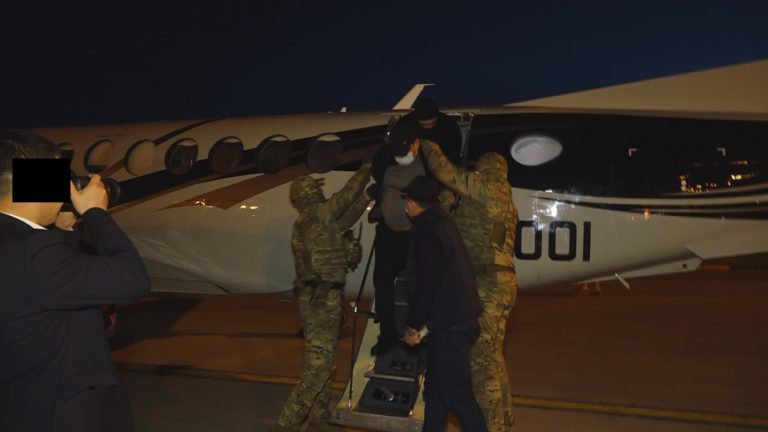
According to statements issued by the special services of Kyrgyzstan, former deputy head of the customs service Raimbek Matraimov is connected with assassins who recently came to Bishkek from Azerbaijan to assassinate members of Kyrgyzstan's leadership. On March 23 Kyrgyz law enforcement became aware that the wanted Matraimov was in Baku, Azerbaijan's capital. The State Committee for National Security of Kyrgyzstan (CNSK) sent a letter to the Azeri authorities with a request to detain and extradite him. In Baku this request was fulfilled. Matraimov's brothers were also detained and flown to Kyrgyzstan, the CNSK reported. The investigation into Matraimov alleges that his clan once had its own people in virtually all government agencies, including the police, prosecutor's office, and parliament, where an entire political party worked on his behalf. Matraimov's group had enormous resources, and numerous levers of influence over the authorities. The 2020 coup d'état in Kyrgyzstan was carried out in part because Matraimov's party won the elections. As a result, those elections were deemed as corrupt, and subsequently voided. Matraimov was put on an international wanted list on January 26. He was charged in absentia under two articles of the Kyrgyz criminal code: illegal imprisonment and legalization of criminal proceeds. As The Times of Central Asia has previously reported, on March 22 in the center of Bishkek authorities detained members of a transnational criminal group, who came to Bishkek from Azerbaijan to assassinate the Kyrgyz political leadership. Kyrgyzstan's special services believe that Matraimov is linked to the criminals and is involved in organizing the assassination attempt. It was also reported that the former official was extradited with the aid of a government board of Kyrgyz authorities.

Kyrgyzstan Takes Issue With Uzbekistan’s Hydropower Plans

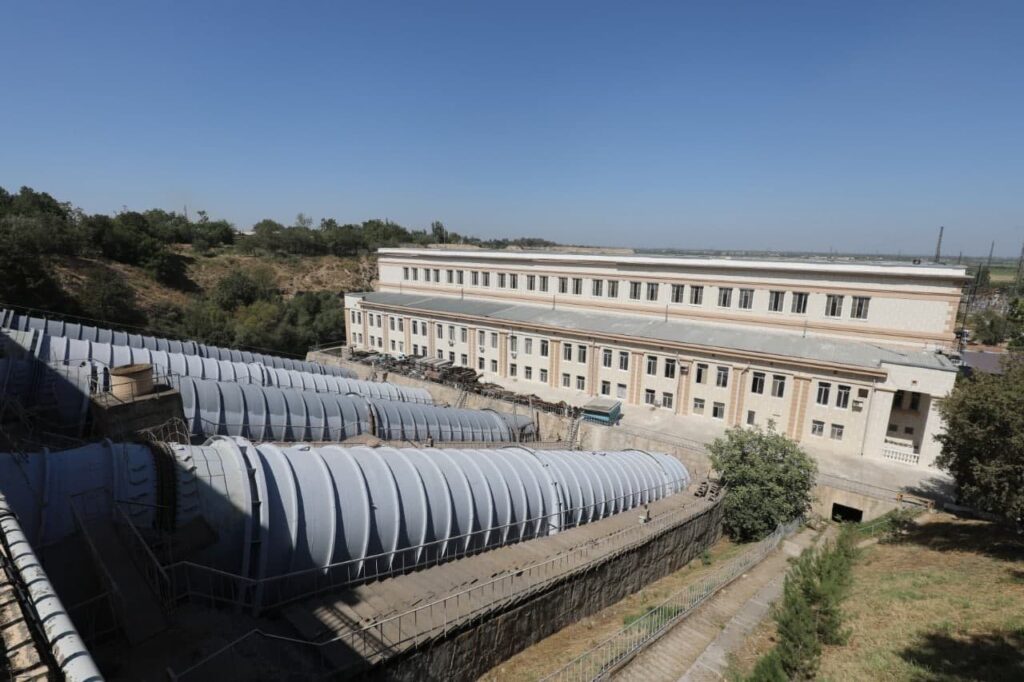
Uzbekistan's grandiose hydropower development plans are irking neighboring Kyrgyzstan, which is experiencing a shortage of water resources. These shortages have in part been caused by Kyrgyzstan swapping its water with Uzbekistan and Kazakhstan in exchange for electricity. Uzbekistan's construction of six hydroelectric power plants (HPPs), with a total capacity of 228 megawatts, has begun on the Naryn River in the Namangan region. The Uzbekhydroenergo project is estimated at $434 million and will generate up to 1 billion kilowatt-hours of electricity per year, enough to provide energy for 430,000 households. This will allow the country to save up to 310 million cubic meters of gas annually, to help alleviate shortages which has seen Uzbekistan turn to Russia. The launch of the hydro project will provide the Namangan region with 7.8 billion kWh per year, which far exceeds local demand. This surplus energy will be transferred to neighboring regions in the Fergana Valley, and will guarantee energy supply during periods of peak consumption. These plans contrast greatly with Kyrgyzstan's situation, as the republic imports 3 billion kWh of electricity from neighboring states during the fall and winter seasons. Uzbekistan and Kazakhstan supply Kyrgyzstan with electricity in winter, and in return Kyrgyzstan provides them with water in summer, measuring the volume of water using a generator, and thus paying back the debt for the electricity. According to official data, the Toktogul Reservoir in Kyrgyzstan is designed to hold 19.2-19.6 billion cubic meters of water. Kyrgyz Deputy Energy Minister, Talaibek Baigaziyev noted at a March 4 press conference in Bishkek that with electricity consumption on the increase and water levels falling, people urgently needed to curtail their usage. Water levels had already stopped at 7.7 billion cubic meters, versus a normal level of 17.3 billion cubic meters, leading to a risk of possible blackouts. If the level reaches anything below 6.5 billion cubic meters, the Toktogul HPP will stop. In 2024, the Kyrgyz authorities plan to launch 11 HPPs, five large and six small. According to the Eurasian Development Bank, Kyrgyzstan's energy sector will be operating under a state of emergency from now until the end of 2026. Kazakhstani experts have also expressed concern about their neighbors' energy development plans. They say water shortages could worsen in the region, with water already scarce in Kazakhstan. Bulat Yesekin, an expert on environmental policy and institutional frameworks for environmental protection, notes that "large hydropower plants further aggravate the problem of water supply and disrupt environmental sustainability. All over the world today there are campaigns to demolish hydroelectric dams and restore the natural regime of rivers. Only the preservation of natural river regimes can reduce water scarcity and create a more reliable basis for water supply for agriculture and industry." The construction of HPPs in border areas continues to create transnational problems. Altering river courses can destroy or alter ecosystems, change biodiversity, affect fisheries and agriculture, erode coastlines, and increase the risk of flooding in certain areas; yet access to electricity is a key issue across Central...

Man with Kyrgyzstan Links Among Suspects in Moscow Attack

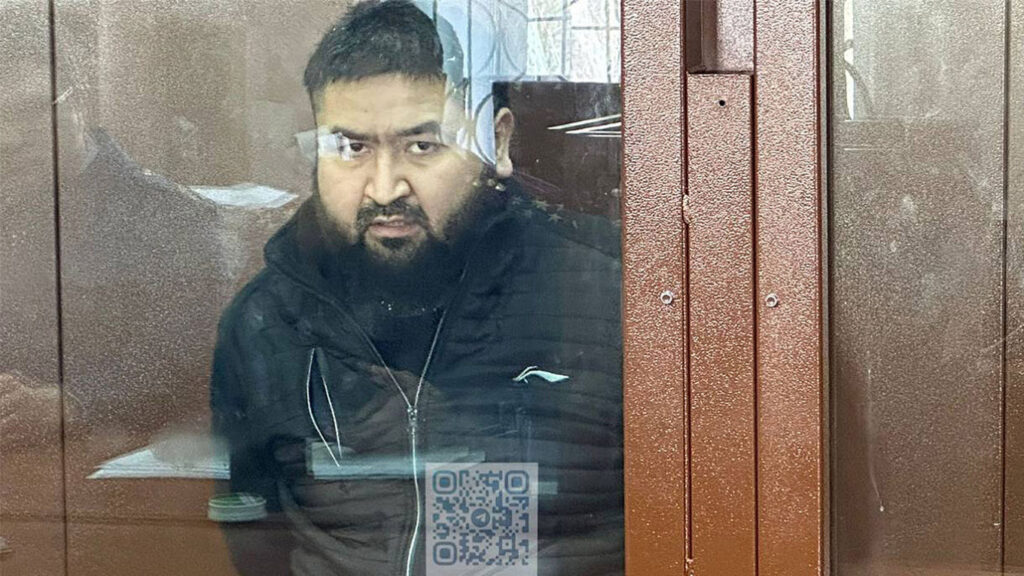
A man originally from Kyrgyzstan is among the suspects detained in the attack on a Moscow concert hall that killed about 140 people, according to media reports. The man, identified as Alisher Kasimov, allegedly rented an apartment to men who carried out the attack on the Crocus City complex on Friday night. He appeared in court on Tuesday and did not show signs of having been beaten or tortured, as was the case with some other suspects. Videos circulating on social media showed a distraught woman purported to be Kasimov’s mother. In the videos, the woman says Kasimov is innocent and that he did not know that he was renting an apartment to people who were plotting an attack. Kasimov denounced his Kyrgyz citizenship in favor of Russian nationality in 2014. Several migrant laborers from Tajikistan were charged with terrorism Sunday night for their alleged role in the devastating assault with rifles and explosives. The attack has focused attention on the large number of Central Asian migrants living – often in grim conditions – in Russia, as well as the possible vulnerability of some of them to recruitment by extremist groups. The Islamic State group claimed responsibility for the Crocus City killings. Russia has tried to assign blame to Ukraine and the West, without offering evidence.

Kyrgyz National Bank, Other Agencies Can Resume Sanctions-Related Inspections

Earlier this year, Kyrgyz President Sadyr Japarov signed a decree prohibiting state supervisory agencies from inspecting businesses until the end of 2024. Only evidence that a private company has violated the law could trigger an inspection. That presidential decree banning business inspections was amended recently to ensure economic stability in Kyrgyzstan, and now the tax and customs authorities, as well as the National Bank of the Kyrgyz Republic, can again carry out inspections. The financial regulator can now assess the activities of commercial banks and other financial institutions, as it was before the presidential decree. In a live broadcast on Kyrgyz state radio, Musa Kataganov, head of the Business Environment Policy Department of the Kyrgyz Ministry of Economy, said that "as you know, numerous sanctions are being imposed against Russia. Our commercial banks are under strict surveillance by the West to ensure that goods do not move from or to Russia." According to Kataganov, the National Bank of Kyrgyzstan (NBKR) is obliged to monitor the activities of commercial banks - despite the presidential moratorium - to prevent the entire Kyrgyz banking system from falling under Western sanctions. After the U.S. Treasury Department threatened to impose sanctions for servicing the Russian payment system MIR in September 2022, just under half of Kyrgyzstan's banks stopped working with the system. U.S. sanctions could affect the servicing of correspondent accounts of Kyrgyz financial institutions abroad, as foreign counter-party banks would likely follow Treasury Department guidelines and cut off access to Kyrgyz banks. Each bank in Kyrgyzstan in this case made the decision on its own, without any pressure from the authorities. Asked by Times of Central Asia, the NBKR's press service said that its removal from the list of government agencies on which the inspection moratorium was imposed was primarily due to the need to ensure the safe and reliable operation of Kyrgyzstan's payments and banking systems in order to promote long-term economic growth in Kyrgyzstan. "As part of supervision over the activities of commercial banks, the National Bank carries out both remote supervision and on-site inspection of all types of risks inherent in the activities of commercial banks, including compliance with the requirements of the legislation of the Kyrgyz Republic in terms of combating the financing of terrorist activities and legalization (laundering) of criminal proceeds - as well as compliance with international sanctions," the press service of the NBKR stated.

Kyrgyzstan’s Foreign Ministry Urges Its Citizens to Temporarily Refrain From Traveling to Russia

A recommendation posted on the Kyrgyzstan Foreign Ministry website has urged its citizens to temporarily refrain From traveling to Russia in relation to the terrorist attack in Crocus City Hall near Moscow on March 22, 2024, which killed over 130 people, as well as the introduction of enhanced security measures throughout Russia. The Ministry of Foreign Affairs asked fellow citizens who do not have good reasons and urgent business in Russia to refrain from traveling to Russia as long as the additional security measures and increased control of passage across the border are still in place. For those who have already planned their trip, the foreign ministry recommends checking for restrictions under their name on the website of the Russian Interior Ministry. "Citizens who have [committed] two or more administrative offenses during their previous stay on the territory of the Russian Federation, refrain from traveling to its territory to avoid not passing through the state border and the consequences associated with this procedure,"  reads a warning on the website of the Foreign Ministry. Furthermore, Kyrgyz diplomats recommend that citizens who are already in Russia refrain from visiting mass gatherings of any kind, as well as carry identification documents and the documents that confirm the legality of their stay in the Russian Federation. The Foreign Ministry warned that citizens should comply with the legal requirements of Russian security forces as part of their mandate to ensure public safety. "In case of emergency questions, citizens should contact the hotline of the Embassy of the Kyrgyz Republic in Moscow at +7 925 115 50 47, as well as the Consular Department of the Ministry of Foreign Affairs of the Kyrgyz Republic at +996 999 312 002," reads the statement. Russian authorities have stepped up security measures in many cities after the terrorist attack in the Moscow region that killed 139 people and injured 182 others, according to the latest figures. Tajik passports were found on the suspected perpetrators of the mass shooting, making Russian citizens and law enforcement more suspicious of Tajikistani nationals and citizens of neighboring Central Asian countries. After the terrorist attack, checks on citizens of all Central Asian countries in Russia have intensified. There is also talk of strengthening migration control in Russia.