• KGS/USD = 0.01144 0%
  • KZT/USD = 0.00211 0%
  • TJS/USD = 0.10460 0.19%
  • UZS/USD = 0.00008 0%
  • TMT/USD = 0.28490 0%
  • KGS/USD = 0.01144 0%
  • KZT/USD = 0.00211 0%
  • TJS/USD = 0.10460 0.19%
  • UZS/USD = 0.00008 0%
  • TMT/USD = 0.28490 0%
  • KGS/USD = 0.01144 0%
  • KZT/USD = 0.00211 0%
  • TJS/USD = 0.10460 0.19%
  • UZS/USD = 0.00008 0%
  • TMT/USD = 0.28490 0%
  • KGS/USD = 0.01144 0%
  • KZT/USD = 0.00211 0%
  • TJS/USD = 0.10460 0.19%
  • UZS/USD = 0.00008 0%
  • TMT/USD = 0.28490 0%
  • KGS/USD = 0.01144 0%
  • KZT/USD = 0.00211 0%
  • TJS/USD = 0.10460 0.19%
  • UZS/USD = 0.00008 0%
  • TMT/USD = 0.28490 0%
  • KGS/USD = 0.01144 0%
  • KZT/USD = 0.00211 0%
  • TJS/USD = 0.10460 0.19%
  • UZS/USD = 0.00008 0%
  • TMT/USD = 0.28490 0%
  • KGS/USD = 0.01144 0%
  • KZT/USD = 0.00211 0%
  • TJS/USD = 0.10460 0.19%
  • UZS/USD = 0.00008 0%
  • TMT/USD = 0.28490 0%
  • KGS/USD = 0.01144 0%
  • KZT/USD = 0.00211 0%
  • TJS/USD = 0.10460 0.19%
  • UZS/USD = 0.00008 0%
  • TMT/USD = 0.28490 0%

Viewing results 457 - 462 of 3316

U.S. Backs Private Bid for Kazakhstan’s Tungsten

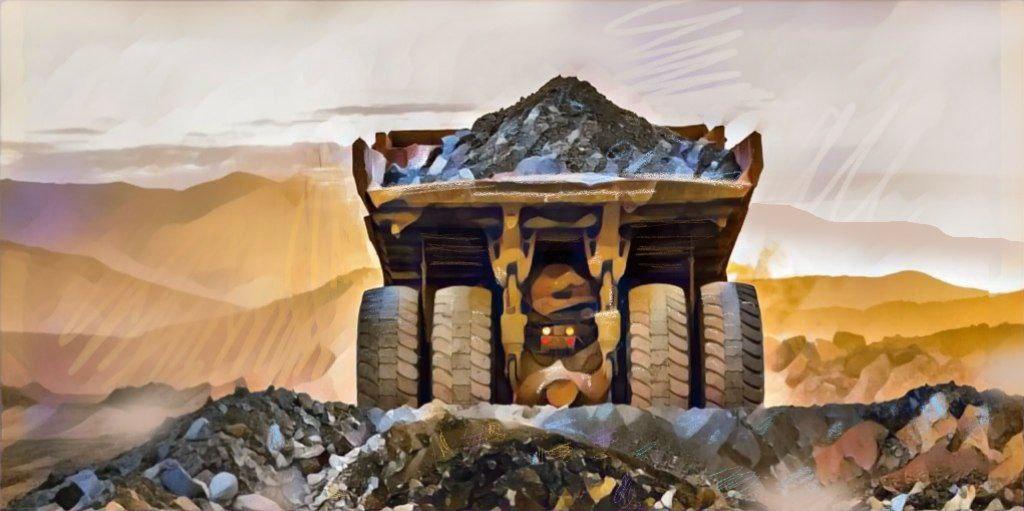
The United States is facilitating a private American bid by Cove Kaz Capital Group LLC for Kazakhstan’s Upper Kairakty and North Katpar tungsten deposits, in competition with state-backed Chinese bidders. Tungsten is not a rare earth element, but it is a critical raw material. In particular, it underpins armor-piercing ammunition, penetrators, and high-temperature tooling used across aerospace and industrial manufacturing. Reporting indicates direct engagement by senior U.S. officials and active coordination with Kazakhstan’s sovereign-wealth ecosystem. The metal’s significance elevates the commercial negotiation into a strategic policy. The policy driver is diversification away from China’s dominance along the mine-to-powder supply chains. China accounts for well over four-fifths of global tungsten production and processing, and tightened export controls in 2025 have upset pricing and availability. The U.S. has established a procurement deadline of 2027 to avoid sourcing from China or Russia for covered defense uses. All this adds urgency to securing non-Chinese volumes. Kazakhstan’s revived tungsten sector includes a newly opened processing plant, with destinations not yet announced for the concentrate to be produced. The country thus offers a practical non-Chinese source of tungsten. Strategic Stakes and Principal Actors The American role would be one of facilitation and financing, rather than ownership. The administration has supported talks linking Cove Kaz to Kazakhstan’s Samruk-Kazyna and relevant mining entities. Commerce Secretary Howard Lutnick is mentioned as a key interlocutor. Potential financial tools include the U.S. International Development Finance Corporation (DFC) and the Export-Import Bank. Insurance (EXIM), guarantees, or direct loans from these institutions would offset pricing and risk advantages historically offered by Chinese bidders. The U.S. government’s approach is to enable a private operator to compete without placing federal equity as an asset. Kazakhstan’s Samruk-Kazyna and its mining arm Tau-Ken Samruk coordinate with the national exploration company Qazgeology. Kazakhstan has pursued a wider critical-minerals investment agenda, signaling its openness to joint ventures and privatization pathways under a special legal regime that provides a familiar legal and compliance framework for Western partners. That structure streamlines licensing and dispute resolution and has already been used for joint ventures in other critical minerals projects. China remains the current market leader, dominating tungsten mining, ammonium paratungstate (APT) conversion, and downstream powders and carbides. Beijing’s 2025 export controls cover tungsten, tightening an already narrow global market and raising the policy value of non-Chinese options. Reports of Chinese interest in Vietnam’s Nui Phao tungsten complex underscore that non-Chinese sources face active competition, framing Kazakhstan’s appeal to Western buyers. The Assets and Kazakhstan’s Capacity Rebuild Kazakhstan suspended tungsten production after the 1990s but has moved over the past several years to re-establish a mine-to-processing base, with corporate and ministerial communications emphasizing the strategic nature of these deposits for long-term development. Upper Kairakty (also rendered as Verkhneye or Upper Kayrakty) and North Katpar sit in the Karaganda Region and feature repeatedly in Samruk-linked materials as the top tungsten prospects. Upper Kairakty is by itself the world’s largest tungsten deposit, and represents over two-thirds of the total tungsten reserves across the ex-Soviet territories. One...
Trump to Host U.S.-Central Asia Summit on November 6

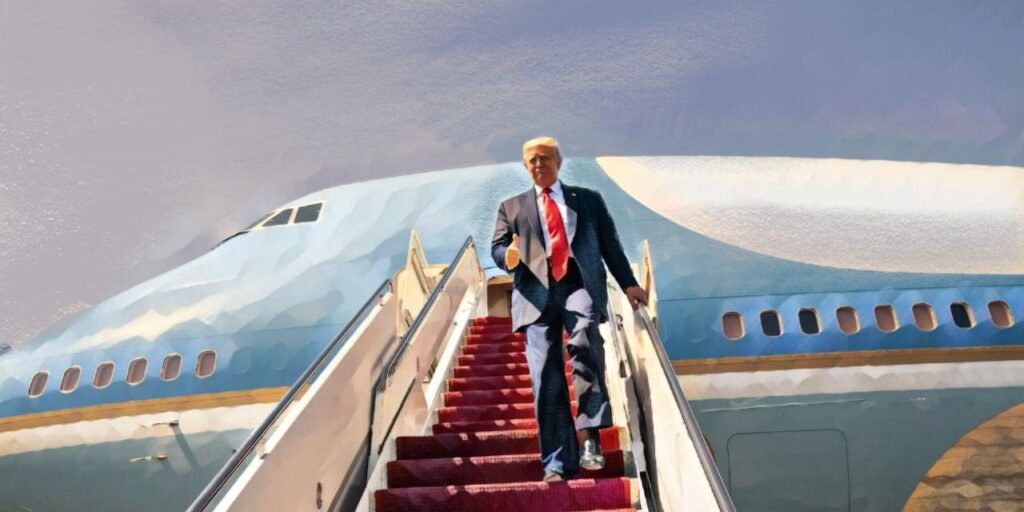
Kazakhstan’s presidency says a Central Asia–United States summit will be held in Washington on November 6. President Kassym-Jomart Tokayev sent a letter to U.S. President Donald Trump to thank him for the invitation to participate in the summit on that date in the U.S. capital, Tokayev’s press office said on Sunday. President Tokayev regarded the initiative of the American leader as both timely and important, the office said. “The Head of State also noted that he shares the key principles of President Trump’s domestic and foreign policy, in particular the advocacy of traditional values based on common sense, as well as dedication to safeguarding peace and security.” The summit would mark the tenth anniversary of the C5+1 diplomatic forum, which includes the United States and the five Central Asian countries of Kazakhstan, Kyrgyzstan, Tajikistan, Turkmenistan, and Uzbekistan. Citing unidentified sources in Uzbekistan’s presidential administration, Gazeta, a media outlet in Uzbekistan, confirmed the summit plan, saying Uzbek President Shavkat Mirziyoyev was among the Central Asian leaders who had received invitations from Trump to attend the November 6 meeting in Washington. Kyrgyz media have also reported that President Sadyr Japarov will attend the C5+1. According to Azattyq, the invitation was extended to all five Central Asia leaders. The announcement of the summit coincides with a visit to Kazakhstan and Uzbekistan by Sergio Gor, U.S. Special Envoy for South and Central Asia, and Deputy Secretary of State Christopher Landau. Trump met Tokayev and Uzbek President Shavkat Mirziyoyev on the sidelines of the U.N. General Assembly last month. Multi-billion-dollar business deals were announced in connection with those meetings. The U.S. president is currently on an Asia tour during which he is expected to meet Chinese President Xi Jinping to discuss trade tensions. A summit with Central Asian leaders could potentially help the U.S. counter the influence of Russia and China in that region. In an Oct. 20 letter, a U.S. congressional foreign affairs panel urged Trump to host a summit with Central Asian leaders before the end of the year. It noted U.S. interests such as the development of critical minerals, including tungsten, antimony, lithium, and rare earth elements; the full repeal of the Jackson-Vanik amendment, a Cold War-era law that imposes some restrictions on trade with several countries in Central Asia; and counterterrorism efforts against the regional branch of the Islamic State group.

From the Highlands to the Steppes: The Long Journey of the Bagpipe

On 28 July 2025, as the skirl of bagpipes echoed across the windswept greens of President Trump’s Turnberry golf resort, two world leaders met under the Scottish flag. U.K. Prime Minister Keir Starmer and U.S. President Donald Trump gathered for “wide-ranging talks” on trade and global conflicts — yet it was the sound of a Scottish pipe band that first captured attention. For President Trump, whose mother was born in the Outer Hebrides, the music carried a personal resonance. The bagpipe, long a symbol of Scotland’s spirit, continues to speak across generations and continents — from clan gatherings and state ceremonies to moments of diplomacy. Its sound is unmistakably Scottish: bold, mournful, and proud. Yet across the ancient world, far beyond the Highlands, other peoples once drew the same haunting tones from leather and reed — among them the nomads of what is now Kazakhstan. Echoes from the East Centuries before the first Highland marches, nomadic Turkic peoples were playing an instrument remarkably similar in design — the zhelbuaz. Crafted from goat or sheepskin and fitted with two or more reed pipes, it produced the same soulful harmony that defines the modern bagpipe. When filled with air and played from horseback or during ceremonies, it created a sound that was at once haunting and powerful, much like the music that still moves crowds today. As the people of the Central Asian steppes were largely nomadic for most of their history, there is scant hard evidence. However, early scholars described the zhelbuaz (or mes-syrnai) as an ancient wind instrument made from a single piece of animal skin or stomach. Al-Farabi wrote of a “wineskin flute” among the Turkic tribes, and the Chinese traveler Wen Sun, visiting the Orkhon region in the 7th century, reportedly recorded a Turk playing a "leather instrument with two pipes, whose sound deepens the sadness of the mourners.” The Journey Westward Over centuries, the idea of the air-filled reed instrument migrated westward — first through trade and migration, and then through cultural contact. Variants appeared in Eastern Europe: the duda in Poland, the tulum in Azerbaijan, and the musette in France. Linguists note that modern terms such as duu (meaning “song” in Mongolian) and düdük (meaning “whistle” in Turkish) suggest a shared onomatopoetic pattern for wind instruments and vocal sound across Eurasia, hinting at, though not proving, a linguistic thread connecting these distant traditions. But it was in Scotland that the instrument found its fullest voice. There, in the hands of Highland clans, it became more than music — it became identity. The Great Highland Bagpipe emerged as a call to arms, a hymn of remembrance, and a symbol of a people’s endurance. Its power lies not just in its sound, but in what it represents: honor, courage, and belonging. [caption id="attachment_38114" align="aligncenter" width="960"] Image: Ykhlas Museum of Folk Musical Instruments[/caption] The Zhelbuaz Remembered In Kazakhstan, the zhelbuaz gradually disappeared from everyday life, its haunting voice surviving only in oral memory and museum collections. Today, musician Abzal...

How U.S. and EU Sanctions Are Rippling Through Central Asia

Russia’s economy has faced renewed pressure following a fresh round of sanctions imposed this past week by both the European Union and the United States. After abruptly canceling a planned meeting with Vladimir Putin in Budapest, President Donald Trump shifted to a more hardline stance, announcing new sanctions. While these sanctions may not cripple Moscow, they are already having secondary effects on Central Asia, particularly on Kazakhstan’s banking and energy sectors. The EU's 19th sanctions package, adopted on October 22, introduces a phased ban on Russian liquefied natural gas (LNG). According to Reuters, short-term contracts will be terminated within six months, while long-term contracts are to expire by January 1, 2027. The package also includes a total ban on transactions with Russian oil giants Rosneft and Gazprom Neft, an expanded blacklist of so-called "shadow fleet" vessels, and sanctions against 45 companies in Russia and third countries supplying military-related technologies. Of growing concern in Central Asia is the inclusion of several regional financial institutions in the EU's sanctions list. These include the Kazakh branch of Russia’s VTB Bank, Kyrgyz banks Tolubai and Eurasian Savings Bank, and Tajik banks Dushanbe City Bank, Kommertsbank of Tajikistan, and Spitamen. These restrictions are scheduled to take effect between November and December 2025. Both Kyrgyzstan’s President Sadyr Japarov and the nation's Foreign Ministry have publicly expressed dismay over the sanctions, with Japarov urging Western leaders to stop “politicizing the economy.” In his speech at the UN General Assembly in New York in September, Japarov criticized the impact of unilateral sanctions, while the Foreign Ministry has stated that the country adheres to its international obligations and maintains an open dialogue with the EU to prevent risks associated with possible sanctions circumvention. The ministry has proposed launching an independent, internationally recognized audit and forming a joint “Kyrgyzstan-European Union” technical working group to facilitate data exchange, transaction monitoring, and risk assessments. In Kazakhstan, the National Bank downplayed the impact of sanctions against VTB. Deputy Chairman Yerulan Zhamaubayev noted that the bank had already been under nominal restrictions, and handles few transactions. “VTB does not affect the country’s financial stability, and we do not expect serious risks for the economy,” Zhamaubayev stated. However, the latest U.S. sanctions may prove more consequential for Kazakhstan, particularly amid efforts to strengthen bilateral trade with the United States, including through the repeal of the Jackson-Vanik amendment. The U.S. Treasury Department has sanctioned Russian oil majors Rosneft and Lukoil. The latter has deep economic ties with Kazakhstan. Just days before the announcement, on October 14, President Kassym-Jomart Tokayev personally attended the 30th anniversary of Lukoil’s operations in Kazakhstan, awarding CEO Vagit Alekperov the Order of Barys, first class. Oil and gas journalist Oleg Chervinsky reported that the joint venture Kalamkas-Khazar Operating LLP, co-owned by Lukoil and KazMunayGas, is directly affected. “Only the Tengiz and CPC projects, which Lukoil operates with American partners, have been exempted from the sanctions,” Chervinsky noted. A final investment decision for Kalamkas-Khazar was expected in December 2025. Yerkanat Abeni, a member of...

How Uzbekistan Plans to Lead Central Asia’s Digital Future – An Interview With the Minister of Digital Technologies

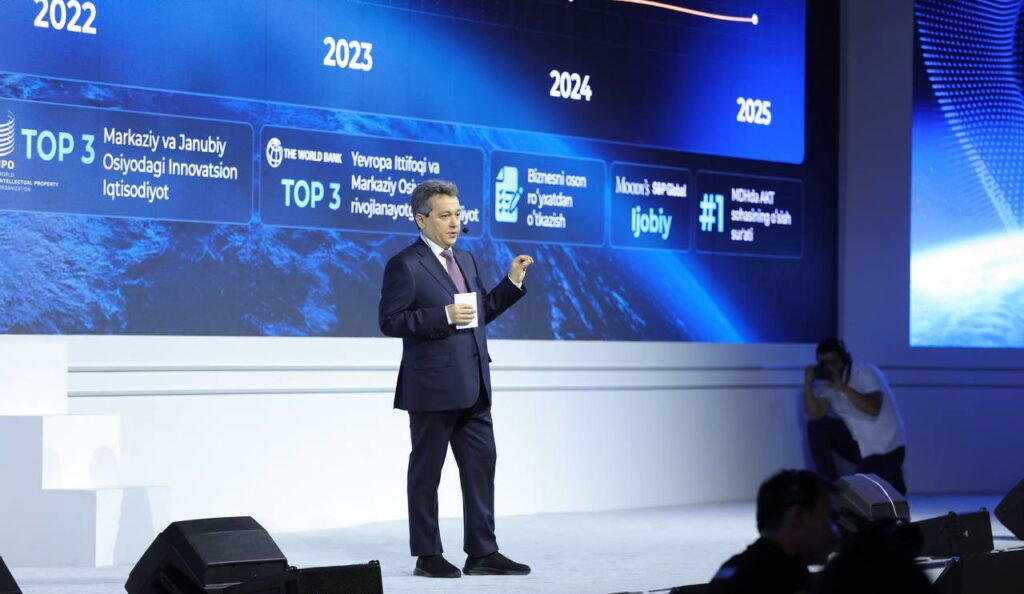
Uzbekistan’s ambitions to position itself as Central Asia’s digital powerhouse took center stage during ICT Week Uzbekistan 2025 this September - the country’s largest-ever technology forum, drawing more than 20 official delegations, 300 companies, and 20,000 participants from over 50 countries. With artificial intelligence and future technologies at its core, the event showcased how Tashkent aims to turn international partnerships into lasting investment, innovation, and talent pipelines. At the forefront of these efforts stands Sherzod Shermatov, Minister of Digital Technologies, who has overseen landmark initiatives extending IT Park incentives until 2040, launching the IT Visa for foreign specialists, and embedding AI education across Uzbekistan’s schools and universities. The Times of Central Asia spoke to Minister Shermatov to discuss how Uzbekistan plans to sustain investor confidence beyond ICT Week, prepare its workforce for an AI-driven economy, and balance rapid digitalization with data protection and national sovereignty. [caption id="attachment_37995" align="aligncenter" width="1280"] ICT Week 2025; image: The Ministry of Digital Technologies of the Republic of Uzbekistan[/caption] TCA: Uzbekistan showcased itself as a regional IT hub during ICT Week. What concrete steps will the Ministry take to ensure foreign investors and global tech firms remain engaged in Uzbekistan? Shermatov: In order to comprehensively stimulate and develop the activities of foreign investors and global technology companies in the Republic of Uzbekistan, a number of key preferences for IT Park residents have already been implemented. The Government of Uzbekistan has extended and reinforced the system of benefits and guarantees for foreign investors and IT Park residents, ensuring long-term stability and predictability of the investment climate. Among these measures, IT Park tax incentives have been officially extended until 2040, offering exemption from a range of taxes, a simplified foreign currency regime, and a 5% dividend tax for non-residents, provided that more than 50% of their revenue is generated from export activities. These reforms provide a reliable and attractive environment for both established global players and emerging startups. To further strengthen the country’s position as a regional digital hub, the Government has also introduced the IT Visa - a three-year visa designed for founders, investors, and foreign specialists of IT Park resident companies. The IT Visa facilitates simplified entry, residence, and employment procedures for international professionals and their family members, making Uzbekistan one of the most open and accessible markets for global technology talent. In parallel, a “One Stop Shop” service has been launched to streamline administrative procedures. It provides fast-track company registration, bank account opening, and work and residency permits, enabling investors and foreign specialists to begin operations in Uzbekistan with unprecedented efficiency. At the same time, the Ministry continues to expand cooperation between global technology partners and the national innovation ecosystem under the “ZERO Risk” and “Local to Global” mechanisms, as stated in the relevant decrees of the President of the Republic of Uzbekistan. These instruments create a foundation for long-term growth, stimulate venture financing, and support the international scaling of Uzbek startups. Also, comprehensive programs are being implemented to train highly qualified IT specialists to...

Canadian Musician Releases Protest Song About Uzbek Student’s Experience with Wizz Air

Canadian singer-songwriter Dave Carroll, best known for his 2009 viral hit “United Breaks Guitars,” has released a new protest song titled “Don’t Fly Wizness Class,” inspired by the travel ordeal of Uzbek student Suhrob Ubaydullayev. The track and accompanying video, featuring Ubaydullayev himself, highlight his experience with Wizz Air in 2023 and raise broader concerns about discrimination and passenger rights. Carroll first gained international attention after United Airlines damaged his $3,500 Taylor guitar during a 2008 flight and refused to compensate him. In response, he released “United Breaks Guitars,” which amassed over 20 million views on YouTube and reportedly caused a $180 million drop in United’s stock value. The episode sparked industry-wide changes in customer service protocols. More than a decade later, Carroll has turned his attention to another case of alleged mistreatment, this time involving a 24-year-old Uzbek national. His latest song recounts how Ubaydullayev was denied boarding on a Wizz Air flight on August 31, 2023. “I had all my documents in order,” Ubaydullayev previously told The Times of Central Asia. “The staff checked them and returned them to me, but when I reached the gate, they suddenly said I couldn’t fly. No reason. No explanation.” According to Ubaydullayev, one airline employee asked, “Are you from Uzbekistan?” Upon confirming he was, he says he was denied boarding without further justification. What followed, he claims, was a humiliating ordeal: threats to call the police, warnings that the Uzbek embassy could not assist him, and refusal to provide any written explanation. Ubaydullayev had just completed a Work and Travel program in Europe and was returning home. After spending his savings on the now-cancelled flight, he borrowed money to reach Istanbul, where he was robbed and left stranded. “I met some Uzbek guys near the Sultan Ahmed Mosque who offered to help,” he said. “But they ended up taking my money and disappearing.” His journey home eventually took him through Kazan in Russia and Osh in Kyrgyzstan, before he reached the Uzbek city of Namangan, exhausted, indebted, and disillusioned. In May, during a visit to Canada, Ubaydullayev met Carroll in person. “He was kind and respectful,” Ubaydullayev told The Times of Central Asia. “Carroll listened to my story and was deeply moved.” Carroll then turned the young man’s experience into a song, aiming to bring attention to the broader issue of traveler discrimination. “My goal,” Ubaydullayev said, “is to ensure Wizz Air and other airlines stop discriminating against Uzbek citizens and start treating them with respect.”