• KGS/USD = 0.01144 0%
  • KZT/USD = 0.00212 0%
  • TJS/USD = 0.10456 0.19%
  • UZS/USD = 0.00008 0%
  • TMT/USD = 0.28490 0%
  • KGS/USD = 0.01144 0%
  • KZT/USD = 0.00212 0%
  • TJS/USD = 0.10456 0.19%
  • UZS/USD = 0.00008 0%
  • TMT/USD = 0.28490 0%
  • KGS/USD = 0.01144 0%
  • KZT/USD = 0.00212 0%
  • TJS/USD = 0.10456 0.19%
  • UZS/USD = 0.00008 0%
  • TMT/USD = 0.28490 0%
  • KGS/USD = 0.01144 0%
  • KZT/USD = 0.00212 0%
  • TJS/USD = 0.10456 0.19%
  • UZS/USD = 0.00008 0%
  • TMT/USD = 0.28490 0%
  • KGS/USD = 0.01144 0%
  • KZT/USD = 0.00212 0%
  • TJS/USD = 0.10456 0.19%
  • UZS/USD = 0.00008 0%
  • TMT/USD = 0.28490 0%
  • KGS/USD = 0.01144 0%
  • KZT/USD = 0.00212 0%
  • TJS/USD = 0.10456 0.19%
  • UZS/USD = 0.00008 0%
  • TMT/USD = 0.28490 0%
  • KGS/USD = 0.01144 0%
  • KZT/USD = 0.00212 0%
  • TJS/USD = 0.10456 0.19%
  • UZS/USD = 0.00008 0%
  • TMT/USD = 0.28490 0%
  • KGS/USD = 0.01144 0%
  • KZT/USD = 0.00212 0%
  • TJS/USD = 0.10456 0.19%
  • UZS/USD = 0.00008 0%
  • TMT/USD = 0.28490 0%

Viewing results 493 - 498 of 3334

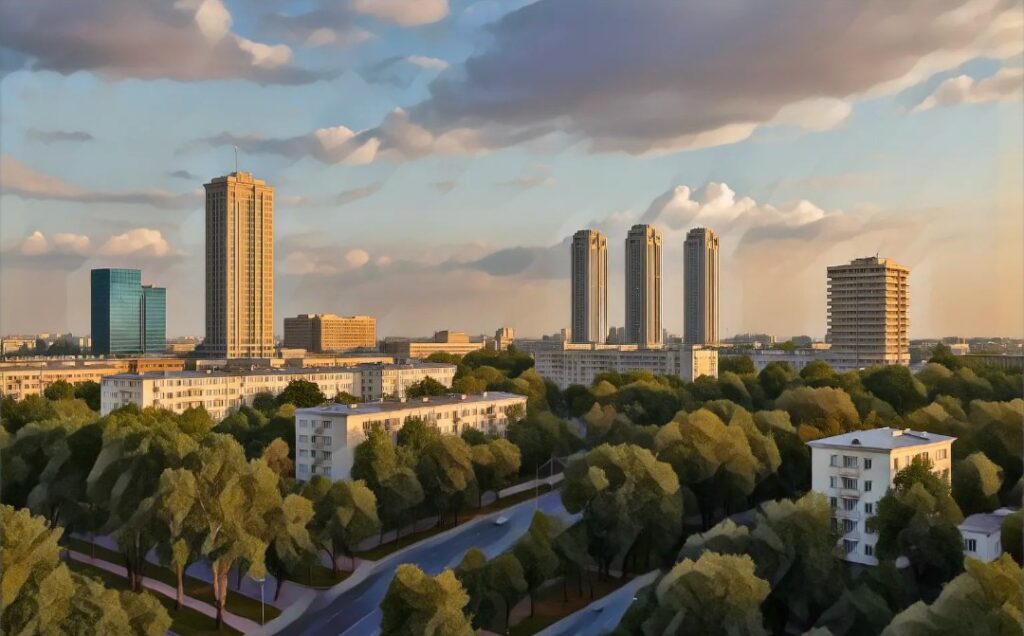
Uzbekistan Emerges as One of Europe and Central Asia’s Fastest-Growing Economies

Uzbekistan is on track to be one of the five fastest-growing economies in the broader Europe and Central Asia region next year, according to the World Bank’s Europe and Central Asia Economic Update, Fall 2025. The report projects Uzbekistan’s gross domestic product will expand by about 6.2% in 2025 - well above the regional average amid an overall slowdown across emerging European and Central Asian markets. Overall regional GDP growth is expected to ease to roughly 2.4% in 2025, down from 3.7% in 2024, as weaker output in Russia drags on the aggregate. Central Asia as a whole continues to stand out. The World Bank notes that countries in the region are collectively growing around 5.9% - making it the fastest-growing part of Europe and Central Asia for the third straight year. Within that group, Tajikistan is also forecast to grow by 7%, Kyrgyzstan by 6.8%, and Kazakhstan by 5.5%. That performance keeps much of Central Asia well ahead of Europe’s advanced economies, which are expected to grow by just over 1% on average. Turkmenistan is excluded from the World Bank’s regional calculations because it does not publish internationally comparable economic data. For Uzbekistan, in particular, inclusion among the region’s top performers marks a sharp turnaround for a country that, less than a decade ago, was largely closed to global markets. By way of comparison, according to the World Bank, Uzbekistan’s economy is about eight times larger than Kyrgyzstan’s and roughly seven times larger than Tajikistan’s. In 2024, Uzbekistan’s gross domestic product was roughly $105 billion, compared with approximately $14 billion for Kyrgyzstan and $15 billion for Tajikistan. Remittances and Investment Fuel Expansion Rising income from abroad and expanding investment at home due to an increasingly investor-friendly climate are the twin engines of Uzbekistan’s boom. The World Bank attributes its upgraded forecast partly to stronger-than-expected remittances and higher capital spending. In the first half of 2025, remittances sent home by Uzbek workers - mainly from Russia, Turkey, and South Korea - jumped 27% year-on-year to reach around $8.2 billion, providing a surge in household consumption. At the same time, both public and private investment are climbing. Government spending on infrastructure and industrial projects remains high, and foreign capital is flowing in at record levels. According to Uzbekistan’s Ministry of Investment, Industry and Trade, foreign direct investment reached about $10 billion in 2024, the highest on record. Projects span energy, agriculture, and information technology, with investors from South Korea, China, the Gulf states, and Europe among the most active. The International Monetary Fund’s 2024 Article IV Consultation observed that “robust investment and resilient consumption” have kept growth well above the overall regional average. Reforms Since 2016 Have Laid the Groundwork This acceleration did not happen by chance. Since President Shavkat Mirziyoyev came to power in 2016, Uzbekistan has pursued a series of market-oriented reforms to dismantle decades of economic isolation and stagnation. The government unified the exchange rate, lifted currency restrictions, and simplified customs and tax rules. It began privatizing state...

Experts Warn of Risks as Kazakhstan Considers Alcohol Sales Restrictions

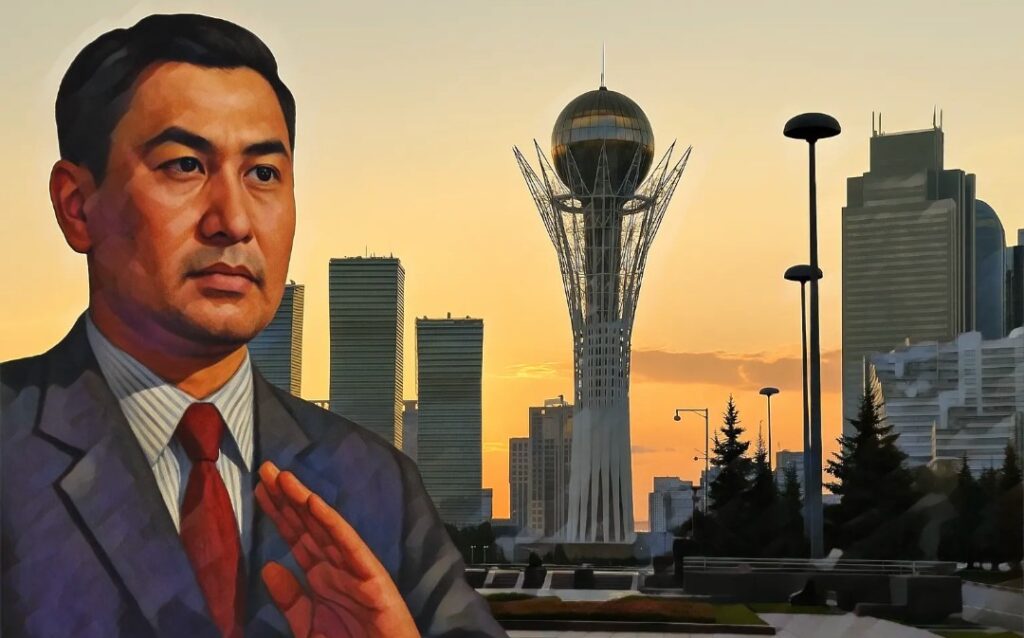
On October 13, Kazakhstan’s Ministry of Internal Affairs shocked citizens by proposing a ban on the sale of alcohol in regular grocery stores, retail chains, and online platforms. The announcement overshadowed global headlines and quickly sparked widespread debate. While the number of alcohol-free settlements in Kazakhstan is rising, overall consumption remains high, prompting concerns among experts about the potential consequences of such a sweeping ban. A Push for Specialized Alcohol Stores The ministry justified the proposed restrictions as a public safety measure. According to Minister of Internal Affairs Yerzhan Sadenov, alcohol is a major contributor to crime, with up to 10,000 crimes committed annually under the influence. Violations of age and time restrictions on alcohol sales are reportedly common. “They sell around the clock under the guise of cafes and bars. Online delivery is widely used. The measure of revoking a license is ineffective, it can be obtained the next day by other persons,” said Sadenov. The ministry is advocating for alcohol to be sold only in specialized stores, so-called alcohol markets. It also proposes tightening the licensing process and limiting the number of licenses issued. Additionally, it recommends restricting alcohol sales in entertainment venues, where more than 1,400 alcohol-related crimes, including three murders, have occurred. A New Front in the Fight Against Alcohol Abuse Many Kazakhstani citizens observe that alcohol consumption has declined since Soviet times, a trend attributed to increasing religiosity in the predominantly Muslim country and the popularity of healthy lifestyles. Still, the issue remains pressing. Over the years, Kazakhstan has introduced stricter regulations. In 2014, restrictions were imposed on sales hours. High-alcohol-content beverages were banned in stores from 9 p.m. to 12 p.m., and low-alcohol beverages from 11 p.m. to 8 a.m. In 2020, the minimum legal age for purchasing alcohol and tobacco was raised from 18 to 21. As of 2025, 429 villages have officially renounced alcohol. In the Aktobe region, 33 villages adopted alcohol-free policies, while 18 in the Kyzylorda region and 53 in the Atyrau region followed suit. According to officials, no offenses have been recorded in some of these areas over the past two years. Kazakhstan Still Drinks Despite these measures, alcohol consumption remains substantial. According to the World Health Organization (WHO), the average per capita alcohol consumption in Kazakhstan among those aged 15 and older stood at 5.4 liters of pure ethanol in 2022. The global average that year was 6.2 liters, with consumption in Europe ranging from 9 to 11 liters. In predominantly Muslim countries, the average is below 3 liters. WHO considers levels above 5 liters a significant health risk. A June 2025 survey found the highest consumption in northern regions, Pavlodar, Kostanay, and North Kazakhstan, as well as in Astana and Almaty. In contrast, Shymkent, Atyrau, and Turkestan reported the lowest levels. Interestingly, young adults aged 18 to 24 were found to drink less frequently, a trend attributed to stronger family oversight and cultural values. Economic and Social Risks of a Ban Experts urge caution in pursuing aggressive...

EU Launches Major Initiative to Boost Digital Connectivity in Central Asia

The European Union has unveiled a major initiative to expand digital connectivity across Central Asia, aiming to bridge the region’s digital divide and promote inclusive socio-economic development, according to the EU Delegation to Kazakhstan. The initiative, part of the EU’s Global Gateway strategy, was formally introduced during the political launch of the Team Europe Initiative (TEI) on Digital Connectivity in Central Asia. It seeks to deepen cooperation with Central Asian governments and accelerate digital transformation through investments in infrastructure, satellite technologies, and human capital. “The Global Gateway and the Team Europe Initiative on Digital Connectivity in Central Asia are opening a new chapter,” said Aleska Simkic, EU Ambassador to Kazakhstan. “Through them, the European Union is connecting remote regions and villages in Central Asia to the internet via satellite connections. Today’s event marks an important milestone in advancing sustainable connectivity and strengthening EU-Central Asia cooperation for the years ahead.” The TEI will be implemented through two core components. The Soft Pillar, known as the C4CA Project, will be carried out by a consortium of EU cooperation agencies led by Expertise France. It will focus on promoting safe and inclusive satellite connectivity, especially for women, youth, and marginalized groups, while supporting broader socio-economic inclusion through improved digital access. The Hard Pillar, titled “Satellite Connectivity for Underserved Populations of Central Asia,” will be coordinated by the European Investment Bank and implemented by satellite operator SES. This component will finance and deploy satellite constellations and ground infrastructure to deliver high-speed internet to remote and underserved areas, boosting access to education, healthcare, and business opportunities. “Connectivity, in all its forms, whether digital, infrastructural, or economic, lies at the heart of today’s global challenges,” said Sylvain Guiaugue, France’s Ambassador to Kazakhstan. “Working hand in hand with our partners in Central Asia, the consortium led by Expertise France will help develop the policies, skills, and technologies needed to ensure equal access to digital services and innovation.” EU officials emphasized that the initiative aligns with the national digital strategies of Central Asian countries and represents a pivotal step in fostering long-term regional cooperation. Governments across the region voiced strong support for the program, highlighting its strategic importance for Central Asia’s sustainable and connected future.

Kyrgyz Authorities Open Public Debate on Death Penalty Bill

Following a series of high-profile murders and sexual assaults targeting young women, Kyrgyz authorities have initiated a public discussion on the possible reinstatement of the death penalty for convicted murderers and rapists. President Sadyr Japarov proposed the nationwide debate in response to growing public outrage. The president’s office has prepared a draft bill that would allow for the introduction of capital punishment for particularly grave crimes committed against women and children. “Currently, Kyrgyzstan is witnessing an increase in particularly serious crimes against children and women, including rape and murder involving rape, which are causing deep concern to both society and the state,” reads the explanatory note to the document. According to the bill, its primary aim is to protect the lives and health of women and children from violent crimes. The Constitution of Kyrgyzstan identifies life and health as the highest values of the state, while guaranteeing special protection of citizens’ sexual integrity. The authors of the bill also reference the UN Declaration on the Elimination of Violence against Women, adopted by General Assembly Resolution 48/104 on December 20, 1993, which calls on member states to develop legal measures, including criminal and administrative sanctions, to combat physical and sexual violence against women. Statistics from the Prosecutor General’s Office indicate a steady rise in violent crimes in recent years. In 2021, there were 39 murders; 36 of the victims were women and three were children. By 2024, the number had increased to 43 (34 women and nine children). In the first eight months of 2025 alone, 28 people were killed. Official data also show that more than 80 women, most of them minors, are raped each year. A large proportion of such crimes remain unreported or unresolved, as families often avoid publicizing the cases due to stigma and fear of reprisal. The draft legislation proposes reinstating the death penalty only for two categories of crimes: the rape of minors and murders committed in conjunction with rape. “The facts of violence against children and the murder of women accompanied by rape no longer shock society, it is becoming commonplace, and that is alarming,” the bill’s authors stated. Public consultation on the proposal will continue until October 28, with parliamentary consideration scheduled until November 4. Kyrgyzstan formally abolished the death penalty in 2007; the last execution was carried out in 1998. In December 2010, the country ratified the Second Optional Protocol to the International Covenant on Civil and Political Rights, committing to the eventual and permanent abolition of capital punishment.

Kazakhstan’s Emerging Role in Global Rare-Earth Supply Chains

October 10 was one of the most consequential days for global trade policy and one of the most volatile for world markets since the U.S.–China tariff conflict first reignited. After China announced tighter export controls on rare earths, U.S. President Donald J. Trump first posted on Truth Social that “there seems to be no reason” anymore for him to meet with the Chinese leader Xi Jinping at the APEC summit in two weeks' time. Several hours later, the official White House account on X posted a message from Trump that he had learned that "effective November 1st, 2025, [China will] impose large-scale Export Controls [sic] on virtually every product they make, and some not even made by them." He then followed with the declaration that the U.S. will impose a 100% tariff on Chinese imports starting November 1, "or sooner," and launch export controls on critical software. As Washington and Beijing escalate their economic confrontation, the scramble for stable rare-earth supply chains has broadened beyond East Asia. Attention is shifting to Central Asia, where mineral potential and trade corridors align with the broader effort to reduce dependence on China. Kazakhstan has drawn particular attention, not as a single solution, but as a state seeking to leverage its Soviet-era industrial base and access to the Caspian to help meet emerging supply chain needs. Although Kazakhstan has made the most progress in translating its mineral reserves into a functioning mining industry, it remains part of a broader regional effort to diversify away from a single external partner, most notably China. Other Central Asian states are testing their own capabilities to meet global supply chain demands, though most remain constrained by infrastructure, financing, or lack of processing capability. Kazakhstan’s Position in the Emerging Supply Realignment On reserves, Kazakhstan’s rare-earth potential is rooted as much in continuity as it is in discovery. Decades of geological mapping under Soviet administration established its mineral profile, and recent joint surveys by Kazgeology and private firms have both confirmed and expanded those earlier findings. New delineated deposits in the east and center of the country, including the Zhana Kazakhstan site in Karagandy, have reinforced its status as a prospective non-Chinese source of critical materials, with verified concentrations of neodymium, praseodymium, dysprosium, terbium, and samarium. If current resource estimates are validated, the Zhana Kazakhstan deposit could rank among the largest rare-earth reserves in the world. These elements are essential inputs for high-efficiency magnets used in electric vehicles, wind turbines, and advanced defense systems. The U.S. Department of Defense classifies these rare earths as “critical defense materials,” a designation that underscores their strategic relevance rather than any immediate shift in supply. Both the Pentagon and the Defense Logistics Agency have begun increasing stockpiles and exploring alternative processing sources, but for now, the question in Kazakhstan is not geological endowment, which is established, but the terms under which that endowment can be brought to market. On processing capacity, Kazakhstan’s experience in large-scale mining of uranium, copper, and other critical minerals has...

Tajik Students Win Award in Los Angeles for Music Video Honoring Jalaluddin Rumi

The music video Nai Noumie by Jalaluddin Rumi, directed by Ilyas Daudi, won first place in the “Best Music Video” category at the Los Angeles Cinema Festival of Hollywood. The project was selected from among hundreds of international submissions. Creating the Project Tajik students Shahriyor Gulmakhmadzoda and Yosuman Ismailova, both studying at the Gerasimov Institute of Cinematography (VGIK) in Moscow, participated in the video. They recited poetry by the renowned Persian mystic Jalaluddin Rumi, set to music by Iranian composer Arash Faladvand. The composition is part of a trilogy by Daudi dedicated to Eastern philosophy and poetry. According to the director, the choice to involve Tajik students was intentional. “The involvement of students from Farhad Mahmudov’s Tajik workshop was guided by the linguistic and cultural proximity between Persian and Tajik traditions,” Daudi explained. He praised the voices of Yosuman and Shahriyor as perfect for the project. Faladvand’s symphonic piece was adapted into what Daudi described as a “concise rock version with an exquisite professional arrangement.” The project had an international scope from the outset. Iranian historians and linguists contributed to ensuring the poetic integrity of Rumi’s work was faithfully preserved. Daudi, an award-winning director and screenwriter, is also the author of the book In the Kunduz Circle. He has received accolades in Los Angeles, Austin, Berlin, Geneva, Madrid, and other cities. Shahriyor's Story Shahriyor Gulmakhmadzoda, 22, is from the Matchinsky district in Tajikistan's Sughd region. His parents, both farmers, currently work in Russia to support his studies. Passionate about the performing arts from a young age, he participated in school productions and later enrolled at the M. Tursunzade Tajik State Institute of Culture and Arts under the mentorship of Kurbon Sobir, a People’s Artist of Tajikistan. “My parents and my brother Shohrukh always supported my path. My teacher Kurbon Sobir gave me so much and showed great patience to shape me. He helped me enter VGIK through a presidential quota, and Maestro Farhad Makhmudov accepted us. For me, he’s someone I would give all my blood to,” Shahriyor said. Yosuman's Story Yosuman Ismailova, 21, was born in Dushanbe and is originally from Tajikistan's Gorno-Badakhshan region. Her mother worked as a dispatcher at Shabakai Avval (First Channel), and her father, a taxi driver, recently relocated to Moscow. From childhood, Yosuman aspired to perform on stage. She studied vocals and graduated from the A. Bokulov College of Arts. “I still remember my teacher, Irina Norayrovna Arutyunyan, with deep appreciation. She did so much for me, and I’m immensely grateful,” she shared. First Steps into Cinema This summer, both students began their studies in Farhad Makhmudov’s workshop at VGIK. Upon learning about the new Tajik students, Daudi invited them to join his project. “We gladly agreed, even though we had no prior experience. Everything was new, filming, recording vocals, working on set,” Yosuman recalled. Filming took place in VGIK’s training studio and on location in the Zavidovo nature reserve outside Moscow. For Shahriyor and Yosuman, this was their first professional cinematic experience and a...