• KGS/USD = 0.01144 0%
  • KZT/USD = 0.00194 0%
  • TJS/USD = 0.10872 0.18%
  • UZS/USD = 0.00008 0%
  • TMT/USD = 0.28571 0%
  • KGS/USD = 0.01144 0%
  • KZT/USD = 0.00194 0%
  • TJS/USD = 0.10872 0.18%
  • UZS/USD = 0.00008 0%
  • TMT/USD = 0.28571 0%
  • KGS/USD = 0.01144 0%
  • KZT/USD = 0.00194 0%
  • TJS/USD = 0.10872 0.18%
  • UZS/USD = 0.00008 0%
  • TMT/USD = 0.28571 0%
  • KGS/USD = 0.01144 0%
  • KZT/USD = 0.00194 0%
  • TJS/USD = 0.10872 0.18%
  • UZS/USD = 0.00008 0%
  • TMT/USD = 0.28571 0%
  • KGS/USD = 0.01144 0%
  • KZT/USD = 0.00194 0%
  • TJS/USD = 0.10872 0.18%
  • UZS/USD = 0.00008 0%
  • TMT/USD = 0.28571 0%
  • KGS/USD = 0.01144 0%
  • KZT/USD = 0.00194 0%
  • TJS/USD = 0.10872 0.18%
  • UZS/USD = 0.00008 0%
  • TMT/USD = 0.28571 0%
  • KGS/USD = 0.01144 0%
  • KZT/USD = 0.00194 0%
  • TJS/USD = 0.10872 0.18%
  • UZS/USD = 0.00008 0%
  • TMT/USD = 0.28571 0%
  • KGS/USD = 0.01144 0%
  • KZT/USD = 0.00194 0%
  • TJS/USD = 0.10872 0.18%
  • UZS/USD = 0.00008 0%
  • TMT/USD = 0.28571 0%
22 December 2025

Viewing results 691 - 696 of 1823

First Train Tour Launched Between Kazakhstan and Uzbekistan

Kazakhstan is launching a new international train tour called “Silk Road,” connecting the cities of Almaty, Turkestan, and Tashkent. The first train on this route will depart on November 16. According to the Ministry of Tourism and Sports of Kazakhstan, the four-day tour will allow travelers to plunge into the atmosphere of ancient cities along the historic Silk Road. The itinerary covers the most important sights of Turkestan and Tashkent and includes guide services, meals, transfers, and entrance fees. Vice-Minister of Tourism and Sports Yerzhan Erkinbayev mentioned that the route will strengthen cultural ties between Kazakhstan and Uzbekistan and make travel more comfortable and affordable. The tour program includes visits to historical places such as the ancient city of Otyrar, the mausoleum of Arystan Baba, the historical and cultural complex Azret Sultan, and the most significant tourist complex in Central Asia, Caravan-Saray. In Tashkent, tourists can familiarize themselves with historical sights and modern architecture. Earlier, the media reported on the launch of a tourist route between China and Kazakhstan. The train from China, which began running in July 2024, passes through the Khorgos-Altynkol border crossing, adding a new opportunity for travel in Central Asia.

Bishkek Secures Multi-Million Dollar Grants at COP29 Conference in Baku

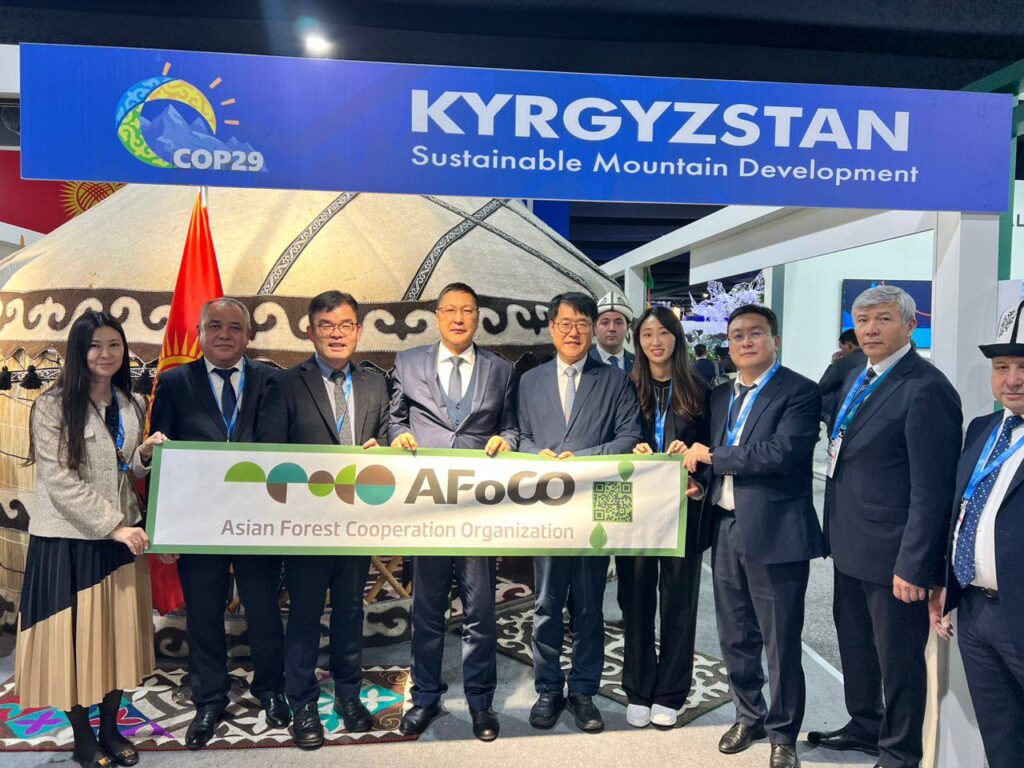
Boobek Azhikeev, the head of Kyrgyzstan’s Ministry of Emergency Situations, held several meetings with representatives of international institutions during the COP29 conference in Baku. Protocols and memorandums were signed, and a joint action plan for 2025-27 was developed. “I would like to highlight our meeting with the regional director of the Green Climate Fund, where we discussed a $25 million grant,” stated Kyrgyz EMERCOM spokeswoman Elnura Muktarova. “These funds are intended to support Kyrgyzstan’s Hydrometeorological and Forestry Services, as well as the Training and Research Center of the Ministry of Emergency Situations. We anticipate beginning these projects next year.” Azhikeev also negotiated with FETNet, a Finnish company that will provide advanced training for the Hydrometeorological Service. FETNet has offered to train Kyrgyz specialists in Finland and will present cutting-edge technologies to improve the accuracy and timeliness of weather forecasts. In addition, the Ministry of Emergency Situations announced that it had reached an agreement with the Asian Development Bank (ADB) to secure $60 million for strengthening the banks of the Kara-Darya, Chu, and Yassy rivers. This funding aims to reduce flood risks and enhance the ecological situation in the region. Of the total, 40% will be provided as a grant, while the remainder will be offered as a loan. During a meeting with representatives from the Financial Service under the Government of South Korea, discussions centered on financing Kyrgyzstan’s Forest Service. The South Korean representatives pledged support in the form of laboratory equipment, high-quality seeds, and digital mapping tools to combat pasture degradation and enhance forestry management. Kyrgyz Ministry of Emergency Situations officials also met with Turkish EMERCOM representatives and the Turkish Cooperation and Coordination Agency (TIKA) to discuss joint efforts in responding to emergency situations.

Chinese Company Builds Cotton-Textile Cluster in South Kazakhstan

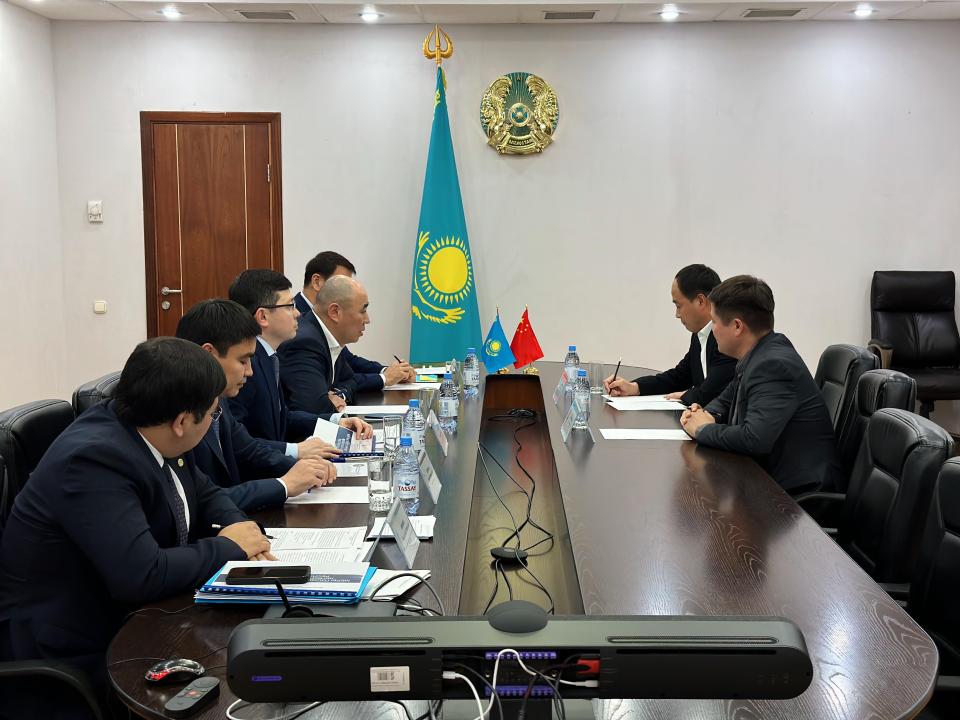
Xinjiang Lihua (Group) Co., Ltd., one of China’s largest companies specializing in the cultivation and deep processing of cotton, has commenced work on a cotton-textile cluster in Kazakhstan’s southern Turkestan region. The project’s progress was reviewed on November 14 during a meeting between Kanat Sharlapaev, Kazakhstan’s Minister of Industry and Construction, and representatives of the company. Located in the Turan Special Economic Zone, the joint venture involves the construction of facilities for PVC pipe manufacturing, drip irrigation systems, two cotton processing plants, a spinning mill, a weaving mill, a dyeing and finishing factory, and a garment factory. The project, with a total cost of 180 billion KZT (over $363 million), is expected to generate more than 4,000 jobs. This year, the initiative saw the installation of a drip irrigation system, cotton cultivation on 1,120 hectares, and the start of construction for the spinning mill. Minister Sharlapaev underscored the project’s significance for the development of Kazakhstan’s light industry, pledging comprehensive government support to ensure its success.

ADB Launches ‘Glaciers to Farms’ Initiative to Combat Climate Change in Central Asia

The Asian Development Bank (ADB) has unveiled a new regional initiative, Glaciers to Farms, aimed at promoting sustainable water management and food security in Central Asia, the South Caucasus, and Pakistan. The program addresses the severe effects of accelerated glacial melt caused by climate change. Backed by the Green Climate Fund (GCF), ADB will conduct risk assessments of glacial melt in Azerbaijan, Kyrgyzstan, Tajikistan, and Uzbekistan to establish a scientific and technical foundation for the program. Regional Cooperation for Glacier Preservation On November 14 in Baku, Azerbaijan, a declaration of support for glacier preservation was signed by several regional leaders: Azerbaijan’s Minister of Ecology and Natural Resources Mukhtar Babayev, Kazakhstan’s Minister of Ecology and Natural Resources Yerlan Nyssanbayev, Kyrgyzstan’s Minister of Natural Resources, Ecology and Technical Supervision Meder Mashiev, Tajikistan’s Committee on Environmental Protection Chairman Bahodur Sheralizoda, and Uzbekistan’s Minister of Ecology, Environmental Protection, and Climate Change Aziz Abdukhakimov. They were joined by ADB President Masatsugu Asakawa and GCF Chief Investment Officer Henry Gonzalez. “As melting glaciers change water flows, disrupt lives, and destroy ecosystems, we must act now,” said Asakawa. “As Asia and the Pacific’s climate bank, we are pleased to be joined by key partners to launch this program to drive international collaboration and deliver results where they matter most—on the ground, in communities at risk.” The Urgent Need for Action Temperatures in the region are expected to rise by up to 6 degrees Celsius by 2100. The resulting loss of glacial mass poses a dire threat to ecosystems, jeopardizing water supplies for agriculture and hydropower and endangering the livelihoods of over 380 million people. The Glaciers to Farms program aims to mobilize up to $3.5 billion in funding from ADB, GCF, governments, development partners, and the private sector. Beyond investments in water and agriculture, the program will prioritize vulnerable communities in fragile mountain regions that are most threatened by glacial melt. Global and Regional Efforts The United Nations General Assembly has declared 2025 the International Year of Glacier Preservation, with Tajikistan set to host the International Conference on Glaciers’ Preservation in Dushanbe next year. At a high-level event in Baku on November 12, Tajikistan's President Emomali Rahmon underscored the importance of preventing further glacier melt and preserving fragile ecosystems. Rahmon highlighted the establishment of the International Trust Fund for the Preservation of Glaciers under the United Nations’ auspices and noted the UN’s recent adoption of a resolution—initiated by Tajikistan and France—declaring 2025-2034 the Decade of Action for Cryospheric Sciences. This resolution calls for enhanced efforts to safeguard glaciers globally. Rahmon also proposed creating a Regional Coordination Center for Glaciology in Dushanbe under the World Meteorological Organization’s guidance. The center would study the impact of climate change on glaciers in collaboration with development partners.

Uzbekistan and Germany Partner on Green Industrialization with €3 Million Grant

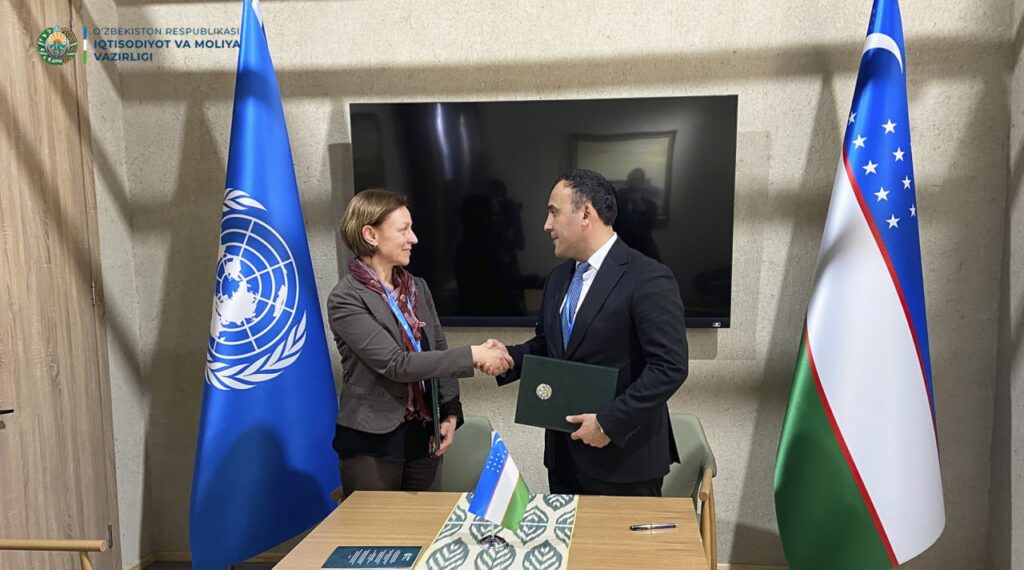
On November 13, at the 29th UN Climate Change Conference (COP29) in Azerbaijan's capital Baku, Uzbekistan's Ministry of Economy and Finance signed a memorandum with the German International Cooperation Society (GIZ) to secure additional funding for a project aimed at supporting the private sector in green industrialization. As part of the initiative, Germany has allocated €9 million to help Uzbekistan’s private sector transition to a green economy. The project is designed to assist the Uzbek government in implementing economic reforms and fostering sustainable economic development, focusing on enhancing the capacity of both the public and private sectors to adopt green industrialization practices. The initiative will also provide technical expertise in measuring and certifying greenhouse gas emissions, supporting Uzbekistan’s participation in international carbon trading mechanisms, and aligning with the European Union’s Cross-Border Adjustment Mechanism (CBAM). Additionally, it aims to promote resource-saving and sustainable production by encouraging the private sector to adopt green technologies, including circular economy practices and green industrial park models. To further bolster the project, a €3 million grant was approved during the conference. This funding will complement the ongoing initiative, titled “Support to the Private Sector and Advice on Economic Policy in Uzbekistan.”

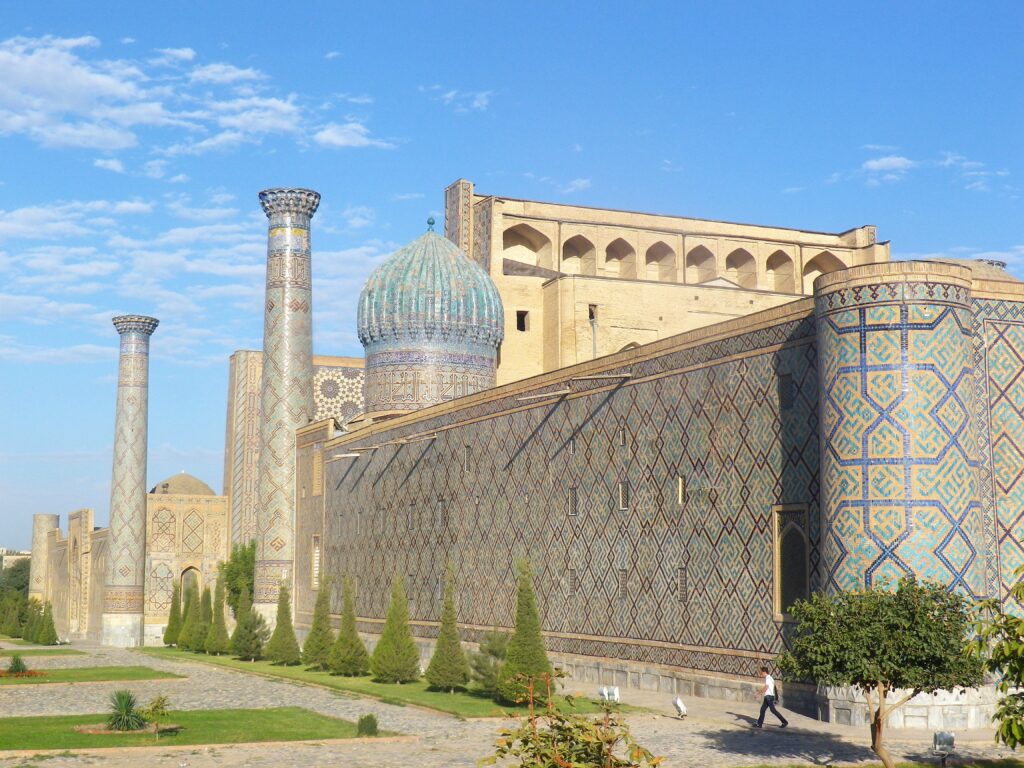
Strategic Partnership Dialogue: U.S. Allocates $500,000 for Registan Square Preservation

On November 13, the latest meeting of the U.S.-Uzbekistan Strategic Partnership Dialogue took place in Washington, D.C. Key participants included U.S. Assistant Secretary of State for South and Central Asia, Donald Lu, Uzbekistan's Deputy Foreign Minister, Muzaffar Madrahimov, and the ambassadors of both countries. The delegations discussed the expanding partnership between Uzbekistan and the United States, focusing on economic development, human rights, security, and cultural ties. The United States reaffirmed its steadfast support for Uzbekistan’s independence, sovereignty, and territorial integrity. At the meeting, both sides emphasized the importance of maintaining close consultations and celebrated new areas of collaboration. Notable progress was highlighted in critical minerals production and efforts to modernize Uzbekistan’s natural gas infrastructure. This follows the signing of a Critical Minerals Memorandum of Understanding (MOU) in September and Uzbekistan’s entry into the Minerals Security Partnership. The delegations also underscored their commitment to diversifying trade and investment, advancing agricultural reforms in Uzbekistan, empowering women economically, addressing the climate crisis, and supporting the transition to clean energy. The United States commended Uzbekistan for adopting USAID-supported English language textbooks and teachers' manuals for public schools. Efforts to expand sustainable economic opportunities for women in Uzbekistan were similarly praised. Both nations highlighted the strength of their cultural ties, with the U.S. expressing gratitude for Uzbekistan’s leadership in archaeology and cultural preservation. As part of these efforts, the U.S. State Department announced a $500,000 allocation from the U.S. Ambassador's Fund for the Preservation of Cultural Heritage. The funding will support conservation efforts at Registan Square, a UNESCO World Heritage site in Samarkand.