• KGS/USD = 0.01144 0%
  • KZT/USD = 0.00211 0%
  • TJS/USD = 0.10454 -0.1%
  • UZS/USD = 0.00008 0%
  • TMT/USD = 0.28571 0.28%
  • KGS/USD = 0.01144 0%
  • KZT/USD = 0.00211 0%
  • TJS/USD = 0.10454 -0.1%
  • UZS/USD = 0.00008 0%
  • TMT/USD = 0.28571 0.28%
  • KGS/USD = 0.01144 0%
  • KZT/USD = 0.00211 0%
  • TJS/USD = 0.10454 -0.1%
  • UZS/USD = 0.00008 0%
  • TMT/USD = 0.28571 0.28%
  • KGS/USD = 0.01144 0%
  • KZT/USD = 0.00211 0%
  • TJS/USD = 0.10454 -0.1%
  • UZS/USD = 0.00008 0%
  • TMT/USD = 0.28571 0.28%
  • KGS/USD = 0.01144 0%
  • KZT/USD = 0.00211 0%
  • TJS/USD = 0.10454 -0.1%
  • UZS/USD = 0.00008 0%
  • TMT/USD = 0.28571 0.28%
  • KGS/USD = 0.01144 0%
  • KZT/USD = 0.00211 0%
  • TJS/USD = 0.10454 -0.1%
  • UZS/USD = 0.00008 0%
  • TMT/USD = 0.28571 0.28%
  • KGS/USD = 0.01144 0%
  • KZT/USD = 0.00211 0%
  • TJS/USD = 0.10454 -0.1%
  • UZS/USD = 0.00008 0%
  • TMT/USD = 0.28571 0.28%
  • KGS/USD = 0.01144 0%
  • KZT/USD = 0.00211 0%
  • TJS/USD = 0.10454 -0.1%
  • UZS/USD = 0.00008 0%
  • TMT/USD = 0.28571 0.28%

Viewing results 721 - 726 of 2359

Heads of Kyrgyz, Tajik, and Uzbek Governments Meet… Finally

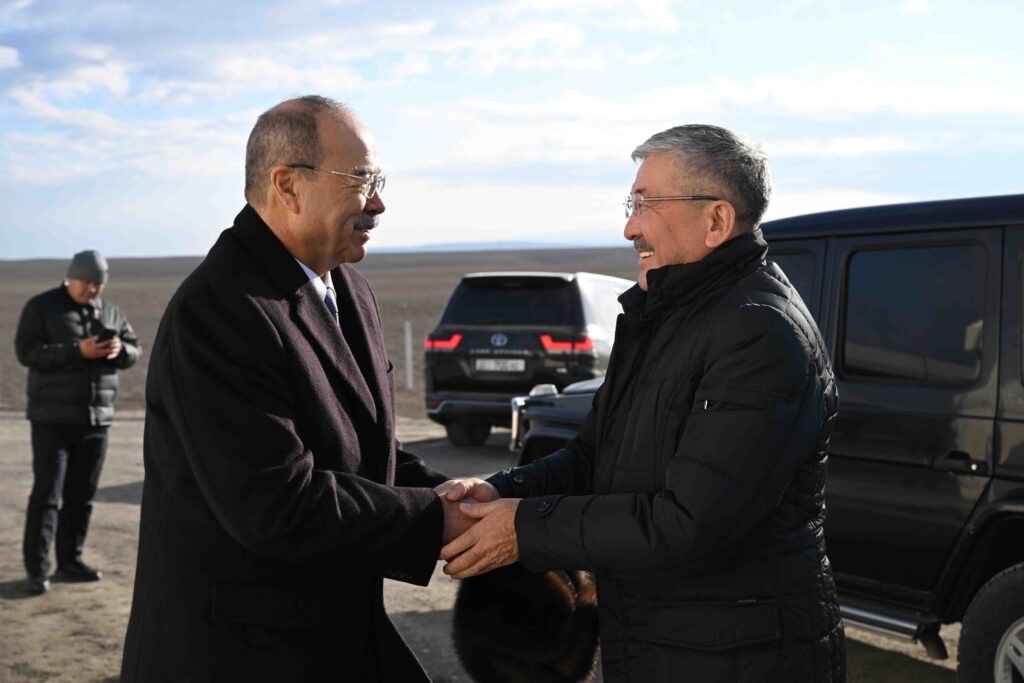
It took more than 30 years, but the prime ministers of the three Central Asian countries that share the Ferghana Valley finally met to discuss a range of important issues that concern all three states. Tajik Prime Minister Kohir Rasulzoda, Uzbek Prime Minister Abdulla Aripov, and Chairman of Kyrgyzstan’s Cabinet of Ministers (Kyrgyzstan does not have a post of prime minister) Adylbek Kasymaliyev met on January 8 at a desolate area where the borders of the three countries meet. [caption id="attachment_27412" align="aligncenter" width="8256"] Image: gov.kg[/caption] The group touted agreements on the completion of the delimitation process along the Uzbek-Kyrgyz border and the early December 2024 agreement on the Kyrgyz-Tajik border. Since 1991, unmarked areas of the borders in the Ferghana Valley were often the scenes of conflicts between communities on either side of the frontier. Border guards sometimes fired on trespassers and dozens of people were killed or wounded, sometimes simply because they inadvertently strayed over unmarked territory into the neighboring country. The Ferghana Valley is the most densely populated region in Central Asia. This is due to the rich agricultural land which makes the region to this day the breadbasket of Central Asia. Soviet mapmakers drew lines to create Soviet republics in the region, though these borders mattered little since they were internal administrative boundaries inside one country. [caption id="attachment_27413" align="aligncenter" width="8256"] Image: gov.kg[/caption] After the USSR collapsed, these often-arbitrary, zigzagging borders took on meaning, and disputes quickly broke out about what land historically belonged to which nation and who had rights to water use. These issues were greatly complicated by the existence of enclaves created during the Soviet period such as Uzbekistan’s Soh and Shahimardon and Tajikistan’s Vorukh, all three of which are surrounded by Kyrgyzstan.   Looking Ahead The three prime ministers discussed hydropower plants (HPP), an important topic for all three countries, especially as key HPPs are located in the mountains ringing the Ferghana Valley and more are currently under construction. Central Asia is one the regions most affected by climate change, so HPPs and water use in general are crucial issues, especially given that agriculture in the Ferghana Valley is vital to all three countries. All three countries face electricity shortages and hydropower is seen as a means of alleviating or even totally resolving this dilemma, but at the same time waters flowing from the mountains of Kyrgyzstan are important for agriculture in every Central Asian state. Uzbek media noted Uzbek Energy Minister Jurabek Mirzamahmudov was part of the delegation attending the January 8 talks. Reports did not mention if energy ministers from Kyrgyzstan and Tajikistan were also present. [caption id="attachment_27414" align="aligncenter" width="8256"] Image: gov.kg[/caption] Central Asia is also taking on a new importance as a trade corridor between Europe and China, and from Europe and China into Afghanistan and on further to Pakistan. Reports noted logistics were high on the agenda at the meeting of the three prime ministers. Trade between the three countries, specifically in the Ferghana Valley, was also discussed not only...
AIIB Commits $500 Million to Tajikistan’s Rogun Hydropower Project

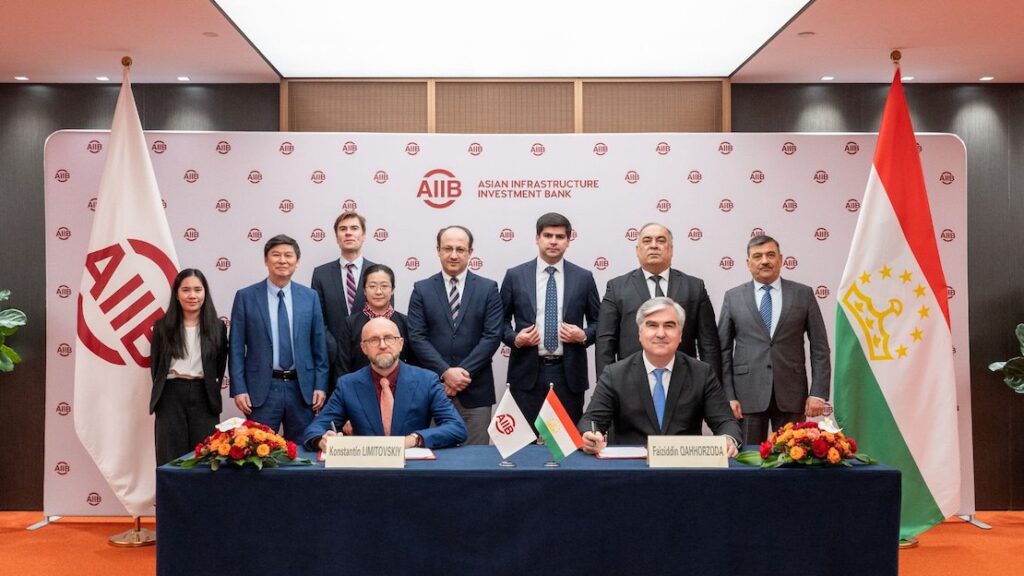
The Beijing-based Asian Infrastructure Investment Bank (AIIB) has approved a multiphase program totaling $500 million, including an initial Phase 1 loan of $270 million, to support Tajikistan’s flagship Rogun Hydropower Plant (HPP) project. The announcement was made on January 6, following the financing approval on December 19, 2024. The Rogun HPP, located on the Vakhsh River — a tributary of the Amu Darya River — lies 110 kilometers from Dushanbe, Tajikistan’s capital. With a designed generation capacity of 3,780 MW, a 335-meter-high dam, and a reservoir spanning 170 square kilometers, the Rogun HPP is expected to deliver improved electricity access to around 10 million people. It aims to address Tajikistan’s chronic winter power shortages and position the country as a key regional energy supplier. The project is co-financed with the World Bank, with potential contributions from a global consortium of donors. It seeks to enhance the supply of clean, affordable, and climate-resilient hydropower, with the potential to export electricity to neighboring Central Asian countries. As Central Asia’s energy demand is projected to grow by 40% by 2030 and triple by 2050, the Rogun HPP will play a pivotal role in increasing reliability and reducing the cost of electricity supply across the region. Konstantin Limitovskiy, AIIB Chief Investment Officer, commented on the significance of the project, stating: "This project will significantly contribute to the green energy transition and energy security of Central Asia. Investing in sustainable energy infrastructure is not merely about meeting today’s demands, but about empowering future generations with clean, reliable power that drives transformative growth, strengthens resilience, and unlocks the full potential of the region." Tajikistan ranks eighth globally in hydropower potential, yet only about 4% of this capacity is currently utilized. The Rogun HPP is set to play a critical role in decarbonizing electricity grids across Central Asia, supporting the region’s ambitious Nationally Determined Contributions (NDCs) under the Paris Agreement.

Kazakhstan Leads Central Asia in Global Passport Power Ranking 2025

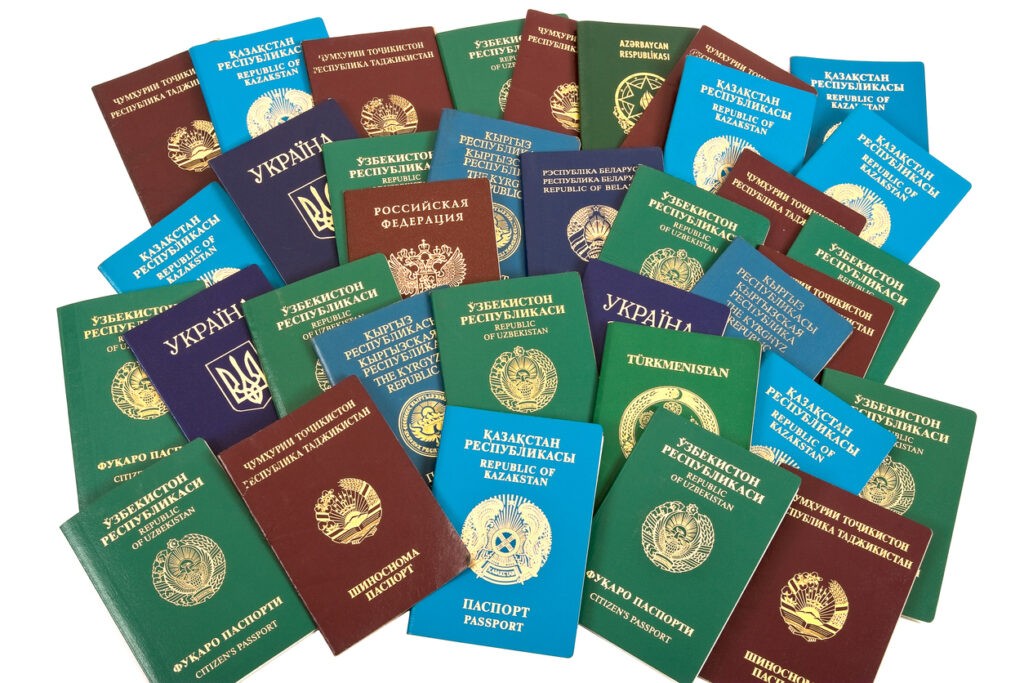
Kazakhstan has secured the top spot among Central Asian countries, ranking 52nd globally in the latest Passport Index by Canadian consulting firm Arton Capital. The ranking evaluates passports based on the number of destinations their holders can access visa-free or with a visa on arrival. Kazakhstan’s passport allows visa-free travel to 46 countries and visa-on-arrival access to 50 more, totaling 96 destinations. However, Kazakh citizens still require visas for 102 destinations. Uzbekistan ranks 68th, climbing two places from 2024. Uzbek passport holders enjoy visa-free access to 32 countries and can obtain visas on arrival for 46 more. Visas are required for 120 destinations. Kyrgyzstan stands at 78th in the global ranking. Its citizens can travel visa-free to 30 countries and obtain visas on arrival in 48. Like Uzbekistan, Kyrgyz nationals need visas for 120 destinations. Tajikistan ranks 80th, with its citizens able to visit 27 countries visa-free and 46 with a visa on arrival. Tajik nationals require visas for 125 destinations. Turkmenistan is 85th globally, the lowest among Central Asian nations. Turkmen passport holders have visa-free access to 18 countries and visa-on-arrival privileges for 50 destinations but need visas for 130 countries. Globally, the United Arab Emirates retains its position as the most powerful passport, followed by Spain, France, Germany, and Belgium. Several countries share the same rank; for instance, German, Belgian, and Italian citizens can visit 133 countries visa-free and obtain visas on arrival in 45 countries.

Kazakhstan and Uzbekistan Collaborate on Syr Darya River Automation to Improve Water Management

Kazakhstan and Uzbekistan are moving forward with plans to install ten automated measuring stations along the Syr Darya River, a project aimed at improving water resource management. As previously reported by The Times of Central Asia in September 2024, this initiative was first discussed during meetings between Uzbek Minister of Water Resources Shavkat Khamroyev and Kazakh Minister of Water Resources Nurzhan Nurzhigitov. The discussions focused on automating and digitizing water accounting in the river basin. On January 7, the two countries announced that they had agreed to develop technical specifications for the project. Five stations will be installed in each country, with the German Agency for International Cooperation (GIZ) assisting in the development of draft technical specifications. Meanwhile, negotiations are ongoing with international financial institutions to secure funding for the project. “This is just the beginning,” stated Kazakhstan’s Vice Minister of Water Resources and Irrigation, Nurlan Aldamjarov. “Only the first ten sections have been identified so far, but we aim to automate all major hydro posts and ensure complete transparency in water accounting. We are also actively addressing this issue in talks with our Kyrgyz and Tajik counterparts.” The automation of water management systems is a critical step for both Kazakhstan and Uzbekistan, as the Syr Darya River plays a vital role in supporting agriculture and ensuring water security in the region.

Bridging Borders: Louis Albertini on Central Asia’s Tech Growth, Startup Challenges, and Building Global Connections

Louis Albertini has been involved in technology and startups across the United States and Kazakhstan for a decade, working with Silicon Valley and venture capital-backed startups based in Kazakhstan, including ORBI and Farel. He is passionate about supporting founders in succeeding in the U.S. market and building connections between the U.S. and Kazakhstan. TCA spoke with Louis to gain insights from his experiences in the Kazakhstan market.   TCA: Can you share your career journey in Kazakhstan and what motivated you to work in diverse roles like marketing, consulting, and startups? Louis: I arrived in Kazakhstan in July 2015 as a Princeton in Asia fellow and spent a year working in the President's Office at KIMEP University with Dr. Chan Young Bang. I served as his communications officer, writing official correspondence, liaising with different departments, and managing the day-to-day affairs of the office. After my PiA fellowship ended, I decided to stay in Almaty and start exploring the nascent startup scene. In 2016, I joined the founding team of a startup called ORBI, which developed 360-degree video recording glasses. This was the first Kazakhstani startup that attracted significant venture financing and was invited to interview at Y Combinator in 2016. We raised about $7 million for the company and secured $350 thousand in pre-orders, the largest ever for a Kazakh start-up. Back then, the YC batches were extremely small, and interviews were conducted in person at their historic but now-closed 320 Pioneer Way office in Mountain View. This was my first applied experience with Kazakhstan startups, and I've been involved ever since.   TCA: What inspired you to create Redfern Partners, and how did you help address the challenges SMBs and tech companies face in Central Asia? Louis: Working at the American Chamber of Commerce gave me some insight into the market research landscape in Kazakhstan, primarily by listening to business leaders complain about available options. Besides the major consulting firms like McKinsey and BCG, which are more focused on quasi-state projects that need stamps of approval, the SMB space for high-quality independent research was largely empty. The Big 4 have variations of market research services, but their core specialty is audit and tax. Most local incumbents were formed in the early 1990s and use outdated methodologies that produce inaccurate or trivial insights. International research firms lack local coverage and rely on a loose patchwork of freelancers. Redfern was formed to offer high-quality, independent market research services to fill this void. We completed about twenty projects and continue to be a partner for the European Bank for Reconstruction and Development (EBRD) small business initiative.   TCA: What common mistakes did you see SMBs in the region make, and how did you help them overcome these? Louis: The SMB space in Kazakhstan is hugely underserved and overlooked, offering the largest surface area regarding technology adoption. In the US, SMBs employ nearly half of the American workforce, representing 45% of America's GDP. In Kazakhstan, the market is mainly asymmetrical, with large players...

Kazakhstan Could Save America’s Energy Future

The energy crisis gripping Europe has made clear for all to see the limits of solar and wind power. Years of investment and unbridled ambition have not created renewable sources that can deliver the consistent, large-scale energy that modern economies need. Nuclear power has emerged as the only viable solution for achieving zero-emissions energy while maintaining reliability. Europe’s urgent need to reduce its dependency on Russian gas has made all that even clearer. Meanwhile, the United States faces its own energy challenges. Its nuclear industry urgently requires a secure and stable uranium supply; yet U.S. foreign policy has largely overlooked Kazakhstan, the world’s largest uranium producer. It gets worse. No sitting U.S. president has ever visited Kazakhstan, which produces over 40% of the world’s natural uranium. Russia and China have filled this diplomatic vacuum, embedding themselves deeply in Kazakhstan’s energy sector. The United States and Europe must act decisively to build stronger ties with Kazakhstan and Central Asia, if they are to achieve energy independence by securing their nuclear futures. Europe’s dependence on Russian natural gas has been its geopolitical Achilles’ heel for decades. Russia's illegal war of aggression against Ukraine, driving home the need to diversify energy sources, has further increased that vulnerability. Nuclear power offers Europe a path to energy independence. This hinges, however, on access to uranium, of which Europe imports 97% of its supply. Moreover, much of that uranium is enriched in Russia, creating a dependency analogous to that on Russian gas. That problem can be solved by deepening cooperation with Kazakhstan, the world’s largest uranium producer. Unfortunately, Europe’s engagement with Kazakhstan has been half-hearted at best; yet the country's reserves are essential for powering Europe’s nuclear plants. Strategic investments and partnerships are needed to unlock Kazakhstan’s role as a reliable uranium supplier to Europe, but logistical hurdles and a lack of political focus have so far stymied efforts to make that happen. Kazakhstan, the world's leading uranium producer, offers the United States a critical opportunity to secure its energy and national-security needs, yet Washington has ignored this and made little effort to deepen its ties with Kazakhstan. By contrast, China sources 60% of its uranium imports from Kazakhstan, supported by investments in mining and nuclear fuel facilities. Likewise, Russia has, through Rosatom, forged strong partnerships with Kazatomprom. These efforts give Beijing and Moscow significant leverage over global uranium markets. The U.S., however, has failed to foster the political and economic relationships necessary for long-term nuclear-energy security. Kazakhstan is a particularly glaring case in point. Over the past two decades, Kazakhstan has come to account for nearly half of global uranium production, giving it a key position in the global uranium supply chain. Neighboring Uzbekistan, the fifth-largest producer, adds another 6%, and Mongolia also has significant undeveloped reserves of future potential. Yet Kazakhstan remains heavily dependent on Russian infrastructure for uranium transport and enrichment. Until the late 2024 signature of an agreement to supply nearly half of its annual uranium ore production to China through the...