• KGS/USD = 0.01144 0%
  • KZT/USD = 0.00213 0%
  • TJS/USD = 0.10607 0.57%
  • UZS/USD = 0.00008 0%
  • TMT/USD = 0.28530 0%
  • KGS/USD = 0.01144 0%
  • KZT/USD = 0.00213 0%
  • TJS/USD = 0.10607 0.57%
  • UZS/USD = 0.00008 0%
  • TMT/USD = 0.28530 0%
  • KGS/USD = 0.01144 0%
  • KZT/USD = 0.00213 0%
  • TJS/USD = 0.10607 0.57%
  • UZS/USD = 0.00008 0%
  • TMT/USD = 0.28530 0%
  • KGS/USD = 0.01144 0%
  • KZT/USD = 0.00213 0%
  • TJS/USD = 0.10607 0.57%
  • UZS/USD = 0.00008 0%
  • TMT/USD = 0.28530 0%
  • KGS/USD = 0.01144 0%
  • KZT/USD = 0.00213 0%
  • TJS/USD = 0.10607 0.57%
  • UZS/USD = 0.00008 0%
  • TMT/USD = 0.28530 0%
  • KGS/USD = 0.01144 0%
  • KZT/USD = 0.00213 0%
  • TJS/USD = 0.10607 0.57%
  • UZS/USD = 0.00008 0%
  • TMT/USD = 0.28530 0%
  • KGS/USD = 0.01144 0%
  • KZT/USD = 0.00213 0%
  • TJS/USD = 0.10607 0.57%
  • UZS/USD = 0.00008 0%
  • TMT/USD = 0.28530 0%
  • KGS/USD = 0.01144 0%
  • KZT/USD = 0.00213 0%
  • TJS/USD = 0.10607 0.57%
  • UZS/USD = 0.00008 0%
  • TMT/USD = 0.28530 0%

Viewing results 1099 - 1104 of 2424

Navigating Challenges: The ICG Reports on Taliban Drug Ban and Its Global Implications

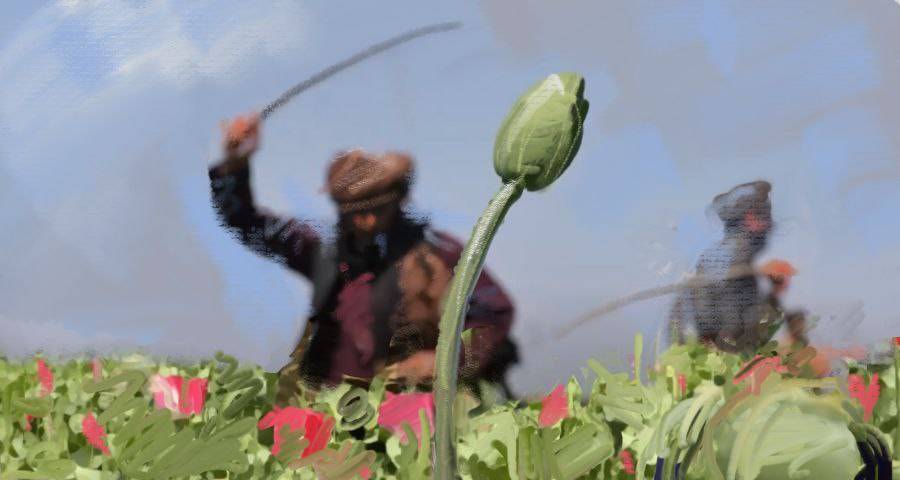
The International Crisis Group, an NGO focused on analyzing conflicts, has reported that “After the Taliban's severe restrictions on women's rights made the regime odious to much of the outside world, the narcotics ban offers a rare opportunity to work with the new authorities on a pressing issue for the benefit of all sides.” Drugs from Afghanistan are a universal problem affecting all regions of the world except for Latin America, with Central Asia remaining one of the main routes for Afghan drugs on their way to Russia and Europe. The so-called “Northern Route” passes through Tajikistan and Uzbekistan, then to Kyrgyzstan and Kazakhstan before reaching the Russian and European markets. Turkmenistan also plays an important role as a transit country for drugs, but on the “Balkan route.” The drug threat from Afghanistan to the five Central Asian republics is not simply a political narrative used by the governments of these republics for their own political purposes. There is a risk of political instability, criminality, corruption, social degradation, and damage to human health as a result of drug trafficking from Afghanistan. Additionally, the elimination of Afghan drug production and trafficking is a key issue in the fight against terrorism, primarily against the Islamic State, as drugs are one of the main sources of income for these groups. In April 2022, hopes for a resolution to this problem appeared following the ban on opium poppy cultivation imposed by the Taliban. Papaver somniferum, commonly known as the opium poppy, has been cultivated in Afghanistan since at least the early twentieth century. The history of opium production is detailed in the Global Illicit Drug Trends report by the United Nations Office on Drugs and Crime (UNODC). Besides the history of opium production, the report provides an overview of measures taken by states in their attempts to regulate and control the drug. Opium began to dominate world drug markets in the early 1980s, after the “April Revolution” and the Soviet invasion of Afghanistan, when the state began to lose control of rural areas, and agriculture itself began to decline. As the UNODC points out, by 1989, opium production was firmly established as the country's main source of income - Afghanistan had become a narco-state. The civil war continued, and the opium economy became firmly entrenched in the country during the 1990s. The first fall of the Taliban in 2001 and the formation of a republican government failed to change the situation due to the newly formed state still having no control over the regions. As a result, its counter-narcotics measures were not effective. It should be noted that only the Taliban managed to reduce drug production. According to the UN, since the Taliban's 2023 ban, opium crops in Afghanistan have declined by 95%, and opium prices have reached record levels. However, many experts wonder if Afghanistan will be able to continue with its chosen policy. Can the new Afghan authorities alone continue to confront the drug threat, and what should be the role of...

Uzbekistan Ratifies International Labor Organization Convention

On September 21 a meeting of the Uzbek Senate passed the new law “On the ratification of the International Labor Organization Convention No. 155 on Occupational Safety and Hygiene and the Working Environment”. The Convention was adopted in Geneva in 1981, and among other Eurasian countries has also been ratified by Russia, Belarus, Ukraine, Tajikistan, Kazakhstan, and Azerbaijan. Senators noted that it is appropriate to ratify this convention, taking into account the development of cooperation between Uzbekistan and the International Labor Organization and the fact that the national labor legislation meets international labor standards. As noted, the convention's ratification will improve national labor laws, enhance safety and hygiene standards per international guidelines, and help prevent workplace accidents. The International Labor Organization has been criticizing the use of forced labor in cotton plantations in Turkmenistan for a long time.

Tajikistan Continues Electricity Supply to Uzbekistan and Afghanistan

It is being reported that Tajikistan delivered more than $82.3 million worth of electricity to neighboring countries from January to August of this year. The export of electricity is $2.8 million (3.3%) less than in the same period of 2023. During this period, Tajikistan's electricity production amounted to about 15.4 billion kilowatt-hours, of which about 1 billion kilowatt-hours (6.5% of the total production) were exported. More than 80% of electricity exports go to Afghanistan, and the remaining 20% to Uzbekistan. Tajikistan signed an agreement on the export of electricity for 2024 with these two countries. Electricity exports to Uzbekistan are carried out only in the summer, and supplies to Afghanistan will continue in the autumn-winter season, but in small volumes — “exclusively for the preservation of infrastructure.” For information, a memorandum of understanding has been signed between Tajikistan and Kazakhstan, providing electricity supply produced by the Rogun hydropower plant until 2032. Agreements on the supply of electricity to Kazakhstan and Uzbekistan are one condition for external financing of the Rogun project. The Times of Central Asia has reported that when the Rogun hydropower plant in Tajikistan reaches full capacity, about 70% of the electricity produced will be exported to other Central Asian countries.

USAID Extends Education Programs in Uzbekistan

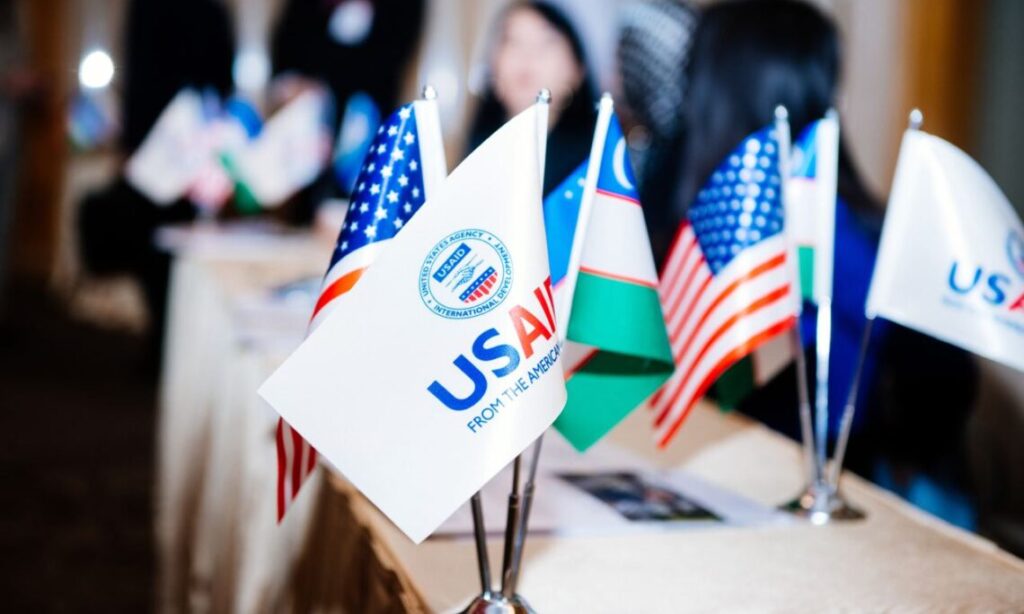
The United States Agency for International Development (USAID) has provided an additional $6.1 million in funding under an ongoing Development Goals Grant Agreement (DOAG) with the Department of Early Childhood Education. The total volume of investments in DOAG nw exceeds $47 million, the US Embassy in Tashkent has reported. The embassy added that the new funding strengthens programs that help develop basic skills in elementary school students, and gives students in grades 8-11 the entrepreneurial and economic skills they need to get jobs and participate in the economy of the future. “Investing in education is an investment in a brighter future for everyone. By providing quality education, we empower individuals with the skills and knowledge they need and pave the way for a more prosperous, equitable, and stable society,” explains David Hoffman, USAID Mission Director in Uzbekistan. “Every dollar spent on education is a step toward building a better tomorrow for all,” he added. The five-year DOAG contract was signed in 2019. USAID’s investments in Uzbekistan’s education sector aim to improve reading and math skills in primary grades, English fluency, information and communication technology development, and employability skills. Also, in March, USAID announced the investment of $17.7 million in a five-year project to support business in Uzbekistan. This investment will increase competitiveness in the fields of information and communication technologies (ICT), tourism, textiles, and green economy. Another USAID initiative is to support clean energy goals in Uzbekistan. As part of the initiative, the “Strategy for the Development of Renewable and Hydrogen Energy” of Uzbekistan plans to increase the production of renewable energy (solar, wind, and hydropower) by 25% by 2030 and achieve carbon neutrality by 2050.

Kyrgyz-Chinese Trade Center Opened in Xi’an

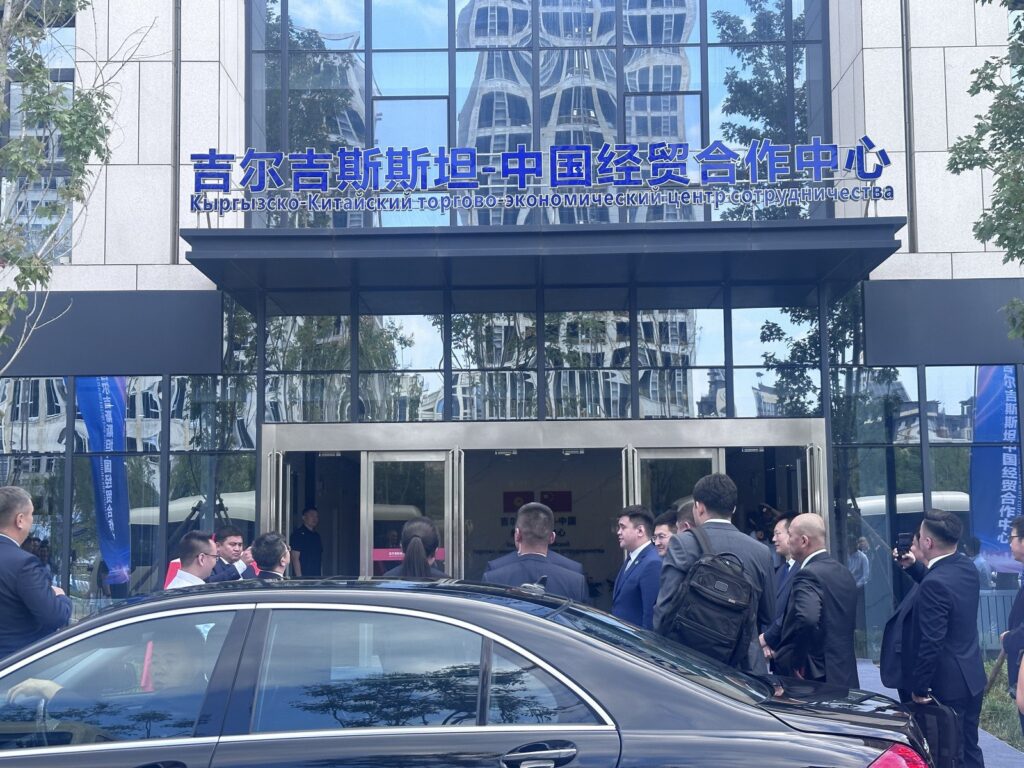
On September 21, a Kyrgyz-Chinese Center for Trade and Economic Cooperation was opened in Xi'an in China’s Shaanxi Province. The new center, which occupies an area of 1,000 square meters, will hold exhibitions of products manufactured in Kyrgyzstan, provide information about the country, and organize meetings between Kyrgyz and Chinese entrepreneurs. On the same day, a 200-square-meter trade pavilion of Kyrgyzstan opened in downtown Xi'an. The pavilion will permanently display Kyrgyz products sold offline and online through applications such as Douyin, WeChat, and Pingduoduo. The Xi'an municipality provided Kyrgyzstan with a total area of 1,200 square meters free of charge for three years. "The trade center and pavilion will become an incentive for the development of trade turnover between the two countries, where Chinese consumers will be able to get acquainted with the products of Kyrgyzstan," Deputy Chairman of the Kyrgyz Cabinet of Ministers Bakyt Torobaev said at the opening ceremony of the center. Xi'an also hosted a business forum attended by representatives of more than 200 companies from Kyrgyzstan and Shaanxi Province. During the forum, representatives of government agencies in Kyrgyzstan and China and entrepreneurs discussed investment opportunities in sectors such as industry, tourism, transport, and agriculture. In 2023, trade turnover between China and Kyrgyzstan amounted to $20 billion, a 32% increase compared to 2022. Bilateral trade reached almost $11 billion from January to July this year.

From Test Sites to Power Plants: Kazakhstan’s Journey Towards a Nuclear Referendum

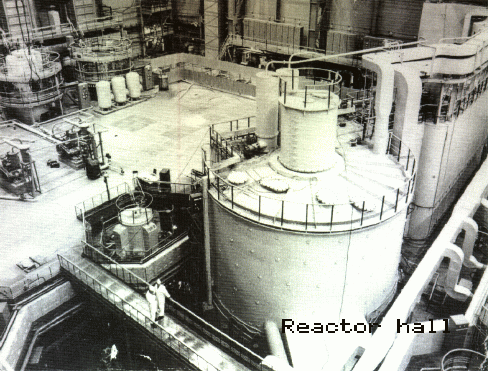
The history of nuclear power in Kazakhstan has many chapters: the arms race, the suffering of people due to test sites, the highest achievements in the name of science, and the service of the nuclear industry for the benefit of society are closely intertwined here. On the eve of the referendum on Kazakhstan's first atomic power plant, it is necessary to revisit these pages in history.   A dark past Construction of the Semipalatinsk nuclear test site began in the Kazakh Soviet Socialist Republic in 1947. The test site is located on the border of the Semipalatinsk (now Abay), Pavlodar, and Karaganda regions, 130 kilometers northwest of Semipalatinsk (now Semey), on the left bank of the Irtysh River. On its territory is the previously closed city of Kurchatov, renamed as such in honor of Soviet-era physicist, Igor Kurchatov. The first nuclear weapons test held in the Soviet Union was conducted at this site on August 29, 1949. The power of the bomb totaled 22 kilotons. From 1949 to 1989, at least 468 nuclear tests were conducted at the Semipalatinsk nuclear test site. The long-term operation of this site and its negative impact on residents' health and the surrounding environment help to explain the fear of nuclear energy in Kazakhstan. Two million people were affected across 300 square kilometers; with all agriculture banned, a vast swathe of land still remains off-limits. Pregnancies are still screened for possible termination, with 6% of babies born “polygon” (the name for the "closed zone".) [caption id="attachment_23475" align="aligncenter" width="1200"] Polygon baby, National Museum of Kazakhstan, Astana; image: TCA, Stephen M. Bland[/caption]   Shutdowns and shortages On August 29, 1991, Kazakhstan's first president, Nursultan Nazarbayev, closed the Semipalatinsk test site. Prior to this, citizens had held rallies protesting against nuclear testing and its development. By 1994, Kazakhstan had voluntarily relinquished its part of the USSR's nuclear arsenal. On May 15, 1992, the National Nuclear Center in the city of Kurchatov was established based on the complex of the former Semipalatinsk test site. The Center deals with eliminating the consequences of nuclear tests and also conducts active and multidisciplinary scientific activities on the remaining research reactors in Kurchatov. Scientific research occurs internationally and touches upon safety technologies, the space program, and more. In 1957, the Institute of Nuclear Physics of the Kazakh SSR Academy of Sciences was founded near Almaty (then Alma-Ata), where the VVR-K reactor, which is still operating today, was launched in 1967. The reactor was shut down in the late 1980s after the Chernobyl disaster and the earthquake in Spitak (Armenia); it was restarted in 1997, and the complex underwent safety and seismic reinforcement modernization. The Institute owns eight experimental facilities: the VVR-K research reactor, a "Критический стенд" lit. "critical stand," and six charged particle gas pedal complexes. In 1972, a unique fast neutron reactor BN-350 was launched in Aktau (then Shevchenko) at the Mangistau Atomic Energy Combine (MAEC). The reactor provided the Mangistau Peninsula with electricity and heat, and supported the operation of desalination plants...