• KGS/USD = 0.01144 0%
  • KZT/USD = 0.00210 0%
  • TJS/USD = 0.10528 0%
  • UZS/USD = 0.00008 0%
  • TMT/USD = 0.28571 0%
  • KGS/USD = 0.01144 0%
  • KZT/USD = 0.00210 0%
  • TJS/USD = 0.10528 0%
  • UZS/USD = 0.00008 0%
  • TMT/USD = 0.28571 0%
  • KGS/USD = 0.01144 0%
  • KZT/USD = 0.00210 0%
  • TJS/USD = 0.10528 0%
  • UZS/USD = 0.00008 0%
  • TMT/USD = 0.28571 0%
  • KGS/USD = 0.01144 0%
  • KZT/USD = 0.00210 0%
  • TJS/USD = 0.10528 0%
  • UZS/USD = 0.00008 0%
  • TMT/USD = 0.28571 0%
  • KGS/USD = 0.01144 0%
  • KZT/USD = 0.00210 0%
  • TJS/USD = 0.10528 0%
  • UZS/USD = 0.00008 0%
  • TMT/USD = 0.28571 0%
  • KGS/USD = 0.01144 0%
  • KZT/USD = 0.00210 0%
  • TJS/USD = 0.10528 0%
  • UZS/USD = 0.00008 0%
  • TMT/USD = 0.28571 0%
  • KGS/USD = 0.01144 0%
  • KZT/USD = 0.00210 0%
  • TJS/USD = 0.10528 0%
  • UZS/USD = 0.00008 0%
  • TMT/USD = 0.28571 0%
  • KGS/USD = 0.01144 0%
  • KZT/USD = 0.00210 0%
  • TJS/USD = 0.10528 0%
  • UZS/USD = 0.00008 0%
  • TMT/USD = 0.28571 0%

Viewing results 211 - 216 of 2386

U.S. Waiver of Sanctions on Iran’s Chabahar Port is Good News for Central Asia

U.S. sanctions on Iran’s Chabahar Port on the Gulf of Oman have been on again/off again since 2013, when the U.S. Congress passed the Iran Freedom and Counter-Proliferation Act (IFCA) to curb Iran’s regional influence and strategic capabilities through targeted economic pressure, aka sanctions. In the decade following IFCA’s passage, Washington’s sanctions on Chabahar had a negative impact on Central Asia, largely by complicating its efforts to deepen economic ties with South Asia and the Gulf. But geopolitics are shifting. Washington is increasing its involvement in Central Asia and India, and is doing the same in Afghanistan. These factors may well induce the U.S. Department of State to keep the waiver in place. Washington first waived its sanctions on Chabahar in 2018—a strategic move to support India's role in Afghanistan's post-war development and to provide a crucial trade route for that landlocked country. Six years later, India's Indian Ports Global Limited secured a 10-year deal with Iran to manage Chabahar port, in part, to offset Pakistan’s Gwadar port at the end of the China-Pakistan Economic Corridor, a mere 100 miles from Chabahar. For all the fanfare, Central Asia held little real priority in Washington in those years. Seven years later, the U.S. changed course. It announced on September 16, 2025, much to Central Asia’s surprise and concern, that “the State Department has revoked the sanctions exception issued in 2018 under the IFCA”, making individuals involved in Iran’s Chabahar port operations subject to penalties, resulting in another snag in Central Asia’s desire for a southern breakout route. And then, in a swift reversal, the U.S. restored India’s sanctions waiver some six weeks later, on October 30. Whatever might explain the sudden change, Central Asia breathed a sigh of relief, and, by all accounts, now feels confident that the waiver will be evergreened. Time will tell if this confidence is justified. The U.S. waiver enables India to work to enhance Chabahar’s infrastructure and functionality, offering Central Asian exporters a more direct and profitable trade route than those via China, Russia, or the Middle Corridor, which stretches from East Asia to Europe via Kazakhstan, the Caspian Sea, Azerbaijan, Georgia, and Türkiye. As a result, goods like minerals, cotton, and energy products can reach regional and global markets faster. Central Asian capitals are quietly reveling in Washington’s flexible realpolitik in the face of convulsive U.S.-Iranian relations and heated Indo-Pakistan tensions. Without fear of punitive measures, India can now continue its work at Chabahar.  To be sure, the waiver affirms India’s rising global presence and accelerates New Delhi’s drive into Central Asia, including Afghanistan. Washington’s decision signaled to traders, investors, and think tankers that it has no intention of spoiling India’s export ambitions and Central Asia’s desire for north-south economic integration. The waiver shows Washington’s pragmatism—and is welcomed by those who have little or no use for Washington’s penchant for foreign policy moralism. Chabahar Port complements not only the Trans-Caspian corridor—a multimodal trade route connecting Asia and Europe by linking China to Europe through Central...
Tensions Between Kazakhstan and Ukraine Rise After Oil Infrastructure Attack

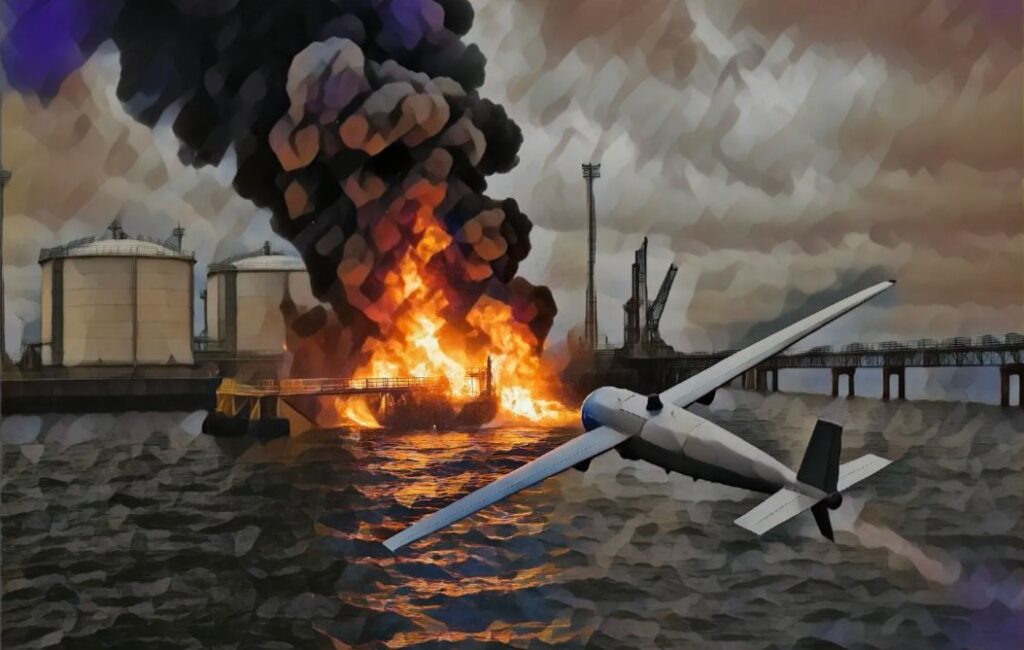
Escalating Ukrainian attacks on the Russian port of Novorossiysk on the Black Sea have caused significant damage to energy infrastucture there, drawing a sharp rebuke from Kazakhstan, which relies heavily on the facility for the transhipment of oil from Kazakh fields to international markets. In response, Ukraine said it was not targeting Kazakhstan but trying to undercut “full-scale Russian aggression” as part of a campaign that has stirred concern about global oil prices and supply. An attack by “unmanned boats” on Saturday damaged a mooring device at the Caspian Pipeline Consortium’s marine terminal on Saturday, leading to the suspension of loading operations and other activities, the consortium said. While there were no casualties among its workers nor any immediate indication that oil entered Black Sea waters, some pipelines were closed and the normal resumption of oil shipments at Novorossiysk appeared to be in question because of security concerns. “Shipments at the terminal will be carried out in accordance with established rules upon cancellation of threats from unmanned surface vessels and drones,” said the consortium, which includes energy companies from Russia, Kazakhstan, the United States and several Western European countries. Kazakhstan has tried to project neutrality in the war between Russia and Ukraine, maintaining close trade and diplomatic ties with Moscow while also, on occasion, speaking in support of Ukrainian sovereignty. But Ukraine’s latest attack on Novorossiysk, aimed at weakening Russia by targeting its oil facilities nationwide, drew an uncharacteristically blunt protest from Kazakhstan’s Ministry of Foreign Affairs. “This incident marks the third act of aggression against an exclusively civilian facility whose operation is safeguarded by norms of international law. As a responsible participant of the global energy market, Kazakhstan consistently advocates for maintaining the stability and uninterrupted supply of energy resources,” the ministry said. It also said: “We view what has occurred as an action harming the bilateral relations of the Republic of Kazakhstan and Ukraine, and we expect the Ukrainian side to take effective measures to prevent similar incidents in the future.” Russian Foreign Ministry Spokeswoman Maria Zakharova also weighed in, describing the Ukrainian attack as “terrorist” and noting that “our friends in the Kazakh Ministry of Foreign Affairs” had already protested. Ukraine said it had taken into account Kazakhstan’s concerns about the pipeline consortium’s infrastructure. “We emphasize that no actions by the Ukrainian side are directed against the Republic of Kazakhstan or other third parties – all efforts of Ukraine are focused on cutting off the full-scale Russian aggression within the framework of the right to self-defense guaranteed by Article 51 of the UN Charter,” Ukraine’s Ministry of Foreign Affairs said. The Ukrainian statement also noted that Kazakhstan had not condemned Russian attacks on Ukrainian civilians, residential buildings and energy systems, including nuclear power plant substations. Russia launched a full-scale invasion of Ukraine in February 2022. In a statement about the attack, the Caspian Pipeline Consortium said it had not been subjected to sanctions and played a significant role in “safeguarding the interests of the company's Western shareholders.”...

Critical Baikonur Launch Pad Hit by Damage After Soyuz MS-28 Liftoff

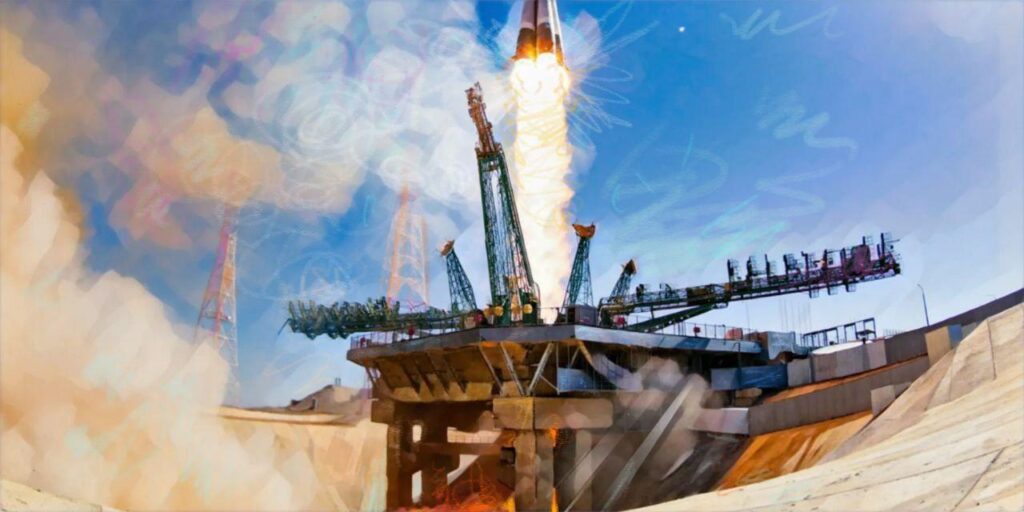
Russia’s space agency has confirmed that a launch pad at the Baikonur Cosmodrome in Kazakhstan was damaged during the liftoff of a Soyuz spacecraft that carried three crew to the International Space Station, raising questions about the near-term launch schedule at the site that Russia has relied on for more than six decades. Roscosmos reported that the Soyuz MS-28 mission lifted off from Baikonur on November 26 and reached orbit without problems. The spacecraft carried Russian cosmonauts Sergey Kud-Sverchkov and Sergey Mikayev, and NASA astronaut Christopher Williams. The crew docked with the station about three hours later. Roscosmos said in a statement on its official Telegram channel that the crew was healthy and the spacecraft worked as planned. Soon after the launch, engineers inspected Launch Pad 31/6, which served as the departure point for the flight. The agency said the inspection found damage to several structural elements on the pad and that repair work would start soon. Roscosmos said all required parts were on hand and the pad would be restored in the near future. Both The Moscow Times and Russian state media, including RIA Novosti, reported that the pad sustained damage but did not identify specific components. Roscosmos confirmed that “damage to several elements of the launch pad was detected.” Independent analysts have stated the damage might be more serious than Roscosmos has suggested, with Anatoly Zak, who publishes technical assessments of Russian space activity at RussiaSpaceWeb, reporting that a mobile service platform may have collapsed into the flame trench below the pad during or shortly after liftoff. Zak noted that the available launch pad for Russian crew missions might be unusable until engineers confirm the structure’s stability, and that it was unclear how soon crews or cargo could fly from Baikonur if the pad requires major work. Roscosmos has not confirmed a collapse of the platform, and it has not provided further details about the condition of the pad. The agency said the accident did not affect the MS-28 mission itself, which it described as nominal. But any impact on the pad is notable because Russia depends on Baikonur for its Soyuz crew launches. Russia leases the site from Kazakhstan through 2050 and continues to use its Soviet-era pads because Vostochny Cosmodrome in Russia’s Far East is not yet certified for crew flights. Russian outlets noted that future launches could face adjustments, but none reported a confirmed delay of a Progress mission. Roscosmos has neither confirmed the schedule nor said whether that mission will move to a later date. NASA has not issued a public statement about the status of joint operations after the incident. Russia and the United States continue to exchange seats on Soyuz and SpaceX vehicles under a 2022 agreement that allows both sides to maintain a sustained presence on the International Space Station. NASA has said the arrangement reduces risk because each side can reach the station even if one spacecraft type is grounded for technical reasons. The new damage at Baikonur highlights the...

EU Supports Connectivity Improvements in Kazakhstan, Kyrgyzstan, and Uzbekistan as Part of Trans-Caspian Transport Corridor

On November 27, Tashkent hosted the Trans-Caspian Transport Corridor (TCTC) and Connectivity Investors Forum, where representatives of the European Union, Central Asian and South Caucasus states, Türkiye, and international development banks reaffirmed the strategic importance of the TCTC as a fast and reliable route linking Europe and Asia. The TCTC is the EU’s designation for the Trans-Caspian International Transport Route (TITR), also known as the Middle Corridor. This multimodal route connects China and Southeast Asia to Europe via Central Asia, the Caspian Sea, Azerbaijan, Georgia, and Türkiye in no more than 15 days, offering an alternative to the northern route through Russia. Participants discussed efforts to modernize both hard infrastructure, roads, railways, ports, and logistics hubs and soft connectivity, including digitalization, regulatory alignment, and trade facilitation. According to the EU Delegation in Uzbekistan, the forum, attended by European Commissioner for International Partnerships Jozef Síkela and European Commissioner for Enlargement Marta Kos, produced several new agreements to enhance multimodal connectivity in Central Asia. The EU has committed EUR 10.4 million within an EBRD loan of EUR 35 million to modernize Aktau Port in Kazakhstan, a key logistics hub on the Caspian Sea. The project will expand berths, introduce energy-efficient cranes, and increase container-handling capacity, strengthening the Middle Corridor’s competitiveness. An envisaged EIB loan of EUR 150 million, backed by an EU guarantee of EUR 8.8 million, will support road rehabilitation in Kazakhstan. The financing for national operator KazAvtoZhol aims to improve sustainable transport infrastructure linked to the TCTC. The EU will contribute EUR 15.46 million within an EBRD loan of EUR 35 million for the modernization of the Karabalta-Chaldovar road in Kyrgyzstan. Upgrading the 31.7-kilometer section will enhance connectivity between Kyrgyzstan and Kazakhstan, reduce travel time and costs, and improve road safety. In Uzbekistan, an anticipated EIB loan of up to EUR 100 million, supported by an EU guarantee of EUR 6 million, will finance the Nukus Highway Development Project. The upgrade of 87 kilometers of the A380 highway, one of the country’s main transport arteries, is expected to strengthen regional trade and streamline transport flows with neighboring states. Speaking at the forum, Commissioner Marta Kos stressed the geopolitical and economic value of reliable east-west transport links: “All of us have learnt the hard way that excessive dependencies make us vulnerable," she said. "Investments in transport infrastructure, digital and energy connectivity create more options and less risk of blackmail. We need credible, long-term alternatives to the Northern Corridor. Cargo along the Middle Corridor has grown four-fold between 2022 and today. By 2030 it could again triple, if the right investments are made to increase capacity and close gaps.”

Opinion: Abraham Accords Can Help Kazakhstan Reshape Its Energy Future

On 6 November 2025, after speaking with Kazakhstan’s President Kassym-Jomart Tokayev and Israel’s Prime Minister Benjamin Netanyahu, U.S. President Donald Trump announced that Kazakhstan would join the Abraham Accords. Astana and Jerusalem have maintained full diplomatic relations since 1992, but Kazakhstan’s entry pushes the Accords beyond the Middle East and North Africa and into the Eurasian heartland. This matters at a time when Washington wants to re-energize the initiative and deepen its C5+1 engagement with the region. Kazakhstan’s decision fits its multi-vector policy. The decision also builds on the country’s role as a key component of the Trans-Caspian International Transport Route (TITR, “Middle Corridor”), which links Chinese production to European markets. Cargo volumes reached about 4.5 million tons in 2024 and are expected to rise to around 5.2 million tons in 2025. A recent report by Boston Consulting Group expects rail freight through the Middle Corridor to quadruple by the decade’s end. The Accords do not change Kazakhstan’s formal status with Israel. The question is, rather, whether they unlock deeper economic cooperation. The Times of Central Asia has already reported on clear opportunities for cooperation in sectors such as water and agricultural efficiency, grid and industrial productivity, and cybersecurity and administrative modernization. In the energy sector, like the others, the Accords give Israeli companies a clearer political and legal framework for working with Kazakhstan’s energy and infrastructure sectors. Gulf Cooperation Council states, and the United Arab Emirates (UAE) in particular, could provide project finance as well. Hard Energy, Nuclear Fuel, and Israeli Technology Astana’s principal concern in the energy sector is how to raise net revenue: the goal here is to make the sector more resilient to external pressure without incurring prohibitive capital costs. Israeli firms can address that problem at an operational level. The PrismaFlow sensing system developed by Prisma Photonics is a proven technology that uses existing optical fiber as a sensing system. Thousands of kilometers of pipeline can be monitored in real time for leaks, third-party interference, and attempted theft, without having to install physical sensors along the route. KazTransOil and Prisma Photonics could develop a program through an Abraham Accords framework to overlay this technology on selected trunk network segments and on the systems that deliver crude to export pipelines. Energy-sector cybersecurity is another area where Israeli companies can help Kazakhstan’s hard-energy system. The Israeli firm Radiflow specializes in operational-technology (OT) cybersecurity for oil and gas installations, tailored to pipeline and production environments. Its systems provide continuous network visibility and better anomaly detection. Its risk-based threat management reduces both the likelihood and the cost of cyber incidents that might interrupt flows or force precautionary shutdowns. KazMunayGas, KazTransOil, and their joint ventures could implement a structured audit and remediation program with Radiflow as a strategic partner. The uranium sector presents another opportunity for Kazakhstan–Israel cooperation, potentially a more strategic one. OT security systems can provide monitoring and control layers for uranium mining, in-situ leaching fields, and logistics chains. Kazakhstan accounts for over 40% of the world's uranium...

Launch Pad Damage Reported at Kazakhstan’s Baikonur Cosmodrome

Russia’s space agency says a launch pad at Baikonur Cosmodrome in Kazakhstan was damaged during the lift-off of a Soyuz spacecraft that ferried three people to the International Space Station on Thursday. The agency, Roscosmos, said the launch pad will soon be repaired. But some analysts say the incident could lead to launch delays at Baikonur, which Russia periodically uses to send its cosmonauts as well as American astronauts to the space station. In the latest mission from Baikonur, the Soyuz MS-28 craft safely delivered Russian cosmonauts Sergey Kud-Sverchkov and Sergey Mikayev, as well as Christopher Williams of NASA, to the station. “The space launch vehicle took off normally, without any issues. The spacecraft successfully docked with the International Space Station. The crew is on board and feeling well,” Roscosmos said on Telegram. “An inspection of the launch site was conducted, as is done every time after a rocket launch. Damage to several elements of the launch pad was identified,” the agency said. It added: “All necessary spare parts are available for restoration, and the damage will be repaired in the near future.” Quoting unidentified Russian sources, space writer Anatoly Zak said that a mobile service platform had collapsed into a flame duct below the launch pad, making the only facility for Russian orbital crew launches unusable for now. He said it was unclear whether a makeshift solution could be found to offset any delay in cargo and crew launches. A cargo flight had been scheduled for December. Crewed flights have long traveled from the United States to the International Space Station. But any significant disruption to Russia’s launch capabilities would be a setback for the station, which is scheduled to be decommissioned around 2030.