• KGS/USD = 0.01144 0%
  • KZT/USD = 0.00197 -0%
  • TJS/USD = 0.10904 0%
  • UZS/USD = 0.00008 0%
  • TMT/USD = 0.28490 0%
  • KGS/USD = 0.01144 0%
  • KZT/USD = 0.00197 -0%
  • TJS/USD = 0.10904 0%
  • UZS/USD = 0.00008 0%
  • TMT/USD = 0.28490 0%
  • KGS/USD = 0.01144 0%
  • KZT/USD = 0.00197 -0%
  • TJS/USD = 0.10904 0%
  • UZS/USD = 0.00008 0%
  • TMT/USD = 0.28490 0%
  • KGS/USD = 0.01144 0%
  • KZT/USD = 0.00197 -0%
  • TJS/USD = 0.10904 0%
  • UZS/USD = 0.00008 0%
  • TMT/USD = 0.28490 0%
  • KGS/USD = 0.01144 0%
  • KZT/USD = 0.00197 -0%
  • TJS/USD = 0.10904 0%
  • UZS/USD = 0.00008 0%
  • TMT/USD = 0.28490 0%
  • KGS/USD = 0.01144 0%
  • KZT/USD = 0.00197 -0%
  • TJS/USD = 0.10904 0%
  • UZS/USD = 0.00008 0%
  • TMT/USD = 0.28490 0%
  • KGS/USD = 0.01144 0%
  • KZT/USD = 0.00197 -0%
  • TJS/USD = 0.10904 0%
  • UZS/USD = 0.00008 0%
  • TMT/USD = 0.28490 0%
  • KGS/USD = 0.01144 0%
  • KZT/USD = 0.00197 -0%
  • TJS/USD = 0.10904 0%
  • UZS/USD = 0.00008 0%
  • TMT/USD = 0.28490 0%
08 December 2025

Viewing results 331 - 336 of 1740

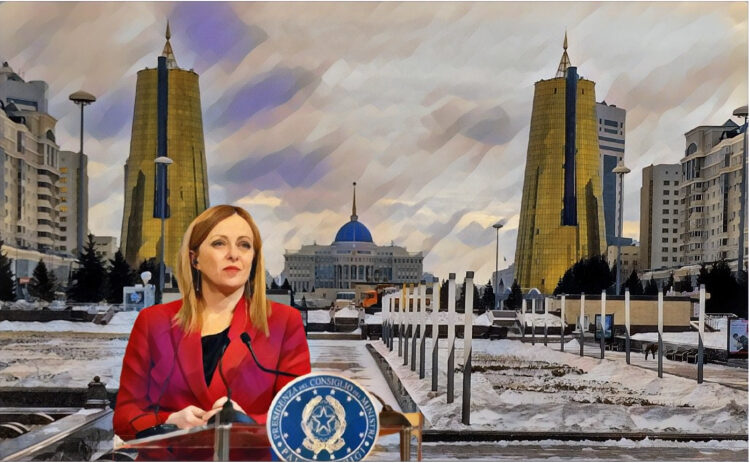
Meloni Will Attend Italy-Central Asia Summit in Kazakhstan This Week

Italian Prime Minister Giorgia Meloni, who postponed a trip to Central Asia in April because of the death of Pope Francis, has rescheduled her visit to the region for this coming Wednesday to Friday. Meloni will travel to Uzbekistan on Wednesday and will attend a Central Asia-Italy summit during a visit to Kazakhstan on Thursday and Friday, according to her office. The leaders of Kazakhstan, Uzbekistan, Kyrgyzstan, Tajikistan and Turkmenistan are expected to join Meloni at the summit, which is aimed at strengthening economic collaboration between Italy and Central Asia.

Opinion – The Quiet Competition: How the U.S. Is Losing Ground to China in Central Asia

Over the past decade, China has steadily expanded its presence in Central Asia, not through military force, but by building roads, trade corridors, and digital infrastructure. As the United States scaled back its regional footprint following its withdrawal from Afghanistan, Beijing moved quickly to fill the void. Today, China has positioned itself as the region's dominant external power, while the U.S. risks being left on the sidelines. At the heart of China’s strategy is the Belt and Road Initiative (BRI), which has provided over $1 trillion into infrastructure projects globally since its launch in 2013. This includes $704 billion in construction contracts and $470 billion in non-financial investments. In 2024 alone, BRI engagement reached $121.8 billion – $70.7 billion in construction and $51 billion in investments – and trade between China and the countries of Central Asia hit a record $95 billion, highlighting the depth of China's economic integration. This engagement has also created significant financial dependencies. Central Asian countries owe China roughly $15.7 billion, about 8% of the region's total external debt, and these loans are often opaque and carry terms that provide Beijing with outsized political leverage. Chinese firms are also laying fiber-optic networks and constructing electric vehicle corridors to link western China with its neighbors. In Tajikistan, for example, contractors are upgrading the Pamir Highway to support cross-border EV transport. Huawei and other Chinese tech giants are also expanding the region’s telecommunications infrastructure, raising serious concerns about surveillance, data sovereignty, and long-term digital dependency. China’s economic outreach is reinforced by high-level diplomacy. The China–Central Asia (C+C5) format has become the centerpiece of Beijing’s regional engagement. At the 2025 summit, leaders from across the region gathered to coordinate on connectivity, climate resilience, and trade facilitation. The regularity and substance of these summits stand in sharp contrast to the United States’ more sporadic diplomatic presence. The U.S. maintains the C5+1 platform and launched a promising Critical Minerals Dialogue in 2024. However, these initiatives have yet to match the scale or consistency of China's approach as U.S. infrastructure investment is limited, its commercial footprint is small, and diplomatic engagement is too infrequent to shift the region’s strategic trajectory. This matters. Central Asia is strategically located, resource-rich, and increasingly central to global supply chains and geopolitical competition. Kazakhstan alone supplies more than 40% of the world’s uranium. The region also serves as a testing ground for competing development models, and if the United States fails to become a more engaged and credible partner, China’s infrastructure-heavy, state-centric model may become the default. To remain competitive, Washington should recalibrate its approach in Central Asia. This includes pursuing bilateral deals that deliver real impact, such as deepening ties with Uzbekistan and Kazakhstan through targeted investment packages, trade agreements, and joint-sector initiatives. It also means securing access to critical minerals by expanding private-sector investment in mining, processing, and transport infrastructure aligned with U.S. supply chain needs. Offering digital infrastructure alternatives is equally essential; the United States must support secure, interoperable, and transparent technology networks that...

The Turkic World in the Heart of Europe: OTS Leaders Discuss Economy, Transport, and Unity

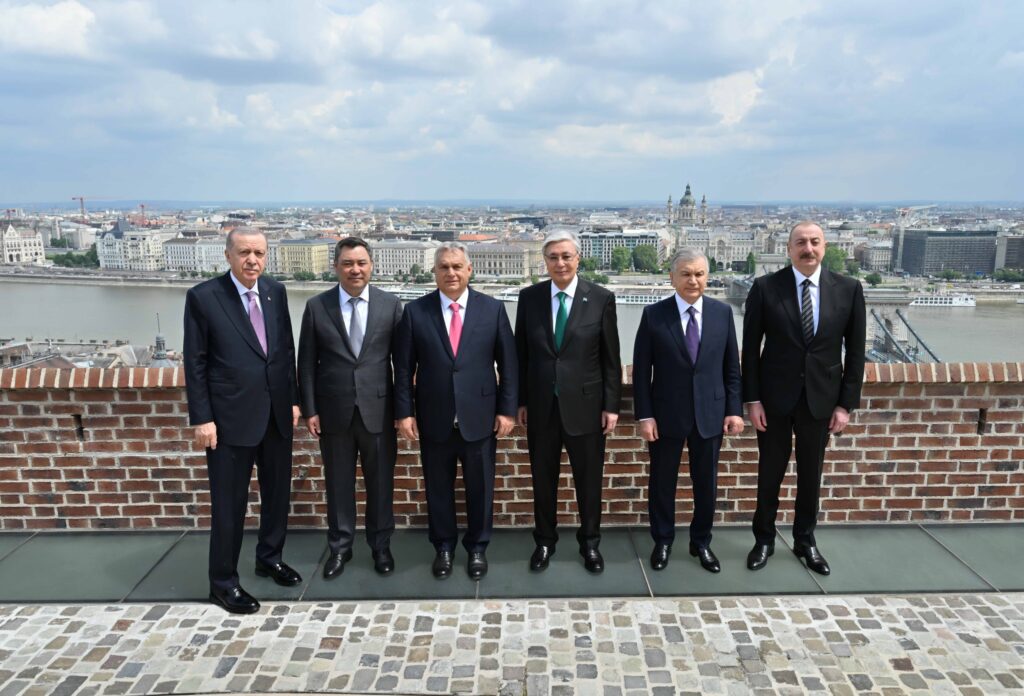
On May 21, 2025, an informal summit of the Organization of Turkic States (OTS) convened in Budapest, uniting leaders of member countries and observers in the symbolic heart of Europe. The heads of Kazakhstan, Turkey, Azerbaijan, Uzbekistan, and Kyrgyzstan, along with Hungarian Prime Minister Viktor Orbán, discussed key areas of cooperation, including the economy, transport, digitalization, and adherence to international agreements. The summit was held under the motto “Meeting Place of East and West.” Tokayev: Uniform Standards Could Boost GDP by 1% Annually Kazakhstan’s President Kassym-Jomart Tokayev emphasized the need for deeper economic integration among Turkic states and advocated for the rapid adoption of a model law to streamline exports among OTS members. “Uniform standards will ensure annual GDP growth of about 1%,” Tokayev said, highlighting that the collective GDP of OTS countries stands at approximately $1.4 trillion, with mutual trade already exceeding $22 billion. According to him, the potential exists to increase this figure by 1.5 times. Tokayev also stressed the importance of respecting existing agreements within the OTS framework. “The norms established in all agreements, whether procedural, political, or economic, must be strictly observed,” he said. He proposed intensifying joint infrastructure projects, particularly those aligned with the North-South and Middle Corridor transport routes connecting East and West. Kazakhstan, he noted, is modernizing border logistics with China, Kyrgyzstan, and Uzbekistan, including launching a new railway checkpoint. In addition, Tokayev highlighted the need to expand supply chains for oil, gas, uranium, and other resources. He thanked Azerbaijani President Ilham Aliyev for facilitating increased Kazakh oil exports to Europe via Azerbaijan. Unity and Vision from Member States Kyrgyz President Sadyr Japarov described the summit as laying a “solid foundation for sustainable development,” linking it to the November 2023 summit in Bishkek. President Aliyev emphasized Azerbaijan’s emerging role as a Eurasian logistics hub, stating that Baku has invested over $20 billion in the economies of OTS member states. An important development was the announcement that the Turkic Investment Fund, intended to foster economic cohesion, will begin operations soon. Several key documents were adopted at the summit, including the Budapest Declaration, a statement by the Council of Heads of State on Afghanistan, the decision on Uzbekistan’s accession to the Turkic Culture and Heritage Fund, and the extension of Secretary General Kubanychbek Omuraliev’s mandate. The Hungarian Dimension and Cultural Ties Hosting the summit for the first time, Hungary underscored its unique position as an OTS observer. Prime Minister Orbán, who promotes the notion of Turkic roots among Hungarians, has championed closer ties with the Turkic world. Kyrgyz historian Tyntchtykbek Chorotegin pointed out that Hungarian shares structural and grammatical features with Turkic languages, such as suffixation and the absence of prefixes. Cultural similarities extend beyond linguistics. Nomadic traditions persist in both regions, evident in culinary parallels like goulash and kuurdaq, shared housing styles, equestrian practices, and enthusiasm for folk games. European athletes' growing participation in the World Nomad Games further illustrates strengthening cultural bonds. The Budapest summit was more than a diplomatic gathering; it marked...

Cuts to USAID Leave Central Asia Facing Development Challenges

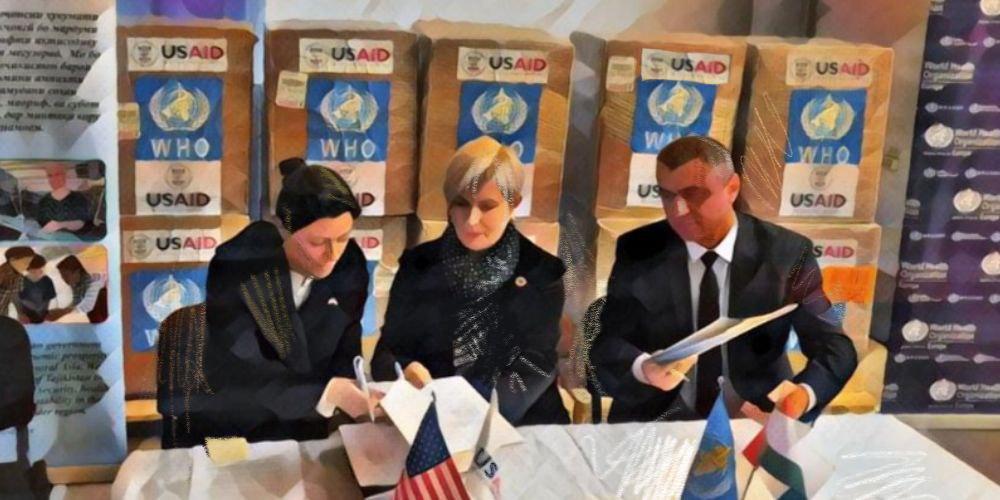
When American President Donald Trump announced a freeze and overhaul of his country's foreign aid in early 2025, the move sparked concern across Central Asia. For more than three decades, the United States Agency for International Development (USAID) had been a key contributor to development in the region, supporting education, healthcare, agriculture, and environmental protection. Support for Weaker Economies USAID’s role was particularly critical in economically vulnerable countries like Kyrgyzstan and Tajikistan. Its sudden withdrawal now leaves local governments scrambling to compensate with limited domestic resources. The cuts have not been uniform, but the overall impact has been profound. According to the Center for Global Development, Tajikistan and Kyrgyzstan lost 78 percent and 69 percent of their USAID-backed programs, respectively. In Kazakhstan, Turkmenistan, and Uzbekistan, nearly all aid programs were discontinued. Foreign aid to the region has often reflected shifting geopolitical dynamics. In Uzbekistan, for example, support surged from $6 million to $40 million in 2016 following President Shavkat Mirziyoyev’s rise to power. Kyrgyzstan received $75 million in 2010 amid negotiations over the U.S. military base there. In contrast, aid to Turkmenistan fell to just $2.8 million by 2024. Limited Time to Adjust While Kazakhstan’s more robust economy allowed for a gradual reduction in U.S. assistance, American companies remain active in its vital oil sector. Yet the abrupt nature of the broader aid pullback has disrupted numerous projects with little warning. Health and education initiatives were halted, as were efforts to bolster trade and cross-border infrastructure, critical for Uzbekistan and Kazakhstan as they seek to deepen global economic ties. Environmental initiatives also suffered. With Central Asia especially vulnerable to climate change, USAID had funded resilience-building programs focused on water access and renewable energy. These efforts have largely ceased, raising concerns among farmers and local communities who had come to rely on them. Civil Society Under Strain Some governments in the region may quietly welcome the cuts, particularly those wary of foreign-backed NGOs. USAID frequently partnered with local civil society organizations and media outlets, entities that Central Asian authorities often view with suspicion. The loss of U.S. support has left these groups increasingly exposed to state pressure. Tajikistan offers a telling case. In 2020, USAID partnered with the Aga Khan Foundation during the COVID-19 pandemic. But two years later, following unrest in the country's Gorno-Badakhshan Autonomous Region, the government launched a crackdown on the foundation. This underscores how some aid programs, especially those linked to civil society, are perceived as threats. Although USAID did not operate programs directly, its funding empowered local partners. With that backing gone, and less pressure from Washington, several Central Asian governments have tightened their control over independent organizations. Seeking Alternatives Replacing USAID’s role will not be easy. The European Union and countries such as France and Germany have long supported development in Central Asia, but their resources are stretched, especially with increased attention and funding directed toward Ukraine. Despite EU pledges of investment via the Global Gateway initiative, support for democracy, civil society, and human rights...

Russia: Thousands of Central Asia-Born Russians Sent to Ukraine Front Line

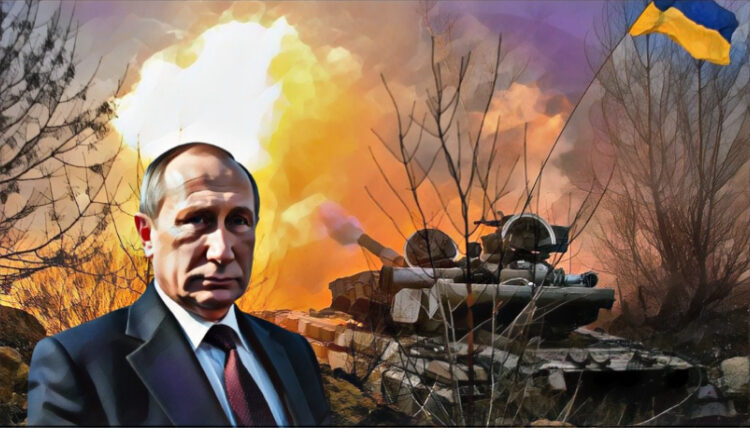
A senior Russian official has said that thousands of migrants from Central Asia who became Russian citizens were sent to fight in Ukraine after they tried to dodge conscription. "Our military investigations directorate conducts regular raids,” Alexander Bastrykin, head of Russia’s Investigative Committee, said on Tuesday in remarks that were reported by the Russian state-run TASS news agency. “So far, we've tracked down 80,000 such Russian citizens who didn't just avoid the front lines — they wouldn’t even show up at military enlistment offices. We’ve registered them for military service, and about 20,000 of these 'new' Russian citizens, who for some reason no longer want to live in Uzbekistan, Tajikistan, or Kyrgyzstan, are now on the front lines," Bastrykin said at the St. Petersburg International Legal Forum. Bastrykin’s comments contributed a piece to the often murky picture of the involvement of people from Central Asia in Russia’s war effort in Ukraine in the last three years. In addition to conscription measures, Russia has also sought to replenish its ranks by offering contracts and other incentives to foreigners willing to fight. Uzbekistan and Kazakhstan are among Central Asian countries that ban their nationals from fighting in foreign conflicts and there have been several high-profile prosecutions of citizens who fought for Russia and returned home. It is a sensitive political matter in Central Asia, a region that seeks to project neutrality in the conflict between Russia and Ukraine. Kazakhstan has said it is reviewing a report by a Ukrainian institution that said about 661 Kazakh citizens have fought for Russia since it launched a full-scale invasion of Ukraine in February 2022. The I Want To Live center, which is run by the Ukrainian security services and assists with surrender requests from soldiers fighting for Russia, published a list of what it said were the Kazakh nationals. Of the 661, at least 78 have been killed, according to the center. Without providing details, it said it received the list from its own sources within the Russian military. Uzbekistan is conducting a similar investigation based on data from the Ukrainian group.

Cuts to USAID Leave Central Asia Facing Development Challenges

When American President Donald Trump announced a freeze and overhaul of his country's foreign aid in early 2025, the move sparked concern across Central Asia. For more than three decades, the United States Agency for International Development (USAID) had been a key contributor to development in the region, supporting education, healthcare, agriculture, and environmental protection. Support for Weaker Economies USAID’s role was particularly critical in economically vulnerable countries like Kyrgyzstan and Tajikistan. Its sudden withdrawal now leaves local governments scrambling to compensate with limited domestic resources. The cuts have not been uniform, but the overall impact has been profound. According to the Center for Global Development, Tajikistan and Kyrgyzstan lost 78 percent and 69 percent of their USAID-backed programs, respectively. In Kazakhstan, Turkmenistan, and Uzbekistan, nearly all aid programs were discontinued. Foreign aid to the region has often reflected shifting geopolitical dynamics. In Uzbekistan, for example, support surged from $6 million to $40 million in 2016 following President Shavkat Mirziyoyev’s rise to power. Kyrgyzstan received $75 million in 2010 amid negotiations over the U.S. military base there. In contrast, aid to Turkmenistan fell to just $2.8 million by 2024. Limited Time to Adjust While Kazakhstan’s more robust economy allowed for a gradual reduction in U.S. assistance, American companies remain active in its vital oil sector. Yet the abrupt nature of the broader aid pullback has disrupted numerous projects with little warning. Health and education initiatives were halted, as were efforts to bolster trade and cross-border infrastructure, critical for Uzbekistan and Kazakhstan as they seek to deepen global economic ties. Environmental initiatives also suffered. With Central Asia especially vulnerable to climate change, USAID had funded resilience-building programs focused on water access and renewable energy. These efforts have largely ceased, raising concerns among farmers and local communities who had come to rely on them. Civil Society Under Strain Some governments in the region may quietly welcome the cuts, particularly those wary of foreign-backed NGOs. USAID frequently partnered with local civil society organizations and media outlets, entities that Central Asian authorities often view with suspicion. The loss of U.S. support has left these groups increasingly exposed to state pressure. Tajikistan offers a telling case. In 2020, USAID partnered with the Aga Khan Foundation during the COVID-19 pandemic. But two years later, following unrest in the country's Gorno-Badakhshan Autonomous Region, the government launched a crackdown on the foundation. This underscores how some aid programs, especially those linked to civil society, are perceived as threats. Although USAID did not operate programs directly, its funding empowered local partners. With that backing gone, and less pressure from Washington, several Central Asian governments have tightened their control over independent organizations. Seeking Alternatives Replacing USAID’s role will not be easy. The European Union and countries such as France and Germany have long supported development in Central Asia, but their resources are stretched, especially with increased attention and funding directed toward Ukraine. Despite EU pledges of investment via the Global Gateway initiative, support for democracy, civil society, and human rights...