
• KGS/USD = 0.01144 0%
  • KZT/USD = 0.00211 0%
  • TJS/USD = 0.10515 0.48%
  • UZS/USD = 0.00008 0%
  • TMT/USD = 0.28530 0%
  • KGS/USD = 0.01144 0%
  • KZT/USD = 0.00211 0%
  • TJS/USD = 0.10515 0.48%
  • UZS/USD = 0.00008 0%
  • TMT/USD = 0.28530 0%
  • KGS/USD = 0.01144 0%
  • KZT/USD = 0.00211 0%
  • TJS/USD = 0.10515 0.48%
  • UZS/USD = 0.00008 0%
  • TMT/USD = 0.28530 0%
  • KGS/USD = 0.01144 0%
  • KZT/USD = 0.00211 0%
  • TJS/USD = 0.10515 0.48%
  • UZS/USD = 0.00008 0%
  • TMT/USD = 0.28530 0%
  • KGS/USD = 0.01144 0%
  • KZT/USD = 0.00211 0%
  • TJS/USD = 0.10515 0.48%
  • UZS/USD = 0.00008 0%
  • TMT/USD = 0.28530 0%
  • KGS/USD = 0.01144 0%
  • KZT/USD = 0.00211 0%
  • TJS/USD = 0.10515 0.48%
  • UZS/USD = 0.00008 0%
  • TMT/USD = 0.28530 0%
  • KGS/USD = 0.01144 0%
  • KZT/USD = 0.00211 0%
  • TJS/USD = 0.10515 0.48%
  • UZS/USD = 0.00008 0%
  • TMT/USD = 0.28530 0%
  • KGS/USD = 0.01144 0%
  • KZT/USD = 0.00211 0%
  • TJS/USD = 0.10515 0.48%
  • UZS/USD = 0.00008 0%
  • TMT/USD = 0.28530 0%

Viewing results 379 - 384 of 2395

Uzbekistan Responds After Migrant Taxi Driver Insulted in Moscow

A video filmed in the Moscow region has sparked public outrage after a Russian man verbally assaulted a taxi driver from Uzbekistan, calling him a “slave of Russians.” According to Minval, the incident took place in the courtyard of a residential complex in the town of Khimki, where the resident told the driver that he was “not at home” and had come to Russia “because there is nothing in Uzbekistan.” The footage has triggered a wave of discussion in both Russia and Uzbekistan, where labor migration remains a vital economic issue. In response, Uzbekistan’s Ministry of Foreign Affairs issued a statement, without directly referencing the video, reaffirming that all Uzbek citizens are under the protection of the state, regardless of their location. “The Republic of Uzbekistan, in accordance with its Constitution, national legislation, and international obligations, has a duty to safeguard the rights, freedoms, and dignity of its citizens abroad,” the ministry stated. Authorities also urged Uzbeks whose rights are violated abroad to immediately report incidents to local law enforcement and to seek assistance from Uzbek diplomatic missions or consulates. “Protecting the rights and interests of our citizens abroad is a key priority of our state policy,” the ministry emphasized. The incident comes amid broader policy shifts in Russia concerning foreign nationals. Starting September 1, authorities in Moscow and the surrounding region will roll out a new digital monitoring system for migrants. According to the Multifunctional Migration Center in Sakharovo, citizens from Central Asia and other countries will be required to install a mobile application called Amina, which will manage functions such as residence registration, address changes, and work permit payments.
Tokyo Steps Up: Iwaya’s Central Asia Tour Signals Japan’s Long-Term Commitment

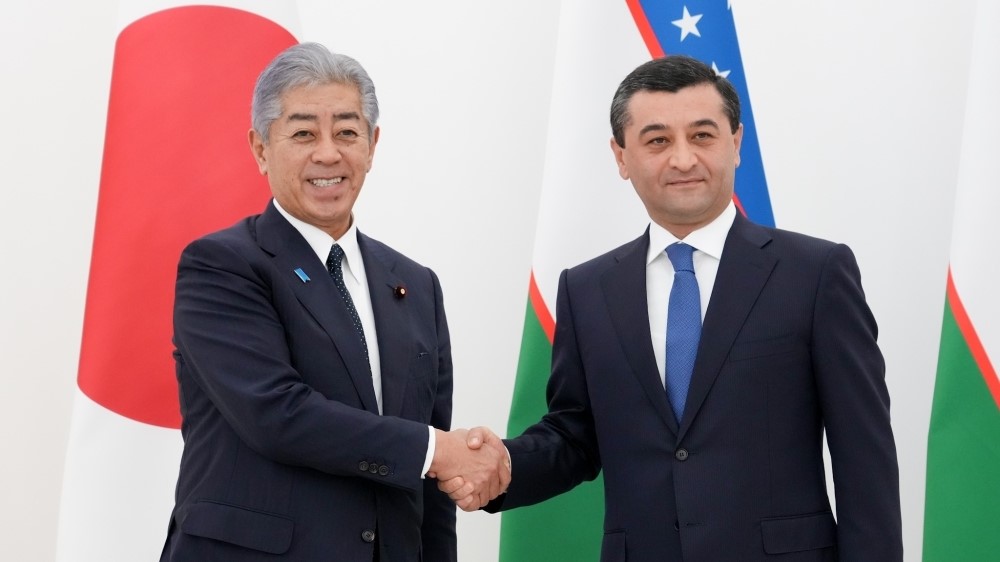
Japanese Foreign Minister Takeshi Iwaya made a landmark trip to Central Asia from August 24–28, 2025, holding talks in Kazakhstan and Uzbekistan. Tokyo framed the visit as a bid to deepen bilateral ties and revive the Central Asia plus Japan leaders’ summits. The visit fulfilled commitments made by then-Prime Minister Kishida, who had planned a similar tour in 2024 before cancelling at the last minute due to a domestic earthquake alert. Strategic Engagement Iwaya’s visit reflects Tokyo’s long-standing, multifaceted approach to Central Asia. Analysts emphasized to The Times of Central Asia that Japan is pursuing “trust-building diplomacy” in the region, focusing on human capital, infrastructure, and governance rather than quick geopolitical wins. Tokyo inaugurated the Central Asia plus Japan Dialogue format in 2004, making it the first outside power to group all five Central Asian republics within a single framework. As Professor Timur Dadabaev of Tsukuba University told The Times of Central Asia, Tokyo is seen “not as a competing hegemon, but as a partner that invests in the region’s human capital, infrastructure, and governance in ways that reinforce independence.” This approach contrasts with what has been characterized as the transactional models of other powers. On August 25, Iwaya met with Kazakhstan’s Deputy Prime Minister and Foreign Minister Murat Nurtleu in Astana, marking his first official visit to the country. The talks underscored both sides’ commitment to strengthening ties as strategic partners and in upholding a “free and open international order based on the rule of law.” The ministers welcomed active exchanges and pledged to expand cooperation in trade, investment, mineral resources, disaster prevention, and nuclear non-proliferation. They also announced plans to accelerate preparations for the long-delayed Central Asia plus Japan summit. [caption id="attachment_35524" align="aligncenter" width="1000"] Japanese Foreign Minister Iwaya with Kazakh Foreign Minister Nurtleu in Astana after their meeting on August 25, 2025; image Japan MOFA[/caption] In Tashkent, Iwaya echoed this message, calling Uzbekistan “an important strategic partner,” and highlighting the first-ever foreign ministers’ strategic dialogue held there. Japanese officials also stressed their policy does not aim to pressure Central Asian partners on sensitive issues. Characterizing Japan as a “catalyst to promote interconnectivity and inter-regional cooperation,” Foreign Ministry spokesman Toshihiro Kitamura stated that Tokyo does not see a zero-sum “competition between Japan and other countries. We would like to see Central Asian countries work together with other parts of the world.” In Tashkent, Kitamura explicitly noted that while Japan condemns Russia’s invasion of Ukraine, it will not pressure Uzbekistan or others to take the same stance. “The relationship between Russia and the Central Asian countries is a very delicate issue. Each country should take into account the relations it establishes with other countries. Even if it is with Russia, such relations do not affect the relations of other countries with Japan,” Kitamura stated. Bilateral Agreements In Kazakhstan, Iwaya held high-level talks with President Kassym-Jomart Tokayev and Foreign Minister Nurtleu. Tokayev welcomed Japan as a “reliable and close partner in Asia” and said ties are “developing dynamically.” The sides agreed to...

EU Opens First Migrant Resource Center in Uzbekistan as Russia Moves to Tighten Control

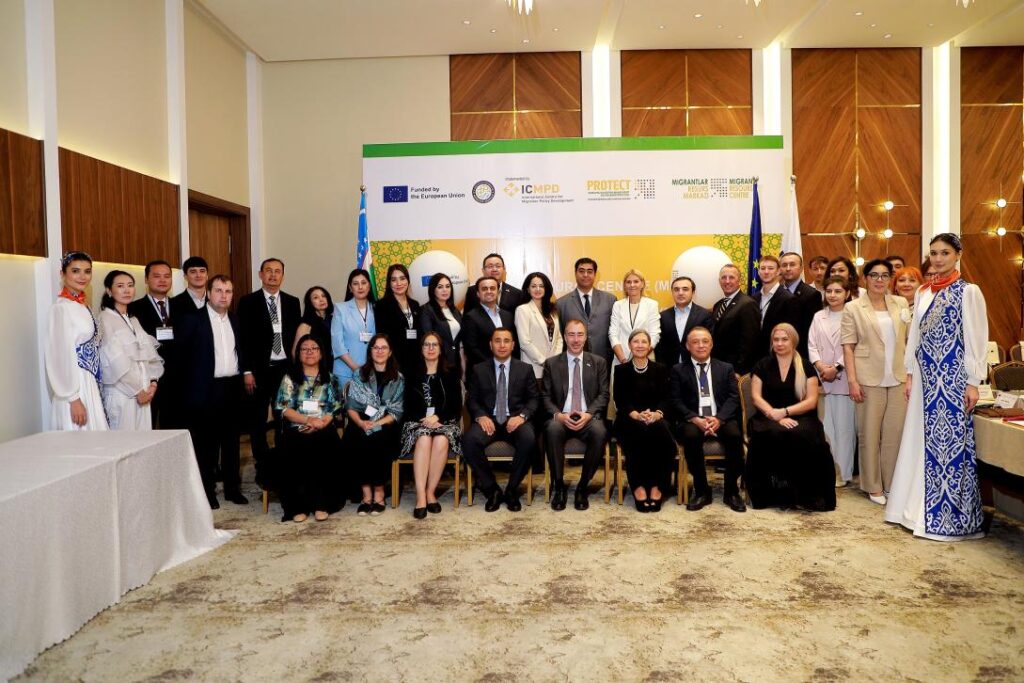
The European Union has launched Uzbekistan’s first Migrant Resource Center in Tashkent, while Russia is preparing to roll out a mobile application to monitor foreign workers starting September 1. Migrant Resource Center in Tashkent The EU Delegation in Uzbekistan announced that the centre opened on August 26 as part of the EU-funded PROTECT program: Improving Migration Management and Migrant Protection in Selected Silk Routes and Central Asian Countries. The initiative is implemented by the International Centre for Migration Policy Development (ICMPD) in partnership with Uzbekistan’s Migration Agency. The Center will provide information on legal employment opportunities abroad, raise awareness about the risks of irregular migration, and support the reintegration of returning migrants. Similar centers already operate in Tajikistan and Kyrgyzstan. At the opening ceremony, EU Ambassador Toivo Klaar said the centers “play a crucial role in providing people with the information they need to make informed decisions about migration.” ICMPD Deputy Director General Sedef Dearing added that the new facility will be “practical and timely for those considering migrating and returning.” Russia’s Mobile Application for Migrants Meanwhile, Russia will begin testing a new digital monitoring system in Moscow and the Moscow region on September 1, according to the Multifunctional Migration Centre in the Russian town of Sakharovo. Citizens from Uzbekistan, Tajikistan, Kyrgyzstan, Armenia, Kazakhstan, Georgia, Azerbaijan, Moldova, and Ukraine will be required to install a mobile application called Amina. The app will handle residence registration, address updates, work permit payments, and appointment scheduling. The Ministry of Internal Affairs will also have access to users’ geolocation data. Migrants who fail to confirm their location within three working days risk being removed from the registration system and placed on a monitoring list. Migration Management in Focus The launch of the EU-backed center in Tashkent reflects Europe’s emphasis on support services and informed choice for migrants, while Russia’s mobile app signals a shift toward stricter surveillance and control. Together, these measures highlight the growing importance of migration management across Central Asia and Eurasia.

Opinion: Gas, Geopolitics, and Realism: U.S.–Turkmenistan Talks Signal Shift

U.S. Secretary of State Marco Rubio and his Turkmen counterpart Rashid Meredov wrapped up bilateral consultations last week in Washington, DC. The encounter suggested a new awareness on Washington’s part of Turkmenistan’s pivotal geostrategic location in the heart of Central Asia and its status as a major hub of natural resources. Since becoming head of state in March 2022, Turkmenistan’s President Serdar Berdimuhamedov has shifted his country’s foreign policy from one of strategic isolation to what might be called practical realism, whereby priority is given to fair trade and investments that are in line with national interests and long-term development. Like the other Central Asian heads of state, Berdimuhamedov also champions a pragmatic, interest-based foreign policy. Consequently, they find the current, pragmatic U.S. administration with its concern to work out deals (presumably mutually beneficial ones) more congenial than its predecessor, with its penchant for geostrategic maneuvering and ideology. Secretary Rubio recently observed: “A mature foreign policy requires a balancing of interests - that’s a fact.” This way of thinking goes over well in smaller independent states such as Turkmenistan and other Central Asian countries, whose key national priorities include establishing their statehood on a firm basis and safeguarding their sovereignty amid the turbulent great power politics being played out in their vicinity. Oil and Gas Over the years, Berdimuhamedov has insisted that foreign entities seeking access to the country’s vast natural gas reserves must play by Ashgabat’s rules. Home to the world’s fourth-largest gas reserves, Turkmenistan invites foreign participation in its energy sector, provided that agreements are structured as win-win arrangements and don’t give suitors the geostrategic upper hand. In this context, it would make sense for Washington to get the word out about two upcoming conferences in Ashgabat: The Turkmenistan Investment Forum, September 18– 19, 2025, which will serve to attract long-term investment into the country's economy, and the 30th Oil & Gas of Turkmenistan – 2025 International Conference & EXPO (OGT 2025) on 22–24 October. Turkmenistan had a strong 2024 in terms of energy, producing 77.6 billion cubic meters of natural gas and 8.3 million tons of oil. The OGT 2025  will showcase the country’s resource potential and new investment opportunities, focusing on upstream projects such as the Galkynysh gas field and the Caspian blocks, as well as on initiatives in the areas of renewable energy, methane mitigation, and infrastructure modernization. Moreover, Ashgabat wants to expand its Trans-Caspian and north-south economic corridors and complete the Turkmenistan-Afghanistan-Pakistan-India (TAPI) gas pipeline, among other initiatives in transport and logistics. U.S. companies may want to explore these new opportunities. Travel Limitations to the U.S. Ashgabat is working with the U.S. Department of State to lift recently imposed restrictions on Turkmen citizens wishing to travel to the U.S. Both sides are aiming to ensure that applicants are properly screened before a visa is granted and that recipients comply with its terms. To further deepen ties, Washington should view Turkmenistan’s neutrality towards others on the global stage in security and foreign-policy matters not as an obstacle, but as an advantage that facilitates dialogue. While maintaining its advocacy for democratic principles,...

U.S.–Turkmenistan Rapprochement: Energy, Neutrality, and Digital Geopolitics

For more than three decades, Turkmenistan has stood apart from its neighbors. Since declaring independence in 1991, it has built its foreign policy around “permanent neutrality,” a status formally recognized by the United Nations in 1995. Neutrality has meant avoiding military alliances, steering clear of regional blocs, and limiting international engagement to carefully managed bilateral relationships. Ashgabat has been especially cautious in its dealings with Washington, keeping contacts minimal while relying overwhelmingly on China to buy its natural gas. That posture is beginning to shift. In 2025, the outlines of a quiet rapprochement between Turkmenistan and the United States are visible. The latest round of Annual Bilateral Consultations (ABCs) in Washington, coupled with Ashgabat’s more active role in the C5+1 regional dialogue, suggests a gradual warming. On September 19, 2023, Turkmen President Serdar Berdimuhamedov participated in the first C5+1 multilateral summit alongside the U.S. and regional counterparts, highlighting Ashgabat’s more active role in the platform. At the heart of this cautious opening are three themes: energy dependence, security on Turkmenistan’s southern border, and the geopolitics of digital connectivity. Annual Bilateral Consultations: A Structured Dialogue The ABCs were launched in 2010 as part of a U.S. initiative to formalize engagement with all five Central Asian states. They are yearly, structured meetings between senior officials that review the state of bilateral relations across political, economic, and security issues. In August 2025, Foreign Minister Rashid Meredov met Secretary of State Marco Rubio in Washington for the 11th ABC. According to the U.S. State Department release, the two sides “underscored their commitment to advancing U.S.-Turkmenistan relations, including through security cooperation, increased economic and investment opportunities, the advancement of religious freedom, and deepening engagement through the C5+1 diplomatic platform.” The statement was deliberately brief and omitted sensitive matters such as the partial visa restrictions Washington imposed on Turkmen citizens earlier that year. But the very fact of the meeting, following years of minimal contact, marked a notable warming. From Episodic Contacts to Broader Cooperation The rapprochement has begun to take shape in concrete ways. Trade between the two countries, though still small, nearly doubled in 2024 to reach $218.5 million. Turkmenistan exported textiles, chemicals, and gas-related equipment, while U.S. exports included aviation technology, electronics, and agricultural machinery. Overall, the trade volume remained the second-lowest among Central Asian states, but the sharp increase pointed to a deliberate effort to expand ties. Reflecting this momentum, on June 8, 2025, Turkmenistan’s Foreign Minister Rashid Meredov met with the Executive Director of the Turkmenistan–U.S. Business Council, Eric Stewart, to discuss cooperation across sectors, including energy, cybersecurity, green technology, and education. Security cooperation has grown more visible. Turkmenistan’s long border with Afghanistan has long been a vulnerability, and while Ashgabat avoided involvement in the U.S.-led war, it quietly welcomed assistance to reinforce border defenses and counter trafficking. The U.S. has provided equipment, training, and support for Turkmen border services, a low-profile effort documented in a Congressional Research Service report. Turkmenistan has invested over a billion dollars in Afghan infrastructure projects...

Uzbekistan Jordan Relations Advance with Landmark State Visit

King Abdullah II of Jordan paid a state visit to Uzbekistan on August 25-26 at the invitation of President Shavkat Mirziyoyev. The visit, his first since the establishment of diplomatic relations, marked a milestone in bilateral ties and culminated in the signing of 15 agreements spanning politics, trade, investment, education, and culture. A Historic Visit with Symbolic and Strategic Weight Mirziyoyev welcomed King Abdullah with full ceremonial honors in Samarkand, including flag displays, a guard of honor, and performances of national songs and dances. The leaders visited prominent cultural sites, including the Shah-i-Zinda complex, Amir Temur’s mausoleum, and Registan Square, where the Jordanian monarch received an overview of Uzbekistan’s rich historical heritage. King Abdullah also visited the tomb of Qutham ibn al-ʿAbbas, a revered early Islamic preacher in Samarkand. The Jordanian delegation toured the “Eternal City” cultural park, which showcases Uzbekistan’s traditional crafts, architecture, and customs. Expanding Economic and Diplomatic Cooperation The official program commenced on August 26 at the Congress Center in Samarkand. Following the ceremonial welcome, the leaders visited an exhibition of Uzbekistan’s export-oriented products. The showcase featured a range of goods from key industries such as pharmaceuticals, chemicals, mining, textiles, agriculture, IT, and jewelry. King Abdullah praised Uzbekistan’s industrial development and called for increased business-to-business collaboration. During bilateral talks, the two sides agreed to elevate their relationship to a comprehensive partnership. Discussions focused on expanding political dialogue, boosting trade and investment, and strengthening cooperation in science, education, tourism, and culture. To formalize the partnership, the two countries agreed to establish a joint intergovernmental commission and a business council by the end of the year, and to convene an Uzbek-Jordanian business forum. They also outlined plans for cooperation in smart agriculture, geology, healthcare, and the textile industry. Broad-Based Agreements and International Alignment Fifteen agreements and memoranda were signed during the visit, including: An extradition treaty A bilateral investment promotion agreement A visa waiver agreement Cooperation protocols in higher education, scientific research, agriculture, veterinary medicine, tourism, and standardization The two leaders also reiterated their commitment to close coordination within international organizations, including the United Nations and the Organization of Islamic Cooperation. Honoring Partnership and Future Prospects In recognition of his role in strengthening bilateral ties, Mirziyoyev was awarded Jordan’s highest state honor, the Order of Al Nahda (“Renaissance”), presented personally by King Abdullah II. “I accept this award with great honor, as a recognition of our joint efforts to expand multifaceted cooperation and a sign of friendship and respect for the people of Uzbekistan, who are laying the foundations for the Third Renaissance in our country,” Mirziyoyev said. The visit concluded with a joint statement and mutual invitations for future high-level exchanges, reaffirming both countries’ shared ambition to elevate Uzbekistan-Jordan relations to a new strategic level.
