
• KGS/USD = 0.01144 0%
  • KZT/USD = 0.00216 0%
  • TJS/USD = 0.10663 0%
  • UZS/USD = 0.00008 0%
  • TMT/USD = 0.28530 0%
  • KGS/USD = 0.01144 0%
  • KZT/USD = 0.00216 0%
  • TJS/USD = 0.10663 0%
  • UZS/USD = 0.00008 0%
  • TMT/USD = 0.28530 0%
  • KGS/USD = 0.01144 0%
  • KZT/USD = 0.00216 0%
  • TJS/USD = 0.10663 0%
  • UZS/USD = 0.00008 0%
  • TMT/USD = 0.28530 0%
  • KGS/USD = 0.01144 0%
  • KZT/USD = 0.00216 0%
  • TJS/USD = 0.10663 0%
  • UZS/USD = 0.00008 0%
  • TMT/USD = 0.28530 0%
  • KGS/USD = 0.01144 0%
  • KZT/USD = 0.00216 0%
  • TJS/USD = 0.10663 0%
  • UZS/USD = 0.00008 0%
  • TMT/USD = 0.28530 0%
  • KGS/USD = 0.01144 0%
  • KZT/USD = 0.00216 0%
  • TJS/USD = 0.10663 0%
  • UZS/USD = 0.00008 0%
  • TMT/USD = 0.28530 0%
  • KGS/USD = 0.01144 0%
  • KZT/USD = 0.00216 0%
  • TJS/USD = 0.10663 0%
  • UZS/USD = 0.00008 0%
  • TMT/USD = 0.28530 0%
  • KGS/USD = 0.01144 0%
  • KZT/USD = 0.00216 0%
  • TJS/USD = 0.10663 0%
  • UZS/USD = 0.00008 0%
  • TMT/USD = 0.28530 0%

Viewing results 115 - 120 of 744

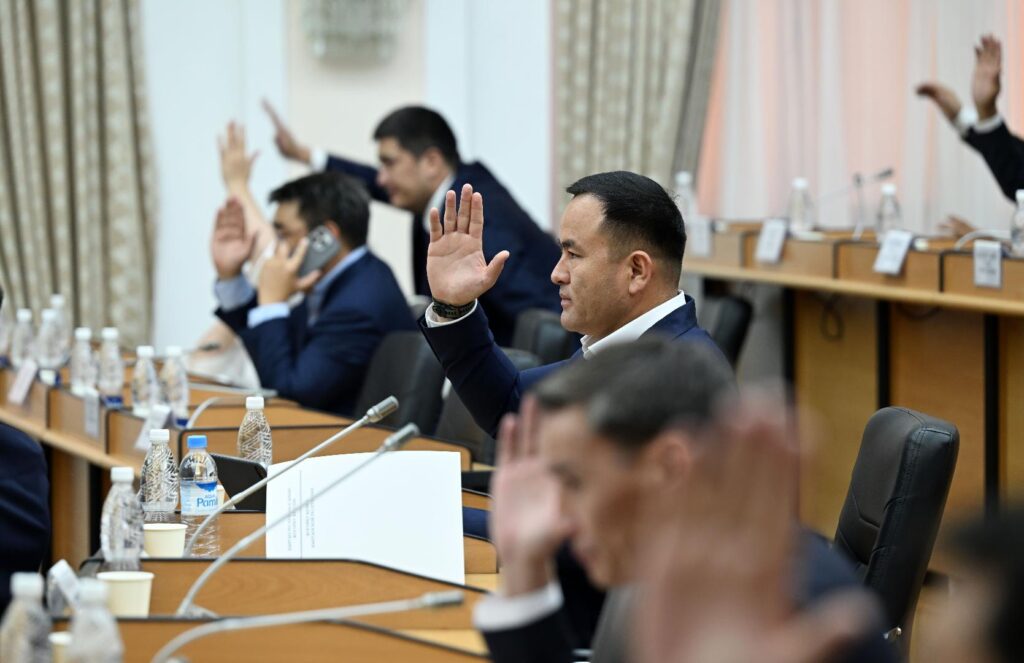
Kyrgyzstan Parliament’s Secret Polygamy Law Repeal Blocked by President Japarov

On June 25, 2025, Kyrgyzstan’s parliament, the Jogorku Kenesh, voted to repeal Article 176 of the Criminal Code, which criminalizes polygamy. The initiative was debated behind closed doors, without public hearings, and only came to light after the bill was submitted to President Sadyr Japarov for approval. According to the presidential administration, Japarov returned the bill for further revision. Before doing so, he sought official assessments from several key state bodies, including the Ombudsman’s Office, the Prosecutor General’s Office, the National Agency for Religious Affairs, the National Academy of Sciences, the Ministry of Justice, and the Constitutional Court. These institutions concluded that the proposal was incompatible with Kyrgyzstan’s Constitution and its international commitments, including the Convention on the Elimination of All Forms of Discrimination against Women (CEDAW) and the Convention on the Rights of the Child (CRC). In an explanatory note, the president stated that retaining criminal liability for polygamy "demonstrates a commitment to the principles of gender equality and the rule of law, protects women and children from legal and social inequality, and contributes to strengthening the institution of the family.” Under the current law, polygamy in Kyrgyzstan is classified as a minor offense. It is punishable by a fine ranging from 50,000 to 100,000 KGS (approximately $570 - $1,140), and criminal proceedings can only be initiated at the request of the victim. The Family Code permits only one officially registered marriage, and the civil registry office is not authorized to record second or subsequent unions.

State Workers in Turkmenistan Once Again Forced to Fund Cotton Harvest

As the cotton harvest begins in Turkmenistan, reports from the independent outlet turkmen.news indicates that the annual season is once again marred by forced labor practices. Pay or Work the Fields In Lebap and Mary provinces, state employees, including teachers, doctors, and workers from the Turkmenabat silk production association and a local knitwear factory, are being compelled to contribute financially toward the harvest. The daily levy stands at 30 manats (approximately $1.50). Since August 3, similar demands have reportedly extended to medical and educational staff in Mary province. As in previous years, state workers are frequently presented with a coercive “choice”: pay for a replacement harvester or work in the fields themselves. Some avoid field labor by sending their children in their place. Reform Promises Fall Short In 2024, the Turkmen government, in cooperation with the International Labour Organization, unveiled a roadmap for eradicating forced labor in the cotton industry. The plan outlined key measures to safeguard workers’ rights and address systemic abuses. Despite this, rights groups, including the Turkmen Initiative for Human Rights, the Progres Foundation, and the Cotton Campaign, warn that little can change while the state maintains total control over the cotton supply chain, from seed distribution to raw cotton procurement. These organizations argue that genuine reform requires guarantees of free speech and the right to organize, allowing citizens to report abuses and form independent trade unions. In reality, however, workplace union leaders are reportedly tasked with collecting money from employees and organizing labor schedules. Experts note that this top-down mobilization underscores the state-driven nature of the system, perpetuating a cycle of coercion rather than addressing its root causes.

Kazakhstan Confirms Detention of Military Attaché Worker in Poland

Defense officials in Kazakhstan said on Wednesday that Polish security agencies have detained a worker in the Kazakh military attaché´s office, two weeks after the Polish government announced the arrest of a military intelligence officer from a post-Soviet country who is suspected of espionage. “The International Relations Center of the Ministry of Defense of the Republic of Kazakhstan confirms the fact of the detention of an employee of the apparatus of the Kazakh military attaché by the Polish law enforcement agencies,” the ministry said on Telegram. The statement, which came after media reports about the arrest circulated in Kazakhstan, said efforts were underway to “resolve this situation” and that measures are also being taken to protect “the rights and legitimate interests” of the detained citizen. Kazakhstan’s government didn’t comment on why its employee was detained. Without naming sources, some media reports in the Central Asian country have said it is the same person suspected by Polish authorities of spying. Tomasz Siemoniak, a member of Poland’s Council of Ministers and coordinator of special services, said on X on Aug. 1 that, two days previously, “officers of the Internal Security Agency detained a citizen of one of the Asian countries that emerged after the collapse” of the Soviet Union. “He is a career military intelligence officer who conducted espionage activities detrimental to the security of the Republic of Poland and allied military structures,” Siemoniak said. “The National Prosecutor’s Office brought charges against him, and on August 1, 2025, the suspect was remanded in custody for three months by a court decision.” Siemoniak did not specify the alleged threat to military interests. Poland has been one of Europe’s staunchest supporters of Ukraine in its war against Russia, serving as a conduit for military and other supplies to Ukrainian forces across their shared border. Kazakhstan has aimed for a pragmatic or neutral position on the conflict, maintaining close ties with Moscow while also, in a nod to Ukraine, speaking in support of the territorial integrity of sovereign states under the U.N. Charter. Prime Minister Donald Tusk of Poland also announced the arrest of an alleged spy, saying “anyone who threatens the security of the Polish state will be caught, sooner or later.” Poland’s Internal Security Agency said the suspect had conducted espionage while “operating under diplomatic cover in a European country.”

Tajikistan May Revisit Sentences for Social Media ‘Likes’ and Comments

Tajikistan may review criminal cases in which individuals were convicted solely for “likes” and other digital interactions on social media. This was announced on August 7 by Rustam Mirzozoda, Chairman of the Supreme Court of Tajikistan. Possibility of Sentence Review According to Mirzozoda, existing legislation permits the review of such cases, though most convictions to date have been based on additional charges. “If the sentence was handed down solely on the basis of ‘likes and reposts,’ the courts are ready to review such decisions,” Mirzozoda stated. He added that no appeals have yet been filed with Tajikistan's courts on this issue, and no cases have been reviewed. Navruz Odinaev, founder of the Khimoya law firm, previously explained to Asia-Plus that the Criminal Code allows for retroactive application of laws if they reduce penalties or decriminalize offenses. This means that recent amendments may apply not only to future prosecutions but also to previously issued sentences. Origins of the “Like Law” In 2018, amendments to Article 179 of the Criminal Code introduced penalties for public calls for terrorist activity and the justification of terrorism, including online actions. These changes allowed likes, reposts, and comments on extremist content to be treated as evidence of criminal involvement. Convictions under this article carried sentences ranging from 5 to 15 years. Similar amendments to Article 307 (“Public calls for extremism”) imposed prison terms of 3 to 12 years. President Rahmon’s Reversal In October 2024, President Emomali Rahmon publicly condemned the prosecution of individuals for social media interactions, describing the practice as excessive and misguided. “Recently, the authorities have considered the fact that some citizens like shared materials and videos on social media as evidence, which has caused them enormous difficulties,” Rahmon stated. “In other words, some authorities are unjustifiably bringing criminal cases against them, and these actions must be stopped.” His comments came amid growing scrutiny of citizens for engaging with content posted by religious or opposition figures. On May 14, 2025, Rahmon signed legislation decriminalizing digital reactions on social media, even those related to content previously deemed extremist or a threat to public order. What Prompted the Shift? According to Deputy Prosecutor General Umed Karimzoda, more than 1,500 people were imprisoned in 2024 for social media activity deemed extremist. Lawyer Ranjet Yatimov attributes the president’s policy reversal to several factors. He notes that prosecutions for digital expression have damaged Tajikistan’s international reputation, especially given its membership in global human rights organizations. Domestically, the increase in such cases has fueled public dissatisfaction and eroded trust in law enforcement. Legal ambiguities also played a role, as vague statutory language enabled selective enforcement, prompting urgent legislative reform.

UN Special Rapporteur Urges Turkmenistan to Release Activist Murat Dushemov

Mary Lawlor, the United Nations Special Rapporteur on the situation of human rights defenders, has called for the immediate release of Turkmen civil activist Murat Dushemov, who was recently re-imprisoned under disputed circumstances. Lawlor stated that the new charges against Dushemov are fabricated and appear to be retaliation for his peaceful activism and exercise of free expression. “I will closely monitor the trial of civil activist Murat Dushemov, who has been in prison since 2021 and is now facing new criminal charges in apparent retaliation for his peaceful activism and for exercising his freedom of expression in Turkmenistan. I call for his immediate release,” Lawlor posted on X. Her call was echoed by the Regional Office for Central Asia of the UN High Commissioner for Human Rights, which reaffirmed support for Dushemov’s release. Renewed Persecution As previously reported by The Times of Central Asia, Dushemov was originally scheduled for release on June 14, after serving a four-year sentence. However, just days before his expected release, he was transferred to a pre-trial detention facility in Turkmenabat. Authorities have accused him of participating in a prison altercation, an allegation he claims is entirely fabricated. "The person who wrote the statement against me started banging his head against the wall, injuring himself and staining the wall with his blood. They want to slander me again to prolong my stay here," Dushemov reportedly said. Despite assurances from Prosecutor Agajan Nuryev that a hearing would take place in mid-July, no trial date has been announced. Details remain withheld even from Dushemov’s family, in clear violation of Turkmenistan’s judicial transparency laws. Background and First Conviction Dushemov was first detained in 2021. He was convicted of extortion and causing bodily harm and sentenced to four years in prison. Human rights groups say the trial was politically motivated, noting that Dushemov had openly criticized the government’s pandemic response, including mandatory mask policies and vaccination campaigns, which he considered unlawful. The initial charges centered on two incidents: an alleged extortion attempt involving a chief doctor, and accusations of assault made by fellow inmates, claims that mirrored the current allegations against him. Widening International Support Several human rights organizations have joined the campaign to secure Dushemov’s release. These include the Norwegian Helsinki Committee, Turkmen.News, the Turkmen Human Rights Initiative, the International Partnership for Human Rights, and the Association for Human Rights in Central Asia. “The authorities must drop the new criminal charges brought against civil activist Murat Dushemov as clear retaliation for his activities and release him immediately,” the organizations said in a joint statement. They also urged Turkmenistan’s international partners to pressure Ashgabat to cease persecution of activists, journalists, and dissenters. Human Rights Watch has also issued a statement supporting Dushemov, calling for his “immediate and unconditional” release and demanding an end to abuses prolonging his detention. Lawlor has previously highlighted rights violations in Turkmenistan. In April, she called for an investigation into the alleged poisoning of independent journalist Soltan Achilova. She is also monitoring the case of Baloch...

‘No Complaints,’ Says Tajikistan Ombudsman Amid Allegations of Journalist Mistreatment

Representatives from the Office of the Human Rights Ombudsman in Tajikistan stated they have met with several imprisoned journalists and received no formal complaints from them. The announcement was made by Khusniddin Nidoev, deputy head of the department for civil and political rights protection, during a press conference on August 4. Visit to the Detention Facility According to Nidoev, he personally visited the “First Soviet” correctional colony on May 5, where he met with journalists Daler Emomali, Zavkibek Saidamin, Abdullo Gurbati, and Ahmad Ibrohim, editor-in-chief of the regional newspaper Paik. “We are in constant contact with them. Even during phone conversations with the heads of institutions, we ask about their condition, especially those whose names are widely covered in the media,” Nidoev said. He added that the journalists expressed satisfaction with their conditions and did not report any grievances. Relatives Raise Concerns However, relatives of other imprisoned journalists have reported troubling circumstances. The family of Abdusattor Pirmuahmadzoda, a blogger and former employee of Radio Sadoi Dushanbe, said they have had no contact with him since March. His brother, Abdukarim, told Asia-Plus that Abdusattor was placed in solitary confinement after he publicly questioned why his name was excluded from a list of candidates for amnesty during an official visit to the prison. Since then, neither his wife nor his children have been able to visit him, despite repeated requests. Nidoev confirmed that the ombudsman’s office met with Pirmuahmadzoda in 2024 while he was held in a Khujand prison but acknowledged that no such visit has occurred this year. He promised to investigate his current status. In a separate case, the wife of Zavkibek Saidamin, Mahfirat Khudoynazarova, reported in early July that her husband is suffering from a nervous condition and experiencing pain in his spine and eyes. “We sent him medicine. He is taking it. They said he was examined by an eye doctor and treated. But he still doesn’t feel well,” she told Asia-Plus. Meanwhile, the families of Daler Emomali and Ahmad Ibrohim have said their relatives are in stable condition, although they continue to object to their imprisonment. Sentences and Human Rights Reactions The prison terms for the journalists range from seven to over ten years. Ahmad Ibrohim was sentenced to 10 years and 4 months, Daler Emomali to 10 years, Abdullo Gurbati to 7.5 years, and both Abdusattor Pirmuahmadzoda and Zavkibek Saidamin to 7 years each. Appeals filed by defense lawyers and relatives have been rejected by higher courts, leaving the sentences in force. International human rights organizations, including Reporters Without Borders, have repeatedly condemned the imprisonments as politically motivated and called for the journalists’ immediate release. To date, Tajik authorities have not responded publicly to these demands. Since 2022, at least six journalists have been arrested and sentenced to lengthy prison terms in Tajikistan.
