• KGS/USD = 0.01144 0%
  • KZT/USD = 0.00216 0%
  • TJS/USD = 0.10663 0%
  • UZS/USD = 0.00008 0%
  • TMT/USD = 0.28530 0%
  • KGS/USD = 0.01144 0%
  • KZT/USD = 0.00216 0%
  • TJS/USD = 0.10663 0%
  • UZS/USD = 0.00008 0%
  • TMT/USD = 0.28530 0%
  • KGS/USD = 0.01144 0%
  • KZT/USD = 0.00216 0%
  • TJS/USD = 0.10663 0%
  • UZS/USD = 0.00008 0%
  • TMT/USD = 0.28530 0%
  • KGS/USD = 0.01144 0%
  • KZT/USD = 0.00216 0%
  • TJS/USD = 0.10663 0%
  • UZS/USD = 0.00008 0%
  • TMT/USD = 0.28530 0%
  • KGS/USD = 0.01144 0%
  • KZT/USD = 0.00216 0%
  • TJS/USD = 0.10663 0%
  • UZS/USD = 0.00008 0%
  • TMT/USD = 0.28530 0%
  • KGS/USD = 0.01144 0%
  • KZT/USD = 0.00216 0%
  • TJS/USD = 0.10663 0%
  • UZS/USD = 0.00008 0%
  • TMT/USD = 0.28530 0%
  • KGS/USD = 0.01144 0%
  • KZT/USD = 0.00216 0%
  • TJS/USD = 0.10663 0%
  • UZS/USD = 0.00008 0%
  • TMT/USD = 0.28530 0%
  • KGS/USD = 0.01144 0%
  • KZT/USD = 0.00216 0%
  • TJS/USD = 0.10663 0%
  • UZS/USD = 0.00008 0%
  • TMT/USD = 0.28530 0%

Viewing results 121 - 126 of 744

NCOC Wins Temporary Reprieve in Environmental Case in Kazakhstan

An Astana court has overturned a multi-billion-dollar environmental fine imposed on the North Caspian Operating Company (NCOC), the consortium developing the Kashagan oil field in Kazakhstan’s sector of the Caspian Sea. The ruling was based on procedural violations by Kazakhstan’s environmental authorities. However, the court made clear that the decision does not prevent the re-filing of claims once the procedural flaws are addressed. The NCOC consortium comprises KMG Kashagan B.V. (16.877%), Shell Kazakhstan Development B.V. (16.807%), Total EP Kazakhstan (16.807%), Agip Caspian Sea B.V. (16.807%), ExxonMobil Kazakhstan Inc. (16.807%), CNPC Kazakhstan B.V. (8.333%), and Inpex North Caspian Sea Ltd. (7.563%). In March 2023, the Ministry of Ecology and Natural Resources filed a $4.2 billion lawsuit against NCOC, based on a complaint from the Atyrau Region Department of Ecology. The agency alleged that more than 1.7 million tons of sulfur were being stored at the Kashagan site, far exceeding the 2022 legal limit of 730,000 tons. NCOC denied the allegations, stating that its sulfur production and storage practices fully complied with Kazakh legislation and international standards. In March 2025, an arbitration court ruled in favor of NCOC. The case then proceeded to the appellate level, where the Administrative Chamber of the Astana Court annulled the initial enforcement order due to violations of the Administrative Procedure Code by the environmental authorities. “It has been established that the authorized body committed violations of the Administrative Procedure Code of the Republic of Kazakhstan when issuing the order, which was the basis for overturning the contested order,” the court’s press service stated. The court emphasized that its ruling was procedural and did not address the substance of the environmental claims. “The court did not assess the validity of the conclusions of the Department of Ecology on the merits. Thus, the decision does not affect the substance of the violations identified and does not prevent the authorized body from taking further action after the procedural errors have been corrected,” the statement continued. As previously reported by The Times of Central Asia, this is not Kazakhstan’s only legal dispute with NCOC. An international arbitration case remains ongoing, in which the government is seeking $150 billion in lost profits, citing delays in the Kashagan field’s launch and the failure to meet oil delivery commitments.

Uzbek National in U.S. Faces Deportation Following Voter Fraud Conviction

An Uzbek citizen, Sanjar Djamilov, is facing deportation from the United States after pleading guilty to conspiracy to commit voter registration fraud, according to a U.S. court ruling reported by Florida Politics. Djamilov, 33, who resides in St. Petersburg, Florida, was sentenced to time served and placed under supervised release pending deportation. He has been remanded to the custody of U.S. Marshals and is awaiting processing by the Bureau of Customs and Immigration. If deported, he will be barred from re-entering the U.S. without explicit government authorization. The court imposed a $100 assessment on Djamilov, but waived restitution and other fees. According to investigators, Djamilov and a Russian national, Dmitry Shushlebin, submitted 132 fraudulent voter registration applications to the Pinellas County Supervisor of Elections between February and March 2023. The applications were flagged for identical formatting, repeated typographical errors, sequential Social Security numbers, and recurring birth dates, raising immediate suspicion. Authorities say the pair also submitted change-of-address forms to the U.S. Postal Service to redirect official mail to three addresses under their control. The case was jointly investigated by the FBI, the U.S. Postal Inspection Service, and the Florida Department of Law Enforcement, following a referral from the Florida Department of State’s Office of Election Crimes and Security. In an April 2025 plea agreement, Djamilov admitted that Shushlebin had hired him and others to submit more than 100 fraudulent applications. While Djamilov has now been sentenced, Shushlebin has also pleaded guilty but is still awaiting sentencing. Djamilov had faced up to five years in prison for his involvement. As previously reported by The Times of Central Asia, 131 citizens from Uzbekistan, Kazakhstan, and Kyrgyzstan were repatriated from the U.S. on a special charter flight in May 2025. Funded by the Uzbek government, the operation reflected growing cooperation between Washington and Tashkent on migration and security issues.

Kazakhstan Proposes Stricter Measures for Convicted Pedophiles, Including Pre-Release Chemical Castration

Kazakhstan's Ministry of Health has proposed tightening the application of chemical castration for individuals convicted of sexual crimes against minors. Draft amendments published on the Open NPA platform outline a new mechanism mandating the procedure six months prior to a convict’s release from prison. Ministry of Health Proposal Under the proposed changes, prisoners would undergo a compulsory forensic psychiatric evaluation one year before their scheduled release to assess the risk of recidivism. If deemed necessary, chemical castration would follow six months later. “An amendment is being introduced on the use of chemical castration six months before release and the referral of materials by the administration of the institution no later than twelve months before the expiry of the sentence to the court for the appointment of a forensic psychiatric examination,” the explanatory note states. Legal Basis and Procedure Chemical castration is regulated under Article 91 of Kazakhstan’s Criminal Code. It is currently applied to individuals over the age of 18 convicted of crimes against the sexual integrity of minors, provided they have been diagnosed with a disorder of sexual preference. The procedure involves the administration of antiandrogenic medication to suppress testosterone levels and reduce sexual drive. Presently, the measure can only be imposed by court order. The Ministry of Health argues that conducting the procedure shortly before release would minimize the risk of reoffending during the immediate post-release period, which is considered particularly high-risk. Lifelong Supervision Also Under Consideration In a parallel initiative, the Ministry of Internal Affairs has proposed introducing lifetime administrative supervision for convicted pedophiles. Currently, such supervision is limited to eight years. “We can also restrict leaving the house at night,” said Deputy Minister of Internal Affairs Igor Lepekha. “Previously, supervision lasted eight years. Now, it is planned to be significantly extended.” Under the proposal, courts would reassess each case every six months based on the likelihood of recidivism. Additional measures may include restrictions on visiting educational institutions, curfews, and more. Violations would carry administrative or criminal penalties. A Push for Surgical Castration A more extreme measure was proposed in 2024 by parliament deputy Yelnur Beisenbayev, who advocated for the surgical castration of pedophiles, calling it a powerful deterrent. “I spoke in favor of surgical castration. We included this provision in the draft law, but the government did not support it, citing concerns about violating privacy,” Beisenbayev said. He criticized the government's stance as “spineless,” asserting that physical castration could serve as both a preventive measure and a means to protect children from violent sexual crimes.

Opinion: Ghosts of the Gulag – A View From the Ground

Recently, The Times of Central Asia published an article titled Ghosts of the Gulag: Kazakhstan’s Uneasy Dance With Memory and Moscow. While it is essential to consider outside opinions, it is equally important to articulate how this perspective looks from within. In Kazakhstan, there are three large museums dedicated to the memory of the victims of the communist regime. These are the infamous ALZHIR (Akmolinsk Camp for Wives of Traitors to the Motherland), the museum dedicated to the memory of victims of political repression, KARLAG (Karaganda camp), and a smaller memorial complex to the victims of political repression at Zhanalyk, located about 40 kilometers from Almaty. Historians believe that around 2,500 people are buried there, including prominent members of the Kazakh intelligentsia, such as Akhmet Baitursynov, Mukhamedzhan Tynishpaev, Saken Seifullin, Ilyas Jansugurov, and Beimbet Maily. In addition to these museums, there are monuments to the victims of political repression and the famine of the 1920s–30s in many cities across the country. But it's not just about the number of museums and monuments. What matters most is that the memory of these events is preserved, and it is being carefully studied. In 2020, a state commission for the full rehabilitation of victims of political repression was established by the government. Over several years, 425 scholars, researchers, and experts have participated in its work. More than 2.6 million documents and materials have been declassified. Most importantly, this commission has rehabilitated more than 311,000 victims of political repression within the framework of existing legislation. The results of this work are documented in 72 volumes. There are no sections in these research materials divided by nationality. The approach is the same for everyone: justice and fairness for all. This calls into question the “collective amnesia that obstructs historical reckoning” referred to by Guillaume Tiberghien, a specialist in dark tourism at the University of Glasgow. Regarding any "emphasis on what the prison system ‘contributed’ to the nation” mentioned by Margaret Comer, a memory studies expert at the University of Warsaw, there are conflicts of interest and truths people would rather not face. One of the main purposes of Karlag was to serve as a major base of food supplies for Kazakhstan’s growing coal and metallurgical industries. In addition to industrial development, by 1941 the camp had 70 sheep farms, 45 cattle farms, one horse farm, and two pig farms. By 1950, 4,698 people worked on these farms, including 13 academic scientists. The communist system of corrective labor camps was an integral part of economic development, achieved through what was essentially slave labor. This is the full cynicism of the regime on display: prisoners were expected to “work off” their guilt. “The country is walking a tightrope,” Tiberghien suggests, pointing to President Tokayev’s speech on May 31, the official Day of Remembrance for Victims of Political Repression. “It wants to keep things calm, to avoid upsetting Russia.” In this speech, while calling for the rehabilitation of victims and greater access to archives, Tokayev also condemned the...

Uzbek Critic, Jailed for a Decade After Disputed Conviction, Dies

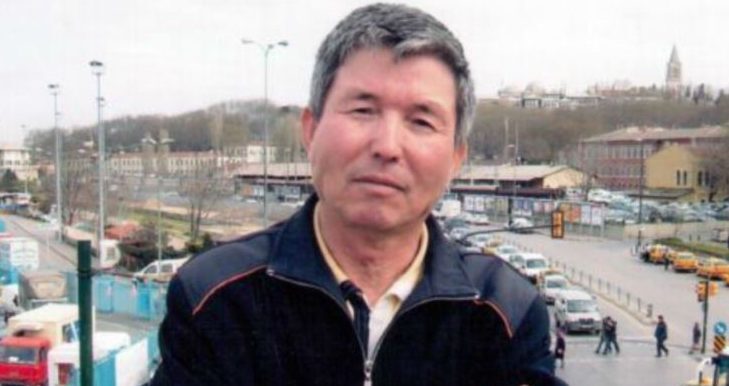
Salijon Abdurakhmonov, an Uzbek journalist and activist who was jailed for nearly a decade in Uzbekistan after being convicted on drug charges that he said were fabricated, has died in Germany at the age of 75. Abdurakhmonov was released in 2017 at a time when President Shavkat Mirziyoyev, who had taken office in the previous year, was promising a new openness in the Central Asian country following a long clampdown on dissent and criticism by his predecessor, Islam Karimov. However, Abdurakhmonov campaigned in vain to have his conviction overturned and clear his name in Uzbekistan. The writer had longed to be acquitted in his case, said Abdurakhmon Tashanov, head of the Ezgulik human rights group in Uzbekistan. “Goodbye, good man!” Tashanov said on Facebook on July 26. Abdurakhmanov was an “outspoken” journalist who wrote about issues including human rights, corruption, and the legal status of Karakalpakstan, a politically sensitive, autonomous part of Uzbekistan where protests have occurred over the years, according to a Human Rights Watch statement in 2008 that called for his release. It said he had worked with the online news agency UzNews and did freelance assignments for Radio Free Europe/Radio Liberty, Voice of America, and the Institute for War and Peace Reporting. Koshkarbay Toremuratov, a blogger and activist who is originally from Karakalpakstan, expressed sorrow at Abdurakhmonov´s death. “I first met him in 2004, when, as a correspondent for Radio Ozodlik, he came to my office regarding issues faced by Christian students from Nukus,” the capital of Karakalpakstan, Toremuratov said on X. “Our paths crossed again later, when we were both imprisoned… Our prison zones were separated by a common ´restricted area.´” In June 2008, Abdurakhmonov was arrested after police said they found a stash of marijuana and opium in his car and accused him of selling illegal drugs. Several months later, he was sentenced to ten years in prison. He alleged that the drugs were planted in his vehicle and that the case amounted to retaliation for reporting that was critical of officials. Several international human rights groups said Abdurakhmonov didn’t receive a fair trial and campaigned for his release. His family and supporters said he suffered from stomach ulcers while in jail, and he moved to Germany after he was released. He remained active there, speaking publicly about what he said was an unjust imprisonment and establishing a YouTube channel to discuss issues about Uzbekistan.

Kazakhstan Establishes Center for Countering Disinformation

Kazakhstan has announced the creation of a new Center for Countering Disinformation under the presidential administration. According to official statements, the center aims to protect citizens from false information and provide “objective, verified data.” The initiative, housed within the President's Central Communications Service, is being presented as a measure to identify and debunk falsehoods and promote “responsible information consumption.” Kazakhstan’s geographic location - bordering both Russia and China - makes information control a particularly sensitive issue. Since the Russian invasion of Ukraine, Astana has refused to recognize Russia’s annexations and generally observes Western sanctions. Much of Kazakhstan’s population consumes Russian-language media, however, which remains a source of governmental concern. Questions over how “disinformation” is defined remain, however. A 2023 law on online platforms and advertising, which penalizes the spread of false information, prompted warnings from Reporters Without Borders and others about potential state overreach. Kazakhstan has increasingly found itself on the frontline of regional information warfare, as waves of disinformation target its foreign policy and internal stability. Recent campaigns have sought to undermine the country’s relations with China, Russia, and the United States, exploiting its position between major powers. Officials in Astana have pointed to anonymous Telegram channels and coordinated online networks as sources of destabilizing narratives, ranging from economic panic to conspiracy theories about national security. In response, the government has intensified its efforts to counter these threats, including public awareness campaigns and new monitoring initiatives. Analysts note that operations like “Spider Web” highlight both the scale of the problem and the geopolitical sensitivities involved. While Kazakhstan is working to address disinformation, the challenge lies in balancing security concerns with the need to preserve media freedom.