• KGS/USD = 0.01144 0%
  • KZT/USD = 0.00211 0%
  • TJS/USD = 0.10678 0%
  • UZS/USD = 0.00008 0%
  • TMT/USD = 0.28490 0%
  • KGS/USD = 0.01144 0%
  • KZT/USD = 0.00211 0%
  • TJS/USD = 0.10678 0%
  • UZS/USD = 0.00008 0%
  • TMT/USD = 0.28490 0%
  • KGS/USD = 0.01144 0%
  • KZT/USD = 0.00211 0%
  • TJS/USD = 0.10678 0%
  • UZS/USD = 0.00008 0%
  • TMT/USD = 0.28490 0%
  • KGS/USD = 0.01144 0%
  • KZT/USD = 0.00211 0%
  • TJS/USD = 0.10678 0%
  • UZS/USD = 0.00008 0%
  • TMT/USD = 0.28490 0%
  • KGS/USD = 0.01144 0%
  • KZT/USD = 0.00211 0%
  • TJS/USD = 0.10678 0%
  • UZS/USD = 0.00008 0%
  • TMT/USD = 0.28490 0%
  • KGS/USD = 0.01144 0%
  • KZT/USD = 0.00211 0%
  • TJS/USD = 0.10678 0%
  • UZS/USD = 0.00008 0%
  • TMT/USD = 0.28490 0%
  • KGS/USD = 0.01144 0%
  • KZT/USD = 0.00211 0%
  • TJS/USD = 0.10678 0%
  • UZS/USD = 0.00008 0%
  • TMT/USD = 0.28490 0%
  • KGS/USD = 0.01144 0%
  • KZT/USD = 0.00211 0%
  • TJS/USD = 0.10678 0%
  • UZS/USD = 0.00008 0%
  • TMT/USD = 0.28490 0%

Viewing results 55 - 60 of 1729

How Kazakhstan’s Animation Industry: An Interview with an ARA Studios Co-Founder

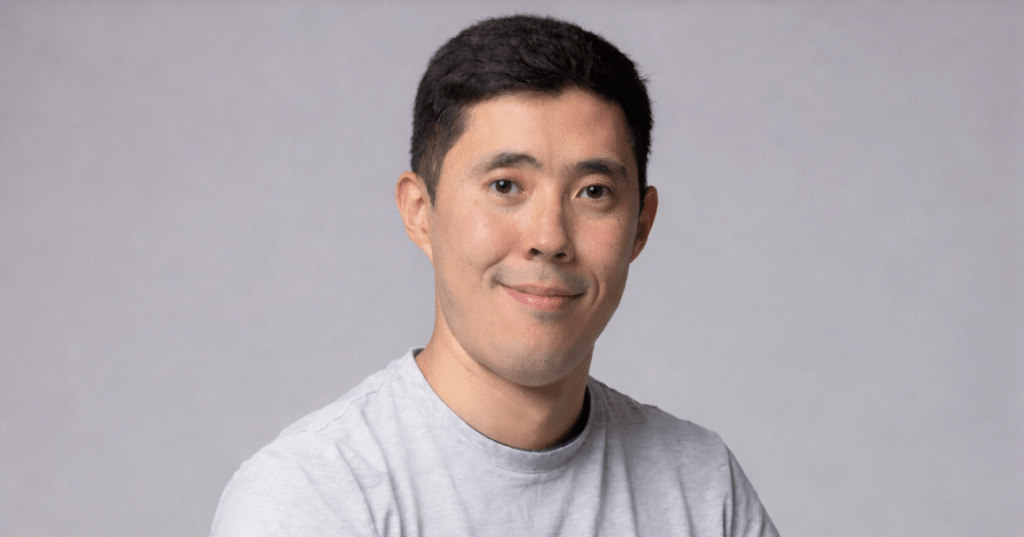
Kazakhstan’s animation industry is gradually developing despite a number of persistent challenges. The Times of Central Asia spoke with Bakytzhan Shabdukarimov, co-founder of ARA Studios, about how the team was formed, the difficulties animators face today, and how he views the future of the industry. TCA: How did the idea to create ARA Studios come about? Bakytzhan: The studio has two co-founders: Bakytzhan Shabdukarimov, that’s me, and Meirzhan Sandybay. The idea first emerged in 2017, and the studio was officially established in 2018. Before that, we worked on the project Shyraq. Last year, we had to disband most of our team after joining the animated series Säbi for the Balapan TV channel. That’s when we began transitioning to 3D projects. Originally, the studio focused more on 2D, while I personally worked in 3D. Over time, we fully shifted toward 3D production. TCA: Who is behind the studio and how many people are on the team? Bakytzhan: Right now, the core team is essentially just the two of us. But last year, we had more than 20 people. Unfortunately, projects and orders suddenly stopped, and it became difficult to maintain a large staff. So we switched to a new format, an online studio. We used to rent an office and maintain a large in-house team, but that has recently become too challenging. Now our team works remotely, and we come together when we take on larger projects. TCA: Which projects do you consider the most important? Bakytzhan: Of all our projects, Maqta Qyz remains the most important because it’s our flagship and we continue to develop it. But in reality, all our projects matter to us; each one has contributed to our growth and given us valuable experience. Our YouTube channel is active, and we’ve gained around 7,000 subscribers organically, without advertising or targeting. We plan to keep releasing new episodes and possibly expand into merchandise in the future. TCA: How is the animation industry developing in Kazakhstan today? Bakytzhan: Honestly, I haven’t been closely following all industry developments lately, but from what I can see, progress is slow. The industry remains relatively small; there is hardly a fully developed market. Most studios either work on government commissions from the Ministry of Culture or collaborate with “Qazaq Animation,” which allocates funding annually for short films, with the aim of developing them into larger projects. Other studios, including independent teams, focus on commercial work, advertising both domestically and internationally, as well as short films. At the same time, we do have strong 2D and 3D specialists and talented teams. TCA: Is there any support for animation studios? Bakytzhan: Yes, there is some support. As I mentioned, part of it comes through “Qazaq Animation.” There is also a new creative fund being launched that will support not only animation but the broader creative industries, film, music, and dance. Private funds are also emerging. For example, there are initiatives involving private investors and financial institutions. However, they mostly invest in feature live-action films. I’ve...

Construction Begins in Kazakhstan on a World-Class Film Studio for a Movie Starring Jackie Chan

A project has been launched in Kazakhstan’s Almaty region that could significantly transform the local film industry. Construction has begun in the city of Kaskelen on the “Dala Stage” film studio project, which is positioned as a world-class facility and is being developed with the participation of international partners. According to local authorities, one of the most notable moments at the project’s groundbreaking ceremony was the delivery of a time capsule from Jackie Chan, which was transported by helicopter. The capsule was received by director Robert Koon, who is set to work on the first production at the new site, Armor of God 4: Ultimatum. “The film industry is developing rapidly, requiring increasingly large-scale solutions and advanced technologies. This new project will allow local professionals to compete at a global level,” said Almaty Region Akim Marat Sultangaziev. Producer Li Chiu Wa conveyed greetings from Jackie Chan and said the project is progressing quickly. He said that just six months ago it was still at the discussion stage, but construction has already begun. The key parameters of the future facility have already been outlined. The total site will cover 15 hectares, with built-up space of 3,000 square meters. The project extends beyond the construction of a film studio and is intended to support the development of the national film industry, including training specialists and attracting investment.

Kazakhstan’s Bublik Remembers Clay Court Moment with Monfils

Kazakhstan’s Alexander Bublik shared a memory at the net with Gaël Monfils after defeating him at the Monte-Carlo Masters, in the French veteran’s last appearance at the Roland Garros tune-up. “Do you know what? Exactly 10 years ago, I was a hitting partner here,” Bublik, ranked 11th in the world, told Monfils after beating him 6-4, 6-4 in the round of 32 on Tuesday. As the two men embraced and the crowd cheered, Bublik asked Monfils if he remembered what he had said a decade ago. Monfils responded: “I told you grass is not the main, here is your main! Remember that.” The 39-year-old Frenchman, who has said the 2026 season will be his last in professional tennis, was onto something when he told Bublik to focus on clay court tennis all those years ago. Although the Russia-born player was once open about his distaste for the surface, he reached the French Open quarterfinals and won two clay titles last year during a resurgence that propelled him up the rankings. Bublik, 28, was in command against Monfils, mixing up baseline drives with feathered drop shots that his opponent couldn’t reach. Monfils was once ranked as high as sixth in the world and has won 13 ATP titles. Bublik has won nine titles. The two men are considered among the most entertaining on the tour, for their shotmaking and flamboyance on the court. In Monaco on Tuesday, as they approached the umpire’s chair for a handshake, Monfils said to Bublik: “Good luck, brother.”

“Ornament Is a Language”: How a Tattoo Artist from Almaty Turns Culture into Art on Skin

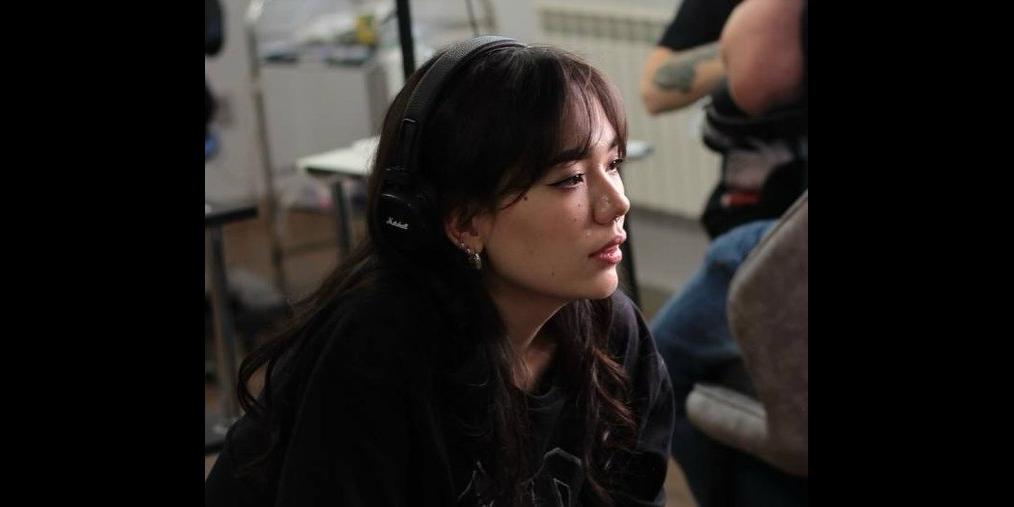
Almaty-based tattoo artist Saltanat Kuanova, known under the pseudonym tana.creator, is among those reinterpreting traditional culture through contemporary art. In her work, Kazakh ornaments become more than decorative elements, they form a complex system of symbols, personal stories, and cultural memory. The Times of Central Asia spoke with her about why Kazakhstanis are increasingly choosing national motifs, how attitudes toward tattoos are changing, and whether tattooing can serve as a means of preserving identity. Path into the Profession TCA: When and why did you start practicing tattoo art? Saltanat: I became interested in tattoos at around 14. Even then, I had a clear sense that it was “mine.” It wasn’t just curiosity, I immediately knew I wanted to become a professional in this field. At 16, I began tattooing. By that time, I had already studied the theory, watched videos, and understood the process, so I was well prepared for formal training and quickly started working. After completing my training, I was offered a position at a studio. That was important because it provided a steady flow of clients, and my work stood out. I worked there for about three years before moving into independent practice. I have now been working independently for more than five years. I’ve gained experience in different studios, and today I have my own private workspace in Almaty and manage bookings through Instagram. TCA: Do you remember your first work? Saltanat: Of course. It was a small tattoo with Roman numerals that I did for a friend during my training. She came as a model to support me, and honestly, I was more nervous than she was. My first paid piece left an even stronger impression it was a wolf with a dreamcatcher. That was the moment I first felt real responsibility toward a client. At the same time, I was surprised that I could actually earn money from this. Even now, years later, I don’t feel like I’m “already a pro.” It’s an ongoing process; there is always room to grow. [caption id="attachment_46606" align="aligncenter" width="225"] @instagram.com/tana.creator[/caption] Working with Kazakh Ornaments TCA: When did you start working with Kazakh ornaments? Saltanat: It happened gradually. At some point, I realized that ornament is not just a pattern, it’s a full-fledged language. It has structure, logic, even “grammar.” Everything matters: the shape, the number of elements, the color. Even a small detail can completely change the meaning of a piece. TCA: Who usually comes for such tattoos locals or foreigners? Saltanat: Primarily Kazakhstanis and, more broadly, representatives of Turkic peoples, Kyrgyz, Uzbeks, Tatars. But there are also many foreigners, and their number is growing. I tend to group them into categories. The first group includes people who come to Kazakhstan for work or travel and want a lasting memory of the country. The second consists of those who have a partner from Kazakhstan. They come together and, through tattoos, connect with each other’s cultures. The third and most touching category is people who were adopted abroad as...

Life Expectancy in Kazakhstan Reaches Record High

Life expectancy in Kazakhstan has reached 75.97 years, setting a record for the entire period of independence, according to the Ministry of Health. For comparison, in 1991 the figure stood at 67.6 years; in 2001 it fell to 65.6 years; in 2011 it rose to 68.98 years; and in 2021 it reached 70.23 years. Overall, life expectancy has increased by more than eight years over the past three decades. The ministry attributes this growth largely to measures aimed at combating noncommunicable diseases. In 2025, Kazakhstan ranked among the top ten countries in the European Region of the World Health Organization for reducing mortality from such diseases by 25%. According to the ministry, a systematic approach to prevention, early diagnosis, and treatment of chronic conditions has underpinned this positive trend. The government is also implementing a healthcare development strategy through 2029, which aims to raise life expectancy to 77 years. The strategy includes measures to strengthen primary healthcare, introduce digital solutions, develop human resources, and advance medical science. Priorities include reducing premature mortality from cardiovascular and oncological diseases, diabetes, and chronic respiratory conditions. The plan was developed with the participation of international organizations, including UNICEF and United Nations Population Fund. The Times of Central Asia previously reported that Kazakhstan became the first country in the region to meet its targets for reducing premature mortality from noncommunicable diseases. At the same time, rising life expectancy is accompanied by demographic shifts. According to Kazakhstan’s Unified Accumulative Pension Fund, by 2050 approximately 19% of the population will be of retirement or pre-retirement age.

Turkmenistan Ranked Last Among Central Asian Countries in Internet Freedom Index

According to a report by Cloudwards, a portal focused on technology and internet security, Turkmenistan scored just 16 out of 100 points for internet freedom in 2026, placing it among the countries with the lowest levels of online freedom. The authors note that significant internet censorship persists in the country. Compared with its regional neighbors, Turkmenistan’s score is among the lowest. Uzbekistan received 24 points, Kazakhstan 35, and Kyrgyzstan 52, while Tajikistan ranked highest in Central Asia with 56 points. The gap reflects varying levels of access to information and differing degrees of online restrictions across the region. In a global context, the disparity is even more pronounced. North Korea received the lowest possible score of 0. The report describes it as a country where most residents have no access to the global internet, with only a limited group permitted to use a heavily restricted internal network. Countries ranking only slightly higher include Russia, Pakistan, Iran, and China, each scoring 4 points. None is classified as fully free under the report’s criteria. According to the study, platforms such as X, Facebook, YouTube, and TikTok are blocked or have at times been restricted in these countries. The report also highlights that in some cases, restrictions are more flexible in nature. For example, in China, access to VPNs and social media is not entirely prohibited but is tightly controlled, with users largely limited to approved platforms. Expressing politically sensitive views can lead to serious consequences. Turkmenistan is grouped alongside India, Myanmar, and Bangladesh, all of which scored between 12 and 20 points. In these countries, the report notes significant censorship and restricted access to information. At the other end of the ranking are Belgium, East Timor, Denmark, Iceland, Costa Rica, Liechtenstein, New Zealand, Norway, Slovakia, Suriname, and Finland, each with a score of 92. No country achieved a perfect score of 100. The study assessed internet freedom across several criteria, including access to torrents, adult content, political and social media platforms, and the ability to use VPN services. “Although certain types of internet regulation, when implemented carefully, can help combat hate speech, protect vulnerable groups, and limit the spread of harmful misinformation, in many countries, censorship has been taken to extremes,” the report’s authors state. They add that residents of countries with strict internet controls are effectively deprived of full access to information. This has implications not only for freedom of expression but also for education, technological development, and innovation. In some cases, the consequences can be more severe, including imprisonment for online speech.