• KGS/USD = 0.01144 0%
  • KZT/USD = 0.00211 0%
  • TJS/USD = 0.10515 0.48%
  • UZS/USD = 0.00008 0%
  • TMT/USD = 0.28530 0%
  • KGS/USD = 0.01144 0%
  • KZT/USD = 0.00211 0%
  • TJS/USD = 0.10515 0.48%
  • UZS/USD = 0.00008 0%
  • TMT/USD = 0.28530 0%
  • KGS/USD = 0.01144 0%
  • KZT/USD = 0.00211 0%
  • TJS/USD = 0.10515 0.48%
  • UZS/USD = 0.00008 0%
  • TMT/USD = 0.28530 0%
  • KGS/USD = 0.01144 0%
  • KZT/USD = 0.00211 0%
  • TJS/USD = 0.10515 0.48%
  • UZS/USD = 0.00008 0%
  • TMT/USD = 0.28530 0%
  • KGS/USD = 0.01144 0%
  • KZT/USD = 0.00211 0%
  • TJS/USD = 0.10515 0.48%
  • UZS/USD = 0.00008 0%
  • TMT/USD = 0.28530 0%
  • KGS/USD = 0.01144 0%
  • KZT/USD = 0.00211 0%
  • TJS/USD = 0.10515 0.48%
  • UZS/USD = 0.00008 0%
  • TMT/USD = 0.28530 0%
  • KGS/USD = 0.01144 0%
  • KZT/USD = 0.00211 0%
  • TJS/USD = 0.10515 0.48%
  • UZS/USD = 0.00008 0%
  • TMT/USD = 0.28530 0%
  • KGS/USD = 0.01144 0%
  • KZT/USD = 0.00211 0%
  • TJS/USD = 0.10515 0.48%
  • UZS/USD = 0.00008 0%
  • TMT/USD = 0.28530 0%

Viewing results 169 - 174 of 1576

NoMad Nights: Celebrating Kazakh Identity at New Year in New York

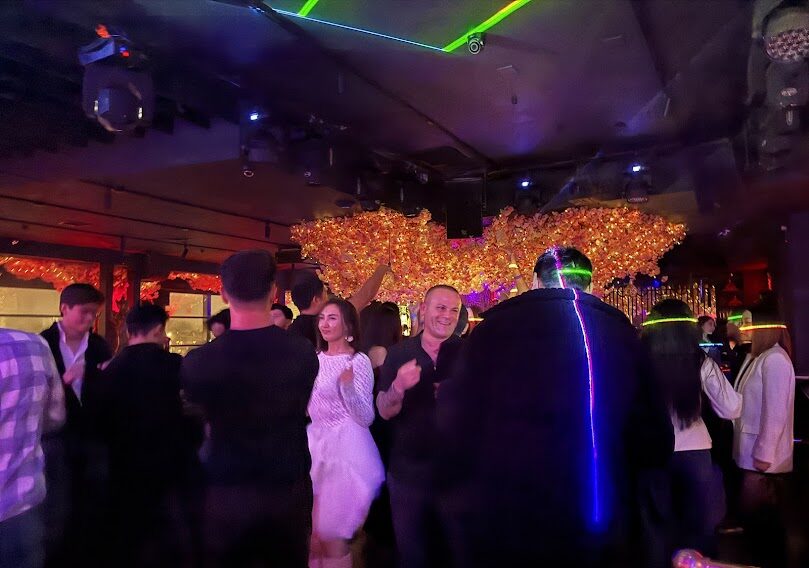
There’s no party like a New Year NoMad Kazakh Party. Staged slightly ahead of New Year’s Eve to align with the weekend, the glamorous event marked a welcome to the incoming 2026 as well as a celebration of Kazakh culture in New York City. The Sky Wise Lounge, a fashionable Asian fusion venue with regular live entertainment, is located in Brooklyn’s Sheepshead Bay. The neighborhood has a sizable Central Asian population rooted in the former Soviet diaspora and sustained by post-Soviet migration. Events like this one are part of an expanding series of multi-city gatherings across the United States hosted by ATB Promotions, led by Kazakhstani entrepreneur, Talgat Abdrakhmanov. A rotating group of about half a dozen DJs brings high-energy sets that fuse their own mixes with crowd-favorite Kazakhstani hits. [caption id="attachment_41575" align="aligncenter" width="455"] Talgat Abdrakhmanov (right) at NoMad Nights[/caption] Abdrakhmanov, originally from Karaganda, has achieved the American dream. Like other successful immigrants, he has built a business by adopting, adapting, and commercializing the enterprising customs of the U.S. After arriving in New York City in 2012, Abdrakhmanov worked his way up from a dishwasher and a waiter to a customer service representative. He later worked as an IT quality assurance analyst and in the competitive worlds of Wall Street and Silicon Valley. But it was not all work. While navigating employment and IT studies, Abdrakhmanov also embraced the play element of his American life, particularly nightlife and dance music, where he began to notice an unmet demand within his community. During this time, he developed an idea rooted in his own downtime preferences and a desire to cater to fellow immigrants from Kazakhstan. Initially, he organized small meetups with friends at restaurants and sports bars, as well as group outings to soccer games and boxing matches, including bouts featuring former Kazakhstani middleweight world champion Gennady Golovkin, widely known as GGG. “That was the initial spark that gave me an idea to make parties and events in the future,” Abdrakhmanov told The Times of Central Asia. “That’s how ATB Promotions came up.” The Kazakhstani community in the U.S. was receptive to Abdrakhmanov’s first networking foray, KazCommunity USA. “I started KazCommunity USA back in 2016, because I had held many jobs and gained a lot of experience, and people were often asking me for advice, where to find a job, where to find a place to live, how to do this, how to do that. Based on those questions, I decided to create chats and groups on Facebook, Telegram, and WhatsApp, so they exist across different social media platforms. “KazCommunity USA is really about the community. I never charged any money for it. It’s more like a nonprofit initiative that helps people find work, find a place to live, and connect with each other. That includes organizing meetups and events, some of which I later did through ATB Promotions. But KazCommunity itself is free and focused on helping people and building connections within the community.” Abdrakhmanov’s efforts to connect U.S.-based Kazakhstani...

Kazakhstan vs. Uzbekistan: A Footballing Derby with an Uncertain Outcome

The Uzbekistan national football team has qualified for the 2026 World Cup, which will take place across three North American countries: the U.S., Canada, and Mexico. Meanwhile, one of Kazakhstan’s leading clubs, FC Kairat Almaty, continues to gain experience competing in the UEFA Champions League. Football in Central Asia has become a mirror of the region’s growing economic and political ambitions, with Uzbekistan and Kazakhstan at the forefront. Their rivalry, which dates back to the Soviet era, has adapted to this new chapter. Kazakhstan and the Road to Europe Matches between Almaty's Kairat and Tashkent's Pakhtakor were once marquee events during the Soviet era, filling stadiums and energizing fans across the republics. Following the collapse of the USSR, however, the footballing paths of these two historical rivals began to diverge. Initially, both Kazakhstan and Uzbekistan joined the Asian Football Confederation (AFC), which includes countries from across Asia and parts of the Pacific, including former Oceania Football Confederation members such as Australia and Guam. Kazakhstan became a full member of the AFC in 1992, followed by Uzbekistan in 1994. However, Kazakhstan soon grew disillusioned with the level of competition within the AFC and began to explore other avenues. Its early attempts to join UEFA were rebuffed in the mid-1990s. Rakhat Aliyev, then head of the Football Union of Kazakhstan and son-in-law of former President Nursultan Nazarbayev, later described the process as being dismissed “without really getting to the heart of the matter.” Despite this, both Kazakhstan and Uzbekistan quickly showed they were a cut above most AFC members at the time. Kazakhstan won the inaugural Central Asian Cup in 1992, while Uzbekistan claimed gold at the 1994 Asian Games in Hiroshima, defeating China 4-2 in the final. Eventually, Kazakhstan succeeded in joining UEFA. Spearheaded by Aliyev, the Football Union of Kazakhstan (FSC) lobbied hard for admission, culminating in meetings with FIFA and UEFA presidents Lennart Johansson and Joseph Blatter in Moscow in late 2000 and early 2001. The AFC issued a statement on May 10, 2001, allowing Kazakhstan to make its own decision, and five days later Johansson confirmed that UEFA would welcome Kazakhstan as its 52nd member. "Joining UEFA has given all of us who work in football a powerful boost," Aliyev said at the time. "We will strive to use this momentum to raise the level of our national football." Uzbekistan and the Central Asian Football Association Unlike Kazakhstan, Uzbekistan chose to remain in the AFC, where it has steadily risen in prominence. In 2014, it became a founding member of the Central Asian Football Association (CAFA), a regional sub-group within the AFC. Officially operational since 2015, CAFA also includes Afghanistan, Iran, Kyrgyzstan, Tajikistan, and Turkmenistan. The organization is currently chaired by Rustam Emomali, son of Tajik President Emomali Rahmon. Uzbekistan is ranked second in the CAFA, behind Iran, and has consistently reached the quarterfinals of the AFC Asian Cup in 2004, 2007, 2015, and 2023. Much of this success is due to sustained investment in youth development, training...

EBRD to Allocate $6 Million for Modernization of Dushanbe’s Heat Supply System

The European Bank for Reconstruction and Development (EBRD) will provide $6 million to Tajikistan for the implementation of the “Heat Supply in Dushanbe” project. The decision was approved by parliament on December 12. According to MP Nigina Sharifzoda, the financing will comprise a $3 million grant and a $3 million loan. The funds will be used to reconstruct and expand the capital’s central heating infrastructure. The project includes the modernization of Dushanbe’s heating networks, with the aim of ensuring reliable heat supply during the winter months. By 2028, over 500,000 residents are expected to benefit from stable heating services. This initiative is part of an ongoing program. The initial credit line has been in place since 2021, and the current stage was formalized as an additional credit agreement. The document was signed on October 6 between the Ministry of Finance, the Dushanbe mayor’s office, the state-owned Dushanbe Heat Network company, and the EBRD. First Deputy Minister of Finance Yusuf Majidi noted that the project is intended not only to modernize infrastructure but also to address long-standing systemic issues in the sector. Currently, more than 43% of Dushanbe’s residential buildings, schools, kindergartens, hospitals, and businesses are connected to centralized hot water supply. By the 2025-2026 heating season, an estimated 3,300 facilities are expected to be integrated into the system. Despite progress, challenges remain. Residents in several districts continue to report inadequate heating. A recent inspection by the Energy Supervision Agency revealed that in some heating stations, the temperature of the heat carrier was just 55°C, well below the standard 75°C. Separately, the EBRD, in partnership with the European Union, has announced another major initiative: the modernization of Tajikistan’s electricity distribution infrastructure, with €43 million allocated for the project.

Kazakhstan’s Tazy: The Ancient Hunting Dog of the Steppe

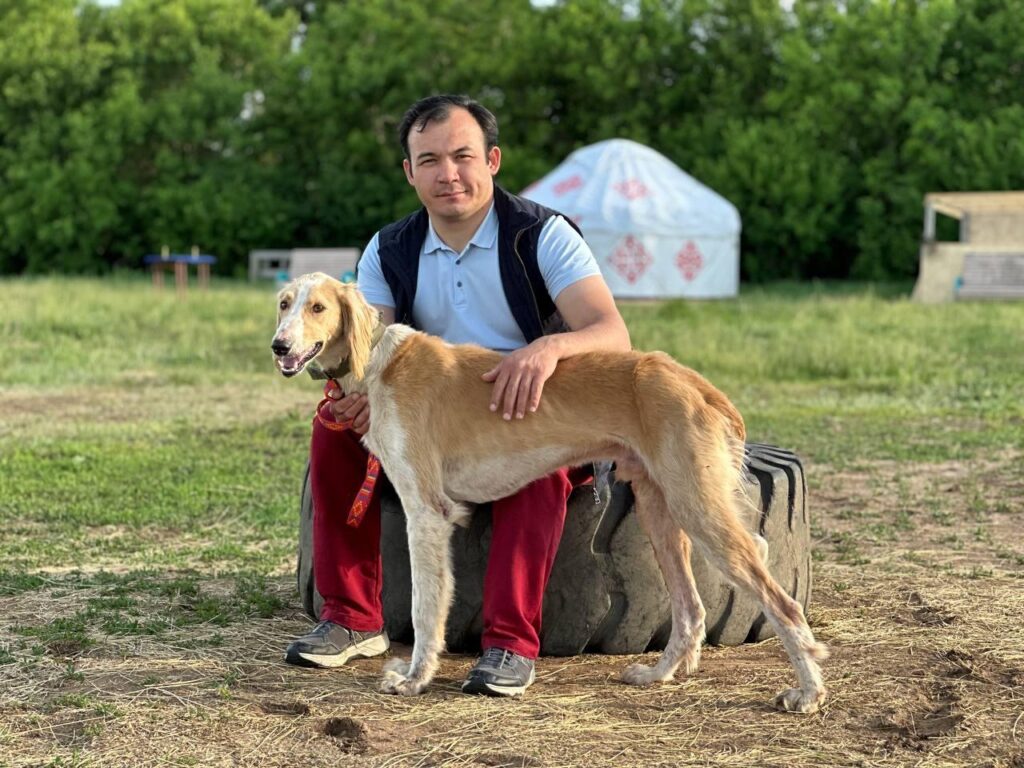
For centuries, nomadic tribes across the steppe that now forms modern Kazakhstan absorbed outside influences and adapted them to local conditions, creating something uniquely Kazakh. This adaptability is evident in many aspects of steppe life, including the development of the Tazy, the Kazakh greyhound. Bred over generations to protect what nomads valued most, their livestock, the Tazy is now considered one of the seven national treasures of Kazakhstan. “If we look at history, we can say that the progenitor of the Kazakh breed, the Tazy, was the Arabian greyhound saluki,” said breeder Abzal Dosyman in an interview with The Times of Central Asia. “Arab missionaries brought it to our lands. The Tazy and the saluki are similar, but over time, given the needs of the nomads and the harsh climate of the steppe, the breed adapted and transformed. Here, their descendants were trained to guard livestock and protect people from wolves.” Dosyman described the unique methods traditionally used to raise Tazys for such a role. As soon as puppies were born, wolf skin was placed nearby so they would learn the predator’s scent. At four or five months, the young dogs were taken on hunts, but only after a brief starvation period. They were then fed wolf meat, which, after the fast, was considered a delicacy. “Some may see this as cruel,” he acknowledged. “But this is how hunters were raised who dared to face wolves on the steppe. For centuries, Tazys helped Kazakhs protect their herds, which were their livelihood.” Though known for their gentle nature, Tazys transform during a hunt, becoming fast, fearless, and relentless. “They are friendly toward people and non-aggressive with other animals, but they are implacable toward the grey predator,” Dosyman said. He noted that many countries have their own hunting greyhounds. Russia has the Borzoi, Kyrgyzstan the Taigan, meaning “graceful,” and Spain the Galgo. All descend, like the Tazy, from the ancient Arabian saluki. But it was in Kazakhstan that the Tazy acquired its distinct characteristics, shaped by the local way of life. In 2024, the General Committee of the Fédération Cynologique Internationale granted provisional recognition to the Kazakh Tazy as an official breed, confirming Kazakhstan as the holder of its breed standard. The FCI currently recognizes 350 breeds worldwide. Tazy Diplomacy Following independence, Kazakh enthusiasts began reviving the Tazy and promoting national traditions. In 2019, Dosyman presented a Tazy puppy to President Kassym-Jomart Tokayev, who named it Ronnie. He later received Nancy, and another dog named Nauryz was gifted by breeder Anna Zakharova. These steps helped draw state-level support for efforts to preserve and expand the Tazy population. A photograph of the grown Tazys at a reception hosted by the French president for the King of Denmark even appeared in international media, symbolizing what Dosyman calls “Tazy diplomacy.” “This is the moment the Kazakh greyhound becomes a national brand,” he said. “The French have the rooster, the Chinese the panda. Remember when China gifted a panda to another country and it later died...

New Report Highlights Persistent Gender Equality Gaps in Kyrgyzstan

Kyrgyzstan has released its Country Gender Equality Profile (CGEP), a comprehensive, evidence-based assessment prepared by the Ministry of Labor, Social Welfare, and Migration in collaboration with UN Women and with support from the European Union. The report, presented during a National Dialogue on Promoting Gender Equality Policy, examines structural barriers to gender equality through government statistics, legislative analysis, and stakeholder consultations.  Speaking at the event, Deputy Prime Minister Edil Baisalov highlighted the strategic importance of the CGEP, noting that women remain underrepresented in public administration. He called for systemic and practical solutions to ensure women's full participation in both elected and appointed leadership positions. While Kyrgyzstan’s National Gender Equality Strategy through 2030 outlines women’s economic empowerment, cultural transformation, prevention of gender-based violence, and gender parity in decision-making as core priorities, the CGEP finds that implementation remains constrained by deep-rooted challenges. The report notes that gender quotas have proven effective in elected bodies, with women now holding 39% of seats in local councils. However, the absence of similar mechanisms in appointed positions has led to ongoing exclusion. Women currently hold only 5% of cabinet posts, occupy none of the positions of Presidential Representatives or district heads, and account for just 3.5% of leadership roles in rural administration. Media representation further skews public perception, with male politicians receiving seven times more coverage than their female counterparts.  The CGEP also highlights growing economic and social disparities. Women's employment rate declined from 49.3% to 43.8% over the past 15 years, driven by traditional gender norms and rising religious conservatism. The majority of employed women (77%) work in lower-paid sectors such as education and healthcare or in informal roles, contributing to a 25% gender pay gap. On average, women spend 4 hours and 20 minutes per day on unpaid household labor, compared to just 55 minutes for men. Access to property and finance remains limited. Women own only 29% of registered real estate, restricting their ability to secure credit and scale businesses. They make up just 27% of entrepreneurs and hold only 1.2% of leadership roles in Water User Associations. Digital inequality is another critical barrier. In 2023, just 45% of rural women had internet access, compared to 65% of men. Women’s representation in the information and communications technology (ICT) sector dropped from 40.8% in 2020 to 31.9% in 2022, and they hold only 15% of leadership roles in the tech industry. Meanwhile, women account for just 33.9% of students enrolled in computing-related degree programs. According to the National Statistical Committee, as of January 1, 2025, Kyrgyzstan’s population stood at 7.28 million, 3.68 million women and 3.60 million men.  The findings underscore that despite a robust policy framework, Kyrgyzstan continues to face entrenched structural and cultural barriers that limit women’s full participation in political, economic, and digital spheres.

Rumors Grow Over Real Madrid’s Interest in Uzbek Defender Khusanov

Speculation is mounting over a potential move by Real Madrid for Uzbekistan international Abdukodir Khusanov, with Spanish outlet Fichajes reporting that the La Liga giants are exploring the possibility of signing the 21-year-old Manchester City defender on loan. According to Fichajes, Real Madrid has initiated discussions to assess whether a mid-season loan deal is feasible as the club seeks short-term defensive cover amid a spate of injuries and a congested fixture schedule. The report suggests that Khusanov is being evaluated as a cost-effective option who could bolster the squad without committing significant transfer funds. Khusanov’s physical presence, aerial strength, and versatility across defensive roles reportedly make him an appealing candidate for Madrid. The club is said to be looking for a player who can make an immediate impact while maintaining strategic flexibility for future acquisitions. Khusanov joined Manchester City during the summer transfer window from French club RC Lens in a deal reportedly worth €40 million. However, his playing time under Pep Guardiola has been limited. Fichajes notes that City is aware of the need for the young defender to gain regular minutes and views a loan move as a viable development path. A stint at Real Madrid, one of Europe’s top clubs, would offer high-level competition and visibility, making it an attractive scenario for all parties involved. Beyond sporting reasons, the Spanish outlet highlights Real Madrid’s awareness of Khusanov’s potential market appeal in Asia. Signing a player from Uzbekistan could support the club’s outreach in the region, though performance remains the primary consideration. There is no indication that a mandatory purchase clause is part of the current discussions. Reports suggest that Manchester City is open to negotiating a loan, provided Khusanov receives consistent playing time. Talks remain preliminary, with final decisions likely to depend on the loan structure, salary arrangements, and City’s broader squad management. The speculation comes amid recent remarks by Pep Guardiola, published by Russian outlet Euro-Football, in which he expressed continued enthusiasm for working with new players. The Manchester City head coach, who extended his contract through mid-2027, mentioned Khusanov among the fresh arrivals who have reinvigorated his commitment to team development. Guardiola noted that players such as Khusanov, Claudio Echeverri, Matheus Nunes, and Rayan Aït-Nouri have motivated him “to help them adapt, integrate into the team, and become better.” As the winter transfer window approaches, both clubs appear to be weighing their options. Real Madrid continues to monitor the market for defensive reinforcements, while Manchester City evaluates the best route for Khusanov’s progression. Further talks are expected in the coming weeks.