
• KGS/USD = 0.01143 0%
  • KZT/USD = 0.00205 0%
  • TJS/USD = 0.10433 0.1%
  • UZS/USD = 0.00008 0%
  • TMT/USD = 0.28577 0%
  • KGS/USD = 0.01143 0%
  • KZT/USD = 0.00205 0%
  • TJS/USD = 0.10433 0.1%
  • UZS/USD = 0.00008 0%
  • TMT/USD = 0.28577 0%
  • KGS/USD = 0.01143 0%
  • KZT/USD = 0.00205 0%
  • TJS/USD = 0.10433 0.1%
  • UZS/USD = 0.00008 0%
  • TMT/USD = 0.28577 0%
  • KGS/USD = 0.01143 0%
  • KZT/USD = 0.00205 0%
  • TJS/USD = 0.10433 0.1%
  • UZS/USD = 0.00008 0%
  • TMT/USD = 0.28577 0%
  • KGS/USD = 0.01143 0%
  • KZT/USD = 0.00205 0%
  • TJS/USD = 0.10433 0.1%
  • UZS/USD = 0.00008 0%
  • TMT/USD = 0.28577 0%
  • KGS/USD = 0.01143 0%
  • KZT/USD = 0.00205 0%
  • TJS/USD = 0.10433 0.1%
  • UZS/USD = 0.00008 0%
  • TMT/USD = 0.28577 0%
  • KGS/USD = 0.01143 0%
  • KZT/USD = 0.00205 0%
  • TJS/USD = 0.10433 0.1%
  • UZS/USD = 0.00008 0%
  • TMT/USD = 0.28577 0%
  • KGS/USD = 0.01143 0%
  • KZT/USD = 0.00205 0%
  • TJS/USD = 0.10433 0.1%
  • UZS/USD = 0.00008 0%
  • TMT/USD = 0.28577 0%

Viewing results 421 - 426 of 1444

Creature of Clay: Kazakhstan’s Alexander Bublik Reaches Quarterfinals at Roland Garros

Tennis player Alexander Bublik of Kazakhstan, who has said he hates clay, is developing a taste for the surface at Roland Garros. On Monday, Bublik defeated Jack Draper of Great Britain to reach the quarterfinals in Paris, his best performance in a major tournament. After the four-set victory, the world no. 62 fell to the ground in joy and relief and then got up, his face smeared with the court’s red clay.  “Sometimes in life there’s only one chance and I had a feeling that that was mine and I couldn’t let it slip,” the Russia-born player said in an on-court interview with Alex Corretja, a former Spanish player who thrived on clay when he was on the tour.  "Standing here is the best moment of my life. Period,” said the unseeded Bublik, who came back from one set down in the 5-7, 6-3, 6-2, 6-4 victory over Draper, a top ten player.   In 2022, after defeating Stan Wawrinka in Monte Carlo, Bublik complained that he was moving like an “elephant” on the clay and declared: “I hate this surface.”  Bublik isn’t the only player to have struggled with clay, which tends to involve a lot of sliding, high bounces and grit and patience during long, energy-sapping rallies. Maria Sharapova once said she felt like “a cow on ice” on clay, though she won two of her five majors at Roland Garros. Similarly, it took a while for Andre Agassi to warm to clay but one of his eight majors came in Paris.  Bublik isn’t in the league of those champions, but just as they did, he is coming around to clay. His best previous result at a Grand Slam tournament was the fourth round at Wimbledon in 2023.  “All of Bublik's four tour-level titles and 11 finals have come on either hard or grass courts. His 25 wins and 41 per cent win rate on clay entering Roland Garros are both his lowest marks across all surfaces,” the ATP Tour website said.  “You know, I’m standing here like I won” the tournament, the delighted 27-year-old said after the win over Draper. “But at the end, yeah, what can I say. Thank you guys. I mean I can’t cry here. Come on, stop. Let me be in peace.”  When Corretja invited him to go ahead and cry, Bublik said: “I still have a match to go. I’m a professional tennis player. I’ve got to get ready.” That’s for sure. On Wednesday, he plays world no. 1 Jannik Sinner.

Tajik Students Gain Expanded Access to Internships and Training in the UK

Educational cooperation between Tajikistan and the United Kingdom is reaching new milestones, with fresh opportunities emerging for Tajik students to study and gain professional experience in the UK. On May 31, representatives of Tajikistan’s State Agency “Center for International Programs” held talks with leadership at the University of Greenwich to discuss avenues for academic collaboration and student support initiatives. Building Bridges in Higher Education The meeting took place within the framework of Tajikistan’s broader strategy to internationalize its education and science sectors. According to the Ministry of Education and Science, discussions focused on improving access for Tajik citizens to high-quality education, facilitating professional internships, and exploring financial assistance mechanisms. Particular emphasis was placed on fields such as economics, finance, and management. University of Greenwich officials highlighted their partnerships with major financial institutions, which enable students to gain practical experience and enhance their competitiveness in global labor markets. Greenwich: A Gateway to Global Careers As part of the talks, the two sides explored the possibility of offering scholarships to Tajik students through national and international funding schemes. An agreement was reached to continue discussions and expand academic exchange programs. Experts see this initiative as a significant step in strengthening bilateral educational ties and opening new horizons for Tajik youth. Strengthening Tajik-UK Educational Ties Tajik-UK educational cooperation has grown steadily in recent years. Since 2018, more than 30 Tajik students have received Chevening Scholarships to pursue master's degrees at top British universities. The program, funded by the UK government, remains a key pillar of bilateral academic exchange. In 2022, the British Council resumed operations in Dushanbe, boosting collaboration on English language education and teacher training. Joint projects with the Tajik Ministry of Education aim to modernize teaching methods and improve educational outcomes. Tajik universities, such as Rudaki Tajik National University, are also forging partnerships with British institutions like the University of Central Lancashire, including dual degree programs and collaborative research. STEM education is a growing area of focus: in 2023, British-supported robotics and programming courses were launched for Tajik schoolchildren. Regional Context: Broader British Engagement in Central Asia The UK is expanding its educational footprint across Central Asia. In Turkmenistan, British experts have supported teacher training and curriculum modernization. In the 2024/25 academic year, 12 Turkmen nationals received Chevening Scholarships. The British Council continues to roll out digital education initiatives, such as the Digital Learning project, in the region. In May 2025, Turkmenistan also participated in the World Education Forum in London, joining delegates from over 100 countries to discuss global trends and priorities in education.

Bridging Continents: Launching the VIMA Art Fair in Cyprus

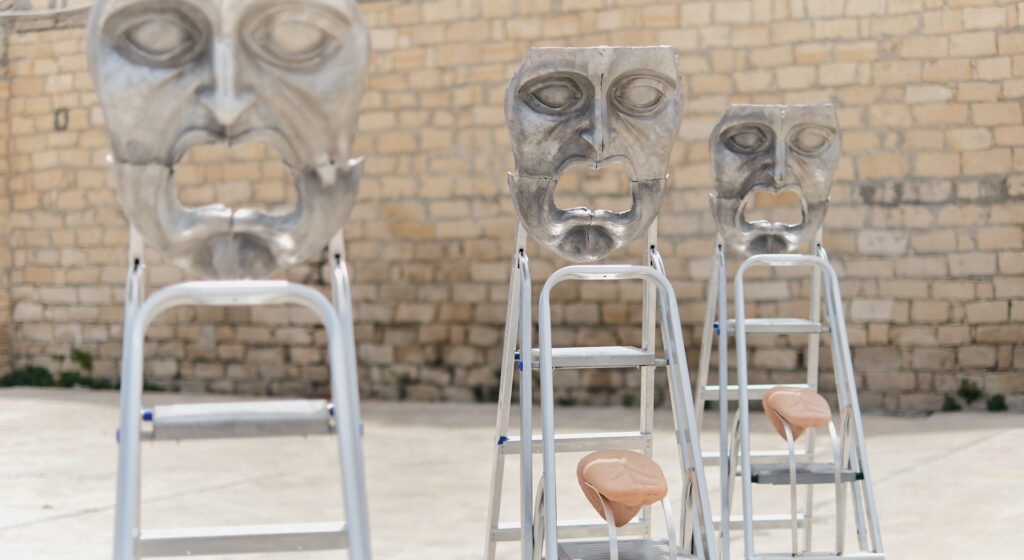
In the art world, fairs often have a meteoric rise and fall in an oversaturated market of competing events. But every so often, one lands with a quiet, deliberate weight, embedding itself in the soil of its context and revitalizing it. VIMA Art Fair in Limassol, Cyprus, is one such project. Unfolding in a transformed wine warehouse near the sea, VIMA resisted the sterile polish of typical fair venues. Here, the Mediterranean wind mingled with the hum of languages, from Russian to Arabic, Greek, and Turkish, to English. The fair was founded by three Russians who have established themselves in Cyprus - Edgar Gadzhiev, Lara Kotreleva, and Nadezhda Zinovskaya - all of whom have brought a deep well of curatorial and institutional experience from Central Asia, Eurasia, and beyond. The trio have diverse backgrounds: Zinovskaya used to manage Ayarkut, an international art foundation operating across Kazakhstan and Mexico, together with Gadzhiev, who specialized in marketing in the cultural sector. Lara Kotreleva, meanwhile, has a museological background in Moscow and founded Sphere Space, an ongoing research initiative dedicated to architectural heritage in Limassol. To set up the fair, they teamed up with an expert committee comprising the Cypriots Alexandros Diogenous and Tasos Stylianou, co-founders of Limassol Art Walks, and Andre Zivanari, director of the Point Center for Contemporary Art in the capital, Nicosia. Of the 27 participants at the fair, there was an emphasis on the ten Cypriot galleries, commercial, not-for-profit, and artist-run spaces, part of Cyprus’s flourishing contemporary art scene, as well as on a number of Middle Eastern and Greek galleries. The Caucasus also made an appearance, with Georgia’s Window Project (Tbilisi) presenting a thoughtful mix of Georgian and international artists. Their mission centers on bridging generational narratives, with a particular emphasis on promoting emerging Georgian talents alongside an often-overlooked older generation of artists. At VIMA, the gallery highlighted the work of female artists, including Tamar Giorgadze, Sigrid Gloerfelt, Natela Grigalashvili, Tamara K.E., and Anie Toidze. Representing Azerbaijan, pop/off/art (Baku) featured a dynamic selection of artists primarily from the post-Soviet sphere as well as Eastern and Central Europe, showcasing works by Despina Flessa, Andrey Krasulin, and Shamil Shaaev. The mood was easygoing and fresh, but did not shy away from important socio-political themes that are unavoidable on the island, from the Greek-Turkish divide, to the arrival of a number of expats fleeing wars. Through a program of talks and a collateral exhibition, the fair leaned into this complexity and spelled out the necessity of communities coexisting, as well as articulating the desire to create new cultural infrastructure through public and private collaboration. The Times of Central Asia spoke with Edgar Gadzhiev, Lara Kotreleva, and Nadezhda Zinovskaya. [caption id="attachment_32435" align="aligncenter" width="1920"] Portrait of the co-founders of the VIMA Art Fair, Edgar Gadzhiev, Nadezhda Zinovskaya, and Lara Kotrelevaimage; image courtesy of the VIMA Art Fair[/caption] TCA: Why did you choose Cyprus as the location to launch this project? Gadzhiev: It wasn’t a random decision. We conducted long-term research, and it became...

Kazakhstan and Uzbekistan Strengthen Cooperation on Cancer Treatment and Child Health

At the high-level conference, “Dialogue for Children: Central Asia and UNICEF,” held recently in Tashkent, the health ministers of Kazakhstan and Uzbekistan met to expand bilateral cooperation in healthcare. Kazakhstan’s Health Minister Akmaral Alnazarova and her Uzbek counterpart Asilbek Khudayarov discussed a range of initiatives aimed at enhancing the quality of medical services in both countries. According to the Uzbek Health Ministry, the discussions focused on joint research projects, the exchange of medical expertise, and collaboration within the coalition of countries supporting primary healthcare. The two sides also considered conducting environmental studies in the Aral Sea region to assess the health impacts of local ecological conditions. Focus on Pediatric Health and Cancer Treatment Children’s health emerged as a central theme in the talks. Kazakhstan proposed establishing an international academic hub for childhood cancer and offered to take the lead on the initiative. Minister Alnazarova outlined Kazakhstan’s use of advanced diagnostic and treatment methods for pediatric cancer, including immunohistochemistry, immunophenotyping, tumor marker detection, high-dose chemotherapy for bone and soft tissue sarcomas, and organ-preserving surgeries. She also announced that a new Proton Therapy Center will open in Astana this October. The center is expected to treat over 800 patients annually and will offer radioiodine therapy for children from across Central Asia. Kazakhstan also proposed creating two additional international hubs: one for adult oncology and oncohematology, and another for pediatric heart surgery at the UMC Heart Center. The heart surgery hub would be open to patients from Uzbekistan, including children from Karakalpakstan. Alnazarova noted that several areas of Kazakhstan’s healthcare system now meet international standards, with hospitals adopting globally recognized technologies and practices. Expanding Bilateral Healthcare Ties To deepen bilateral engagement, the two ministers agreed to hold “Kazakhstan Medicine Days” in Uzbekistan in 2025, followed by “Uzbekistan Medicine Days” in Kazakhstan in 2026. They also endorsed the creation of an international healthcare hub to promote cross-border collaboration. In a related development, Kazakhstan’s Minister of Science and Higher Education, Sayasat Nurbek, announced in March that the country is developing a new anti-cancer drug. Phase II clinical trials, completed last year, showed promising results, including an average tumor size reduction of 30%. The drug is expected to be registered and released to the market by the end of 2024.

First Tourist Train Links China’s Xi’an and Kazakhstan’s Almaty

On May 29, the inaugural tourist train connecting Xi’an, the capital of China’s Shaanxi province, with Almaty, Kazakhstan’s largest city, departed, marking a new chapter in cross-border tourism and cultural exchange. According to the national railway operator, Kazakhstan Temir Zholy (KTZ), the departure ceremony was held in Xi’an and attended by a Kazakh delegation led by KTZ Deputy Chairman Anuar Akhmetzhanov, along with representatives from Chinese authorities, tourism agencies, and transport organizations. Akhmetzhanov emphasized that the project aims to deepen cultural ties and boost bilateral tourism. “We are confident that this journey will leave a lasting impression on our guests from China and lay the groundwork for new joint initiatives,” he said. The train will travel through Urumqi in Xinjiang, cross the Kazakh-Chinese border at Khorgos, and proceed via Altynkol station to Almaty. The train comprises nine carriages and is carrying 246 passengers, including Chinese businesspeople, academics, entertainers, and athletes. During their five-day visit, passengers will explore the historical and cultural landmarks of Kazakhstan’s southern capital, participate in organized tours, and attend cultural and business events. Xi’an also holds strategic importance for Kazakhstan as the site of a Kazakh-operated logistics terminal. This facility has significantly boosted rail container traffic along the Trans-Caspian International Transport Route (TITR), a key corridor linking China and Europe via Kazakhstan.

From Overtime to Downtime: Tracking Work and Leisure in Kazakhstan

Analysts at Finprom.kz have examined average working hours across different employment sectors in Kazakhstan, along with how people typically spend their leisure time. Standard Hours and Overtime As of the first quarter of 2025, Kazakhstan had 9.3 million registered employed citizens, a 1.3% increase compared to the same period last year. The majority, approximately 7.7 million people, work standard hours ranging from 36 to 40 per week, representing a 7.5% year-on-year increase. Conversely, the number of people working overtime declined to 1.2 million, a 4.9% decrease. On average, Kazakhstanis now work 39 hours per week, an increase of one hour from last year. Men work slightly more, averaging 40 hours weekly, while women work around 38. Employees are more likely to work overtime, logging an average of 41 hours per week, compared to 36 hours for the self-employed. Most and Least Time-Intensive Sectors Mining remains the sector with the longest working week, averaging 43 hours. Those in wholesale and retail trade, transport, logistics, and administrative services average 42 hours. Employees in manufacturing, water supply and waste management, construction, and hospitality work about 41 hours weekly. At the other end of the spectrum, workers in agriculture, forestry, and fishing average 33 hours per week. Those in finance, insurance, and education work around 39 hours. Professions with the Heaviest Workload Among occupational groups, industrial, construction, and transport workers, as well as operators and drivers, top the list with an average of 42 hours per week. Trade and service sector employees follow closely at 41 hours. Farmers, fishermen, and unskilled laborers average 36 hours, while managers, civil servants, and technical staff work around 40 hours. Specialists average 39 hours weekly. Approximately 332,800 Kazakhstanis work less than a standard week, half the number from the previous year. The most common reasons include lack of work (122,800 people), reduced hours (56,700), sufficient income (34,200), employer decisions (31,500), and flexible schedules (18,300). How Kazakhstanis Spend Their Day According to official 2024 statistics, the average Kazakhstani spends most of their weekday attending to personal needs such as sleep, hygiene, and meals, totaling 12 hours and 6 minutes on workdays and 13 hours and 57 minutes on weekends. Sleep takes up the largest share: 8 hours and 48 minutes on weekdays and more than 10 hours on weekends. Meals and drinks occupy around 1 hour and 49 minutes during the week and 2 hours and 5 minutes on days off. Hygiene and self-care account for approximately 1 hour and 21 minutes on weekdays and 1 hour and 33 minutes on weekends. Work ranks second in terms of daily time use, averaging 5 hours and 16 minutes on weekdays and just 36 minutes on weekends. Leisure activities—including cultural events, sports, reading, and media consumption—rank third, taking up 2 hours and 40 minutes on weekdays and nearly 4 hours on weekends. Kazakhstanis also devote considerable time to household responsibilities, especially on weekends, spending about 3 hours and 32 minutes on unpaid domestic work and family care.
