
• KGS/USD = 0.01144 0%
  • KZT/USD = 0.00215 0%
  • TJS/USD = 0.10680 0.19%
  • UZS/USD = 0.00008 0%
  • TMT/USD = 0.28530 0%
  • KGS/USD = 0.01144 0%
  • KZT/USD = 0.00215 0%
  • TJS/USD = 0.10680 0.19%
  • UZS/USD = 0.00008 0%
  • TMT/USD = 0.28530 0%
  • KGS/USD = 0.01144 0%
  • KZT/USD = 0.00215 0%
  • TJS/USD = 0.10680 0.19%
  • UZS/USD = 0.00008 0%
  • TMT/USD = 0.28530 0%
  • KGS/USD = 0.01144 0%
  • KZT/USD = 0.00215 0%
  • TJS/USD = 0.10680 0.19%
  • UZS/USD = 0.00008 0%
  • TMT/USD = 0.28530 0%
  • KGS/USD = 0.01144 0%
  • KZT/USD = 0.00215 0%
  • TJS/USD = 0.10680 0.19%
  • UZS/USD = 0.00008 0%
  • TMT/USD = 0.28530 0%
  • KGS/USD = 0.01144 0%
  • KZT/USD = 0.00215 0%
  • TJS/USD = 0.10680 0.19%
  • UZS/USD = 0.00008 0%
  • TMT/USD = 0.28530 0%
  • KGS/USD = 0.01144 0%
  • KZT/USD = 0.00215 0%
  • TJS/USD = 0.10680 0.19%
  • UZS/USD = 0.00008 0%
  • TMT/USD = 0.28530 0%
  • KGS/USD = 0.01144 0%
  • KZT/USD = 0.00215 0%
  • TJS/USD = 0.10680 0.19%
  • UZS/USD = 0.00008 0%
  • TMT/USD = 0.28530 0%

Viewing results 427 - 432 of 1693

Opinion: Ghosts of the Gulag: Kazakhstan’s Uneasy Dance With Memory and Moscow

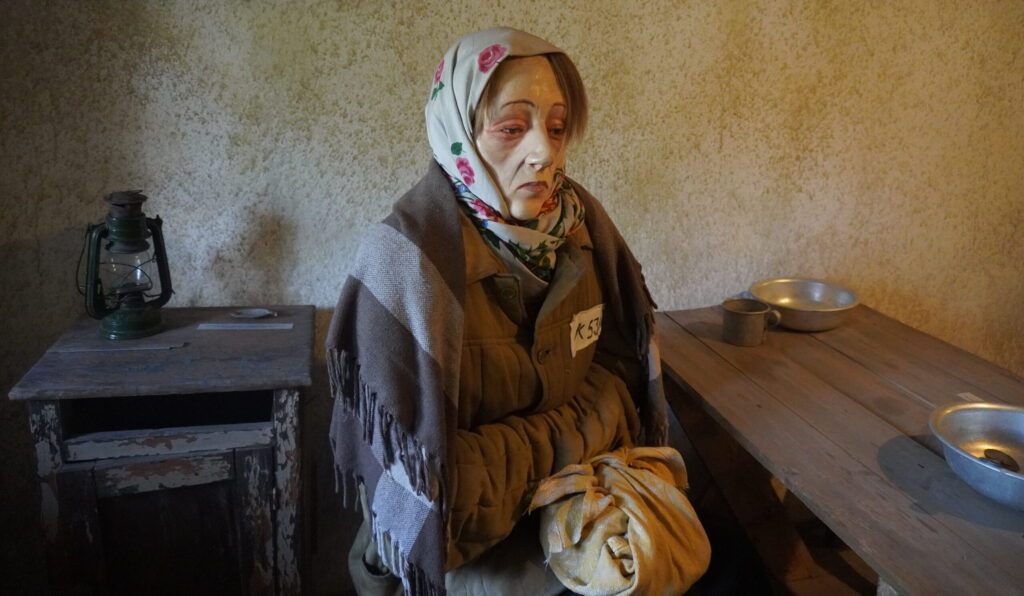
In May 2025, the authorities in Moscow unveiled a life-size bas‑relief sculpture of Josef Stalin in the Taganskaya metro station. The next month, a statue of Lenin was pulled down in Osh, Kyrgyzstan. Between these two symbolic acts lies Kazakhstan, caught in a tug-of-war over the memory of Soviet-era repression. Between 1920 and 1960, millions of prisoners were deported to more than fifty labor camps across what was later to become the Republic of Kazakhstan. Those who weren’t executed on the spot — political opponents, intellectuals, artists — were forced to work in mines, construction sites, or collective farms feeding Soviet industrial expansion. The death toll remains unknown but is believed to be in the millions. Today, this dark past draws in history buffs and thrill-seekers. But darktourism.com, the go-to website on the topic, warns them: forgotten cemeteries, ghost villages, crumbling camps — this gulag archipelago is well hidden in the steppes. No sign points the way to the Museum of Political Repression in Dolinka, housed in the former headquarters of Karlag, one of the largest camps of the Soviet Gulag system. The only other gulag transformed into a museum is ALZHIR, built on the ruins of the Akmola camp near Astana. It commemorates the 18,000 women imprisoned between 1939 and 1953 for being the wives of “traitors to the motherland.” These two museums now stand as official symbols of Soviet repression in Kazakhstan, and, more subtly, as frontline sites in a broader memory war across the former Soviet Union. Selective Memory When the museums were nationalized in the 2000s, their message became tightly controlled. Portraits and quotes from former president Nursultan Nazarbayev began to cover the walls. Guillaume Tiberghien, a specialist in dark tourism at the University of Glasgow, calls it a “selective interpretation of history.” The goal? To unify the country’s 160 ethnic groups under a shared narrative of collective suffering. At both Karlag and ALZHIR, guides emphasize acts of solidarity between Kazakh villagers and deportees — hospitality, compassion, bits of cheese tossed over barbed wire fences to feed the starving. [caption id="attachment_34338" align="aligncenter" width="2560"] Execution scene recreated at the Karlag museum; image: Manon Madec.[/caption] The past is staged. Between wax statues with sunken faces, sound effects mimicking heartbeats, and torture room reconstructions, the visitor is drawn into a visceral experience, sometimes at the cost of accuracy. “You wonder if the museum overdoes it to trigger emotion,” Tiberghien remarks. Margaret Comer, a memory studies expert at the University of Warsaw, explains: “It’s sometimes easier to mourn victims than to identify perpetrators.” [caption id="attachment_34337" align="aligncenter" width="2560"] Execution scene and fake blood, reconstructed in the Dolinka museum; image: Manon Madec.[/caption] The complicity of local Kazakhs is never addressed. Russian responsibility is blurred behind vague terms like “NKVD” or “Stalinist repression.” At ALZHIR, visitors learn only about Sergey Barinov — a Russian commandant described as cultured, discreet, and caring toward the women detained. The other two camp directors are never mentioned. In other former Soviet republics — Ukraine, the Baltics, Georgia — such...

Kazakh Scientists Unveil Facility Capable of Preserving Agricultural Products for 50 Years

Researchers at Al-Farabi Kazakh National University have developed a mobile unit capable of processing and storing agricultural products for up to 50 years. The unit, named “Dayar 20,” utilizes freeze-drying technology and is designed to be transported directly to fields and orchards, an essential advantage for remote agricultural operations. Takeaway Food with a Half-Century Shelf Life The underlying technology is lyophilization, which involves removing water from frozen products by evaporation under low pressure. The process allows food to retain its taste, color, aroma, shape, and nutritional content. “Products dried using the Dayar 20 unit remain usable for a long time, retaining their taste, color, smell, shape, and vitamins,” said project manager Yerbol Ikhsanov, PhD in chemistry. The unit can process a variety of goods, including fruits, vegetables, meat, dairy products, and ready-to-eat meals. Shelf life ranges from three years at room temperature to 10 to 50 years when vacuum-sealed. The innovation is expected to improve the sustainability of Kazakhstan’s agricultural sector and enhance its export potential. Breakthrough in Hydrogen Production This is not the only recent scientific achievement in Kazakhstan. Researchers at the Institute of Combustion Problems have developed a reactor that decomposes hydrocarbon gases into hydrogen and carbon using low-temperature plasma, without the need for catalysts and with minimal energy input. Inside the plasma reactor, gases are heated to temperatures between 1,800 and 2,700°C, triggering pyrolysis. The result is hydrogen with a purity of up to 98.9% and technical carbon. Notably, scientists also identified giant carbon nanotubes, up to 100 nanometers in diameter, within the by-product. These nanotubes are considered a promising material for super-strong fibers and composites, far exceeding typical size expectations under normal conditions. The method offers nearly 100% efficiency in hydrocarbon recycling and significantly accelerates hydrogen production. Kazakh Anti-Cancer Drug Shows Early Promise In another separate development, Kazakh scientists have made progress on an anti-cancer drug that has yielded promising results in early clinical trials. Dos Sarbasov, Vice President of the National Academy of Sciences, reported that tumor growth had ceased in six patients and shrunk by 30% in one case. “After the first dose of the drug, the condition of fifteen cancer patients stabilized, and in six of them, the tumor stopped growing,” Sarbasov said. The drug targets cells that actively absorb glucose and has shown no signs of toxicity. Clinical testing began two years ago and has already passed two phases. The trials, conducted at the Kazakh Institute of Oncology and Radiology, are expected to conclude within the next two to three years. The drug has received international patent protection.

Kyrgyzstan Grows Toward Food Security with Surplus Potato and Carrot Harvests

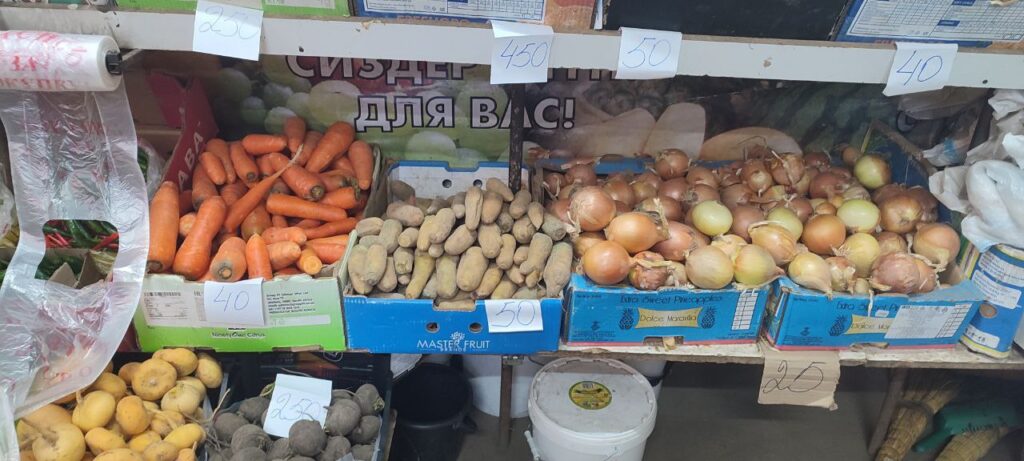
The Kyrgyz government is stepping up efforts to ensure food security and stabilize prices for socially important goods, including staple vegetables such as potatoes and carrots. In response to rising prices, the Ministry of Water Resources, Agriculture, and Processing Industry has decided to maintain existing potato crop volumes while expanding carrot cultivation. According to the ministry, the active open-field growing season is currently underway. In 2025, potato planting areas reached over 64,000 hectares, with a projected harvest exceeding 1.1 million tons. Domestic demand is estimated at approximately 760,000 tons annually, allowing for surplus exports. However, the ministry cautioned farmers against indiscriminately expanding potato acreage in pursuit of higher profits, warning that an oversupply could depress prices and reduce incomes. “To prevent unjustified price increases for socially significant products, the Ministry of Agriculture continues to monitor market prices daily. If risks of domestic shortages arise due to excessive exports or speculative practices by intermediaries, temporary export restrictions will be considered,” the ministry stated. Amid recent price surges for carrots, the government has expanded carrot cultivation by 223 hectares in the Chui region. “The second carrot harvest will ensure a stable domestic supply and help contain price increases,” said Agriculture Minister Bakyt Torobaev. The ministry attributes the current price increases to heightened demand for Kyrgyz vegetables from member states of the Eurasian Economic Union (EAEU) and neighboring countries. Uzbekistan remains the largest importer of Kyrgyz potatoes. In 2024, Kyrgyz exports to Uzbekistan doubled to 68,500 tons, prompting state intervention and temporary export restrictions to prevent domestic shortages and inflation. In addition to Uzbekistan, Kyrgyzstan annually exports over 10,000 tons of potatoes to Kazakhstan, as well as smaller volumes to Russia and Azerbaijan.

Kazakhstan’s Bublik Wins Back-to-Back Tennis Titles on Clay

Another week, another title. Alexander Bublik of Kazakhstan won the Generali Open in Kitzbühel, Austria on Saturday, just a week after raising the winner’s trophy in Gstaad, Switzerland. Both tennis titles were on clay, a surface he once disparaged. Bublik beat Arthur Cazaux of France, 6-4, 6-3 in Kitzbühel, pounding groundstrokes and feathering dropshots against a player he had also beaten on the way to the title in Gstaad. It’s all part of what Bublik, 28, has described as his greatest season on the tour, which includes a quarterfinals run at the French Open and the grass court title at Halle in Germany. He now has won a total of seven ATP Tour singles titles, and his No. 30 ranking is projected to climb after the victory in Austria on Saturday. He struggled earlier in the year and was ranked 82 in mid-March. The Russia-born player stumbled at Wimbledon with a loss in the first round.  

Exile and Empire: Dostoevsky’s Years in Semey, Kazakhstan

Semey, Kazakhstan – In the windswept, seemingly infinite steppe of eastern Kazakhstan stands a city with a dual, haunting legacy. It is a place where one of the world's literary giants plumbed the depths of the human soul, and where, a century later, humanity sought to master the power to extinguish itself. This is Semey, formerly Semipalatinsk, a city whose soil is steeped in the memory of both Fyodor Dostoevsky's exile and the Soviet Union's atomic ambition. For Fyodor Dostoevsky, one of Russia’s most celebrated writers, Semey was not a destination of choice but of punishment. Arrested in 1849 for his involvement with the Petrashevsky Circle — a group of intellectuals who read and discussed banned political texts — Dostoevsky was sentenced to death, only to be spared at the last moment in a mock execution ordered by Tsar Nicholas I. His sentence was commuted to four years of hard labour in the Omsk fortress, followed by compulsory military service in Semipalatinsk. Arriving in 1854, Dostoevsky spent nearly five years in Semipalatinsk, a provincial outpost on the Russian Empire’s edge, where exiles, soldiers, and bureaucrats mingled with Kazakh nomads and merchants. Though his official role was that of a soldier in the Siberian Line Battalion, his time here marked a critical period of transformation — politically, spiritually, and literarily. Semey offered isolation, but also introspection. Deprived of literary contact, Dostoevsky was forced inward. His exposure to suffering — in prison, in exile, and his struggles with epilepsy — sharpened the moral and psychological vision that would later define Crime and Punishment, The Idiot, and The Brothers Karamazov. In letters from this time, he describes long walks through the barren steppe and his growing fascination with the Kazakh people, whose customs and resilience left a lasting impression. During his years in Semey, Dostoevsky also began to reengage with the intellectual world. Thanks to the leniency of local officials, he was able to read, write, and eventually re-enter literary circles. It was here he completed Uncle’s Dream and The Village of Stepanchikovo, and began work on Notes from the Dead House, a fictionalised account of his time in prison that marked a decisive shift from romanticism to the raw psychological realism for which he became renowned. Despite its remoteness, Semey in the 1850s was not without its cultural encounters. Dostoevsky formed a lasting friendship with Chokan Valikhanov, a Kazakh nobleman, ethnographer, and military officer, whose liberal views and deep knowledge of Central Asian culture helped broaden Dostoevsky’s perspective on the empire’s outer subjects. Their conversations influenced Dostoevsky’s thinking on race, empire, and the spiritual dignity of non-Russian peoples — ideas that subtly permeate his later works. In 1853, aged 18, Valikhanov graduated from the Cadet Corps and was commissioned as a cornet in the Army Cavalry. He was then assigned as an officer to the 6th Regiment of the Siberian Cossack Army. Later, through the Main Administration of the Region, he was appointed as an officer of special assignments. In 1858–1859, he...

Kazakhstani Woman Earns Grandmaster Title, Says Chess is “My World”

As Bibisara Asaubayeva of Kazakhstan puts it, she has dedicated 17 of her 21 years of life to chess. Was it worth it? Well, this month, FIDE, the Switzerland-based governing body of chess, awarded grandmaster status to Asaubayeva, making her the second Kazakhstani woman and the 43rd female player ever to earn the coveted title. The announcement came on Monday after a FIDE council meeting on July 18 that approved nine other grandmasters, including 15-year-old Kazakhstani Edgar Mamedov. It wasn’t a surprise for the players from Kazakhstan because they had achieved the required ratings two months ago and were awaiting official confirmation. Still, the accomplishment spurred reflections this week from Asaubayeva, who posted an Instagram slideshow of photos spanning her career, from a young girl perched in front of chessboards at tournaments to a young woman with a wealth of accolades and experience behind her. She described being “haunted” by missed chances or mistakes on the board and said chess was no longer a game for her because it is so much a part of her identity. “It’s so strange sometimes to look at my childhood photos from tournaments,” she said. “The games, the trips, the emotions — everything seemed so big, so extraordinary back then. I remember how differently I saw chess at the time — with awe, excitement, as if I were entering a fairytale where anything was possible.” Asaubayeva said losses hurt and she never gets used to them, but they make her more resilient. “To me, chess isn’t just 64 black and white squares. It’s a whole world. My world. And there’s still so much left to explore,” she said. “And you know… If you ever give it a try — this game will never let you go.” The first woman from Kazakhstan to become a grandmaster was Zhansaya Abdumalik in 2021. Asaubayeva won consecutive titles at the Women's World Blitz Championships in 2021 and 2022. Currently, she is ranked 10th among the world's highest-rated women with a rating of 2509, according to Chess.com. It stated that she received a wildcard into the Freestyle Chess Grand Slam in Las Vegas and played there a few days ago, but struggled against the world-class competition. Kazakhstan has been pushing to develop homegrown talent, introducing chess into the curricula of hundreds of schools, training chess teachers, organizing numerous tournaments, and even supporting chess federations in some other Asian countries. At last week’s chess council meeting, delegates confirmed the dates for several upcoming events, including the 2nd FIDE Chess Olympiad for people with disabilities, scheduled to take place in Kazakhstan in October this year.
