• KGS/USD = 0.01144 0%
  • KZT/USD = 0.00216 0%
  • TJS/USD = 0.10659 0%
  • UZS/USD = 0.00008 0%
  • TMT/USD = 0.28530 0%
  • KGS/USD = 0.01144 0%
  • KZT/USD = 0.00216 0%
  • TJS/USD = 0.10659 0%
  • UZS/USD = 0.00008 0%
  • TMT/USD = 0.28530 0%
  • KGS/USD = 0.01144 0%
  • KZT/USD = 0.00216 0%
  • TJS/USD = 0.10659 0%
  • UZS/USD = 0.00008 0%
  • TMT/USD = 0.28530 0%
  • KGS/USD = 0.01144 0%
  • KZT/USD = 0.00216 0%
  • TJS/USD = 0.10659 0%
  • UZS/USD = 0.00008 0%
  • TMT/USD = 0.28530 0%
  • KGS/USD = 0.01144 0%
  • KZT/USD = 0.00216 0%
  • TJS/USD = 0.10659 0%
  • UZS/USD = 0.00008 0%
  • TMT/USD = 0.28530 0%
  • KGS/USD = 0.01144 0%
  • KZT/USD = 0.00216 0%
  • TJS/USD = 0.10659 0%
  • UZS/USD = 0.00008 0%
  • TMT/USD = 0.28530 0%
  • KGS/USD = 0.01144 0%
  • KZT/USD = 0.00216 0%
  • TJS/USD = 0.10659 0%
  • UZS/USD = 0.00008 0%
  • TMT/USD = 0.28530 0%
  • KGS/USD = 0.01144 0%
  • KZT/USD = 0.00216 0%
  • TJS/USD = 0.10659 0%
  • UZS/USD = 0.00008 0%
  • TMT/USD = 0.28530 0%

Viewing results 433 - 438 of 1693

German University Launches Bachelor’s Programs in Kazakhstan

Germany’s Anhalt University of Applied Sciences has opened a branch campus in Almaty, marking a new milestone in German-Kazakh educational cooperation. The new campus, based at Energo University, is now accepting applications for bachelor’s programs in Biomedical Engineering and Electrical Engineering and Information Technology. The initiative is supported by Kazakhstan’s Ministry of Science and Higher Education and the German Consulate General in Almaty. According to the ministry, the programs were selected to align with current demands in Kazakhstan’s labor market. Graduates will receive dual diplomas, one from Anhalt University and one from a Kazakhstani institution. A total of 100 state-funded scholarships will be awarded to students who qualify through a competitive selection process. The Almaty campus features modern classrooms and laboratories equipped for practical and research-based instruction in electronics, biomedical science, and information technology. “This is a large-scale initiative for young people in Kazakhstan who are eager to learn,” said Jörg Bagdahn, President of Anhalt University. “They now have the opportunity to obtain a German engineering degree without leaving their country.” Courses will be taught by faculty from Germany, and German language instruction is included in the curriculum. “Partnership with Anhalt University is a strategic step for Energo University,” said Rector Gani Cosmetology. “We are creating a platform to deliver top-tier European education locally.”

In a New Light: Kazakhstan’s Evolving Relationship with Design and Atmosphere

For much of its recent history, Kazakhstan’s image has been shaped by the discourse of natural resource extraction — oil, gas, metals, the infrastructure to transport them, and the political influence they provide. But, a quiet transformation of its public and private spaces is underway, one not measured in barrels, commodity prices, or contracts, but by lighting or lights, which means ambience, illumination, aesthetics, and the atmosphere of lived space. Lighting, of all things, is central to human existence and part of its development story. It may seem peripheral, but in architecture, lighting is never neutral. It guides, reveals, softens, and dramatizes space. It also mirrors taste, cultural aspirations, and society’s choices. [caption id="attachment_34248" align="aligncenter" width="1200"] Astana Opera; image: Dilyara Abdirakhmanova[/caption] Light is the Language of Architecture and Space Some of Kazakhstan’s most emblematic public buildings already utilize the optimal use of lighting. The Astana Opera, for example, with its marble staircases and opulent chandeliers, is illuminated to bring out its grandeur and high culture. Its stage is masterfully lit so that musicians are inspired to give their best performances. Likewise, the Palace of Peace and Reconciliation, a crystalline pyramid designed by Foster + Partners, plays with transparency and glow, its stained-glass summit flickering between monument and mirage, giving voice to the need for peace in our time. Then there’s the Khan Shatyr Entertainment Center — part shopping mall, part climate-controlled urban experiment — which glows at night through its tensile skin - representing a range of civic and family-friendly amenities offering a comfortable and eye-pleasing microclimate for all. And then there’s the Hazrat Sultan Mosque, designed and lit for reverence and reflection. Daylight barrels through high arches; at dusk, soft interior light catches the tracery of Quranic calligraphy, domes, and minarets. The lighting is generous but subtle, quiet, and precise. In each of these cases, light isn’t an afterthought. It reaches out to the subconscious and makes daily human activity more pleasant. [caption id="attachment_34249" align="aligncenter" width="2000"] The Palace of Peace and Reconciliation; image: Foster + Partners[/caption] A Gap in Everyday Life Until recently, there has been little discussion in Central Asia about the link between lighting and its impact on the human person. Walking through many apartment buildings, offices, restaurants, and public lobbies, the atmosphere is flat, cold, and covered in uninspiring glare, often overpowering and at times blinding. These spaces may function, but they don’t resonate and are often uninviting. This state of affairs – the depressing nature of fluorescent grids – in the world of lighting is beginning to change, slowly, and unevenly. This shift towards ‘more welcoming’ lighting isn’t being driven by architects alone, or even by design schools. Demand comes from developers, hoteliers, homeowners, and restaurateurs who want to serve their clients better in an increasingly competitive environment. In this more mobile and inquisitive world, people want lighting that feels and works better for clients, employees, and oneself. A Market Beginning to Notice Enter enterprises like iSquare, a recently launched lighting design firm in Almaty. Its operating...

In Tajikistan, Tradition Defines the Ideal Bride in a Changing World

In Tajikistan, the image of the “ideal bride” is shaped not only by character but by deep-rooted societal expectations. While wedding customs vary across Central Asia, they are united by traditional values that place a high premium on modesty, obedience, and domestic skill—qualities that can determine a woman’s future prospects in marriage. Restraint in All Things In traditional Tajik households, modesty is synonymous with decency. Future mothers-in-law scrutinise prospective brides for soft-spoken voices, humble body language, and conservative attire. In some homes, daughters-in-law are expected not to make direct eye contact with their parents-in-law—considered a mark of humility. Clothing is another marker. Revealing outfits like shorts or miniskirts are widely viewed as signs of frivolity and can irreparably damage a girl's reputation. Respect for elders is paramount. During the matchmaking process, the groom’s family pays close attention to whether a girl rises when elders enter the room, places her hand over her heart in greeting, and avoids using first names. A “well-raised” kelinka is also expected to manage the home without protest—never challenging her husband or his family, and always deferring to elder relatives. Cooking, especially traditional dishes like pilaf, cleaning, and hospitality are seen as baseline qualifications for marriage. Chastity as a Social Standard Virginity remains a critical factor in bride selection. Although the Tajik Ministry of Health does not officially require it, virginity testing remains widespread. A joint statement from the UN and WHO has condemned these tests as “humiliating, traumatic, and medically unnecessary.” In Tajik culture, premarital sex is widely considered a dishonour to the family. Some households even prohibit young women from grooming practices like eyebrow plucking until marriage, believing these are reserved for wives only. Age Expectations and Digital Matchmaking Efforts to arrange marriages can begin as early as a girl’s 18th birthday. In conservative communities, being unmarried by 30 may carry social stigma. However, this does not always preclude education or employment—many families now see value in educated daughters-in-law. In recent years, digital matchmaking has gained traction. Platforms like Facebook host matchmaking groups where relatives post ads in search of “decent and well-mannered” partners. Girls introducing potential matches often include detailed preferences such as height and eye colour. While the legal marriage age is 18, Tajik courts can authorise marriage at 17 in “exceptional circumstances.” In reality, these exceptions often stem from emotional or economic hardship—such as orphanhood, poverty, or family pressure. A Society in Transition? Despite these enduring customs, signs of change are emerging. Urbanisation, rising education levels, and increased internet access are giving Tajik women new tools to assert choice in their personal lives. NGOs and human rights organisations are pushing for better enforcement of existing protections, and the growing discourse around women’s rights may gradually soften the rigidity of old expectations. While traditions still dominate, a slow cultural shift is underway—one that may eventually reshape what it means to be the “ideal bride” in Tajikistan.  

Fatherless Tajik Children: The Social Consequences of Labor Migration

Labor migration has become a daily reality in Tajikistan, and a vital means of survival for many families. It is estimated that between 800,000 and 1 million citizens (up to 20% of the labor force) work abroad. Remittances make up a significant share of GDP, estimated between 27 % and nearly 50 %, with one measure at 45 % in 2024, helping families cover essential expenses such as food, education, and healthcare. However, this economic stability comes at a high social cost, which is often paid by the children left behind, many of whom grow up without adequate parental care. Shifting Roles: Mothers and Children Left Behind The prolonged absence of a father figure significantly alters family dynamics. Women, mothers, grandmothers, and often older children assume all household and caregiving responsibilities. Tasks traditionally viewed as “men’s work,” such as repairing windows, chopping wood, and cultivating land, are now undertaken by those remaining at home. Children are frequently forced to grow up early. Older siblings help raise younger ones, cook meals, and manage household chores while their mothers work. In some cases, these duties interfere with education. In rural areas, it is not uncommon for girls to leave school after the ninth grade to help sustain the household. Experts note that parental absence accelerates emotional and social maturity by placing an undue burden on children. Studies confirm this trend: around 15% of children aged 10 to 14 in migrant households are engaged in informal labor, working in markets or fields instead of attending school. As a result, many children are deprived of a full childhood and are compelled to act as “little adults,” shouldering family responsibilities. The issue is widespread. In Tajikistan, where labor migration is especially intense, up to 30% of school-age children are raised by grandparents or extended family members. Thousands grow up under the care of older siblings while both parents or, more commonly, fathers, are abroad. The Emotional Toll: Loneliness and Psychological Strain The long-term absence of fathers also takes a psychological toll. While phone and video calls offer some form of connection, they are no substitute for physical presence. Communication is often irregular: surveys show that 70% of children speak with their migrant parent less than once a week, and 15% only once a month. Feelings of abandonment and emotional detachment are widespread. One in three children of labor migrants reportedly exhibits signs of depression, including apathy, sadness, and a declining interest in school. Approximately 40% feel lonely and emotionally neglected. Teachers note lower academic performance and reduced motivation among these children. Moreover, the absence of paternal supervision can contribute to behavioral issues: up to 10% of adolescents from migrant families in Tajikistan display signs of deviant behavior, such as aggression and minor offenses, significantly higher than among their peers in two-parent households. Family relationships often suffer as well. Women left behind effectively become single parents, managing both emotional and material responsibilities. Years of separation, financial strain, and infrequent visits can lead to emotional distance between spouses. Observers note...

Timur’s Birthplace Languishes on UNESCO List of Endangered Sites

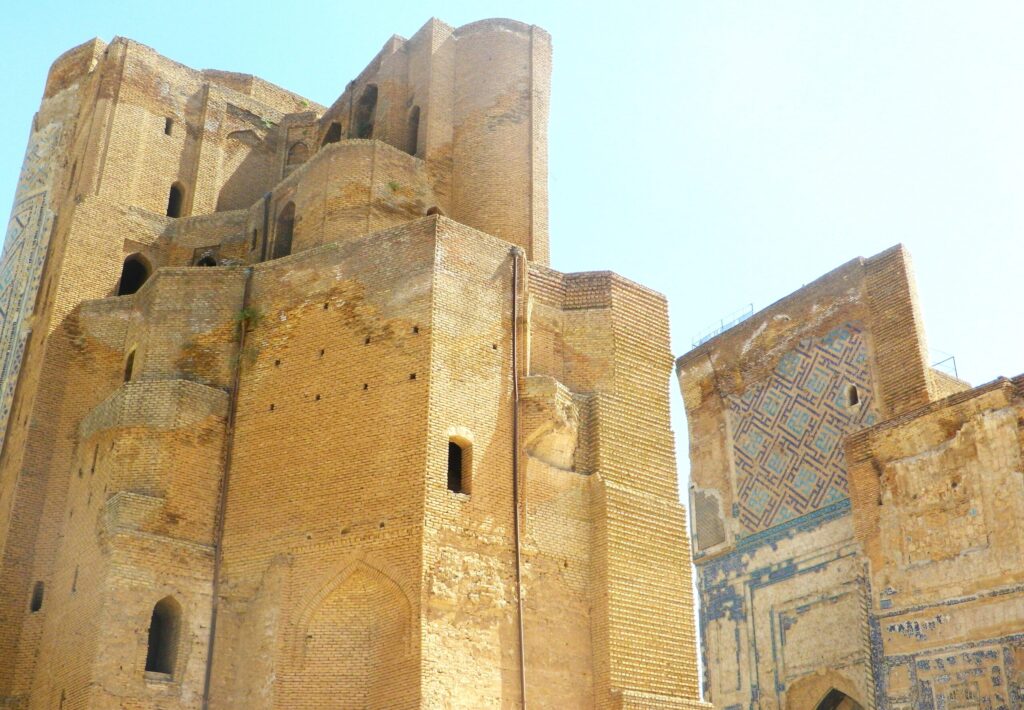
Bukhara, Samarkand, Khiva. Uzbekistan’s cultural heritage draws visitors from around the world, but the troubled modern history of another ancient site, Shakhrisabz, is a reminder that development and mass tourism sometimes overshadow preservation. Shakhrisabz, or Green City, is less known than some other tourist destinations in Uzbekistan that were part of the Silk Road network linking cultures across Asia, Europe, and Africa many centuries ago. Yet the old urban core is more than 2,000 years old and contains spectacular monuments and other structures, some dating from the heyday of the city during the rule of the Turco-Mongol conqueror Timur, also known as Tamerlane, and the Timurids in medieval times. [caption id="attachment_34196" align="aligncenter" width="2560"] Timur Statue; image: TCA, Stephen M. Bland[/caption] UNESCO declared it a world heritage site in 2000. But the historical center of Shakhrisabz, previously called Kesh, was placed on the U.N. cultural agency´s list of world heritage sites in danger in 2016 after large sections were razed to make way for a park and tourist facilities. It has stayed on the danger list ever since as officials in Uzbekistan, assisted by international advisers, try to figure out a way to prevent it from losing its United Nations status altogether. A total of 53 locations around the world are on UNESCO’s danger list. [caption id="attachment_34197" align="aligncenter" width="2560"] The Fayzullah Ravnakhi Museum B&B, one of many buildings demolished to make way for tourist facilities; image: TCA, Stephen M. Bland[/caption] A solution in Uzbekistan’s case appears to be in the works. At a meeting in Paris this month, the UNESCO World Heritage Committee tentatively approved an Uzbek proposal that would restore Shakhrisabz in southern Uzbekistan to the regular heritage list but in reduced form – only four key Timurid monuments would be included, while the rest of the historical center would be labeled as a buffer zone. “The main focus is expected to shift from the concept of a ´complete historic city´ to the conservation of the ensemble of monuments, including the Ak-Saray Palace, while preserving their urban context,” reported Gazeta.uz, a media organization in Uzbekistan. [caption id="attachment_34198" align="aligncenter" width="2560"] Ak-Saray Palace; image: TCA, Stephen M. Bland[/caption] Uzbekistan must conduct archaeological studies, prepare a restoration plan, and take other measures in order for the proposal to succeed, according to Gazeta.uz. Uzbekistan must update UNESCO on its progress in February 2026, and the process could still take several years. Construction of the Ak-Saray Palace began in 1380 after a military victory by Timur, who was born in the city, according to UNESCO. The agency said that not one of the many Timurid monuments in Samarkand, north of Shakhrisabz, can rival the Ak-Saray Palace. “The foundations of its immense gate have been preserved: this architectural masterpiece is outstanding in its dimensions and bold design,” UNESCO said. While Shakhrisabz has less tourist infrastructure than nearby Samarkand, there are efforts to raise its profile. Last year, the Economic Cooperation Organization, whose ten members include Central Asian countries, declared it the tourism capital for 2024. Uzbekistan’s other cultural sites have also faced...

Netflix Documentary ‘Off Road’ Showcases Kyrgyzstan to the World

A new documentary series, Off Road, filmed in Kyrgyzstan by Faraway Road Productions, has premiered on the global streaming platform Netflix. The project was produced in collaboration with Kyrgyzstan’s Ministry of Economy and Commerce, the Department of Tourism, and the Tourism Development Support Fund, all of whom played key roles in facilitating filming across the country. Off Road takes viewers on a thrilling automotive adventure across some of Kyrgyzstan’s most breathtaking landscapes from the capital Bishkek to the high mountain valleys of Issyk-Kul, Karakol, and other iconic destinations. Over six episodes, the series immerses audiences in the country’s natural beauty, vibrant culture, and the renowned hospitality of the Kyrgyz people. Edil Baisalov, Deputy Chairman of the Cabinet of Ministers of Kyrgyzstan, emphasized the significance of the series: “Thanks to the release of Off Road, millions of viewers around the world will discover the stunning nature of Kyrgyzstan and the traditional warmth of our people. We are grateful to the production company and Netflix for choosing Kyrgyzstan as a filming location. Next year, several additional films and series are expected to launch, further promoting our country’s tourism potential on Netflix and other international platforms.” More than a backdrop, Kyrgyzstan emerges as the true protagonist of Off Road, inviting global audiences to experience its rugged terrain, rich traditions, and unspoiled beauty.