• KGS/USD = 0.01143 0%
  • KZT/USD = 0.00216 0%
  • TJS/USD = 0.10633 -0.28%
  • UZS/USD = 0.00008 0%
  • TMT/USD = 0.28571 0%
  • KGS/USD = 0.01143 0%
  • KZT/USD = 0.00216 0%
  • TJS/USD = 0.10633 -0.28%
  • UZS/USD = 0.00008 0%
  • TMT/USD = 0.28571 0%
  • KGS/USD = 0.01143 0%
  • KZT/USD = 0.00216 0%
  • TJS/USD = 0.10633 -0.28%
  • UZS/USD = 0.00008 0%
  • TMT/USD = 0.28571 0%
  • KGS/USD = 0.01143 0%
  • KZT/USD = 0.00216 0%
  • TJS/USD = 0.10633 -0.28%
  • UZS/USD = 0.00008 0%
  • TMT/USD = 0.28571 0%
  • KGS/USD = 0.01143 0%
  • KZT/USD = 0.00216 0%
  • TJS/USD = 0.10633 -0.28%
  • UZS/USD = 0.00008 0%
  • TMT/USD = 0.28571 0%
  • KGS/USD = 0.01143 0%
  • KZT/USD = 0.00216 0%
  • TJS/USD = 0.10633 -0.28%
  • UZS/USD = 0.00008 0%
  • TMT/USD = 0.28571 0%
  • KGS/USD = 0.01143 0%
  • KZT/USD = 0.00216 0%
  • TJS/USD = 0.10633 -0.28%
  • UZS/USD = 0.00008 0%
  • TMT/USD = 0.28571 0%
  • KGS/USD = 0.01143 0%
  • KZT/USD = 0.00216 0%
  • TJS/USD = 0.10633 -0.28%
  • UZS/USD = 0.00008 0%
  • TMT/USD = 0.28571 0%

Viewing results 487 - 492 of 1690

Kyrgyzstan Sees Notable Drop in Poverty Rate

Kyrgyzstan’s national poverty rate dropped to 25.7% in 2024, marking a 4.1% decrease from the previous year, according to new data released by the National Statistical Committee of the Kyrgyz Republic. In 2023, approximately 1.871 million people in the country lived below the poverty line, with nearly 62% residing in rural areas. For 2024, the poverty threshold was set at 65,417 Kyrgyz soms (around USD 748) per capita annually. The extreme poverty line was defined at 41,349 soms (approximately USD 472). As of January 2025, Kyrgyzstan’s population stood at 7.3 million. Many Kyrgyz households, particularly in rural communities, depend on remittances from family members working abroad, primarily in Russia. According to The Times of Central Asia, around 600,000 Kyrgyz nationals currently live outside the country, with Russia remaining the primary destination. By the end of 2024, over 379,000 Kyrgyz citizens were registered with Russia’s migration authorities. A recent World Bank report on migration trends in Europe and Central Asia highlighted the significant economic impact of these remittances. In 2024, remittances accounted for approximately 24% of Kyrgyzstan’s GDP. The report also found that the poverty rate among households with a family member working abroad was under 10% but would exceed 50% without these external income flows. In a related development, China pledged USD 3.7 billion in assistance to Central Asian countries, including Kyrgyzstan, to support poverty alleviation initiatives. The commitment was announced by Chinese President Xi Jinping at the inaugural China-Central Asia Summit, held in May 2023 in the city of Xi’an. Xi stated that China would develop a plan for scientific and technological cooperation with Central Asia in the area of poverty reduction and encourage Chinese companies operating in the region to generate more employment opportunities.

Kazakhstan Launches QR Code System for Foreign Visitors at Airports

Kazakhstan’s Ministry of Tourism and Sports, in collaboration with local authorities, has implemented a new QR code system at all international airports across the country. The initiative, announced by Minister of Tourism and Sports Yerbol Myrzabosynov, is designed to enhance the travel experience for foreign visitors by providing easy access to essential services. According to the Ministry, the QR codes grant immediate access to: Electronic SIM card services; Licensed taxi operators; Online hotel booking platforms; Information regarding the registration of foreign citizens; Details on major tourist attractions. The primary goal of the system is to reduce the risk of fraud targeting tourists, particularly in areas such as transportation, mobile communications, and currency exchange, and to improve service quality throughout a visitor’s stay. In 2024, Kazakhstan welcomed 15.3 million foreign nationals, of whom 10.4 million spent more than a day in the country and were officially classified as tourists. The new digital system is part of broader efforts to create a safer, more convenient environment for international travelers, reinforcing Kazakhstan’s image as a tourist-friendly destination. Kazakhstan currently offers visa-free entry to citizens of 87 countries, and an electronic visa application system is available to nationals of 107 countries.

Kyrgyzstan: Film Festival Showcases Central Asian Talent, New and Old

An international film festival in Kyrgyzstan this week is celebrating the past, present, and future of Central Asian cinema. The Bishkek International Film Festival features a retrospective of the work of Kyrgyz director Tolomush Okeev, whose films include The Ferocious One, The Red Apple, and The Descendant of the Snow Leopard; a presentation of ten film projects by emerging directors in Central Asia; and a competition among nine films whose directors are from Kyrgyzstan, Kazakhstan, Uzbekistan, and Tajikistan. The June 11-15 festival also has master classes for those who really want to dig into the craft of making films. Hosts of some of the classes include actor and educator Olesya Gribok, who will talk about working with emotions, self-presentation, and other core actor values; designer Alex Rosno, who will discuss using AI tools to create scenes and build storyboards; and Andrzej Bartkowiak, a cinematographer and director with decades of experience with lighting, movement, and composition. Films from India, Mongolia, Germany and other countries will vie for an international prize. A separate contest involves nine films from Central Asia, seeking to highlight the region’s movie-making talent. There’s also “KyrgyzBox” - a competition just for movies, including box office standouts, from Kyrgyzstan. In another contest, film project contenders are “accepted only from citizens from Central Asian countries – Kyrgyzstan, Kazakhstan, Uzbekistan, Turkmenistan and Tajikistan - with strong potential for international distribution,” according to the film festival. The project must be a feature film that is at least 75 minutes long and filming must be planned in Central Asia or have a “close connection” to the region. The retrospective of Okeev, who died in 2001 at age 66, showcases a screenwriter and director who made films over several decades of the Soviet era and was known for filming in the majestic mountains and deserts of Kyrgyzstan. The Bishkek festival, the third edition of the event, will screen several of Okeev’s films, including The Descendant of the Snow Leopard, a 1984 film that draws inspiration from Kyrgyz tales about hunters who follow ancient laws. “When a young chief, Kojozhash, breaks a sacred ancestral taboo, it leads to tragic consequences for the entire tribe,” the festival says in a description of the film. The snow leopard is a national symbol of Kyrgyzstan, which is taking steps to protect the vulnerable species.

A British Scholar’s Glimpse into Kazakh Life a Century Ago

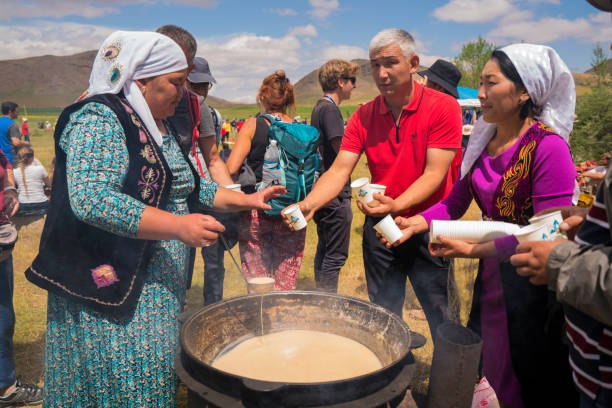
A century ago, in 1925, British historian, writer, and revolutionary Ralph Fox published People of the Steppes, a compelling account of his travels offering rare insights into the life and culture of the Kazakh people. Fox (1900–1936) was no ordinary observer. A journalist, Marxist, and author of biographies on Lenin and Genghis Khan, he traveled through Soviet Central Asia in the early 1920s and spent his final years working at the Marx-Engels Institute in Moscow, where he wrote his last major tome. In the foreword to People of the Steppes, Fox states that his aim was not political propaganda but to record what he had witnessed. His observations, written as he journeyed through the steppe from the Orenburg region to the Aral Sea, provide a vivid portrait of nomadic life. As the train carried him across Turkestan, Fox was struck by the sights outside his window: “For the first time I see, through the train windows, the round black tents of the nomads, shaped like broad beehives, and I whisper to myself that under just such a tent was Chingiz Khan born… Sometimes there passes a family on the march, the elders and children perched above their household goods on the beautiful shaggy Bactrian camels, the youths on horseback, small, sturdy ponies. It is all strange to me and I feel a beauty of slowness and order in their movements, the eternal rhythm of a wandering shepherd's life.” Fox shortly visited a nomadic camp, recording his impressions in the sub-section “The Tents of the Kazakhs”. “We sat on some empty crates and watched the hens scutter across the floor," he wrote, "while his wife, a quiet, kindly woman, brought us a bowl of Kummis (Mare’s milk) to drink." The hospitality of the Kazakhs left a lasting impression: “ They roused me when the meal was ready. ‘The Kazaks, men and women, sat round the pot in the dim tent, for smoke filled all the upper part now, and the sun had set. Brown arms were thrust into the mess, or painted wooden spoons, while we dainty whites were given wooden bowls. ‘The meat was tough and greasy, and to me only the little cakes of dough were palatable, though they were gritty with sand, so I did not eat much… It was all fantastic around that evil-smelling fire.” The next day, Fox encountered a group of Lesser Horde Kazakhs migrating from Siberia along the Syr Darya River. He noted that some had already settled in Torgai, while others aimed to reach the Urals. “ Once there, they would willingly sell off their surplus stock to buy their necessities on the bazaars to last them through the following year, at Kazalinsk, at Jussali, at Perovsk and ‘Turkestan, the great bazaars of the Syr Daria.” Fox also explored the broader historical and cultural context of the Kazakhs, noting that their nomadic lifestyle limited the development of written literature but fostered rich oral traditions and epic poetry: “It is hard to unravel their...

Majority of Kazakhstanis Are Religious, But Discrimination Persists, Studies Suggest

A recent study by analysts at Energyprom.kz sheds light on the religious landscape of Kazakhstan. According to data from the educational platform Jagran Josh, Kazakhstan's population includes approximately 15.4 million believers.  The majority, 11.3 million, identify as Muslim, while about 4 million identify as Christian. A smaller segment, approximately 670,000 individuals, comprise atheists, agnostics, and those with no religious affiliation. Additionally, there are around 5,000 Hindus, 40,000 Buddhists, and about 50,000 practitioners of traditional local beliefs. It is important to note that these figures are compiled from various sources, some dating back to 2015 or earlier. Consequently, they are more suitable for broad international comparisons rather than a precise assessment of Kazakhstan's current religious demographics. Regional Characteristics of Religiosity More recent data, based on a 2024 survey of 1,500 respondents (aged 18 to 65) conducted by the Committee on Religious Affairs of the Republic of Kazakhstan, provides deeper insights into domestic religiosity. The survey revealed that 24.1% of Kazakhstani citizens consider themselves practicing believers who strictly observe religious precepts. The majority, 62.7%, identify as believers but observe only some rituals and traditions. About 9.2% of respondents stated they do not consider themselves believers yet still participate in certain rituals. A smaller proportion, 1.3%, reported no religious affiliation and no participation in rituals, while 0.9% identified as convinced atheists and 0.5% as agnostics. Regionally, Shymkent recorded the largest share of conditionally religious people who observe only certain traditions, at 77.6%. The Atyrau region exhibited the highest proportion of strict practitioners, at 46%. Conversely, the Pavlodar region led in the number of non-believers who nevertheless participate in rituals, at 24.6%. Atyrau also had the highest proportion of complete non-believers, at 10%. In terms of religious affiliation, 65.1% of respondents identified as followers of the Hanafi school of Islam, with another 11.6% belonging to other branches of Islam. Orthodox Christianity was practiced by 14.8% of respondents, Catholicism by 2.1%, and Protestantism by 1.8%. Hinduism, Buddhism, paganism, and Tengriism collectively accounted for less than 2%. An additional 0.8% reported believing but not identifying with any particular religion. The proportion of daily prayers increased from 17.7% to 19.3% over the last quarter. However, 27.9% of respondents reported never praying. Regarding attendance at places of worship (mosques, churches, etc.), 6.2% visit regularly, 14.5% do so weekly, and 33.8% two to three times a year. Notably, 10.4% of respondents have never been to a place of worship. Daily religious discussions with relatives were reported by 4.3% of Kazakhstani citizens, while 27.3% admitted that they never discuss religion within their families. Religious Discrimination Over the past three months, 41.3% of respondents reported experiencing discrimination on religious grounds. The most frequently cited incidents included the publication of offensive images (19.3%), negative comments on social media (11.5%), bans on visiting mosques or churches by the clergy (7.8%), and restrictions on education due to wearing a hijab (10.8%). Although official statistics on incidents directly classified as religiously motivated are not maintained, 54 criminal offenses were recorded between January and April 2025...

Construction Begins on New British School Campus in Astana

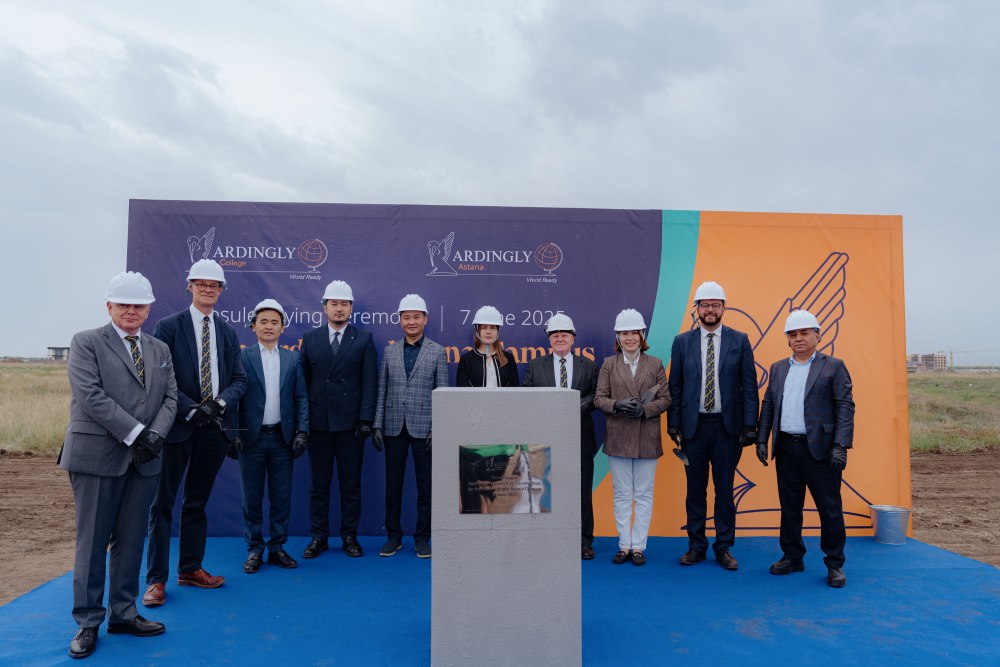
A capsule-laying ceremony on June 7 marked the official start of construction on the new Ardingly College campus in Astana, a major milestone in Kazakhstan-UK educational cooperation. Ardingly Astana is a branch of Ardingly College, a prestigious British coeducational day and boarding school founded in 1858 in West Sussex, England. The Astana branch will follow the Cambridge curriculum, offering instruction in English and preparing students for A-Level examinations. The school’s faculty will include educators with international and UK-based teaching experience. The first phase of the new campus is expected to open in 2026, with the capacity to accommodate up to 1,000 students. The campus will include state-of-the-art facilities such as a swimming pool, sports complexes, music and art studios, and science laboratories. Designed as an educational hub for students from Kazakhstan and across Central Asia, Ardingly Astana aims to merge the British academic model with innovative teaching methods, equipping students for admission to leading universities worldwide. The project also seeks to attract international educators and promote cross-border knowledge exchange and educational integration. The development is supported by Kazakh Invest, Kazakhstan’s national investment promotion agency. The capsule-laying ceremony was attended by representatives of the British Embassy in Kazakhstan, Ardingly College, Ardingly Astana, and Kazakh Invest. Azamat Kozhanov, Deputy Chairman of Kazakh Invest, underscored the project’s significance: “The opening of a campus of one of the UK’s top educational institutions in the heart of Eurasia symbolizes trust, partnership, and a strategic vision for the future. It will be more than just a school, it will be an ecosystem for nurturing ideas and developing future leaders. Education remains a priority for investment, and we are ready to provide full support for such projects. We are confident that Ardingly Astana will attract talented students and educators from around the world.” The project marks a significant step in advancing both educational and investment ties between Kazakhstan and the United Kingdom.