
• KGS/USD = 0.01144 0%
  • KZT/USD = 0.00207 0%
  • TJS/USD = 0.10463 0%
  • UZS/USD = 0.00008 0%
  • TMT/USD = 0.28490 0%
  • KGS/USD = 0.01144 0%
  • KZT/USD = 0.00207 0%
  • TJS/USD = 0.10463 0%
  • UZS/USD = 0.00008 0%
  • TMT/USD = 0.28490 0%
  • KGS/USD = 0.01144 0%
  • KZT/USD = 0.00207 0%
  • TJS/USD = 0.10463 0%
  • UZS/USD = 0.00008 0%
  • TMT/USD = 0.28490 0%
  • KGS/USD = 0.01144 0%
  • KZT/USD = 0.00207 0%
  • TJS/USD = 0.10463 0%
  • UZS/USD = 0.00008 0%
  • TMT/USD = 0.28490 0%
  • KGS/USD = 0.01144 0%
  • KZT/USD = 0.00207 0%
  • TJS/USD = 0.10463 0%
  • UZS/USD = 0.00008 0%
  • TMT/USD = 0.28490 0%
  • KGS/USD = 0.01144 0%
  • KZT/USD = 0.00207 0%
  • TJS/USD = 0.10463 0%
  • UZS/USD = 0.00008 0%
  • TMT/USD = 0.28490 0%
  • KGS/USD = 0.01144 0%
  • KZT/USD = 0.00207 0%
  • TJS/USD = 0.10463 0%
  • UZS/USD = 0.00008 0%
  • TMT/USD = 0.28490 0%
  • KGS/USD = 0.01144 0%
  • KZT/USD = 0.00207 0%
  • TJS/USD = 0.10463 0%
  • UZS/USD = 0.00008 0%
  • TMT/USD = 0.28490 0%

Viewing results 529 - 534 of 1453

Videos Show Man Tackling Hostage-Taker at Almaty Airport

A Kazakh man who disarmed a hostage-taker by grabbing the knife from his hand at Almaty International Airport is being celebrated internationally for his courage.  Several videos and accounts of the dramatic scene in the airport on Friday are circulating widely on the internet. The videos show the assailant holding a woman by her hair and making threats as security officials converge. He then lets go of the woman after a man offers himself as a hostage - and disarms the hostage-taker shortly afterward. A scuffle ensues as the man and officials subdue the attacker.   Multiple reports identified the man who disarmed the attacker as former boxer Musa Abdraim, who is in his early 50s. The World Boxing Council identified him as Mussa Abraimov. WBC President Mauricio Sulaiman said on Instagram that he had a “great” video call with the former boxer and that he would receive the council’s “bravest man on earth” award.  Kazakh President Kassym-Jomart Tokayev was informed about the hostage situation at the airport, according to presidential press secretary Ruslan Zheldibay. “The President highlighted the bravery and skill of the man who disarmed the criminal and ordered that he be nominated for a state award,” Zheldibay said on social media platforms.  The woman who was taken hostage and released was in uniform, suggesting that she was an airport employee. The attack occurred in the security check area of the airport. A criminal case has been opened against the hostage-taker. Authorities have not commented on his motivations.  Abdraim spoke to journalists after the incident.  "I watched him carefully, and as soon as his grip weakened slightly, I had to seize the knife from his hands,” Tengri News, a media outlet based in Kazakhstan, quoted him as saying. “As a man, as a citizen of the Republic of Kazakhstan, I simply could not have acted differently."

Interview With Sara Raza – Director of the Tashkent Centre for Contemporary Art

Sara Raza is a litmus test for the spirit of the times in the shape of an art curator.  In simple terms, art crowds can count on her direction for the Tashkent Centre for Contemporary Art (CCA) to bring the most pressing issues in contemporary art to the foreground. Indeed, the author of the book Punk Orientalism - and the namesake curatorial studio - has been just appointed as Artistic Director and Chief Curatorial Director of the CCA Tashkent, set to open in September 2025. It’s a strategic move for the Centre, which has aspirations of becoming a global arts and culture hub and is aiming at international artistic and creative exchanges, which include residencies, exhibitions, workshops, and educational programmes, and contributing to Uzbekistan’s cultural ecosystem. Transversal in her curatorial approach, London-born, New-York-based Raza is coming from a mixed Central Asian/Middle Eastern background, but she is also steeped in the heart of the Western art system, in institutions such as the Guggenheim – having taken care of a project called UBS MAP Global Art Initiative, curating the Middle East and North Africa section. Over the years, the curator has worked with artists from Asia, the Caucasus, the Middle East, Europe, and North America, and has curated shows at the Mathaf: Arab Museum of Modern Art in Doha and the Rubin Museum of Art in New York, but it is truly her book, Punk Orientalism: The Art of Rebellion, which brought a fresh approach to the sometimes highly academic field of art criticism. For Raza, artists from the former-Soviet countries and beyond hold a strong punk DIY ethos, by which they counter the Orientalist gaze they have always been subjected to by both the West and Russia. Their art is often a form of bricolage, an unexpected connection of disparate ideas used to create something entirely new. Will she bring this original approach to the direction of the museum, too? TCA spoke with Raza to find out about how she’s planning to foster cultural and educational partnerships and to support local, regional, and international artists while engaging with Uzbekistan’s rich cultural heritage. [caption id="attachment_29451" align="aligncenter" width="2560"] Centre for Contemporary Art Tashkent Artist Residencies; image: Namuna[/caption] TCA: The Centre for Contemporary Art in Tashkent is poised to become a major hub for artistic discourse in Central Asia. As its first Artistic Director and Chief Curator, how do you envision defining the institution’s identity from the ground up? My vision for CCA is less of a ground up approach, but rather one that builds on an historical and visual cultural foundation established in the 20th century that included a robust relationship with artists, intellectuals and others from the Global Majority World [a collective term for people of African, Asian, indigenous, Latin American, or mixed-heritage backgrounds, who constitute approximately 85% of the global population]. This included relationships between Harlem Renaissance figures [The Harlem Renaissance was an African American cultural movement that flourished in the 1920s and had Harlem in New York City as its symbolic...

How Women in Central Asia Celebrate International Women’s Day

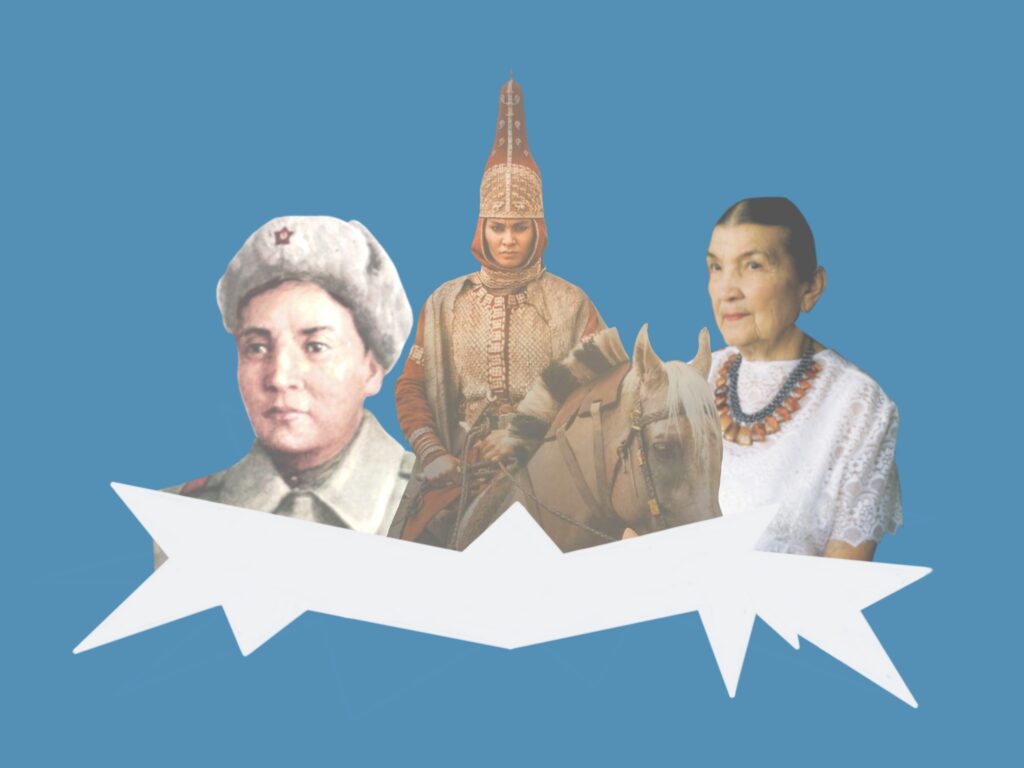
March 8, International Women’s Day, holds a special place in Central Asia. Over the years, the holiday has evolved from its Soviet-era roots into a modern celebration that blends tradition with contemporary interpretations. The Soviet Past: March 8 as a Day for Working Women During the Soviet Union, March 8 was more than a celebration of spring and femininity, it symbolized the struggle for women’s rights and equality. The day honored working women, with official ceremonies highlighting their achievements. State-run enterprises and organizations staged formal events and presented flowers and gifts to female employees, and media outlets published articles about the country’s outstanding women. The Transition Period: The 1990s Following the collapse of the Soviet Union, Central Asian countries began redefining their identities, which was reflected in how they marked March 8. The holiday took on a more personal and familial character, with less ideological emphasis. While state celebrations continued, they became more subdued. Men still gifted flowers and presents to women, but the political significance of the day gradually faded into the background. Modern Celebrations: Balancing Tradition and New Trends Today, March 8 in Central Asia is primarily a day to recognize women’s contributions and express gratitude. The holiday remains widely celebrated across Kazakhstan, Kyrgyzstan, Uzbekistan, Tajikistan, and Turkmenistan, though each country has developed its distinct traditions. Kazakhstan: Major cities host flash mobs, charity events, and cultural programs. In recent years, feminist activism has gained momentum, with some using the holiday to highlight gender inequality. “For me, March 8 is not just about receiving flowers, it’s a reminder that equality is not a privilege but a necessity,” Ainur, 24, from Almaty told TCA. Uzbekistan: The holiday remains warm and family-oriented. Women receive flowers, sweets, and gifts from colleagues and relatives, while government agencies organize concerts and celebrations. “My friends and I always celebrate March 8. It’s wonderful to receive gifts from my brothers, friends, and husband, but I wish there was more year-round appreciation for women,” Madina, 27, from Tashkent told TCA. Kyrgyzstan: Alongside traditional celebrations, women's organizations and activists hold marches and discussions on gender rights, reflecting a shift toward reinterpreting the holiday. “I participate in the women’s rights march every year because this day is not just about flowers; it’s about our opportunities and freedoms,” Gulzat, 23, from Bishkek told TCA. Tajikistan and Turkmenistan: March 8 remains an official holiday, but without any strong political agenda. “For me, this day is a time to gather with family, but I see that younger women are giving it a new meaning,” Zarina, 40, from Dushanbe told TCA. Changing Values and Perspectives Each year, debates over the significance of March 8 grow stronger. Some argue that it should remain a celebration of spring and femininity, while others emphasize its role in promoting gender equality. Regardless of interpretation, International Women’s Day remains an important occasion that unites different generations of women and reinforces the need for respect and support. Over time, the holiday in Central Asia has evolved from a Soviet...

Uzbek Star Khusanov Named Man City’s Player of the Month

Uzbek footballer Abdukodir Khusanov has made history by being named Etihad Player of the Month for February, just six weeks after joining Manchester City on a four-and-a-half-year contract. A Rapid Rise at City Khusanov has quickly won over fans with his strong, fast, and determined defensive performances under head coach Pep Guardiola. His impressive displays earned him the highest number of votes ever recorded for the award, surpassing star players Erling Haaland and Joško Gvardiol. The 21-year-old, who recently celebrated his birthday, has already made a significant impact at City. He scored his first goal for the club in early February, helping City secure a 2-1 victory against Plymouth Argyle in the FA Cup. Last month, he played every minute of City’s Premier League matches against Newcastle, Liverpool, and Tottenham Hotspur. The team won two of these games, keeping clean sheets against Newcastle and Spurs. Even in City’s defeat to Liverpool, Khusanov stood out as one of the team’s best performers. His steady improvement suggests he is adapting well to English football. Transfer and Future Prospects As previously reported by The Times of Central Asia, Khusanov joined Manchester City from French club Lens in a €40 million transfer. He signed a contract until June 2029, with an option to extend for another year. Manchester City congratulated Khusanov on his award and thanked fans for their votes. With such a strong start, many believe he has much more to offer Guardiola’s squad in the future.

Kyrgyzstan Weighs Organ Transplants for Foreign Patients

Kyrgyzstan is considering allowing kidney transplants for foreign citizens as part of its efforts to expand medical tourism, Health Minister Erkin Checheybayev announced. Rising Transplant Numbers According to the Ministry of Health, kidney transplants in Kyrgyzstan are on the rise. In 2024, the number of such procedures increased by 36.4% compared to the previous year. “Kidney transplantation is a life-saving operation for patients on dialysis. Developing this field is crucial, as organ transplants ease the burden on the healthcare system and significantly improve patients’ quality of life. We are working on a regulatory framework to ensure sustainable financing and fair compensation for medical professionals,” Checheybayev stated. The ministry is exploring the possibility of offering organ transplants to foreign patients, which could provide additional funding for medical institutions specializing in high-tech surgeries. Challenges Remain Despite these ambitions, Checheybayev previously told parliament that Kyrgyz hospitals are not yet fully equipped to handle organ transplants on a large scale. "Facilities at two medical institutions are being prepared, but the necessary infrastructure is not yet in place. Preoperative and postoperative care must be improved, and cadaveric organ donation must be legalized before we can move forward,” the minister explained.

Fast Now, Feast Later: The Culinary Traditions of Ramadan in Uzbekistan

You hear the darkness before you see it. As the late winter sky pales over Tashkent, the noise of thousands of motorbike engines, bicycle bells, and apartment buzzers mounts to a crescendo. Those who haven’t ordered in battle their way past the onrushing delivery drivers towards the nearest restaurant. At Xadra, in the city’s Chilonzor district, tables fill rapidly. Dates, walnuts, sweetened milk, and bottles of water await their parched and starved customers. Many eye their watches carefully, waiting for the moment, at precisely 18.17, when they can begin to eat. Ramadan, or ramazon in Uzbek, is the ninth month of the Islamic calendar. From dawn until sunset, Muslims must refrain from eating, drinking, and other physical needs, only breaking their fast at sundown with a meal known as iftar. Though one might imagine a month of fasting would see a lull in activity across Tashkent’s catering sector, on the contrary, Ramadan is a month that is very much about food. [caption id="attachment_29505" align="aligncenter" width="1600"] Dates and milk are a traditional fast-breaking snack for starved stomachs; image: Joe Luc Barnes[/caption] The not-so-strict fast While the vast majority of the population are Muslim, Uzbekistan is a secular country, and there are no laws requiring restaurants or bars to close during daylight hours. Nevertheless, “cafes and restaurants are definitely less crowded; they’re at no more than 30 or 40% capacity during the daytime,” said Saodat Umarova, an economic analyst at the Center for Progressive Reforms. Shavkat, a kebab shop owner, observes a sharp decline in daytime custom. “I’m still open, but it’s certainly a more relaxed pace,” he said, pausing the film on his phone to talk to TCA. While a nearby university provides some business, his regular clients remain committed to their fasts. When asked if he finds it difficult being around food when he himself is fasting, Shavkat says that he does not mind. “On the first day or two, it is difficult, but you get used to it. This year is not such a difficult year.” He is referring to the season: in 2025, Ramadan began on March 1 and will end on March 30; the fasting period is a little over 12 hours, and the weather is mild. “When Ramadan falls in summer, you have long days, and it’s forty-degrees [104F], that’s when you really get tested.” Corporate accommodation The rhythm of business operations also shifts during the holy month. Oybek Shaykhov, Secretary General of the Uzbekistan-European Association for Economic Cooperation, tells TCA that while the economy doesn’t typically slow down, the nature of business meetings changes. “Breakfasts, lunches, and dinners are central to the business community, and during Ramadan, these gatherings shift towards Iftar, which is more of a group engagement rather than bilateral discussions,” he said. “Many companies try to ease workloads for employees, particularly if Ramadan falls during the hotter months, to accommodate fasting” Gulmira, a lawyer at a construction company, echoes this sentiment. “The only real difference is the lunch hour; everyone who is...
