• KGS/USD = 0.01144 0%
  • KZT/USD = 0.00204 0%
  • TJS/USD = 0.10394 0%
  • UZS/USD = 0.00008 0%
  • TMT/USD = 0.28490 0%
  • KGS/USD = 0.01144 0%
  • KZT/USD = 0.00204 0%
  • TJS/USD = 0.10394 0%
  • UZS/USD = 0.00008 0%
  • TMT/USD = 0.28490 0%
  • KGS/USD = 0.01144 0%
  • KZT/USD = 0.00204 0%
  • TJS/USD = 0.10394 0%
  • UZS/USD = 0.00008 0%
  • TMT/USD = 0.28490 0%
  • KGS/USD = 0.01144 0%
  • KZT/USD = 0.00204 0%
  • TJS/USD = 0.10394 0%
  • UZS/USD = 0.00008 0%
  • TMT/USD = 0.28490 0%
  • KGS/USD = 0.01144 0%
  • KZT/USD = 0.00204 0%
  • TJS/USD = 0.10394 0%
  • UZS/USD = 0.00008 0%
  • TMT/USD = 0.28490 0%
  • KGS/USD = 0.01144 0%
  • KZT/USD = 0.00204 0%
  • TJS/USD = 0.10394 0%
  • UZS/USD = 0.00008 0%
  • TMT/USD = 0.28490 0%
  • KGS/USD = 0.01144 0%
  • KZT/USD = 0.00204 0%
  • TJS/USD = 0.10394 0%
  • UZS/USD = 0.00008 0%
  • TMT/USD = 0.28490 0%
  • KGS/USD = 0.01144 0%
  • KZT/USD = 0.00204 0%
  • TJS/USD = 0.10394 0%
  • UZS/USD = 0.00008 0%
  • TMT/USD = 0.28490 0%

Viewing results 769 - 774 of 1250

Large Bribes Being Extorted from Graduates of Foreign Universities in Turkmenistan

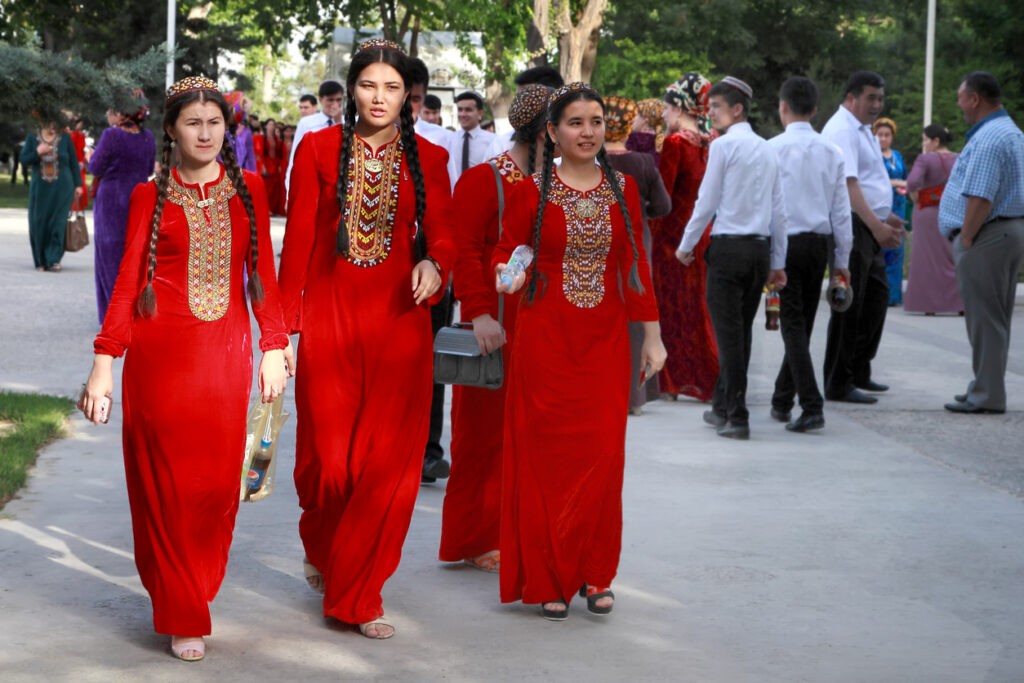
Turkmenistan citizens graduating from foreign universities, are currently required to undergo a complex process to have their  diplomas recognized in their home country. A source in the Main Department of Education of Lebap told Radio Azatlyk that Turkmenistan citizens graduating  from pedagogical universities in CIS countries are obliged to enrol in a month-long advanced training course at the Pedagogical Institute in Turkmenabad to nostrify (recognize university qualifications) their diplomas and moreover, provide 17 references. According to graduates, the process also involves the extortion of bribes. Hakberdi, a Russian language teacher from Turkmenabad who underwent the diploma recognition process about five years ago, explained that the size of the bribe depends on the influential status of whoever is engaged to help. "From 2018 to 2019, the bribe could reach 10-15 thousand dollars. If you have an acquaintance in the ministry, the bribe will be smaller, but can rise if intermediaries are involved." In addition, when attempting to get their diplomas recognized, graduates can fall prey to fraudsters who promising help, take their money and disappear. In parallel with the season of diploma nostrification, the process of submitting documents and sitting exams for admission to foreign universities continues. Exams are taken online and because of internet issues, this can create new problems. "Since the speed of the Wi-Fi signal at home is inadequate," reported a resident of Dianev, "applicants from across the districts gather at the Turkmentelecom internet cafe in Turkmenabad but there are not enough computers and often queues from 6 a.m."
Kazakhstan Seeks to Increase Local Content in Oil and Gas Equipment Production

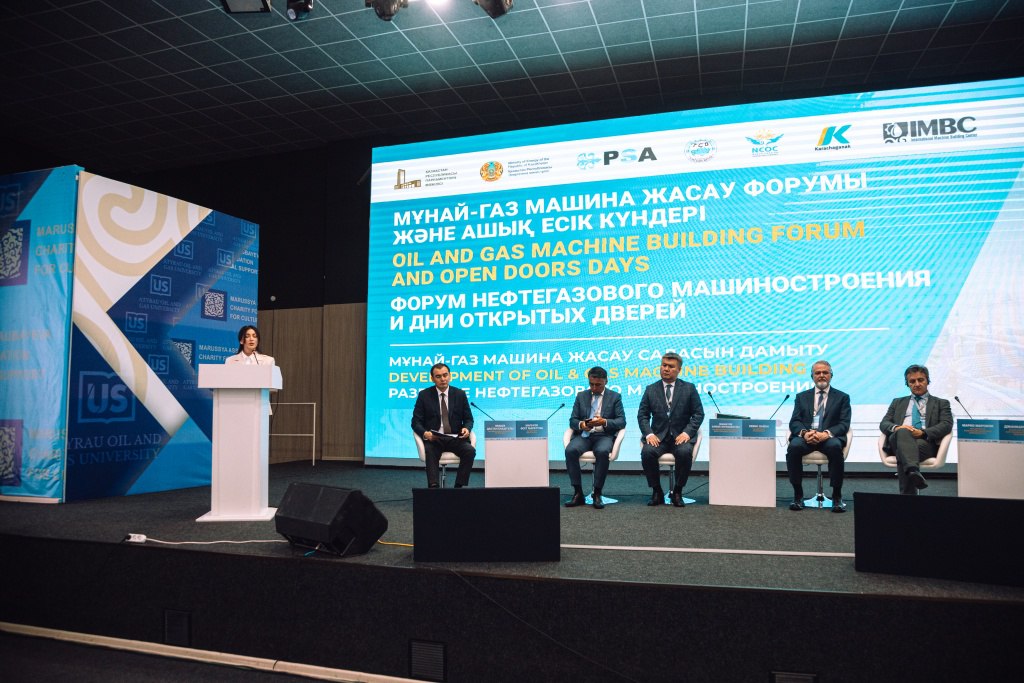
From July 10 to 12, the Kazakhstani city of Atyrau hosted the Oil and Gas Machine Building Forum. The Forum aimed to develop local content and support domestic manufacturers of oil and gas equipment and local suppliers of works and services for the sector. The event also included Open Doors Days for three major oil and gas operators in Kazakhstan: Tengizchevroil, North Caspian Operating Company, and Karachaganak Petroleum Operating B.V. As reported by the Kazakh Ministry of Energy, these three major subsoil users account for 70% of all oil and gas equipment purchases in Kazakhstan. Speaking at the Forum, Vice Minister of Energy Alibek Zhamauov said that both Kazakhstan’s president and prime minister outlined several specific tasks aimed at developing local content in the oil and gas sector. Particular attention, they said, should be paid to increasing the share of Kazakhstani goods, works and services in the sector’s purchases, creating new as well as modernizing existing production facilities, localizing the production of the most popular products in Kazakhstan, as well as moving design offices to the country, with the mandatory involvement of local engineers and design companies. Due to efforts of the Ministry of Energy, in May of this year contracts were signed between Tengizchevroil, North Caspian Operating Company, and Karachaganak Petroleum Operating B.V. and domestic manufacturers for the purchase of locally made oil and gas equipment worth $240 million. Speaking at the Forum, Leyla Gimranova, Deputy Director of the Project Department at Kazakh Invest, emphasized that oil and gas engineering could become a new growth point in developing domestic added-value production and import substitution. She said that last year, Kazakhstan produced oil and gas equipment for $72.7 million and imported such equipment for $1 billion. “This is a significant difference that needs to be reduced. Therefore, we are actively working to identify priority goods for import substitution, the production of which is possible based on existing domestic enterprises," Gimranova said.

Uzbekistan Creates Law to Address Excessive Energy Consumption

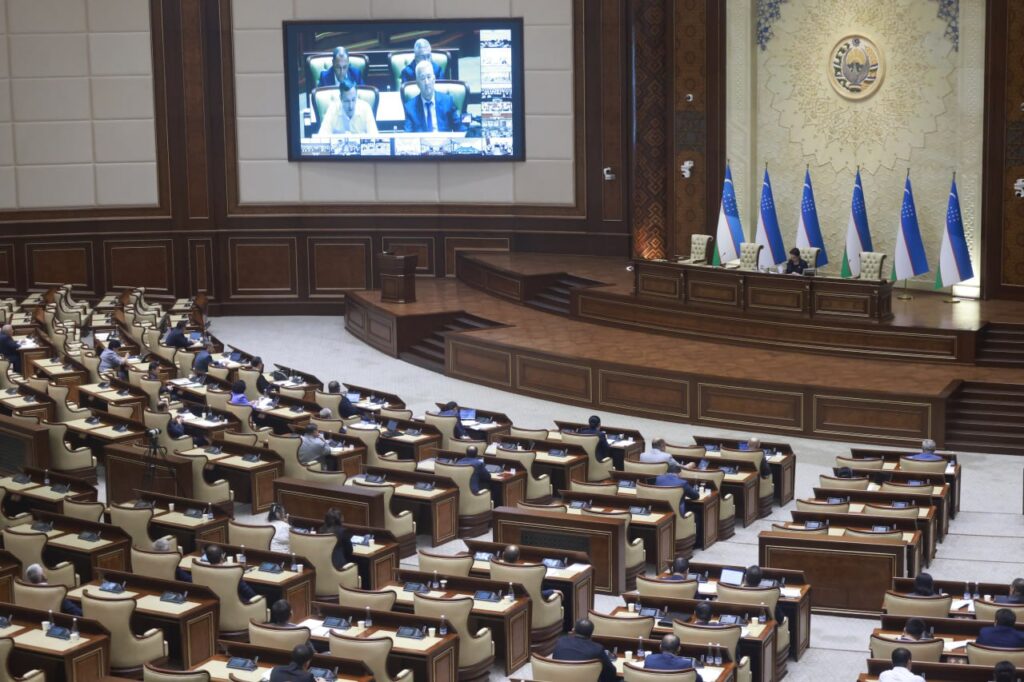
The law “On saving energy, its rational use and increasing energy efficiency" was approved at the plenary session of the Senate of the Oliy Majlis held in Uzbekistan on July 10. The law defines the tasks and rules for ensuring energy security, saving energy, increasing efficiency, and promoting rational use of resources, such as electric and thermal energy, fuel, and non-traditional energy resources in economic and social sectors. The law also establishes the responsibility for excessive energy resource consumption in Uzbekistan. Energy-saving directions and improvements in energy efficiency apply to the fields of construction and transport, buildings and structures, heat supply and utility companies, agriculture, and water management. According to the senators, the adoption of this law will help further optimize the costs of energy resources and create a legal basis for systematic monitoring of energy consumption efficiency.

It Wasn’t Like This Under Nazarbayev: Kazakhstan’s Party Political Landscape

Speaking on June 27 on the eve of Media Workers Day at a reception where awards were presented to distinguished journalists, Kazakh President Kassym-Jomart Tokayev paid special attention to the powers of the head of state. Tokayev emphasized that the term of presidential powers approved in the referendum is a reality that will not be altered through amendments to the Constitution. This means that in 2029, Kazakhstan will see a new president, chosen through a legal expression of its citizens' will. This new president will not appear out of nowhere; they will likely be nominated by one of the existing political parties, which will enter the electoral battle for the Mazhilis deputy mandates in 2028. The party leading this significant two-year electoral race will have its nominee occupy the presidency of Kazakhstan. The topic of the "problem-2029" is already a subject of discussion within the corridors of power. The current president's team has a dual task - ensuring the continuity of democratic and liberal transformations while preventing a resurgence of the Old Kazakhstan. Having been unable to change the country's leadership in 2022, Tokayev's opponents will likely pursue an institutional route. Historically, former president Nursultan Nazarbayev used a similar strategy, having first elected democratically, then extending his powers via a referendum, and gradually amending the Constitution to consolidate his rule without seeking further public approval. Could a current political party be used as a Trojan horse in such a scenario? Here are the players on the present political landscape. Amanat The most influential party in Kazakhstan, Amanat, which formerly supported Elbasy (Father of the Nation) Nursultan Nazarbayev, was founded in 1999 through the merger of several political organizations, with the largest being the Party of People's Unity of Kazakhstan (PNUK). Known as Otan and then Nur Otan (“Radiant Fatherland”) until it was rebranded in 2022, although modern sources attribute this merger to Nazarbayev, he was reportedly not focused on party building at that time. The Otan party, which resulted from the merger, emerged shortly after the early presidential election of 1999, where Nazarbayev won with a "modest" 80.97% of the vote. The runner-up in the election, Serikbolsyn Abdildin claimed that there had been widespread voter fraud and a failure to tally ballots properly, whilst the U.S. Department of State commented that the undemocratic nature of the election "cast a shadow on bilateral relations". In 2006, Otan held two congresses, during which three more political organizations joined: the Asar Party, founded by Nazarbayev's eldest daughter Dariga and her then-husband Rakhat Aliyev, as well as the Civic and Agrarian Parties, previously part of the AIST pre-election bloc. Following these mergers, Otan was renamed Nur Otan. After Rakhat Aliyev was charged, initially with the kidnapping and then with the murder of two executives at a bank he controlled in 2007, Dariga and her son took over his stake, swelling her fortune. In 2013, Forbes named her one of the fifty richest Kazakhs with assets of US$595 million, including a vast media empire. Under...

A Rocky Romance in Kyrgyzstan: Boyfriend of President’s Niece is Arrested

The boyfriend of the niece of Kyrgyz President Sadyr Japarov has been arrested on suspicion of manufacturing illegal drugs, two weeks after a controversy over his use of a rented government helicopter to propose marriage.  “We confirm that the boyfriend of the daughter of President Sadyr Japarov's younger brother was detained by law enforcement agencies,” presidential spokesman Askat Alagozov said on Facebook on Wednesday. He said there is “every reason to believe” that the man, Aftandil Sabyrbekov, wanted to hide “his illegal activities” by developing relationships with people who could protect him from the law.  Alagozov stressed that the president won’t hide illegal conduct. The spokesman did not specify the alleged crimes of the fiancé of Lazat Nurkozhoeva “and his accomplices,” but several media organizations in Kyrgyzstan reported that a district court in Bishkek ordered Sabyrbekov to be placed in pretrial detention until Aug. 3.  Sabyrbekov is suspected of the "Illegal production of narcotic drugs, psychotropic substances and their alternatives for the purpose of sale in large quantities,” the Kloop outlet reported. It said he could face between 12 and 15 years in prison if convicted.  Last month, Sabyrbekov asked Nurkozhoeva, a former beauty queen, to marry him after the pair traveled by helicopter to the mountains near Bishkek. The helicopter belonged to the Ministry of Emergency Situations, a revelation that prompted scorn on social networks and drew an apology from Japarov, who has campaigned against corruption. The ministry said the aircraft was “legally leased” and Japarov said the government sometimes rents its helicopters for the benefit of the state’s coffers. But the ostentatious use of the government asset, flaunted in a slick video showing Japarov’s niece in the helicopter, was over the top for some critics.  It wasn’t true love after all, the presidential spokesman, Alagozov, appeared to suggest. At the end of his Facebook message, he referred to Sabyrbekov as the “ex-boyfriend,” indicating that the romance with the president’s niece was over. 

Why Is Bishkek Getting Rid of Trolleybuses?

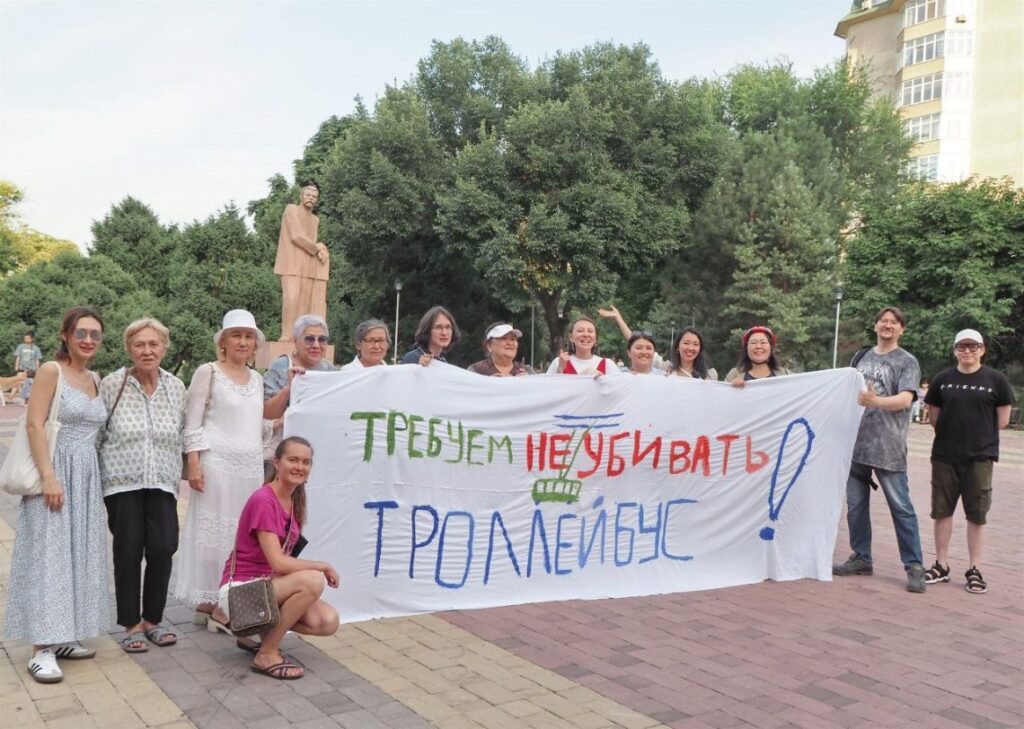
Bishkek City Hall intends to "clean" the city of trolleybuses. According to city officials, the environmentally friendly mode of transportation has become unprofitable; however, residents are against such a decision — citizens claim their opinion is not considered in the municipality. Almost all trolleybus routes will be removed from Bishkek's roads, and electric buses ordered from China will replace them. The entire electric infrastructure — wires for trolleybuses — has been dismantled. In an interview with the state agency Kabar, mayor Aibek Junushaliyev said that the unpopular decision would create more comfortable living conditions for citizens. "Trolleybuses can only ride on one route, and we cannot temporarily redirect them to other streets. That is, they can only travel on their lines, and during some road closures, it is impossible to change their route. Electric buses and other public transportation are more mobile, and their route can be changed to solve problems with traffic jams in the city. With trolleybuses, such a solution is impossible," Junushaliyev said. The mayor explained his decision to remove trolleybuses due to the unprofitability of electric transportation. Allegedly, trolleybus passenger traffic is decreasing year by year. In 2023, trolleybuses moved 8 million people; this year, they moved 3 million fewer. "Also, trolleybus maintenance is costly. We subsidize more than 200m KGS ($2.3m) for trolleybuses," Junushaliyev stated. The Bishkek mayor's office said it is launching the Open Skies project, which will remove all trolleybus lines in the city because they have reached the end of their useful life. Interestingly, in 2022, the Bishkek Trolleybus Department signed a contract with the Chinese company Ankai Automobile Co. to bring 120 battery-powered trolleybuses and the entire charging infrastructure to Kyrgyzstan. Bishkek residents are outraged by the city authorities' unilateral initiative. In the past few weeks alone, government agencies have received more than three hundred appeals from citizens to stop the destruction of an ecological mode of transportation. Activist Darya Nesterova told The Times of Central Asia that the city government deliberately underestimates the number of passengers traveling on trolleybuses. "City Hall is violating the law. We have regulations according to which such projects must be submitted for public discussion. The townspeople should comment that the mayor's office has behaved very willfully. They did not listen to the opinion of city deputies or the people; they immediately started cutting trolleybus wires, although they had no legal right to do so," Nesterova said. According to her, the destruction of one of the modes of public transportation is sabotage. "Bishkek City Hall in 2018 took a loan from the European Bank for Reconstruction and Development to upgrade the trolleybus network. This loan the city will repay for another five years. In addition, the bank's money was used to purchase 50 new trolleybuses capable of serving the city. Therefore, all the talk about the outdated electric fleet is illogical," Nesterova isaid. The public doesn't understand how the capital's authorities will explain themselves to the creditors—the EBRD gave a loan to reconstruct trolleybus lines in...