• KGS/USD = 0.01144 0%
  • KZT/USD = 0.00209 0%
  • TJS/USD = 0.10829 0%
  • UZS/USD = 0.00008 0%
  • TMT/USD = 0.28571 0.28%
  • KGS/USD = 0.01144 0%
  • KZT/USD = 0.00209 0%
  • TJS/USD = 0.10829 0%
  • UZS/USD = 0.00008 0%
  • TMT/USD = 0.28571 0.28%
  • KGS/USD = 0.01144 0%
  • KZT/USD = 0.00209 0%
  • TJS/USD = 0.10829 0%
  • UZS/USD = 0.00008 0%
  • TMT/USD = 0.28571 0.28%
  • KGS/USD = 0.01144 0%
  • KZT/USD = 0.00209 0%
  • TJS/USD = 0.10829 0%
  • UZS/USD = 0.00008 0%
  • TMT/USD = 0.28571 0.28%
  • KGS/USD = 0.01144 0%
  • KZT/USD = 0.00209 0%
  • TJS/USD = 0.10829 0%
  • UZS/USD = 0.00008 0%
  • TMT/USD = 0.28571 0.28%
  • KGS/USD = 0.01144 0%
  • KZT/USD = 0.00209 0%
  • TJS/USD = 0.10829 0%
  • UZS/USD = 0.00008 0%
  • TMT/USD = 0.28571 0.28%
  • KGS/USD = 0.01144 0%
  • KZT/USD = 0.00209 0%
  • TJS/USD = 0.10829 0%
  • UZS/USD = 0.00008 0%
  • TMT/USD = 0.28571 0.28%
  • KGS/USD = 0.01144 0%
  • KZT/USD = 0.00209 0%
  • TJS/USD = 0.10829 0%
  • UZS/USD = 0.00008 0%
  • TMT/USD = 0.28571 0.28%

Viewing results 13 - 18 of 1369

Tashiyev Charged as Kyrgyzstan’s Elite Rift Deepens

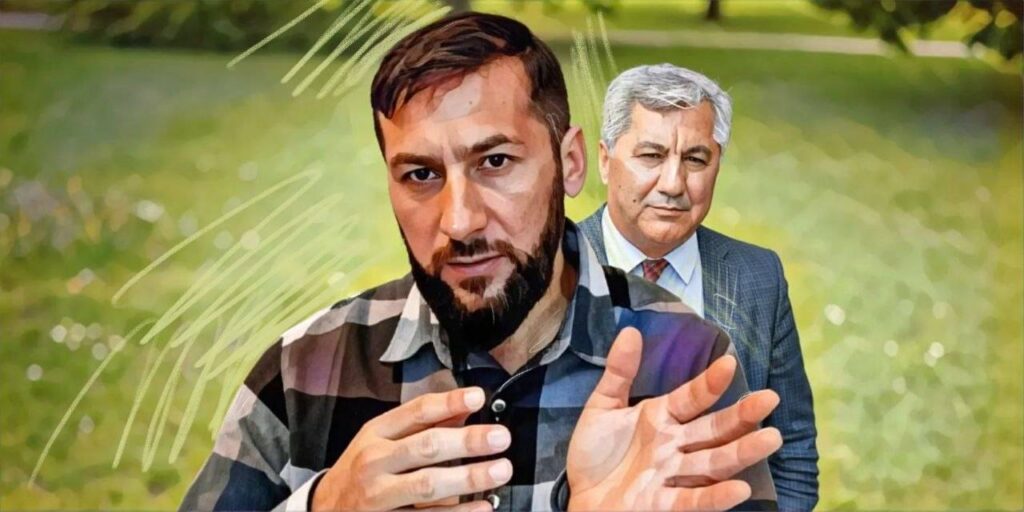
Former head of Kyrgyzstan’s State Committee for National Security (GKNB), Kamchybek Tashiyev, has been charged under two articles of the criminal code, his lawyer said, amid signs of escalating political tension in the country. According to defense attorney Ikramidin Aitkulov, Tashiyev faces charges under Article 326, concerning forcible seizure or retention of power and actions aimed at forcibly changing the constitutional order, and Article 337, concerning abuse of office. The latter charge relates to alleged actions carried out for personal gain or for the benefit of others, and to conduct by a senior public official. A restraint measure has been imposed on Tashiyev in the form of a written undertaking not to leave his place of residence. After questioning at the Interior Ministry, he left the building late on April 29. His lawyer said the former official denies all charges. Tashiyev said he intends to defend himself through legal means. “I am innocent and, God willing, I will be acquitted,” he said in a statement. He also urged his supporters to remain calm and act within the law. Media reports suggest that former Prosecutor General Kurmankul Zulushev and former parliamentary speaker Nurlanbek Turgunbek uulu may also be linked to the same case, though their legal status remains unclear. The Interior Ministry has not publicly confirmed or denied reports that they were questioned. President Sadyr Japarov has previously said that any potential involvement by Tashiyev in the so-called “Letter of 75” should be determined by investigators and the courts. The letter, made public in February, urged Japarov and parliament to initiate an early presidential election, citing ambiguity over whether his current term should be treated under the six-year term in force at the time of his 2021 election or the five-year term introduced by the constitution adopted later that year. Tashiyev’s fall has been one of Kyrgyzstan’s most significant political ruptures since Japarov came to power after the 2020 upheaval. The two men had long been seen as the central tandem in Kyrgyz politics, with Japarov controlling the presidency and Tashiyev heading the security apparatus. That arrangement ended on February 10, when Japarov dismissed Tashiyev as GKNB chairman and deputy chairman of the Cabinet of Ministers. The official explanation was that the decision had been taken “in the interests of the state” and to prevent a split in society. The move was followed by a wider reshuffle inside the security services and parliament, where figures seen as close to Tashiyev came under pressure. The Times of Central Asia previously reported that Japarov’s decision appeared to have broken the Japarov-Tashiyev tandem that had shaped the country’s power structure since 2020. The political pressure on Tashiyev’s network intensified in March and April. Tashiyev returned to Kyrgyzstan in March after more than a month abroad and was questioned by the Interior Ministry in connection with Kyrgyzneftegaz, the state oil company. TCA previously reported that the State Tax Service had revived allegations involving the company and private entities linked to Tashiyev’s relatives or associates, while...

Japarov, Tashiyev, and the Kompromat War

Kyrgyzstan has seen three revolutions since 2005. It has been a politically active country since becoming independent in late 1991, when the Soviet Union collapsed. But since the current President Sadyr Japarov came to power after the 2020 revolution, he and his long-time friend and security chief, Kamchybek Tashiyev, have stifled expressions of public discontent. For the last five years, Kyrgyzstan’s political scene has been uncharacteristically quiet. But events since Japarov sacked Tashiyev on February 10 have raised speculation that a fierce political battle between the two powerful men now looms ahead for the country. Japarov has already fired the first shots. Accusations of corruption against Tashiyev and his family have led to arrests. But two can play at that game, and the former security likely has compromising information about Japarov and his family. “You Can't Cook Two Sheep's Heads in One Cauldron” The February 10 announcement of Tashiyev’s firing was arguably Kyrgyzstan’s biggest political shock since the October 2020 revolution that saw Japarov go from a prison cell to simultaneously occupying the posts of prime minister and president within ten days. The two had been friends for decades, they started their political careers about the same time, and both quickly rose through the ranks of government during the presidency of Kurmanbek Bakiyev, who was ousted in the 2010 revolution. The day after he was confirmed as president, Japarov appointed Tashiyev to be head of the State Committee for National Security (GKNB). The day before Tashiyev was sacked, a group of 75 prominent figures, who included former government officials, released an open letter to President Japarov and the speaker of parliament calling for an early presidential election. The group pointed to the discrepancy over whether Japarov was serving the six-year presidential term mandated in the 2010 constitution or the five-year term stipulated in the constitution adopted in April 2021, three months after the snap presidential election that Japarov won. It quickly became apparent that Tashiyev’s dismissal and the letter were connected. The same day Tashiyev was fired, so were several top GKNB officials, with the sacking of officials said to be close to Tashiyev continuing for days. Japarov’s spokesman said it was necessary to “prevent a split in society.” However, Japarov has avoided any detailed explanation of the reasons for the many changes and repeatedly described Tashiyev as a friend. Member of Parliament Elvira Surabaldiyeva, in an April 24 interview with a Kazakh journalist, said Tashiyev was dismissed because he was planning a coup and had been preparing it for a long time. “The president is going through a very difficult time right now, because his longtime friend tried to remove him from office,” Surabaldiyeva said, and added, “There's a saying: ‘You can't cook two sheep's heads in one cauldron.’ This seems to be exactly the case.” Kompromat Tashiyev was out of Kyrgyzstan when the news broke that he had been fired. He briefly returned on February 13, leaving again on February 17. He returned on March 19 and the...

Turkmenistan to Pay WWII Veterans Around $10, Far Below Regional Levels

Payments to World War II veterans ahead of Victory Day continue to vary significantly across Central Asia, with Turkmenistan offering one of the lowest levels of support in the region. At a government meeting on April 24, President Serdar Berdimuhamedov, discussing traditional commemorative events for May 9, instructed officials to organize the distribution of commemorative gifts to veterans and women who worked on the home front during the war. A cash payment is also expected. According to available information, as in previous years, it may amount to 200 manats, approximately $57 at the official exchange rate or about $10 at the unofficial rate. The latter figure is more commonly used for cross-country comparisons. Against this backdrop, support levels in neighboring countries appear significantly higher. In Kyrgyzstan, veterans are set to receive a one-time payment of around $2,300. In Uzbekistan, payments will amount to approximately $2,400. Kazakhstan offers the highest payments in the region, with veterans set to receive about $10,500 each. Final figures for Tajikistan have not yet been announced, although last year veterans received around 4,810 somoni (approximately $440-$480, depending on the exchange rate).

Uzbekistan to Restrict Foreign Access to Farmland as Land Reforms Advance

Uzbekistan plans to stop offering agricultural land lease rights to foreign investors through auctions as part of a broader effort to improve land use efficiency, according to the presidential press service. The measures were presented during a government briefing on land reform, where officials outlined changes to the current system. Over the past five years, Uzbekistan has shifted to an auction-based model for land allocation, removing the authority of local governors to distribute plots directly. During this period, more than 616,000 hectares of land were allocated through auctions, generating 1.4 trillion UZS ($115,940) in state revenue. Officials said the reforms have led to the emergence of private land users and increased productivity. Income per hectare has tripled to around 50-60 million UZS ($4,140-$4,970), while land allocated through auctions now produces goods worth an estimated 539 trillion UZS ($44,635,398,500) annually and generates $2.1 billion in exports. Despite these gains, authorities acknowledged ongoing challenges. Around 117,600 hectares of land remain unallocated, partly due to limited autonomy for tenants in how they use the land. To address this, the government plans to introduce a revised leasing system and auction an additional 100,000 hectares under new conditions this year, with stronger economic incentives for efficient use. A key change will affect foreign investors. Under the proposed rules, they will no longer be able to acquire land through auctions. Instead, access to agricultural land will be limited to secondary lease agreements arranged through regional authorities, and only for projects with a minimum investment of $10 million. These projects must also focus on developing underused land, including pasture and rain-fed areas. At the same time, participation in agricultural land auctions will be restricted to domestic farmers and entrepreneurs. Land designated for defense, border zones, forests, and cultural heritage sites will be allocated exclusively to Uzbek citizens. A unified lease term of up to 49 years is also proposed for all land categories. The presentation highlighted successful pilot projects in the Fergana Valley, as well as in Jizzakh and Tashkent regions, and Karakalpakstan, where entrepreneurs were allowed to independently choose crops. On 16,000 hectares, farmers planted high-yield and export-oriented crops, contributing to an estimated $150 million in exports in 2025. To support new projects, the government plans to offer financial incentives, including preferential loans of up to seven years with grace periods, subsidies for infrastructure costs, and compensation of up to 50% of packaging expenses. Authorities also intend to expand the use of modern agricultural technologies to increase land productivity. Officials also stressed the need to accelerate digitalization in the sector, noting that many processes, such as land reclassification and compensation calculations, are still handled on paper, causing delays and investor dissatisfaction. Plans include integrating cadastral, agricultural, and legal databases, as well as introducing transparent procedures for extending lease agreements.

Tajikistan to Gain Access to Emergency Financing Under New World Bank Project

The World Bank Group has approved a Contingent Emergency Response Project (CERP) for Tajikistan, providing the country with a financial instrument designed to enable the rapid reallocation of resources in the event of crises and emergencies. According to Tajikistan’s Ministry of Finance, the mechanism allows up to 10% of undisbursed funds from the World Bank’s current investment portfolio to be redirected annually to emergency needs. This gives the government additional flexibility in managing already allocated resources. The mechanism can be activated following an official declaration of a state of emergency. However, preparations for its use are carried out in advance. Experts note that CERP eliminates the need to seek new funding sources by enabling the rapid redeployment of existing funds. These resources can be used to procure food, water, and medical supplies, provide emergency services with necessary protective equipment, and support the agricultural sector. Assistance to households affected by crises is also provided. The mechanism forms part of the broader Rapid Response Option (RRO) framework, which allows governments to swiftly reallocate funds from ongoing projects to respond to emergencies. Tajikistan has already formally adopted this instrument. The Ministry of Finance also noted that CERP will operate in conjunction with the existing Tajikistan Preparedness and Resilience to Disasters Project. According to officials, the combined use of these instruments is expected to strengthen the country’s capacity to respond to potential risks.

Kazakhstan’s Regional Ecological Summit 2026: What It Is and Why It Matters

Kazakhstan’s Regional Ecological Summit 2026 in Astana on April 22-24 is aiming to turn Central Asia’s environmental strain into a regional political agenda. Organized in partnership with the United Nations, the summit is built around the theme, “Shared Vision for a Resilient Future.” Its stated purpose is to bring together governments, international organizations, lenders, businesses, researchers, and civil society to push for joint and practical responses to climate and ecological pressures across the region. President Kassym-Jomart Tokayev first proposed hosting a regional climate summit in Kazakhstan under UN auspices during his 2023 speech at the 78th session of the UN General Assembly. By 2026, that idea had broadened into a wider environmental summit covering climate transition, adaptation, food security, natural resource management, air pollution, waste, finance, and environmental skills. The official key thematic directions show that this is no longer a narrowly framed climate conference. It is being presented as a broader Central Asian platform for ecological cooperation. In Central Asia, ecological stress now shapes core state concerns, from farming and energy to public health and cross-border cooperation. That gives the Astana summit a broader role than a standard environment conference. That shift reflects real regional pressures. Central Asia faces chronic water stress, glacier retreat, desertification, air pollution, and growing strain on ecosystems. The summit’s organizers say the meeting is meant to produce joint solutions rather than another round of abstract pledges. The UN in Kazakhstan says the summit is expected to advance shared regional responses and identify green financing needs, while a second UN page states that one planned outcome is a Joint Declaration by the heads of state of Central Asia, alongside a 2026-2030 Programme of Action developed with the United Nations. Tokayev’s own language explains the summit’s pitch. On August 5, 2025, speaking at the Third United Nations Conference on Landlocked Developing Countries in Awaza, Turkmenistan, he said, “Many developing countries without access to the sea are facing water scarcity, glacier melt, desertification, and other extreme weather events. Addressing these challenges requires coordinated regional efforts and strong international support. At the same time, I believe that measures to combat climate change must remain balanced and inclusive, and respond to the legitimate development needs of countries. To strengthen our joint efforts in addressing climate change, I invite you to the Regional Ecological Summit, which will be held in Astana in partnership with the United Nations.” The wording shows how Kazakhstan wants to frame the event. Central Asia’s environmental problems cross borders, but the response, in Tokayev’s view, must also accommodate growth, infrastructure, and development. That is why the summit is being presented not just as a climate gathering, but as a forum linking ecological policy, investment, technology, and state planning. The EXPO component is part of that design. Government and investment-promotion pages say the parallel exhibition will focus on green technologies, ESG tools, and practical climate solutions, linking diplomacy to project finance and implementation. The summit’s speaker list underlines its international reach. The official RES 2026 page includes...