Kyrgyzstan’s presidential election is scheduled for January 27, 2027, with candidate nominations already open. Sadyr Japarov intends to run for a second term, but the political landscape bears little resemblance to the situation six years ago, when he came to power following the protests of October 2020.
Since then, Kyrgyzstan has shifted from a parliamentary to a presidential model, rewritten its election rules, and changed its media legislation. Japarov’s political alliance with Kamchybek Tashiyev, the former chief of the State Committee for National Security (GKNB), has collapsed. Tashiyev, until recently considered a possible successor to the president, has been convicted and remains under three years of probation supervision. Several other prominent politicians are facing criminal cases, while rallies in central Bishkek have been restricted.
The Jogorku Kenesh, the national parliament, has scheduled the vote for a Wednesday rather than the traditional Sunday. The election law was changed twice: first, the vote was moved from autumn 2026 to January 2027, and then election day was moved from the fourth Sunday to the fourth Wednesday of January.
“I intend to run for another term and continue my work,” Japarov said in an August 13 interview with investigative journalist Ali Toktakunov.
Japarov’s right to run again required a separate interpretation by the Constitutional Court. In 2021, he won under the previous Constitution, which provided for a single six-year presidential term. A few months later, a new Constitution shortened the term to five years but allowed a president to hold office twice.
In February, the Constitutional Court preserved the original six-year duration of Japarov’s current term, while ruling that he would continue exercising his powers under the 2021 Constitution. It also held that his current six-year mandate counts as his first term under the new two-term limit, allowing Japarov to run again.
From Successor to Defendant
A year ago, any discussion of the election inevitably led to Tashiyev. Japarov’s longtime ally headed the GKNB and was the country’s second center of political influence.
Japarov later said that he had originally planned to step down after his first term and support Tashiyev. “Kamchy would become president, and I would retire. That was my plan,” he said in the interview with Toktakunov.
That scenario collapsed after a group of 75 former officials, politicians, and public figures published an open letter on February 9 calling for an early presidential election. The following day, Japarov dismissed Tashiyev as head of the GKNB. A criminal case and trial followed.
In July, Tashiyev and seven other defendants were found guilty of preparing to seize power by force. In September, the Bishkek City Court removed that charge and reclassified the case as obstruction of electoral rights.
Under the current election law, people with a criminal conviction, including one that has later been expunged, are barred from being elected president. Tashiyev therefore cannot take part unless his conviction is overturned.
Among other contenders, former acting Interior Minister and Batken regional governor Omurbek Suvanaliev has announced his intention to run. He has spoken about the need for an alternative election and an attempt to unite opposition forces. Former State Service for Combating Economic Crimes chief Syiymyk Japykeev has also said he intends to run.
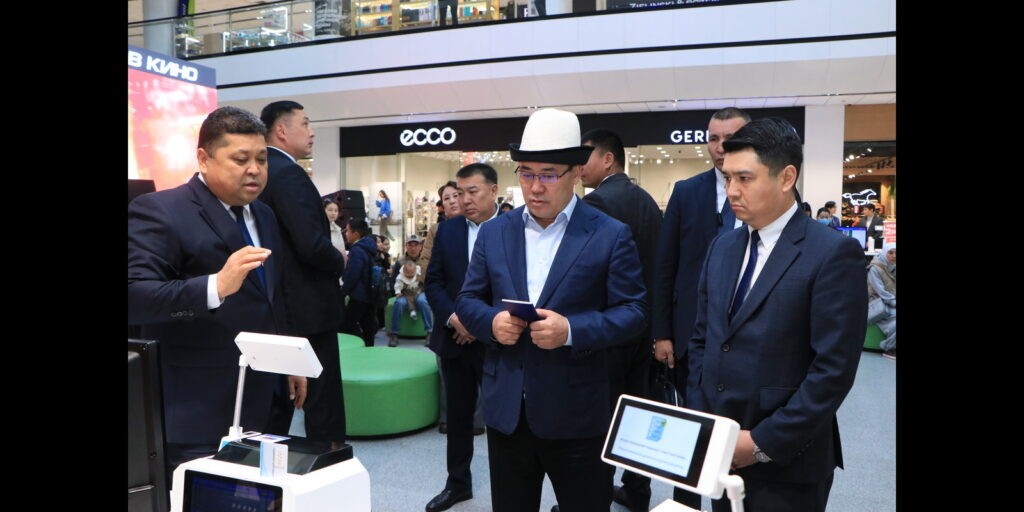
Nominations will remain open until November 13. To register, a candidate must collect at least 30,000 signatures and demonstrate proficiency in Kyrgyz. For the first time, signatures can be collected electronically through Tunduk, the national digital public services portal. Candidate registration will be completed by December 23.
A Campaign Amid Court Proceedings, Protest Restrictions, and New Media Rules
On October 6, prosecutors requested lengthy prison sentences in the case involving the Social Democrats party. The defendants include party leader Temirlan Sultanbekov and Kadyr Atambayev, the son of former President Almazbek Atambayev. The charges are related to the alleged organization of mass unrest following the 2025 parliamentary election.
Prosecutors sought nine years for Sultanbekov, seven and a half years for Atambayev, and sentences ranging from seven and a half to nine years for the other defendants. The trial is closed to the public, and a verdict has not yet been issued.
Rallies and pickets in central Bishkek are also restricted from October 1 through December 31. The list includes Ala-Too Square, Erkindik Boulevard, and areas near parliament, the Supreme Court, the Interior Ministry, the GKNB, and the Russian Embassy. The restrictions cover almost the entire period of candidate nomination and registration.
Japarov has promised a campaign without the use of administrative resources. A September 25 decree prohibits the involvement of teachers, doctors, students, and employees of state institutions in campaigning, as well as officials’ use of their positions to favor candidates. Violations can result in dismissal.
The vote will be the first presidential election held since the adoption of the new media law. It applies registration requirements to online publications and caps foreign ownership of media companies at 35%. The authorities describe the changes as a modernization of legislation, while journalists and international organizations have criticized them over the risk of increased state control.
To officially participate in election campaigning, media outlets and online publications must be accredited by the Central Election Commission (CEC). Applications are accepted until October 14.
Under the presidential model adopted in the 2021 referendum, the president heads the executive branch and has broad powers in forming the Cabinet of Ministers. Kyrgyzstan, once distinguished in Central Asia by frequent changes of power and strong street politics, is approaching a new election with a much more concentrated system of government.
As of October 5, the CEC said it had not received a formal nomination application from any prospective candidate. Japarov, Suvanaliev, and Japykeev have all publicly said they intend to run. The president has promised not to obstruct his competitors, but first they have to formally enter the race.