• KGS/USD = 0.01144 0%
  • KZT/USD = 0.00216 0%
  • TJS/USD = 0.10666 -0.19%
  • UZS/USD = 0.00008 0%
  • TMT/USD = 0.28490 0%
  • KGS/USD = 0.01144 0%
  • KZT/USD = 0.00216 0%
  • TJS/USD = 0.10666 -0.19%
  • UZS/USD = 0.00008 0%
  • TMT/USD = 0.28490 0%
  • KGS/USD = 0.01144 0%
  • KZT/USD = 0.00216 0%
  • TJS/USD = 0.10666 -0.19%
  • UZS/USD = 0.00008 0%
  • TMT/USD = 0.28490 0%
  • KGS/USD = 0.01144 0%
  • KZT/USD = 0.00216 0%
  • TJS/USD = 0.10666 -0.19%
  • UZS/USD = 0.00008 0%
  • TMT/USD = 0.28490 0%
  • KGS/USD = 0.01144 0%
  • KZT/USD = 0.00216 0%
  • TJS/USD = 0.10666 -0.19%
  • UZS/USD = 0.00008 0%
  • TMT/USD = 0.28490 0%
  • KGS/USD = 0.01144 0%
  • KZT/USD = 0.00216 0%
  • TJS/USD = 0.10666 -0.19%
  • UZS/USD = 0.00008 0%
  • TMT/USD = 0.28490 0%
  • KGS/USD = 0.01144 0%
  • KZT/USD = 0.00216 0%
  • TJS/USD = 0.10666 -0.19%
  • UZS/USD = 0.00008 0%
  • TMT/USD = 0.28490 0%
  • KGS/USD = 0.01144 0%
  • KZT/USD = 0.00216 0%
  • TJS/USD = 0.10666 -0.19%
  • UZS/USD = 0.00008 0%
  • TMT/USD = 0.28490 0%

Viewing results 19 - 24 of 1341

Kazakhstan Proposes Creating a Digital Platform Within the EAEU to Coordinate Freight

Kazakhstan has proposed the creation of a unified digital platform for coordinating cargo flows within the Eurasian Economic Union (EAEU). Prime Minister Olzhas Bektenov presented the proposal at a meeting of the Eurasian Intergovernmental Council in Shymkent. The proposal involves developing an integrated system based on AI that will improve the efficiency of logistics processes across the union. Currently, the EAEU comprises five countries: Armenia, Belarus, Kazakhstan, Kyrgyzstan, and Russia. Moldova, Uzbekistan, Cuba, and Iran hold observer status. According to Bektenov, the creation of a unified AI-based platform will reduce cargo delivery times and lower business costs. “In order to fully realize the transit and transport potential of the Union’s member states, it is proposed to create an integrated platform for coordinating cargo flows based on artificial intelligence,” he noted. Kazakhstan is paying particular attention to the digitization of control procedures. In particular, it is proposed to fully transition veterinary and phytosanitary controls to an electronic format. This involves moving away from paper documents and implementing data exchange mechanisms both within the EAEU and with third countries. Kazakhstan is a regional leader in terms of readiness for AI implementation.  Further initiatives include the creation of an artificial intelligence fund and an international computing hub.

Uzbekistan and Tajikistan Launch 10 Joint Projects During Rahmon’s State Visit

Uzbekistan's President Shavkat Mirziyoyev welcomed his Tajik counterpart Emomali Rahmon to Tashkent on March 26 for a state visit marked by high-level talks, and the launch of joint economic projects. Talks between the presidents followed, first in a one-on-one format and then during the inaugural meeting of the Supreme Interstate Council, a new platform aimed at deepening bilateral cooperation. Mirziyoyev described the visit as a landmark in bilateral relations, noting that the council would elevate cooperation and provide a mechanism for implementing joint initiatives. Both sides highlighted the increasing frequency of contacts between government institutions, parliaments, and agencies. In the lead-up to the visit, a series of events took place, including an intergovernmental commission meeting, an industrial exhibition, and forums involving regional leaders, academics, and youth. Uzbekistan also hosted Days of Tajik Culture and Cinema. During the discussions, Mirziyoyev and Rahmon reviewed opportunities to expand cooperation across key sectors, including trade, industry, transport, and water and energy security. Bilateral trade approached $1 billion last year, driven largely by the exchange of finished goods. The two countries aim to double this figure to $2 billion by 2030. Planned measures include accelerating the establishment of the Oybek-Fotekhobod border trade center, introducing digital certification systems and “E-Permit” mechanisms, and modernizing border infrastructure. The sides also agreed to adopt an industrial cooperation program covering mining, energy, agriculture, construction, and manufacturing. Following the council meeting, Mirziyoyev and Rahmon attended a ceremony to launch 10 joint projects. These include new enterprises producing furniture and leather goods, expanded household appliance manufacturing, textile production facilities in Tajikistan, and construction projects in Tashkent. Additional initiatives include food processing plants in Uzbekistan's Fergana region, dairy production in the city of Andijan, and facilities for making fruit juice and metal briquettes in the country's Surkhandarya region. A ceremony was also held to name a street in New Tashkent after Dushanbe, underscoring symbolic ties between the two capitals. The visit also featured the opening of a new building for Tajikistan’s embassy in Tashkent. The complex includes administrative offices, a consular section, a residence for the ambassador, and housing for diplomatic staff and their families. Cultural diplomacy formed another key part of the visit. Mirziyoyev and Rahmon attended a joint concert at the International Forums Palace featuring performers from both countries, with a program highlighting shared cultural heritage and longstanding ties between the Uzbek and Tajik peoples. The leaders also discussed regional and international issues, reaffirming their commitment to continued dialogue and cooperation within Central Asia. They agreed to strengthen coordination on security matters and expand interregional ties, as well as humanitarian, educational, and scientific exchanges. Given the presence of large diaspora communities in both countries, a proposal was put forward to adopt a five-year program aimed at strengthening cultural and humanitarian connections. At the conclusion of the visit, both sides agreed to develop a comprehensive roadmap to ensure implementation of the agreements reached, signaling continued efforts to expand cooperation across political, economic, and cultural spheres.

Turkmenistan Promotes Tourism Abroad — While Keeping Its Borders Closed

Turkmen authorities are preparing to host an international tourism forum, once again emphasizing the sector’s potential. However, the reality appears less optimistic. The number of foreign visitors remains extremely low, while a strict visa regime continues to deter not only tourists but also business travellers. The Turkmen Travel international forum and exhibition is scheduled to take place in Ashgabat from April 14 to 16. Preparations are reportedly being carried out at a high level. Deputy Prime Minister for Culture, Bahar Seydova, briefed officials on the event, and President Serdar Berdimuhamedov has instructed organizers to present the country’s tourism potential in a dignified manner. At the same time, a paradoxical situation has emerged. Despite the construction of modern hotels in Ashgabat and the Avaza tourist zone, the opening of new airports, and the hosting of international events, foreign tourists visit Turkmenistan extremely rarely. Even travellers with a genuine interest in the country frequently encounter significant visa restrictions. According to sources, these challenges affect not only tourists. Representatives of international companies also face lengthy and complicated entry procedures. Market participants note that interest in Turkmenistan does exist. A representative of a travel agency in Ashgabat said that combined tours of Central Asia remain popular among tourists from China, the U.S., European countries, Australia, South America, and Russia. By 2024, demand for trips to Turkmenistan had increased by about 50% compared with the 2018-2020 period. Nevertheless, actual visitor numbers remain very low. Strict entry rules are also affecting business activity. For example, in February 2024, specialists from South Korea’s Hyundai Engineering were unable to arrive in Turkmenistan on time to carry out restoration work at the polymer plant in Kiyanly following an accident. Their visas were delayed due to bureaucratic procedures. Such cases are reported to occur regularly. While the state is seeking to attract foreign companies to major projects, it often fails to provide basic conditions for their operations. Against this backdrop, calls to reconsider current policies are becoming more frequent. Without a more open approach, Turkmenistan may struggle not only to increase tourist arrivals but also to support broader economic development.

Kyrgyzstan Braces for Showdown Between President Japarov and Former Security Chief Tashiyev

When Kyrgyzstan’s President Sadyr Japarov suddenly dismissed his long-time friend Kamchybek Tashiyev as head of the country’s State Committee for National Security (GKNB) on February 10, he cryptically said it was “in the interests of our state, in order to prevent a split in society.” Less than two months later, that split could be coming, and there is a possibility the country is headed for a confrontation between the two men and their supporters. The Gathering Clouds Tashiyev returned to Kyrgyzstan on March 19 after being outside the country for more than a month amid a widening corruption investigation targeting Tashiyev and people close to him. On the day he arrived, Tashiyev went to the Interior Ministry’s investigative department, where he was questioned about state-owned company Kyrgyzneftegaz. On March 17, the head of the State Tax Service, Almambet Shykmamatov, said that “Kyrgyzneftegaz was under the complete control of the GKNB.” The State Tax Service is looking into allegations that Kyrgyzneftegaz sold crude oil to private companies connected to Tashiyev’s relatives or associates who then sold the oil back to Kyrgyzneftegaz at a profit. These accusations are not new. Bolot Temirov, the host of the investigative news program Temirov Live, reported about this exact topic in January 2022. Two days after the report was posted on YouTube, police raided the office of Temirov Live, detaining Temirov on narcotics possession charges that were later dropped. Instead, Temirov was convicted of having a fake Kyrgyz passport and using false documents to cross in and out of Kyrgyzstan. At an appeals trial in November 2022, a judge ordered Temirov deported from Kyrgyzstan, and he was taken from the courtroom to the airport and put on a plane to Russia. Several journalists connected to Temirov Live have been detained, and some, including Temirov’s wife, have been imprisoned since Temirov’s expulsion from Kyrgyzstan. The State Tax Service has resurrected the Temirov Live accusations, while insisting that the evidence it collected has no relationship to the Temirov Live report. Tashiyev’s nephew, Baigazy Matisakov, who was the head of the Kyrgyzneftegaz refinery since 2021, was detained on March 18. Tashiyev’s son, Tay-Muras, who is connected to Moko Group, one of the private companies involved in purchasing oil from and then reselling it to Kyrgyzneftegaz, was questioned at the Interior Ministry. An article from March 16 states that the State Tax Service also connected Tashiyev’s brother, Shairbek, to illegal activities in the oil business. Reports about Tashiyev being questioned at the Interior Ministry on March 19 stressed that he was called in as a “witness.” Japarov Goes on the Offensive On February 10, the reason for sacking Tashiyev, who was out of the country at the time, was unclear. In the days that followed, it gradually became apparent that this was more than just a disagreement between two friends who had governed Kyrgyzstan together for five years. Japarov also dismissed top officials in the GKNB, which Tashiyev had headed since October 2020. Officials in the Interior Ministry, the prosecutor...

Kazakhstan’s Constitutional Reform and the Logic of Modernization

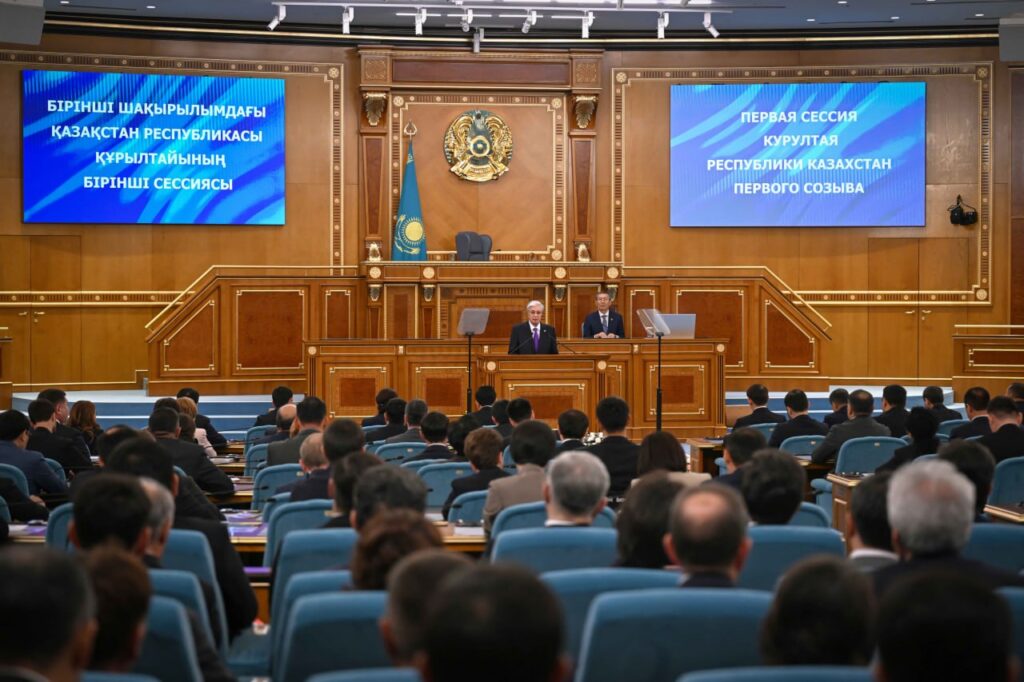
As The Times of Central Asia has noted throughout its special coverage, Kazakhstan’s new constitutional model is presented as modernization, not a rupture with the existing system. President Kassym-Jomart Tokayev has described the project as a response to a rapidly changing global landscape, arguing that the country’s basic law must be recalibrated to make governance more coherent, effective, accountable, and sustainable. That framing has included streamlining parliament, restoring the vice presidency, and redistributing authority across institutions as part of what Tokayev called a “complete reboot” of government, not a revolutionary break with existing institutions. Voters endorsed that vision in the 15 March referendum, with 87.15% backing the new constitution on 73.12% turnout. A report published the following day by the Kazakhstan Institute for Strategic Studies can be read as the most authoritative attempt to define and systematize that vision. Why This Report Matters Kazakhstan’s new constitutional report is presented as an analytical study while remaining closely aligned with official policy perspectives and institutional priorities. Published by the Kazakhstan Institute for Strategic Studies under the President of the Republic of Kazakhstan, it says its purpose is to examine constitutional reform as part of a broader process of institutional and socio-economic transformation. The timing is also significant. The report was recommended for publication on 16 March 2026, one day after the referendum it describes as a milestone in the country’s political development. That makes the document best read as an authoritative explanatory text outlining the state’s interpretation of the reform. It is an effort to define the significance of the referendum for both domestic and foreign audiences. The report’s central argument is that Kazakhstan is not abandoning the presidential republic but renewing its constitutional architecture for a new stage of development. Throughout, it links constitutional change to stronger institutions, better governance, human capital, and long-term resilience. The International Framing of Reform For external audiences, the report presents this argument as a process of evolutionary reform, not revolutionary change. It traces the reform path back to political modernization launched in 2019 and accelerated by constitutional amendments in 2022. In the report’s own framing, the 2026 referendum is the next step in a longer sequence of institutional renewal. The institutional changes highlighted for foreign audiences are significant. The report points to a transition to a unicameral parliament, the creation of a Vice President, the establishment of the Halyq Kenesi as a consultative body with legislative initiative, and an expanded role for the Constitutional Court. Together, these changes are framed as a way to improve policy coordination, ensure continuity in government, and broaden channels between the state and society. The report also puts heavy emphasis on rights protection, especially in ways likely to resonate internationally. It says the reform strengthens guarantees of fair trial, the presumption of innocence, legal assistance, freedom of expression, and access to information. It also gives unusual weight to digital-era rights, including personal data, privacy, and the security of electronic communications. To reinforce that point, the report cites the Constitutional Court’s...

Kazakhstan Senator Proposes Restoring State Oversight of Driving Schools

Gennady Shipovskikh, a member of Kazakhstan’s Senate, has proposed restoring state oversight of driving schools, linking the initiative to a sharp increase in traffic accidents across the country. According to figures cited by the senator, the number of road accidents has nearly doubled over the past three years. In 2023, approximately 15,800 accidents were recorded in Kazakhstan. This figure rose to about 31,500 in 2024 and exceeded 36,000 in 2025. In total, more than 100,000 people were reported injured during this period. Shipovskikh attributes the worsening situation partly to reduced state supervision of driver training standards. At present, most driving schools in Kazakhstan are privately operated: of 727 institutions nationwide, 567 are privately owned, while 160 are state-run. He noted that regulatory changes in recent years have significantly altered the sector. In 2016, the licensing system for driving schools was replaced with a notification-based procedure, and in 2018, direct state oversight was abolished. He said these reforms have contributed to declining training standards and growing public distrust in the quality of instruction. As a possible solution, Shipovskikh has proposed reinstating an accreditation mechanism for driving schools. Under such a system, institutions whose graduates are repeatedly involved in traffic accidents could face the suspension or revocation of their operating permits. He also called for tighter monitoring of compliance with training requirements, particularly in the private sector, as well as the creation of a unified national driver training framework. He also highlighted the need to establish a centralized analytical platform to enable more detailed study of accident causes and to support the development of preventive policies. “We must not forget that behind every traffic accident lies a tragedy for families and society,” he said in remarks addressed to Prime Minister Olzhas Bektenov. Alongside reforms in driver education, Shipovskikh proposed introducing modern traffic-management tools. Among these measures is the use of so-called “waffle markings” at congested intersections. These road markings prohibit vehicles from entering an intersection if traffic conditions prevent them from clearing it, thereby helping to reduce congestion and the risk of collisions. Such practices are already widely used in major cities worldwide and have proven effective in improving road safety. The Times of Central Asia previously reported that Senator Zhanna Asanova had proposed allowing private laboratories to conduct medical examinations of drivers for intoxication as part of wider discussions on road safety policy.