• KZT/USD = 0.00226
  • TJS/USD = 0.10830
  • UZS/USD = 0.00009
  • TMT/USD = 0.29760
  • KZT/USD = 0.00226
  • TJS/USD = 0.10830
  • UZS/USD = 0.00009
  • TMT/USD = 0.29760
  • KZT/USD = 0.00226
  • TJS/USD = 0.10830
  • UZS/USD = 0.00009
  • TMT/USD = 0.29760
  • KZT/USD = 0.00226
  • TJS/USD = 0.10830
  • UZS/USD = 0.00009
  • TMT/USD = 0.29760
  • KZT/USD = 0.00226
  • TJS/USD = 0.10830
  • UZS/USD = 0.00009
  • TMT/USD = 0.29760
  • KZT/USD = 0.00226
  • TJS/USD = 0.10830
  • UZS/USD = 0.00009
  • TMT/USD = 0.29760
  • KZT/USD = 0.00226
  • TJS/USD = 0.10830
  • UZS/USD = 0.00009
  • TMT/USD = 0.29760
  • KZT/USD = 0.00226
  • TJS/USD = 0.10830
  • UZS/USD = 0.00009
  • TMT/USD = 0.29760
27 September 2026

Viewing results 31 - 36 of 1063

Bishkek Proposes Curbs on Private Car Use

Bishkek authorities are proposing a shift in the capital’s transport policy by prioritizing public transport and gradually reducing reliance on private cars. A draft presidential decree prepared by the Bishkek mayor’s office has been released for public consultation. The proposal calls for a long-term transport development program, the creation of an interagency coordination headquarters, upgrades to road infrastructure, new traffic management schemes, and continued investment in the city’s municipal public transport network. Its stated objective is to reduce chronic traffic congestion and improve air quality in the capital. According to the explanatory note accompanying the draft, Bishkek’s road network is no longer capable of handling current traffic volumes. When the city was originally planned, its streets were designed to accommodate around 50,000 vehicles. Today, more than 400,000 vehicles are registered in Bishkek alone, with thousands more entering the city each day from surrounding districts and neighboring regions. Opportunities to expand the road network remain limited. The city has substantially modernized its public transport fleet in recent years. Since 2022, Bishkek has purchased new buses and electric buses. Around 1,300 municipal buses and electric buses now operate on city routes each day, carrying approximately 800,000 passengers. Despite these improvements, more than 500,000 residents continue to rely on private cars. The authors of the draft argue that the current use of road space remains inefficient. A single bus can carry up to 50 passengers while occupying only slightly more road space than several private cars, which generally carry between one and four people. The draft decree does not introduce immediate restrictions on motorists. Instead, it establishes a legal framework for future measures aimed at reducing private vehicle use in the city’s most congested areas. Under the proposal, the mayor-led headquarters could launch pilot traffic restrictions, paid parking schemes, and priority lanes for public transport. Its decisions would be binding on state and municipal bodies. The proposed reforms follow last year’s controversy over Bishkek’s decision to phase out its trolleybus system. After dismantling the overhead power lines, the authorities planned to convert the remaining trolleybus fleet into electric buses. However, the conversion tender failed twice after attracting no bids, forcing the municipality to consider alternative approaches. The decision to abandon the trolleybus network drew criticism from environmental organizations and some transport experts. City officials had also previously considered restricting traffic based on odd and even vehicle registration numbers but abandoned the proposal following public criticism. Reducing traffic is also viewed as an important tool for tackling air pollution. According to official estimates, between 600,000 and 700,000 vehicles operate in Bishkek each day, including those entering the city from elsewhere, while more than half of the vehicle fleet is over 15 years old. Road transport accounts for around 30% of air pollution in the capital. The Times of Central Asia previously reported that Bishkek’s air pollution had once again become the subject of parliamentary debate, with lawmakers attributing the worsening environmental situation primarily to the rapid growth in vehicle numbers, an aging vehicle fleet,...

Uzbekistan Establishes Islamic Finance Council as New Banking Law Takes Effect

The Central Bank of Uzbekistan has established an Islamic Finance Council to coordinate the work of banks, microfinance organizations, the Deposit Guarantee Agency and other institutions operating under Islamic financial principles. The council was created weeks after Uzbekistan’s new Islamic banking law took effect on June 29. It will prepare national standards, issue regulatory and supervisory recommendations, advise financial institutions and represent the Central Bank in its work with international standard-setters. Building an Islamic Finance Framework Islamic finance prohibits interest and generally requires financing to be linked to assets, trade, leasing or risk-sharing. Common structures include murabaha, in which a bank buys and resells an asset at an agreed markup, and ijara, which operates broadly like leasing. Sharia Specialists Form Council Majority The council has five members: four specialists from the Fatwa Center under the Muslim Board of Uzbekistan and one financial-sector expert. Saidjamol Masayitov, a chief specialist at the Fatwa Center, will chair the council. Muhammadyubkhon Khomidov, also a chief specialist at the center, will serve as deputy chairman. The other members are Fatwa Center specialists Hikmatilla Toshtemirov and Abdullatif Tursunov, along with Akhrorjon Sadullayev, managing partner of Orient Audit Group. Sadullayev has more than 20 years of experience in banking, finance and auditing. The council is intended to combine Sharia expertise with financial regulation. It will report annually to the Central Bank’s board. From Legislation to Implementation Uzbekistan has been developing an Islamic finance framework for several years. Legislation adopted in 2022 allowed microfinance organizations to provide services based on Islamic principles, while detailed regulations introduced in 2024 covered instruments including mudaraba, murabaha, musharaka, ijara and salam. The Central Bank is also preparing a national Islamic finance roadmap for 2026-2030 with assistance from the Islamic Financial Services Board. The work covers banking, capital markets, insurance, professional training and the wider legislative framework. Law No. O’RQ-1126, signed on March 27, established a dual banking model. Stand-alone Islamic banks can operate alongside Islamic “windows” within conventional commercial banks. The law also created a special licensing system and defined permitted Islamic financial operations. Uzbekistan had previously planned to introduce its first Islamic finance services through a commercial bank in 2027, with at least three banks expected to offer them by 2030. Licensing Rules Approved The Central Bank has now amended its licensing regulations for Islamic banks and Islamic windows. The changes were registered by the Ministry of Justice on July 17 and took effect upon official publication. Applicants must submit Sharia-compliance policies, information about their institution-level Islamic finance council, evidence of dedicated internal oversight and audit systems, and a three-year business plan. Existing conventional banks will require a separate license to open an Islamic window. Council candidates must receive Central Bank approval and meet education and professional-experience requirements. At least one member must hold a certificate from the Accounting and Auditing Organization for Islamic Financial Institutions, or AAOIFI. Certification will become mandatory for all council members from July 1, 2027. Adopting International Standards The Central Bank joined AAOIFI as a regulatory...

Kyrgyzstan Tests Public Health Emergency Response Ahead of World Nomad Games

Kyrgyzstan has carried out large-scale interagency public health emergency exercises as part of preparations for the sixth World Nomad Games, which will take place from August 31 to September 6. Authorities say health security has become one of the key components of planning for what is expected to be the country's largest international event of the year. The two-day simulation exercise was held on July 14-15 in Cholpon-Ata, in the Issyk-Kul region. It brought together representatives of the Ministry of Health, healthcare institutions, the World Health Organization (WHO), other government agencies, and international development partners. Participants rehearsed the response to a simulated outbreak of acute intestinal infection and cases of an unidentified illness during a major international gathering. Field exercises were conducted in the Kyrchyn Gorge, one of the main venues for the upcoming Games, and at the infectious diseases department of the Issyk-Kul District Center for General Medical Practice. The drills tested early detection of health threats, laboratory diagnostics, medical response, interagency coordination, and crisis communication. According to Gulbara Ishenapysova, Kyrgyzstan's Deputy Minister of Health and Chief State Sanitary Doctor, the exercises provided an opportunity to assess the country's emergency response system under conditions closely resembling a real public health crisis and to identify areas requiring further improvement. Acting WHO Representative in Kyrgyzstan Zhanara Bekenova said such exercises are essential for evaluating coordination, information sharing, and decision-making mechanisms ahead of large international events. Preparations for the Games extend well beyond sports infrastructure. As previously reported by The Times of Central Asia, the 2026 World Nomad Games mark the event’s return to Kyrgyzstan. The event is also intended to promote tourism and the country’s nomadic cultural heritage internationally. Following the exercises, the Ministry of Health plans to prepare recommendations to improve interagency cooperation and the preparedness of healthcare institutions. The recommendations will also cover risk communication and revisions to national public health emergency response plans. The sixth World Nomad Games are expected to attract participants from more than 95 countries. More than 3,000 members of sporting delegations and delegations representing culture and science are expected to attend. The event is also expected to draw more than 600 domestic and international media representatives. For more from our World Nomad Games 2026 special coverage, click here.

Kazakhstan Allocates $73 Million for August Kurultai Elections

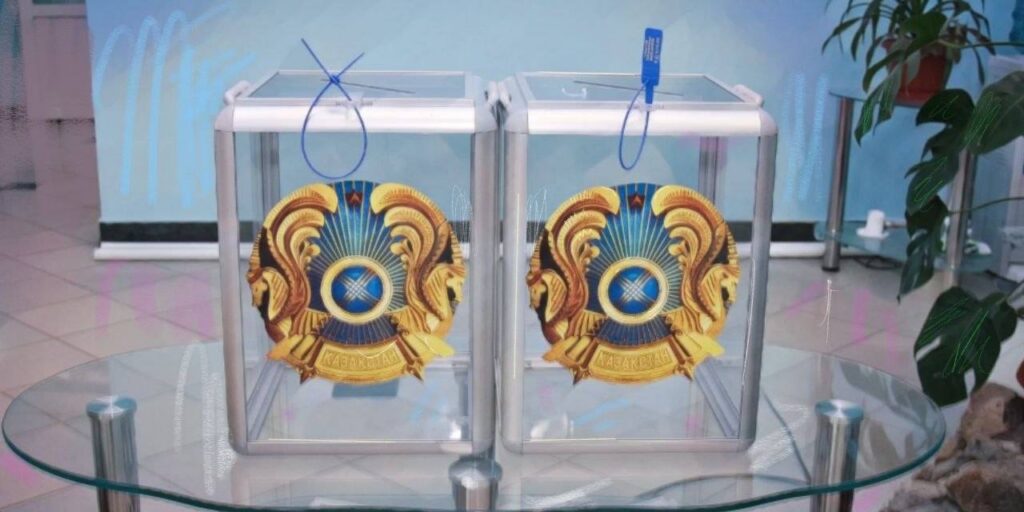
Kazakhstan has allocated 34.3 billion KZT, approximately $73 million, from the government’s reserve fund to finance elections for the country’s newly established Kurultai, the unicameral parliament created under the country’s new Constitution, according to Central Election Commission (CEC) member Mikhail Bortnik. Kazakhstan’s new Constitution entered into force on July 1, replacing the previous bicameral parliament with the Kurultai. Elections for the new legislature are scheduled for August 23. A total of 145 deputies will be elected from party lists. Under the new electoral rules, at least 30% of candidates nominated by each political party must come from three combined categories: women, young people, and persons with disabilities. Speaking on July 14, Bortnik said the election budget would be financed from the government’s reserve because the 2026 state budget had been approved before the constitutional reform and therefore did not include funding for the parliamentary elections. “The budget for the upcoming elections has been prepared based on the needs identified by territorial election commissions and in accordance with electoral legislation, including all expenditures necessary to ensure the legality, transparency, and proper organization of the electoral process,” Bortnik said. The largest share of the funding will cover the work of Kazakhstan’s election administration. More than 70,000 election officials will operate 10,674 polling stations nationwide. Around 8.5 billion KZT, or more than $18 million, roughly 25% of the total budget, has been allocated for organizational expenses, including travel, transport, technical support, ballot printing, equipment, and the establishment of 47 new polling stations. The funding will also cover the preparation of voter information materials, methodological guidance for election officials, public information campaigns, and the operational costs of the Central Election Commission. The CEC is expected to complete the registration of party candidate lists by 6:00 p.m. on July 23. So far, seven political parties have submitted their candidate lists. According to CEC Secretary Shavkat Utemisov, the Adilet Party submitted the largest list, with 186 candidates, while the Nationwide Social Democratic Party submitted the smallest, with 33 candidates. The remaining parties submitted lists ranging from 63 candidates for the Ak Zhol Democratic Party of Kazakhstan to 76 for the Respublica Party. The candidate lists are currently being reviewed by the relevant government agencies to verify that all nominees meet the legal requirements for election. As previously reported by The Times of Central Asia, Kazakhstan’s Constitutional Court recently ruled that President Kassym-Jomart Tokayev remains eligible to seek another presidential term under the country’s 2026 Constitution.

Kazakhstan Joins World’s Top 30 Countries in Cardiac Surgery Development

Kazakhstan has entered the world’s top 30 countries for cardiac surgery, according to the Ministry of Health, citing the country’s growing use of advanced cardiovascular procedures, including heart transplantation and other high-tech surgical interventions. In 2025, Kazakhstan performed 13,106 open-heart surgeries, a 7.2% increase from the previous year. Coronary artery bypass grafting accounted for the largest share of procedures, at 46.1%. It is the standard surgical treatment for severe coronary artery disease and restores blood flow to the heart by bypassing blocked or narrowed arteries. Operations for acquired and congenital heart defects together accounted for 35.8% of all open-heart procedures. “Kazakhstan continues to expand high-tech cardiology and cardiac surgery services, allowing the country to join the world’s 30 leading nations in this field,” the Ministry of Health said. In addition to conventional cardiac surgery, hospitals in Kazakhstan increasingly perform endovascular procedures. These minimally invasive interventions are carried out through small vascular punctures using catheters and other specialized instruments guided by X-ray or ultrasound imaging. According to the ministry, the country’s cardiology centers now provide more than 80 types of high-tech cardiovascular procedures. One of the country’s most notable achievements came in 2025, when surgeons completed Kazakhstan’s 100th heart transplant, highlighting the growing capabilities of the national transplant program and the increasing expertise of domestic specialists. The ministry also reported steady improvements in cardiovascular health indicators. Over the past five years, the incidence of cardiovascular diseases has declined by 15%, while mortality from circulatory system diseases has fallen by 35.1%. The positive trend continued during the first five months of 2026. Cases of circulatory system diseases declined by 6.6%, arterial hypertension by 9.7%, and coronary heart disease by 10.1%. The number of acute myocardial infarctions decreased by 5.7%, while strokes fell by 6.1%. According to the Ministry of Health, these improvements have been driven by the expansion of specialized stroke and cardiac centers, wider availability of high-tech medical care, implementation of modern clinical protocols, improvements in emergency medical services, broader preventive screening programs, and increased access to medicines for patients with cardiovascular diseases. As previously reported by The Times of Central Asia, Kazakhstan has become an increasingly attractive destination for medical tourism, driven by the competitive cost and quality of its healthcare services. In 2025, the country treated approximately 80,000 foreign patients, 4.5 times the 2021 figure. Earlier this year, President Kassym-Jomart Tokayev also argued that Kazakhstan has developed several healthcare advantages that compare favorably with those available in some advanced Western countries.

Tajikistan Develops Gender Equality Strategy and Expands Support for Women

Tajikistan is developing a new strategy to address gender-related social norms for 2027–2036 while expanding programs aimed at increasing women’s economic participation and cooperation with international organizations. The draft strategy was presented at a meeting organized jointly by the Committee for Women and Family Affairs under the Government of Tajikistan and the United Nations Children’s Fund (UNICEF). Representatives of 46 international organizations, development partners, and civil society groups took part in the discussions, the committee said in its review of activities for the first half of 2026. According to the committee, the strategy is intended to serve as the country’s main policy framework on gender equality over the next decade. It aims to address social norms that limit opportunities for women, promote greater participation in economic, political, and public life, and increase support for families. UNICEF is providing technical assistance in developing the document. The initiative builds on Tajikistan’s National Strategy for Enhancing the Role of Women through 2030, adopted in 2021. Under its 2026–2030 implementation plan, the government plans to further increase women’s participation in public administration, business, education, and civic life. It will also continue presidential quota and grant programs that support women’s education and entrepreneurship. One of the government's flagship initiatives is a presidential grant program for women entrepreneurs. This year, authorities received 945 project applications, which are currently under review. The program provides financial support for businesses in manufacturing, agriculture, handicrafts, and services, with the stated goals of creating jobs, increasing household incomes, and expanding opportunities for women-led enterprises. In 2026, Tajikistan was elected to the U.N. Commission on the Status of Women for the 2027–2031 term, a development that authorities say reflects growing international recognition of the country’s work on gender equality. Despite these initiatives, violence against women remains a significant challenge. According to the U.N., more than 2,500 criminal cases involving violence against women have been opened in Tajikistan over the past five years. A national survey also found that 23% of women reported experiencing physical violence at least once, with most incidents occurring within the family.