There is no single Central Asian internet. Crossing a border can turn a freely accessible website into one that is blocked or reachable only through a virtual private network (VPN). The contrast is starkest in Turkmenistan, where years of censorship have created a black market for access to the open internet.
Freedom House’s 2025 Freedom on the Net assessment covers three of the five Central Asian countries. Kyrgyzstan scored 47 out of 100 and retained its Partly Free status. Kazakhstan scored 37, while Uzbekistan scored 29; both were classified as Not Free.
Turkmenistan has the most restrictive system in the region. The largest measurement study of its internet censorship to date tested 15.5 million domains and found that more than 122,000 were blocked. Researchers also identified filtering rules that inadvertently made more than 5.4 million additional domains inaccessible.
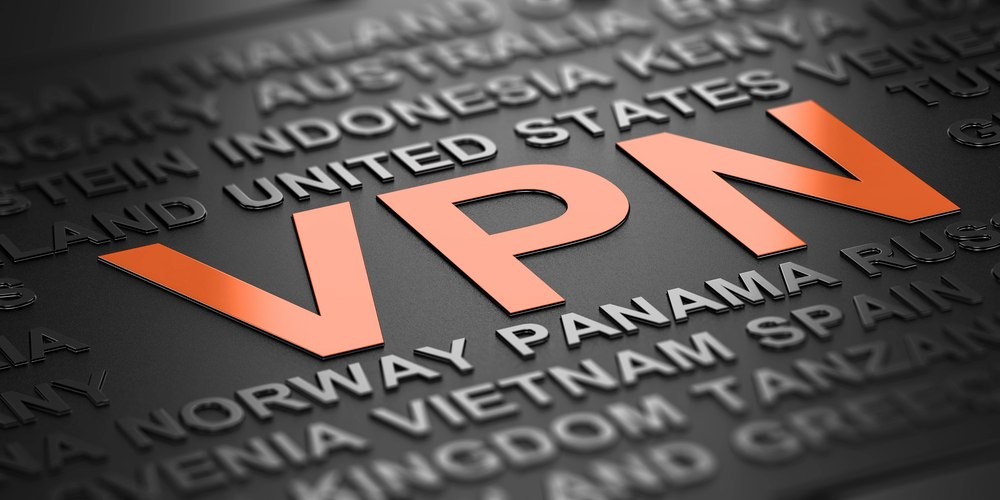
Bypassing these restrictions has developed into a market of its own. In July 2025, VPN keys were being sold for around $50 a month, while access through a connection exempt from government filters cost up to $2,000. Turkmen officials were also alleged to have been involved in selling such access.
Such claims are difficult to verify independently inside one of the world’s most closed countries. Even so, the market illustrates the effect of years of blocking: for some residents, a working VPN can provide access to large parts of the internet that would otherwise remain unavailable.
The situation in Kazakhstan is different. The internet is far more accessible than in Turkmenistan, although the authorities also use technical controls. A study published by the Open Observatory of Network Interference (OONI) found evidence that at least 17 news websites and 73 sites for circumvention tools were blocked between June 1, 2023, and June 1, 2024. The affected sites included independent media and major VPN services.
Researchers also found evidence of Transport Layer Security (TLS) man-in-the-middle attacks, in which a third party intercepts an encrypted connection between a user and a website. This can allow the third party to read or alter the data passing through the connection.
Similar technology prompted an international dispute in 2019, when internet service providers in Kazakhstan instructed users to install a government-issued security certificate capable of intercepting encrypted web traffic. Major browser developers responded by blocking the certificate or preventing their software from trusting it.
Kazakhstan does not, however, operate a closed network. OONI found that some circumvention tools remained accessible, unlike in Turkmenistan, where stable access to the open internet can itself be difficult.
Kyrgyzstan’s online environment has traditionally been more open than those of its Central Asian neighbors, though restrictions have increased in recent years. Freedom House kept the country in the Partly Free category in 2025, lowering its score from 48 to 47. It cited the detention of journalists and activists, as well as pressure on online media.
Government control has also extended to internet infrastructure. In July 2025, President Sadyr Japarov signed a decree giving state-owned operator ElCat a temporary monopoly on international internet traffic. The decree set the one-year trial to run from August 15, 2025, to August 14, 2026.
One of the best-known examples of pressure on independent media has involved Kloop. In 2024, the Supreme Court upheld an order liquidating the outlet’s legal entity. In October 2025, a court declared material published by Kloop and Temirov Live extremist and barred both outlets from publishing online. The ruling also applied to Ait Ait Dese, and the Supreme Court upheld the decision concerning Kloop in March 2026.
Uzbekistan opened access to a number of previously blocked international media and human rights websites in 2019, during the limited liberalization that followed the death of its first president, Islam Karimov, in 2016. The change did not lead to a free internet. Freedom House continues to document site blocking and extensive surveillance. It has also recorded prosecutions over material posted online.
Independent online resources have faced restrictions in Tajikistan for years. The authorities regularly block websites carrying information critical of the government and have imposed wider communications restrictions during unrest. Independent outlets and journalists have also faced sustained legal pressure.
The pressure has been particularly severe during unrest in Gorno-Badakhshan. Internet access in Khorog was cut after protests in late 2021 and remained unavailable for almost four months. In May 2022, Asia-Plus stopped covering renewed unrest after the Prosecutor-General’s Office warned that the outlet could be closed.
Internet access therefore differs widely across Central Asia. Turkmenistan remains the outlier, where a working VPN can determine whether much of the open internet is available. Kazakhstan and Uzbekistan rely more heavily on targeted blocking, while Tajikistan has also imposed prolonged shutdowns during unrest. Kyrgyzstan remains comparatively open, although its earlier advantage has narrowed.