• KGS/USD = 0.01143 0%
  • KZT/USD = 0.00202 0%
  • TJS/USD = 0.10599 -0.19%
  • UZS/USD = 0.00008 0%
  • TMT/USD = 0.28575 0%
  • KGS/USD = 0.01143 0%
  • KZT/USD = 0.00202 0%
  • TJS/USD = 0.10599 -0.19%
  • UZS/USD = 0.00008 0%
  • TMT/USD = 0.28575 0%
  • KGS/USD = 0.01143 0%
  • KZT/USD = 0.00202 0%
  • TJS/USD = 0.10599 -0.19%
  • UZS/USD = 0.00008 0%
  • TMT/USD = 0.28575 0%
  • KGS/USD = 0.01143 0%
  • KZT/USD = 0.00202 0%
  • TJS/USD = 0.10599 -0.19%
  • UZS/USD = 0.00008 0%
  • TMT/USD = 0.28575 0%
  • KGS/USD = 0.01143 0%
  • KZT/USD = 0.00202 0%
  • TJS/USD = 0.10599 -0.19%
  • UZS/USD = 0.00008 0%
  • TMT/USD = 0.28575 0%
  • KGS/USD = 0.01143 0%
  • KZT/USD = 0.00202 0%
  • TJS/USD = 0.10599 -0.19%
  • UZS/USD = 0.00008 0%
  • TMT/USD = 0.28575 0%
  • KGS/USD = 0.01143 0%
  • KZT/USD = 0.00202 0%
  • TJS/USD = 0.10599 -0.19%
  • UZS/USD = 0.00008 0%
  • TMT/USD = 0.28575 0%
  • KGS/USD = 0.01143 0%
  • KZT/USD = 0.00202 0%
  • TJS/USD = 0.10599 -0.19%
  • UZS/USD = 0.00008 0%
  • TMT/USD = 0.28575 0%
15 February 2026

Viewing results 1 - 6 of 239

Opinion: Kazakhstan’s Constitutional Referendum – Strategic Reset or Institutional Consolidation?

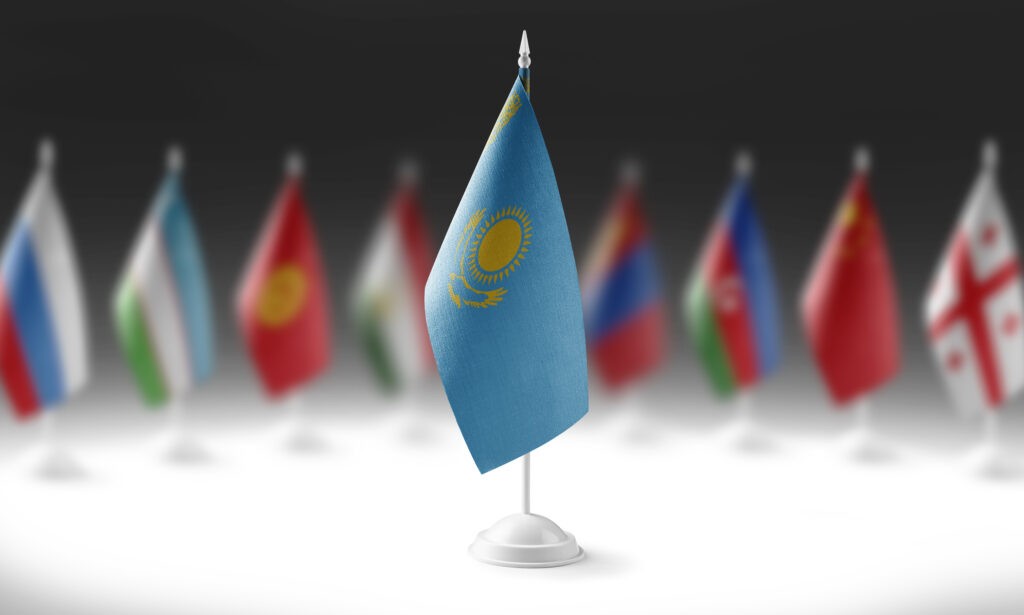
Kazakhstan will hold a nationwide referendum on March 15 to adopt an entirely new constitution – an initiative President Kassym-Jomart Tokayev describes as a decisive break from the country’s super-presidential legacy. The draft, published on February 12 after deliberations by a Constitutional Commission, proposes far-reaching institutional reforms. Among the most notable changes are the replacement of the bicameral parliament with a unicameral body known as the Kurultai; the reinstatement of a vice presidency; and the constitutionalization of commitments to digital transformation, economic modernization, and strengthened sovereignty. The government presents the reform as a necessary modernization of the state in response to global turbulence. Yet the scope and timing of the proposal indicate that the referendum is as much about strategic recalibration as it is about institutional redesign. The Accelerated Timeline The speed of the process has drawn considerable attention. In September 2025, Tokayev advised against rushing constitutional reform and suggested that 2027 would allow sufficient time for public consultation. However, by February 2026, the referendum had been scheduled for mid-March. This abrupt shift suggests a deliberate political calculation rather than simple administrative urgency. One factor under discussion is the legal effect of adopting a wholly new constitution. While reforms in 2022 limited presidents to a single seven-year term, the introduction of a new constitutional order could create ambiguity regarding the continuity of those limits. Even if not explicitly intended as a reset mechanism, such a transformation inevitably introduces flexibility into questions of tenure and succession. Geopolitical pressures also help explain the acceleration. Tokayev has pointed to profound changes in global trade, security alignments, and technological competition. In a world increasingly shaped by sanctions regimes and geoeconomic fragmentation, Kazakhstan seeks to project institutional coherence and responsiveness. Constitutional reform, in this sense, becomes a signal of adaptive capacity. At the same time, the draft completes the political transition that began after the unrest of January 2022. Although earlier amendments removed former President Nursultan Nazarbayev’s constitutional privileges, the 1995 framework remained largely intact. The new proposal replaces that structure altogether, extinguishing residual legal ties to the Nazarbayev era and consolidating a distinct political phase under Tokayev’s leadership. Sovereignty as Constitutional Doctrine A defining feature of the draft is the elevation of sovereignty, independence, territorial integrity, and the unitary nature of the state to foundational, effectively immutable principles. This language carries clear geopolitical resonance, particularly in the aftermath of Russia’s invasion of Ukraine. While Kazakhstan continues to pursue a multi-vector foreign policy, the constitutional entrenchment of territorial integrity reinforces the state’s insistence on inviolable borders. The draft also expands restrictions on foreign financing of political parties and introduces stricter transparency rules for foreign-funded non-governmental organizations. These provisions reflect a doctrine of symmetrical distance: limiting political influence from any external actor, whether Russia, Western governments, or other international stakeholders. The emphasis is not ideological alignment but institutional insulation. Language and Identity: Managed Ambiguity The most domestically sensitive amendment concerns the status of Russian. The draft alters the phrasing from Russian being used “on an equal...

Opinion: Afghanistan and Central Asia – Security Without Illusions

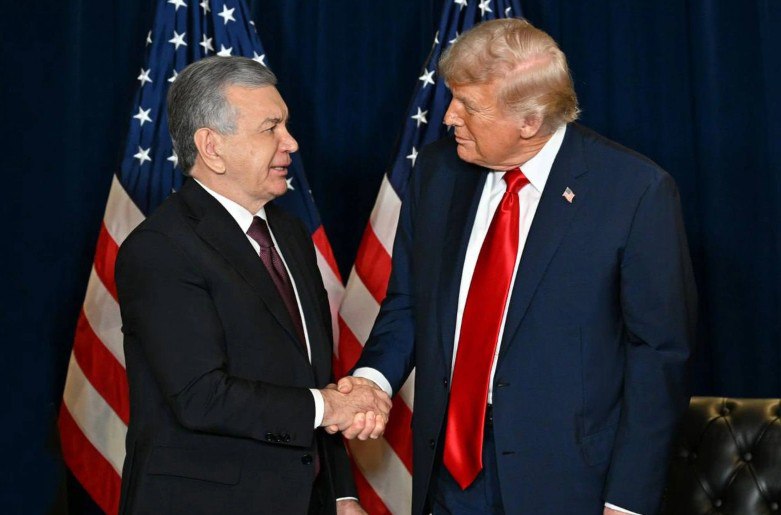
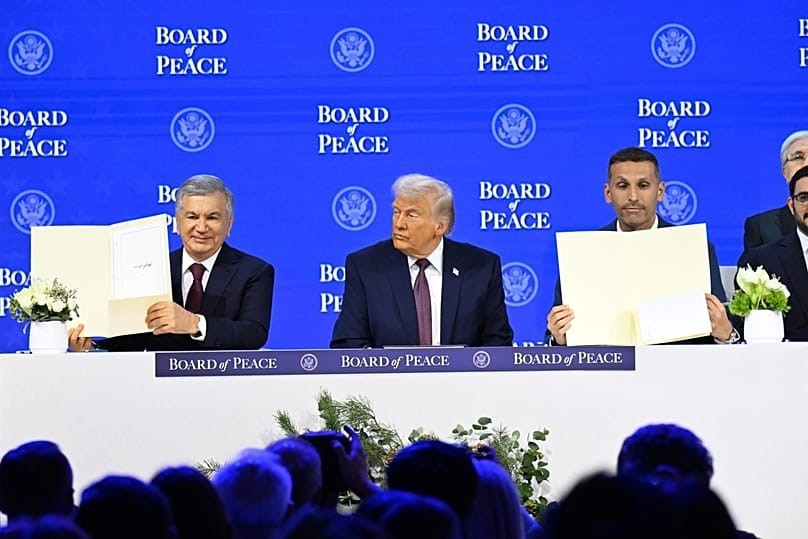
Over the past year, Afghanistan has become neither markedly more stable nor dramatically more dangerous, despite how it is often portrayed in public discourse. There has been neither the collapse that many feared, nor the breakthrough that some had hoped for. Instead, a relatively unchanged but fragile status quo has persisted, one that Central Asian countries confront daily. For the C5 countries, Afghanistan is increasingly less a topic of speculative discussion and more a persistent factor in their immediate reality. It is no longer just an object of foreign policy, but a constant variable impacting security, trade, humanitarian issues, and regional stability. As such, many of last year’s forecasts have become outdated, based as they were on assumptions of dramatic change, whereas the reality has proven far more inertial. Illusion #1: Afghanistan Can Be Ignored The belief that Afghanistan can be temporarily “put on the back burner” is rooted in the assumption that a lack of public dialogue or political statements equates to a lack of interaction. But the actions of Central Asian states show that ignoring Afghanistan is not a viable option, even when countries intentionally avoid politicizing relations. Turkmenistan offers a clear example. Ashgabat has maintained stable trade, economic, and infrastructure ties with Afghanistan for years, all with minimal foreign policy rhetoric. Energy supplies, cross-border trade, and logistical cooperation have continued despite political and financial constraints, and regardless of international debates over the legitimacy of the Afghan authorities. This quiet pragmatism stands in contrast to both isolationist strategies and symbolic or ideological engagement. Turkmenistan may avoid making public declarations about its relationship with Afghanistan, but it nonetheless maintains robust cooperation. This calculated calmness reduces risks without signaling disengagement. Importantly, this approach does not eliminate structural asymmetries or deeper vulnerabilities. But it dispels the illusion that distancing reduces risk. On the contrary, sustained economic and logistical ties foster predictability, without which attempts to “ignore” a neighboring country become a form of strategic blindness. In this sense, Turkmenistan’s experience affirms a broader regional truth: Afghanistan cannot be removed from Central Asia’s geopolitical equation by simply looking away. It must be engaged pragmatically or dealt with later, in potentially more destabilizing forms. Illusion #2: Security Is Achieved Through Isolation Closely related to the first is the illusion that security can be ensured by building walls. Security in Afghanistan, and in the broader Afghan-Pakistani zone, is often seen as an external issue, something that can be kept out by sealing borders or minimizing engagement. Yet in practice, security is determined less by geography and more by the nature of involvement. This is reflected in the recent decision by Uzbekistan and Kazakhstan to participate in U.S. President Donald Trump's “Board of Peace” initiative. While the initiative focuses on resolving crises outside Central Asia, both countries have framed their participation as essential to their own national and regional security interests. As Abdulaziz Kamilov, advisor to the President of Uzbekistan, explained, Tashkent’s involvement stems from three factors: its own security needs, its foreign policy principles,...

Opinion: The New Silk Road to the Sea – Connecting Central Asia to Karachi and Gwadar

A historic shift is quietly but decisively reshaping the economic geography of Eurasia. On 5 February 2026, Pakistan and Kazakhstan agreed to elevate their bilateral relationship to a Strategic Partnership during the state visit of President Kassym-Jomart Tokayev to Pakistan— the first such visit by a Kazakh head of state in 23 years. This moment marked far more than a diplomatic renewal; it signaled a potential turning point in regional connectivity, one that could unlock long-suppressed economic potential across Central Asia and South Asia by overcoming longstanding geographical and logistical barriers. For decades, Central Asia’s landlocked status has imposed structural constraints on its economic growth. High transit costs, dependence on distant or politically sensitive routes, and extended distances to global markets have eroded competitiveness and limited diversification. These challenges were not the result of a lack of resources or ambition, but of geography itself. However, geography need no longer be destiny. Through strategic foresight—particularly under President Kassym-Jomart Tokayev—Kazakhstan and the wider Central Asian region have begun to convert constraint into opportunity by redefining connectivity. President Tokayev has consistently emphasized connectivity as the cornerstone of Kazakhstan’s long-term economic and strategic vision. During his engagements with Pakistan’s leadership, he demonstrated a clear understanding that sustainable prosperity for Central Asia depends on reliable, cost-effective access to warm-water ports. This conviction underpinned the decision to elevate Pakistan–Kazakhstan relations to a Strategic Partnership, recognizing Pakistan not merely as a bilateral partner, but as a gateway to global markets via the Arabian Sea. From a financial and logistical perspective, the implications are profound. Karachi and Gwadar are among the closest seaports to much of Central Asia, significantly closer than many traditional routes to global markets. Every additional kilometer of overland transit results in higher freight costs, longer delivery times, and reduced margins. By connecting Central Asia to Pakistani ports, Kazakhstan and its neighbors stand to substantially lower transportation costs, enhance export competitiveness, and attract greater foreign investment into manufacturing, mining, agriculture, and value-added industries. The most immediate and strategically sound connectivity model emerging from this partnership bypasses the troubled terrain of Afghanistan, long viewed as a chokepoint for regional trade. Under this framework, goods could move seamlessly from Karachi through Pakistan’s railway network to Haripur, then onward via the Karakoram Highway into China. From there, the cargo would seamlessly integrate with the China–Kazakhstan railway system through the established Dostyk–Alashankou corridor. This route is not theoretical; it builds on existing infrastructure, proven logistics, and political stability across all participating states. Financially, this corridor offers predictability—an essential ingredient for trade and investment. Reduced insurance premiums, fewer delays, and stable regulatory environments translate into lower transaction costs. For Central Asian exporters, particularly Kazakhstan, this means improved access to South Asian, Middle Eastern, and African markets. For Pakistan, it positions Karachi and Gwadar as indispensable nodes in Eurasian supply chains, generating port revenues, transit earnings, employment, and industrial growth. At the same time, Kazakhstan’s leadership has demonstrated pragmatic flexibility by supporting additional connectivity options. Regional discussions have included the possibility...

Breaking into Project Vault: A U.S. Role for Central Asia’s Strategic Minerals

The Trump Administration has decided to go head-to-head with Beijing to secure an independent supply chain for critical minerals and insulate U.S. industries from supply shocks. Among many initiatives, the United States launched Project Vault on February 2 to establish a U.S. Strategic Critical Minerals Reserve. The public-private stockpile is expected to secure essential minerals and metals for U.S. national security purposes and high-technology industries. The effort formalizes the U.S. strategy to diversify critical mineral supply chains away from rival China and, in the process, harness broader global capacity. As part of this effort, mineral-rich Central Asia is already factoring heavily in U.S. foreign and economic policy thinking. Participating in the front row of the 2026 Critical Minerals Summit, Kazakhstan and Uzbekistan were invited to engage in Washington’s global effort to build resilient global supply chains. But Project Vault is a critical and separate component of the administration’s focus. Formally approved by the Export-Import Bank of the United States (EXIM) on February 2, Project Vault will be backed with up to $10 billion in long-term financing and an additional $2 billion in private sector participation. In sites across the country, the initiative will establish stores of critical minerals and rare earth elements essential for aerospace, defense, semiconductors, advanced manufacturing, renewables, and electric vehicles. The stockpile’s structure will be operated as a public-private partnership that enables manufacturers, trading firms, and private capital providers to jointly participate. Rare earths, copper, lithium, titanium, scandium, gallium, and germanium are all key minerals highlighted by the U.S. Department of the Interior that underpin modern technologies and demonstrate U.S. vulnerability to supply chain disruptions. Why a Strategic Mineral Reserve? The initiative is a direct response to perceived risks posed by China’s relative control of global critical mineral supply chains and markets, as well as Beijing’s use of trade restrictions, protectionism, and the weaponization of access to certain critical minerals. China controls a commanding share of the mining, refining, and processing of rare earths and related materials. Due to years of strategic planning and investment, Beijing has leveraged state subsidies and pricing controls to develop and secure between 80%-100% of rare earth processing capacities that have dominated international markets and disincentivized competitors for decades. Past export controls and export-license restrictions imposed by Beijing have underscored how critical mineral supply can become a tool of geopolitical leverage. China has at times restricted rare earth exports to Japan, Sweden and the United States in what is defined by many as supply-chain protectionism. Such actions can disrupt U.S. production for industries that rely on stable supplies to manufacture semiconductors, defense systems, and clean energy technologies. Project Vault is, therefore, conceived not merely as a reserve but as a mechanism to stabilize U.S. markets, to reduce reliance on China, and to signal a long-term commitment to diversified supply chains. Much like the U.S. Strategic Petroleum Reserve acts to cushion energy price shocks, the mineral reserve is expected to serve as a similar buffer. Operational and Financial Dimensions Project Vault’s financing model expects a...

Opinion – Qosh Tepa Canal: Transboundary Impacts Without a Transboundary Mechanism

In recent months, media attention has increasingly focused on infrastructure projects underway in Afghanistan. Chief among them is the Qosh Tepa Canal, widely seen not only as an irrigation initiative but as a development with significant transboundary implications for the Amu Darya River basin. The canal draws water from one of Central Asia’s most critical transboundary rivers. For downstream countries, primarily Uzbekistan and Turkmenistan, the Amu Darya is a vital water source, directly linked to agricultural output and the sustainability of rural communities. As such, the conversation surrounding Qosh Tepa extends well beyond Afghanistan’s domestic agenda. Concerns voiced by experts and analysts stem from both the scale of the project and the absence of an inclusive, basin-wide mechanism that includes Afghanistan, which is not a party to the main post-Soviet Amu Darya allocation frameworks. As a result, discussions regarding the canal’s potential impacts are taking place largely outside formal multilateral frameworks. One positive development is the increasing presentation of Qosh Tepa within a broader context, where water flow management is recognized as a factor shaping regional political and economic relations. However, these assessments often highlight not the canal’s stated purpose, but rather the absence of a sustainable mechanism for coordinating discussion of its cross-border effects. [caption id="attachment_43173" align="aligncenter" width="1280"] Image: TCATCA[/caption] A recurring concern among experts is the lack of a structured multilateral platform that enables early-stage evaluation of such projects before they are perceived as risks. Infrastructure development in the region frequently outpaces the establishment of mechanisms for joint impact assessment and management. In this light, Kazakhstan’s initiative to establish a specialized structure within the UN system, the International Water Organization, acquires particular relevance. This proposal is not about building a theoretical global agenda but about addressing a specific institutional gap: the lack of a neutral forum for technical and expert discussion of transboundary water projects at an early stage. The Qosh Tepa Canal, currently a unilateral infrastructure undertaking rather than the result of an international agreement, could serve as a test case for such a preventive mandate. While the project is already underway and its transboundary implications are actively being discussed among experts, it has not yet escalated into a regional dispute. This creates an opportunity for professional dialogue, without entanglement in political or status-related debates. The present situation can be summarized as one of “transboundary implications without a transboundary mechanism.” The project, while entirely within Afghan territory, objectively affects the interests of downstream states, yet it remains disconnected from any multilateral framework for consultation or agreement. Is it in Afghanistan’s interest to engage in multilateral formats? Though the question is often left unanswered, the answer is a clear “yes.” Such engagement would help dispel suspicion not only among Central Asian states, but also in Iran and Pakistan, both of which have voiced concerns over shared water resources. First, it would reduce negative external rhetoric. Currently, Qosh Tepa is largely discussed via external media with alarmist scenarios and with little to no Afghan participation. This reinforces the image...

Opinion: Tokayev’s National Kurultai Address: A Moral Message, Not a Political One

On January 20, 2026, Kassym-Jomart Tokayev, the President of Kazakhstan, addressed the nation at a session of the National Kurultai, an age-old platform for public dialogue, akin to a wise men’s council – at any rate, that’s how it’s often billed. To no one’s surprise, Tokayev pressed ahead with his stated agenda of political reform, highlighting foreign, economic, and development policies and goals. While not devoid of interest, those parts of the speech felt like little more than window dressing that tended to obscure the address’s underlying fire and true import. Tokayev’s oration seemed at points to echo Alexis de Tocqueville’s ideas in Democracy in America: nations endure only when citizens pair civic participation with moral virtue and personal responsibility, because unchecked individualism ultimately weakens free societies and institutions, regardless of the presence of law and order. On closer examination, Tokayev’s thinking reflects Tocqueville’s view that building democracy is hard but doable. As Tocqueville wrote: “nothing is more wonderful than the art of being free, but nothing is harder to learn how to use than freedom,” pointing towards the belief that nation-building depends on freedom bound to virtue. Tokayev’s Kurultai message went far beyond a list of technical fixes, platitudes about the economy, and empty cheerleading. Nor did it read as a sleight of hand or bait-and-switch tactic to preserve power in the face of a failing democracy. Those familiar with Tokayev know he has called for Tocquevillian-like responsible citizenship for years, which, to be sure, requires at times tough love. Tokayev drove home a familiar theme, that the nation’s fate rests on the character and outlook of its people—not just on its economy, wealth, and politics. He maintained that traditional values present the vital adhesive of society, without which, every effort at statecraft withers—or worse, becomes easy prey to unsavory ambitions or certain secular ideologies which have taken on religious force in modern culture. At the heart of Kazakhstan’s future, Tokayev thinks, there must lie a commitment to enduring human principles and timeless truths: unity, selflessness, sharing, mutual understanding, patience, compromise, and common sense. These values are not solely theoretical constructs but qualities evident for successful outcomes. They positively shape family formation, social relations, conflict resolution, and citizens’ engagement with the state and outsiders. What’s more, economic and institutional strength is only possible when built upon a society united by common values, clarity of purpose, and a spirit of service. Transforming Public Consciousness President Tokayev stressed that changing minds matters more than changing laws and hollow pep talks. Without a common moral compass, nation-building is fragile. Strong cultural and spiritual roots foster social cohesion, building trust, identity, and civic duty. Towards this end, he urged the older generation “to promote the values of work and enterprise, and wean young people from verbosity, glorification, laziness, indifference, and idleness.” Tokayev’s strategy for consolidating national consciousness focuses on two core investments: on advancing cultural infrastructure (museums, theatres, libraries) and creative capital, thereby recharging towns and schools as sites of learning, dialogue, and shared...