• KGS/USD = 0.01144 0%
  • KZT/USD = 0.00209 0%
  • TJS/USD = 0.10438 0%
  • UZS/USD = 0.00008 0%
  • TMT/USD = 0.28490 0%
  • KGS/USD = 0.01144 0%
  • KZT/USD = 0.00209 0%
  • TJS/USD = 0.10438 0%
  • UZS/USD = 0.00008 0%
  • TMT/USD = 0.28490 0%
  • KGS/USD = 0.01144 0%
  • KZT/USD = 0.00209 0%
  • TJS/USD = 0.10438 0%
  • UZS/USD = 0.00008 0%
  • TMT/USD = 0.28490 0%
  • KGS/USD = 0.01144 0%
  • KZT/USD = 0.00209 0%
  • TJS/USD = 0.10438 0%
  • UZS/USD = 0.00008 0%
  • TMT/USD = 0.28490 0%
  • KGS/USD = 0.01144 0%
  • KZT/USD = 0.00209 0%
  • TJS/USD = 0.10438 0%
  • UZS/USD = 0.00008 0%
  • TMT/USD = 0.28490 0%
  • KGS/USD = 0.01144 0%
  • KZT/USD = 0.00209 0%
  • TJS/USD = 0.10438 0%
  • UZS/USD = 0.00008 0%
  • TMT/USD = 0.28490 0%
  • KGS/USD = 0.01144 0%
  • KZT/USD = 0.00209 0%
  • TJS/USD = 0.10438 0%
  • UZS/USD = 0.00008 0%
  • TMT/USD = 0.28490 0%
  • KGS/USD = 0.01144 0%
  • KZT/USD = 0.00209 0%
  • TJS/USD = 0.10438 0%
  • UZS/USD = 0.00008 0%
  • TMT/USD = 0.28490 0%

Viewing results 85 - 90 of 266

Opinion: In Central Asia, the EU Defies Its “Geopolitical Dwarf” Label

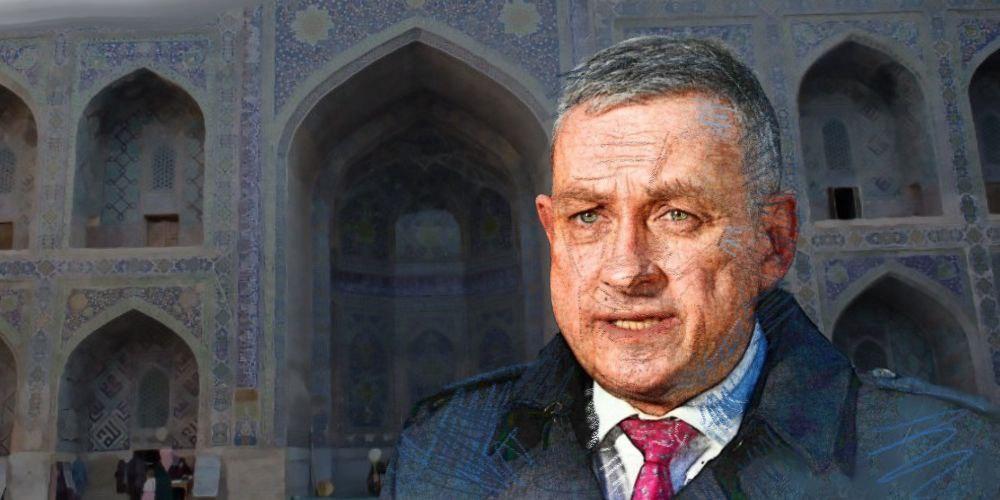
As the United States and Russia reportedly aim to create a new global security architecture, other major actors in the international arena are working to improve their positions in the redefined world order. Often underestimated in terms of its geopolitical influence, the European Union has actively focused its attention on the post-Soviet space, particularly the strategically important Central Asian region. The EU, despite Russia’s and the United States' attempts to undermine its role in the settlement of the Ukraine War and to portray it as a “geopolitical dwarf”, is seeking to increase its presence in global affairs. In Central Asia, the 27-nation bloc is often viewed as a key actor that Kazakhstan, Uzbekistan, Kyrgyzstan, Tajikistan, and Turkmenistan can rely on to balance China’s growing dominance, as well as their security and dependence on Moscow. The EU's desire to strengthen cooperation with Central Asia can be seen as Brussels’ attempt to reduce Russia's influence in the region. Indeed, bogged down in Ukraine, Moscow is slowly but surely being pushed out of Central Asia – a region that has traditionally been within the Kremlin’s geopolitical orbit. As a result, China has managed to significantly increase its economic presence in all five Central Asian nations. The EU is now attempting to do the same. The recent visit of the European Commissioner for International Partnerships Jozef Síkela to Central Asia, as well as the upcoming EU-Central Asia summit scheduled for April 3-4, 2025 in Samarkand, clearly indicates the intensifying geopolitical competition between the EU and China over the region. One of Síkela’s major goals was to expand the scope of the EU's investment strategy, Global Gateway, in Central Asia. The project, launched in 2021, is often viewed as the EU’s version of China’s Belt and Road Initiative (BRI). As part of its strategy to increase its economic presence in Central Asia, the European Union seems to have four priorities: the development of transport infrastructure (particularly the Trans-Caspian International Transport Route, also known as the Middle Corridor), cooperation in raw materials, digital connectivity, and the development of the water resources, energy, and climate sectors. The problem for Brussels is that China, due to its proximity to Central Asia and the lack of bureaucratic procedures, is ahead of the EU in most, if not all of these areas. Beijing has had 12 years to strengthen economic ties with the region through the BRI. As a result, in 2024, China’s overall turnover with Central Asia reached $94.8 billion, nearly double the EU's trade volume with the region in 2022, which stood at $47 billion. Last year, the world’s second-largest economy replaced Russia as Kazakhstan's biggest trade partner. In neighboring Uzbekistan, it remains the top trading partner, while in Tajikistan, over the past 18 years, China has become the major investor in the landlocked nation’s economy. The same applies to Tajikistan and China’s neighbor Kyrgyzstan. The European Union, however, is now intensifying its efforts to position itself as a major foreign power operating in Central Asia. According to...
Power Shifts in Central Asia: The Unpredictable Path of Leadership

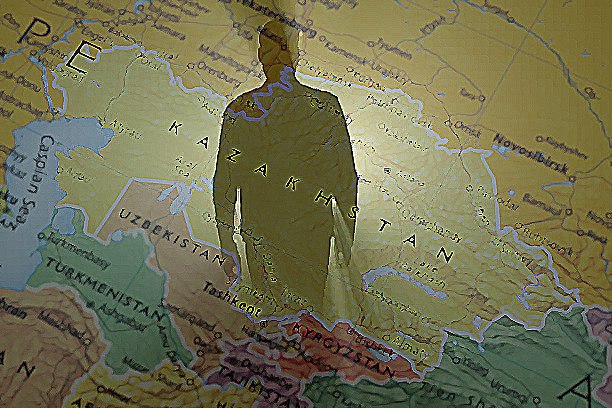
European Union Commissioner for International Partnerships Josef Sikela has concluded his tour of Central Asia, a visit conducted against the backdrop of global geopolitical turbulence. Unlike previous engagements, where European officials often criticized the region’s leadership for a lack of democratic progress, Sikela refrained from making demands on local governments. Historically, Europe has accused Central Asian states of authoritarianism and the entrenchment of long-serving leaders. However, the idea that power is uniquely permanent in the region is increasingly questioned. Critics point to Western examples, such as Angela Merkel’s 16-year tenure as Germany’s chancellor, and alleged electoral manipulation within the EU, such as in Romania, where elections were annulled after an undesired candidate’s victory. Meanwhile, in Central Asia, even presidents once considered “eternal” have eventually left office, sometimes peacefully, sometimes under turbulent conditions. Kyrgyzstan: The Unpredictable Outlier Kyrgyzstan is often described as a "democratic exception" within Central Asia, yet its history is marked by political instability and frequent leadership changes, arguably more so than in many of the world’s most conflict-prone regions. The country’s first president, Askar Akayev, held power from 1990 to 2005. Though re-elected three times, his rule ended in March 2005 when protests erupted over parliamentary election results that heavily favored pro-government candidates. Demonstrators stormed the Government House in Bishkek, prompting Akayev to flee. Reports, though unverified, claimed he was smuggled out wrapped in a carpet. Following Akayev’s ouster, Kurmanbek Bakiyev took power, but his rule ended in 2010 after violent unrest. His downfall was allegedly facilitated by Kazakhstan’s intelligence services, and he later found political asylum in Belarus under President Alexander Lukashenko. Since Bakiyev’s departure, Kyrgyzstan has continued to experience political turbulence. Presidents Almazbek Atambayev (2010-2017) and Sooronbai Jeenbekov (2017-2020) both left office under pressure. Atambayev’s tenure saw a diplomatic fallout with Kazakhstan, while Jeenbekov resigned in 2020 amid protests over parliamentary elections. His successor, Sadyr Japarov, remains in office, but whether he will complete his term is an open question. Uzbekistan: Reform Within Limits Islam Karimov, Uzbekistan’s first post-Soviet leader, ruled for over 26 years before his death in 2016. While he maintained a strictly centralized government, his tenure was also marked by violent crackdowns, most notably the Andijan uprising in 2005, which resulted in a Western diplomatic fallout​. His successor, Shavkat Mirziyoyev, has introduced some reforms, loosening restrictions on civil liberties and the economy. However, the fundamental structure of state control remains intact, with opposition movements still tightly monitored. Kazakhstan: From Nazarbayev to Tokayev Kazakhstan’s transition from Nursultan Nazarbayev to Kassym-Jomart Tokayev is often described as managed succession rather than a genuine power shift. Nazarbayev, who led Kazakhstan for nearly three decades, officially stepped down in 2019, yet retained significant influence until the January 2022 unrest, which forced him to relinquish much of his remaining power. These protests, initially sparked by fuel price hikes, rapidly escalated into anti-government riots. While official accounts describe the unrest as an attempted coup orchestrated by figures within Nazarbayev’s inner circle, critics suggest Tokayev used the crisis to consolidate power....

Opinion: Are Kazakhstan and the U.S. Reaching Common Ground on Sovereignty and Mutual Engagement?

Kazakhstan’s President Kassym-Jomart Tokayev has made his position clear: his country must remain sovereign, and activities to exert foreign influence should be closely monitored. The message from Astana is that cultural impositions from abroad are not welcome. Tokayev’s longstanding view that Kazakhstan’s democracy should evolve on its own terms has gained new traction with the return of U.S. President Donald Trump to the White House. Washington's avoidance of values-based diplomacy in favor of a hard-nosed, transactional model reinforces Astana’s instincts and creates an opening for a new kind of engagement between the two. "The so-called democratic moral values," Tokayev said, "have been imposed on many countries for decades." Moreover, "under this guise, open interference in the internal affairs of states through international non-governmental organizations and foundations has become widespread. Its ultimate goal," he concluded, "is only theft, that is, pocketing billions of dollars in budgets." For decades, the U.S. policy in Central Asia was fixated on democratic governance, press freedoms, and minority rights, seeking to advance these objectives through NGO funding and media support. In principle, these directions align with Kazakhstan’s own institutional reforms. In practice, however, they became points of friction. Astana has pursued decentralization and anti-corruption measures on its own terms, so any tension with Washington did not concern governance itself. It was, rather, about Washington’s insistence on deeper cultural and political shifts. The unease was not hypothetical. It was spelled out in statements by U.S. officials visiting Kazakhstan. They "were glad to discuss key human rights issues including the freedoms of expression and peaceful assembly, and respect for the rights of disabled persons, members of the LGBTQI+ community, and political prisoners." Moreover, these issues were framed as non-negotiable pillars of engagement, without reference to the cultural context of Kazakhstan’s legal and political traditions. In some cases, the “political prisoners” were propped up by NGOs funded by the U.S. Government. From Washington’s perspective, these were essential democratic norms; from Astana’s, they were foreign expectations imposed from outside. In truth, Kazakhstan had seen this dynamic before. Its wariness of Western-backed NGOs was informed by patterns of events. In Astana’s view, some so-called civil society initiatives weren’t merely fostering grassroots activism. They were vehicles for political engineering. For instance, Mukhtar Ablyazov, who remains accused of embezzling $10 billion from Kazakhstan's BTA Bank, fled to Britain in the mid-2000s before escaping criminal charges to France, where he was granted asylum until being ordered to leave in 2023. Despite his history of corruption, he rebranded himself as a political opposition figure and human rights leader, cultivating a network of international NGOs and earning significant support within the European Union. As recently as February 2025, he and his NGO allies received backing from members of the Parliamentary Assembly of the Council of Europe. A similar strategy has been employed by public figures like Bergey Ryskaliyev, Akezhan Kazhegeldin, and Karim Massimov. These individuals, despite facing criminal allegations, have amassed significant wealth that appears to have been used to fund lobbyists, NGOs, media and other...

Opinion: What the Loss of RFE/RL Would Mean for Central Asia

The decision to terminate the federal grant agreement funding for Radio Free Europe/Radio Liberty (RFE/RL) is a crushing blow for hundreds of millions of people. These people know their governments are not telling them the full truth about what is happening in their countries or in the world outside. The objective information provided by RFE/RL has been important to people such as these. Perhaps as important, since the end of the Cold War, was the platform RFE/RL provides, whenever possible, for people in these countries to explain their views to the outside world. I know, because I worked at RFE/RL for 25 years covering Central Asia. RFE/RL was founded in 1950, and I didn’t show up there until 1997. I can only speak about what I saw and heard when I was an RFE/RL employee. My understanding of my tasks as an RFE/RL employee was that we were supposed to keep close track of what was happening in Central Asia, cover as many of the important topics of the region as possible, and make objective and accurate information on these topics available to the people in Central Asia. During Tajikistan’s 1992-1997 civil war, for example, RFE/RL’s Tajik service, Radio Ozodi, was the most trusted source of information for the people of Tajikistan. During the Coronavirus pandemic, the Turkmen government would not even allow the word COVID to be spoken and denied there were any cases of the virus in the country, leaving RFE/RL’s Turkmen service, Azatlyk, as one of the only sources of information for Turkmenistan’s people about the illness. I lived in Central Asia before joining RFE/RL, so I had some idea of what was important to people there. Calling for respect for fundamental rights is a big part of RFE/RL’s work. Read the constitutions of any Central Asian country and you will see enshrined there the right to freedom of speech, freedom of assembly, the right to freely receive or disseminate information, and much more. In practice, these rights are not always observed in Central Asia. In such a situations RFE/RL’s Central Asian services are a voice for those who, with good reason, are afraid to speak out publicly, or more importantly, for those who did speak out and are punished for that. At RFE/RL we looked for “impact stories,” testimony from people of the region about unfulfilled government promises, abuses, or state mismanagement that were hurting communities and individuals. Central Asian government officials are among the most faithful RFE/RL listeners, and often RFE/RL reports that raised social issues led officials to rectify the situation. Ramshackle buildings or schools were suddenly repaired, electricity or running water became accessible to city districts and rural areas, sufficient food became available to communities. The pleas of average citizens too often fell on deaf ears in government halls, but the criticism of an international organization such as RFE/RL, which was broadcasting to the entire country and Central Asian region, was too embarrassing for officials to ignore. This made RFE/RL unpopular with Central...

Kazakhstan’s Geoeconomic Rise and Why the U.S. Must Act Now – Opinion

The recent call between U.S. Secretary of State Marco Rubio and Kazakhstan’s Deputy Prime Minister and Foreign Minister Murat Nurtleu highlights an evolving but structurally inevitable dynamic: the growing convergence of interests between Washington and Astana. Kazakhstan has been explicit about its priorities — independence, sovereignty, territorial integrity, and balanced external relations. The U.S. has strategic imperatives that align directly with what Kazakhstan can offer, particularly in the domains of supply chain diversification, energy security, and critical minerals. The two countries now have the opportunity, reinforced by shifts in global economic and security networks, to establish a substantive and resilient bilateral relationship. Since the dissolution of the Soviet Union, Kazakhstan has pursued an adaptive strategy of multi-vector diplomacy. This balancing mechanism is not merely a preference but rather an intrinsic requirement for preserving its sovereignty in a structurally asymmetric regional environment that is dictated by its geostrategic positioning. U.S. policymakers should recognize that Kazakhstan’s entanglements with Russia through security frameworks and its economic cooperation with China are not exclusionary choices. They are stabilizing counterweights that act to sustain Kazakhstan’s agency. The U.S. must embed itself within this framework. This means serving as a complementary pillar of economic and strategic equilibrium and not supplanting those existing ties. That means Washington’s approach has to pivot. For too long, U.S. engagement with Kazakhstan has been episodic and reactive, lacking internal logic and conditioned by external crises. Diplomatic rhetoric on democratic values and governance, while relevant, cannot substitute for material economic and strategic interdependence. For the U.S. to secure a meaningful place in Kazakhstan’s geopolitical architecture, it must offer tangible incentives through structured economic integration that reinforces Astana’s sovereignty. The two countries’ geoeconomic interests coincide most strongly in the issue areas of energy security, critical minerals, and telecommunications infrastructure. Vulnerabilities exposed by recent global shocks have forced the U.S. to recalibrate toward supply chain resilience. In this context, redundancy and diversification are no longer inefficiencies but have become security imperatives. Kazakhstan’s relevance to these concerns is a direct consequence of its resource endowments and logistical positioning. Energy security is the first pillar of stabilization. Kazakhstan, one of the world’s foremost uranium producers and a major oil and gas supplier, has continually expanded non-Russian export corridors westward to reduce its dependence on Russian transit routes. The U.S., having maintained a legacy of investment in Kazakhstan’s energy sector, should now move toward embedding its involvement within these diversified export pathways. This win-win solution would ensure that Kazakhstan’s resource flows are not beholden to Russian infrastructure bottlenecks. Critical minerals represent the second pillar. The U.S. legislative push under the Inflation Reduction Act (IRA) and the CHIPS Act mandates a diversification of supply chains for rare earth elements (REEs) and other critical materials. Kazakhstan’s reserves of REEs, copper, and other industrial inputs logically make it an important node in a decentralized, resilient industrial network. However, investment must not remain exclusively extractive in nature. The objective must be to integrate Kazakhstan into midstream processing and value-added production, again producing...

Kyrgyzstan’s Economic Boom or Bust? Calls for Inclusive Growth Persist

Kyrgyz President Sadyr Japarov declared late last year that the country’s economic growth had reached historic milestones, with GDP maintaining positive momentum. However, local economists remain skeptical about the broader impact of this growth. In 2020, Kyrgyzstan’s GDP stood at 639 billion KGS ($7.3 billion), according to official data. By the end of 2025, this figure is projected to reach 1.8 trillion KGS ($22 billion). Growth Without Inclusion In an interview with The Times of Central Asia, economist Nurgul Akimova acknowledged that the reported 9% GDP growth and the so-called “leopard’s leap” frequently mentioned by the government are positive developments. However, she stressed that for economic expansion to be meaningful for ordinary citizens, it must be inclusive. "Nine percent growth is not inclusive because it does not create additional jobs. The main drivers of our economic growth are construction, downstream industries, and the financial sector. These sectors do not contribute to improving human capital. In construction, for instance, a significant portion of costs goes toward imported building materials," Akimova explained. According to Akimova, Kyrgyzstan’s economy has followed an inertia-driven trajectory for the past 30 years, avoiding major shocks but also failing to achieve significant breakthroughs. She pointed out that if the garment sector were growing, it would have a greater impact, as it did 15 years ago when Kyrgyz-made clothing was exported to neighboring countries. "For example, a seamstress spends her income on education, healthcare, and consumption. By doing so, she contributes to the development of other inclusive sectors, benefiting society as a whole," Akimova said, adding that while the economy is expanding, it is not improving the welfare of citizens. A People-Centered Economy Akimova emphasized that economic policy should prioritize people’s wellbeing, as failure to do so could erode public trust in the government. She also criticized official comparisons of Kyrgyzstan’s economic growth with other countries, arguing that such assessments lack context. "Officials claim Kyrgyzstan is growing faster than others, but an economy that produces microchips and one that manufactures T-shirts are fundamentally different. These industries require distinct investment levels, equipment, and human capital." Kyrgyzstan’s economy is currently valued at approximately $14 billion. If the country were to sustain an annual 10% growth rate, as authorities suggest, GDP would increase by $1.4 billion per year. Akimova highlighted that this figure represents only 0.5% of Kazakhstan’s economic growth, 0.06% of Russia’s, and a mere 0.0006% of the United States’ GDP expansion. "When we hear claims that we are growing faster than others, we must consider the scale and complexity of economic processes," the economist concluded.