• KZT/USD = 0.00220
  • TJS/USD = 0.10850
  • UZS/USD = 0.00008
  • TMT/USD = 0.29850
  • KZT/USD = 0.00220
  • TJS/USD = 0.10850
  • UZS/USD = 0.00008
  • TMT/USD = 0.29850
  • KZT/USD = 0.00220
  • TJS/USD = 0.10850
  • UZS/USD = 0.00008
  • TMT/USD = 0.29850
  • KZT/USD = 0.00220
  • TJS/USD = 0.10850
  • UZS/USD = 0.00008
  • TMT/USD = 0.29850
  • KZT/USD = 0.00220
  • TJS/USD = 0.10850
  • UZS/USD = 0.00008
  • TMT/USD = 0.29850
  • KZT/USD = 0.00220
  • TJS/USD = 0.10850
  • UZS/USD = 0.00008
  • TMT/USD = 0.29850
  • KZT/USD = 0.00220
  • TJS/USD = 0.10850
  • UZS/USD = 0.00008
  • TMT/USD = 0.29850
  • KZT/USD = 0.00220
  • TJS/USD = 0.10850
  • UZS/USD = 0.00008
  • TMT/USD = 0.29850
30 October 2026

Viewing results 49 - 54 of 275

Opinion: Kazakhstan’s New Income Growth Plan – Administrative Measures Against Market Realities

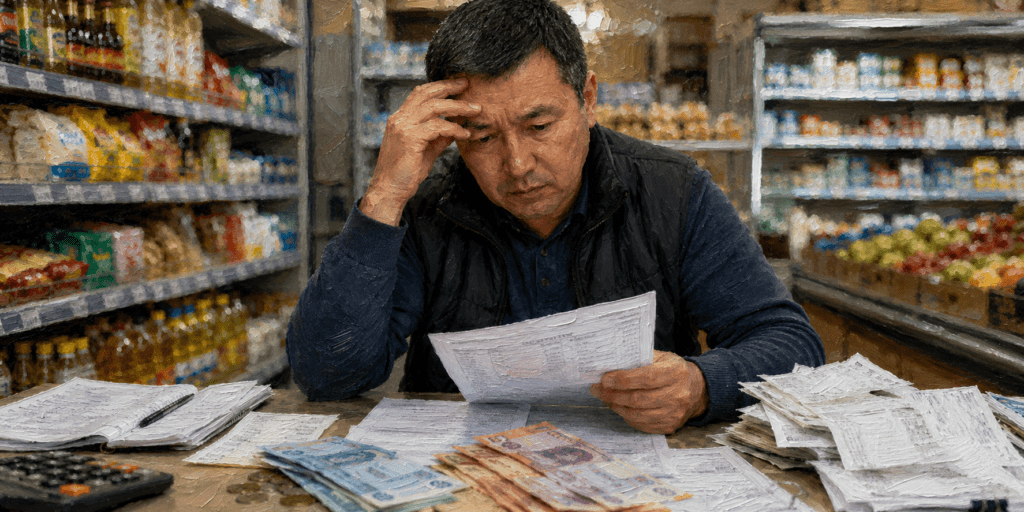
Kazakhstan’s government has unveiled a Comprehensive Plan to Increase Household Incomes for 2026-2029. The Ministry of National Economy says it contains 59 measures. The stated goals include higher wages and lower inflation. The plan also aims to ease household debt. The full text of the plan has not yet been published in open access. First Vice Minister Azamat Amrin presented its main provisions at a Government press conference on June 11. The central contradiction lies in the fact that guaranteed income growth applies to only a small segment of the population. The plan creates fundamentally different conditions for the public and private sectors. It provides for mandatory salary indexation for civil servants. Their wages will be revised every three years based on accumulated inflation. According to labor market data, this category includes about 85,000 to 90,000 people less than 1% of the country’s total workforce of around 9.3 million. It is this narrow group that receives a reliable long-term mechanism of financial protection. Indexation is also planned for employees of national companies and natural monopolies. This group includes around 700,000 to 800,000 people, or 8-9% of the labor market. Employees in the social sector, teachers, doctors, and others, receive their salaries directly from the state budget. This category numbers around 1.2 million to 1.3 million people, or 13-14% of the workforce. Under Kazakhstan’s law on public service, these workers are not considered part of the state administrative apparatus. The plan does not introduce automatic three-year indexation for them; their incomes are raised through separate government decrees, usually on an annual basis depending on budgetary capacity. More than 7 million people work in the competitive private sector, small and medium-sized businesses, as well as the self-employed, accounting for more than 75% of the workforce. For this dominant category, the plan offers no direct mechanisms for income growth. Instead of financial guarantees, the document proposes using an administrative lever: officials will hold talks with private business owners to encourage them to raise wages. The only basic indicator directly affecting the incomes of low-paid private sector workers is the minimum wage. However, the government has postponed revising the minimum wage until August 2026. Private business bears the main market risks and forms the country’s tax base. It is these taxes that finance guaranteed incomes in the public sector, which in total accounts for around a quarter of the labor market, while the overwhelming majority of working citizens, about three-quarters, have no comparable protection. Economist Murat Temirkhanov, an adviser to the chairman of Halyk Finance who took part in expert discussions of the government’s plan, says this approach distorts market relations. A directive requirement to raise wages could push businesses away from formal hiring and into the shadow economy to cut costs. In his view, the plan ignores the only real source of income growth: higher labor productivity. The document devotes only one point to this factor, even though international institutions such as the International Monetary Fund and the World Bank have directly recommended...
Opinion: Data Sovereignty Will Decide Central Asia’s Critical Minerals Moment

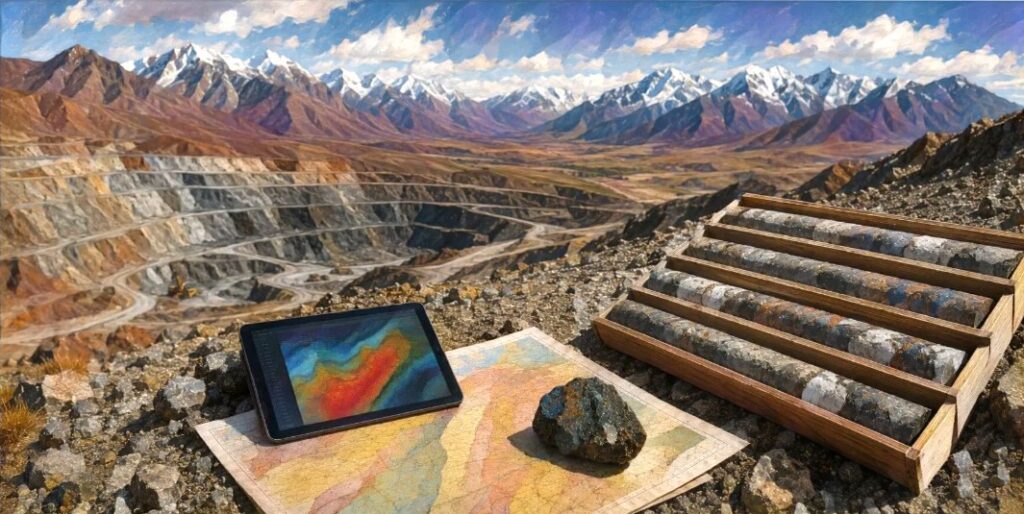
The critical minerals conversation across Central Asia still too often begins in the wrong place: with what lies beneath the ground. It should begin with who controls the knowledge of what lies beneath it. For more than a century, the resource bargain usually ran in one direction. Foreign companies arrived with the instruments, surveys, and models. Host governments arrived with the territory. The resulting terms were often shaped by information asymmetry: not only who owned the rock, but who owned the data about the rock. That asymmetry is easier to narrow than it used to be. Airborne geophysical surveys, satellite-based mapping, modern geochemistry, and national geological databases can now give governments a clearer picture of their mineral endowment before the first serious investor meeting. The decisive question is not simply whether data can be generated. It is who owns it, who validates it, and who is allowed to use it when concessions, joint ventures, and infrastructure commitments are being negotiated. Capital is the reason this matters now. Critical minerals are no longer a specialist mining issue; they sit at the center of debates over energy security, electric vehicles, grid infrastructure, semiconductors, and defense supply chains. The IEA's Global Critical Minerals Outlook 2025 tracks how demand and supply are shifting across copper, lithium, nickel, cobalt, graphite, and rare earth elements. The U.S. C5+1 Critical Minerals Dialogue and the EU's strategic partnership with Kazakhstan show that Central Asia is already part of this conversation. But attention is not the same as leverage. Governments that negotiate from outdated maps, fragmented archives, or company-controlled exploration data will struggle to turn geopolitical interest into durable national benefit. They may still attract investors, but they will be negotiating through someone else's lens. A country that arrives at the table with modern, independently verifiable geological intelligence has more options. It can better value concessions, compare competing proposals, set clearer environmental and infrastructure expectations, and decide which resources are strategic enough to develop slowly rather than quickly. Data does not guarantee a good agreement. It does make a bad agreement harder to excuse. This is sovereignty in a practical form. The point is not to close the door to foreign capital or technical expertise. Central Asia will need both. The point is to ensure that the public side of the table has a master copy of the evidence. When the state owns the underlying data, investors can still compete on capital, technology, processing capability, logistics, and market access. What they should not control is the government's basic understanding of its own resource base. There is also a diplomatic dimension. The Minerals Security Partnership Forum is built around responsible, diverse, and resilient value chains, with Kazakhstan and Uzbekistan among its members. For Central Asian governments, that creates an opening to ask not only who will mine, but who will build capacity - and who will leave the country with stronger institutions than before. Geological data, mining cadastres, processing plans, environmental baselines, and contract terms are all part of the...

Opinion: Indian Ambassador Says Shared Spiritual Legacy Reflects Indo-Uzbek Solidarity

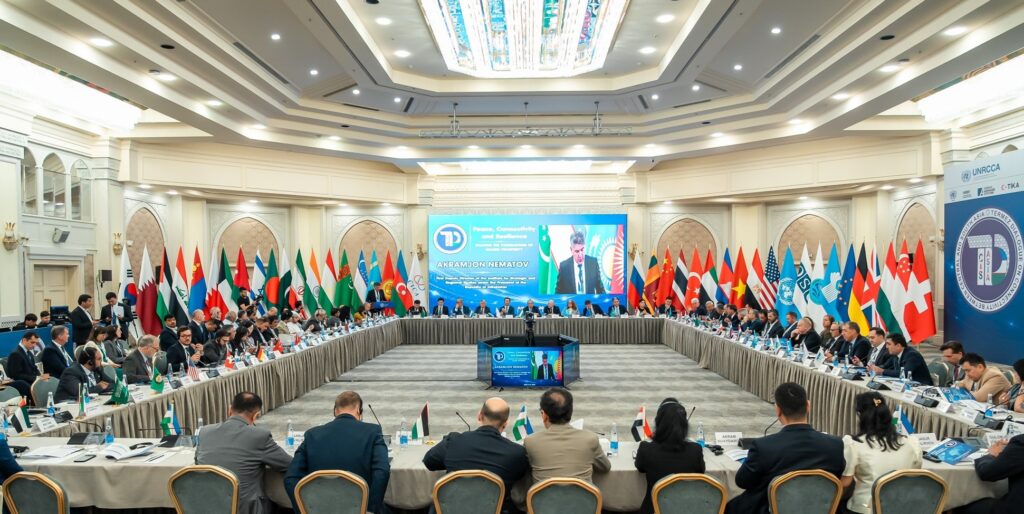
TASHKENT, June 10, 2026 - Indian Ambassador to Uzbekistan Smita Pant used her official remarks at the Termez Dialogue 2026 to argue that connectivity between Central and South Asia cannot be judged by infrastructure alone. Roads, railways, ports, energy links, financial channels, and digital systems are essential. But durable cooperation also depends on confidence, cultural memory, and a willingness to treat sovereignty as a condition for partnership rather than an obstacle to it. The second meeting of the Termez Dialogue was held under the theme “Peace, Connectivity, and Resilience: Shaping the Foundation for Shared Prosperity.” It was organized by the Institute for Strategic and Regional Studies under the President of Uzbekistan and the Ministry of Foreign Affairs of Uzbekistan, in partnership with CICA. The forum fits into a wider Uzbek diplomatic push to reconnect Central and South Asia through political dialogue, trade, transport, climate cooperation, and cultural exchange. Pant’s address stood out because it placed the human dimension of connectivity at the center of the discussion. The broader idea associated with the Termez platform was captured in the phrase: “Eurasia needs not lines of division, but spaces of trust.” For India and Uzbekistan, that argument has particular force. Their relationship is not only diplomatic. It rests on older movements of people, ideas, language, food, faith, scholarship, and trade. That history gives modern policy a deeper base. Central and South Asia are often discussed today through the language of corridors, transit costs, sanctions risk, and access to ports. Those questions are real. The International North-South Transport Corridor, Chabahar, air freight links, customs procedures, and digital payment systems all matter to India’s practical engagement with Central Asia. But the old routes that connected India, Uzbekistan, Afghanistan, and the wider Eurasian space carried more than goods. They also carried habits of coexistence. “Connectivity is not just material. It is not just about roads and rail. It is also cultural, spiritual, financial, and digital,” she said, reminding delegates that human relationships and shared values constitute the most resilient infrastructure of all. [caption id="attachment_50469" align="aligncenter" width="2508"] Indian Ambassador to Uzbekistan, Smita Pant. Photo: Embassy of India, Tashkent [/caption] This is not a decorative point. Central Asia’s geography makes connectivity a strategic necessity, but its history shows that routes endure only when they are trusted. The UN General Assembly resolution on strengthening connectivity between Central and South Asia gave international backing to this agenda in 2022. The harder question now is how to make that connectivity commercially viable, politically acceptable, and socially useful. Pant’s answer was to frame India’s approach around sustainability and sovereignty. “India's approach on connectivity is guided by a very simple mantra – it must be built on the bedrock of financial sustainability and local priorities and should not bypass ideas connected to national sovereignty and independence. India’s approach to connectivity dictates that relations must be transparent, fair and benefit the person on the ground,” she said. That line is important because connectivity projects can easily become abstract. Maps look clean from a...

Opinion: Central Asia’s Shift from Silk Road Romance to Infrastructure Finance – What the June Forums Are Building

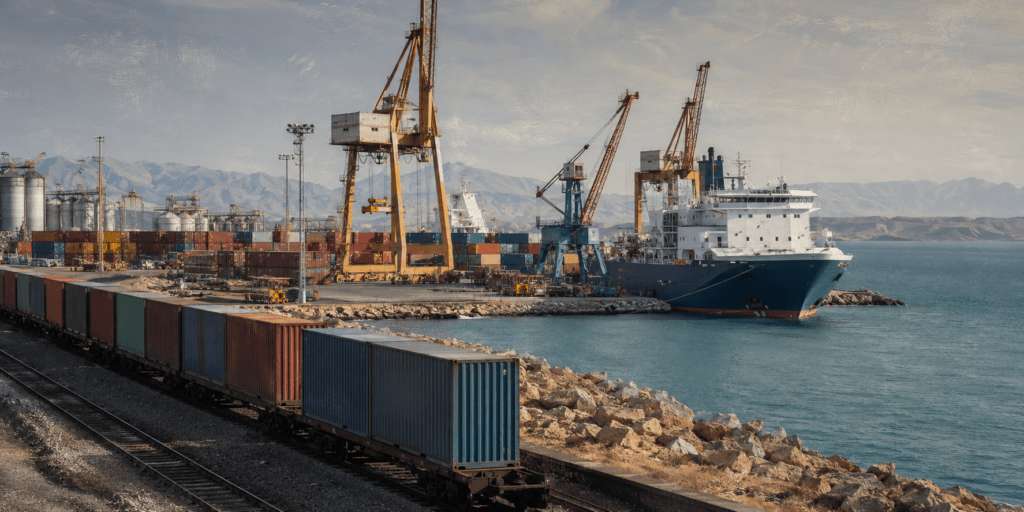
In mid-June, Tashkent and Baku will host two major international finance gatherings within the same regional window: the fifth Tashkent International Investment Forum in Uzbekistan, and the Islamic Development Bank Group’s 2026 Annual Meetings in Azerbaijan. The overlap in timing is useful less as a calendar coincidence than as a signal of how infrastructure, finance, and regional integration are now being discussed together. In Tashkent, the fifth Tashkent International Investment Forum opens under the theme “Investment Resilience: New Frontiers, New Partnerships.” In Baku, the Islamic Development Bank Group will convene delegates from its 57 member countries under the theme “Regional Integration for Sustainable Prosperity.” Add the Astana International Financial Centre’s increasingly active forum calendar, a new cross-border Islamic finance alliance signed in May among regional industry associations, and a stream of connectivity and green investment pledges from recent regional summits, and the wider region looks increasingly focused on turning connectivity talk into investment structures. The more important question is not how much money is being discussed, but what kinds of projects are becoming investable. One answer keeps surfacing: a multi-thousand-kilometer trade route that carries goods from China across Kazakhstan, over the Caspian Sea to Azerbaijan, and onward through Georgia and Türkiye to Europe. The Middle Corridor, formally known as the Trans-Caspian International Transport Route, runs through many of the investment pitches now being made across the region. The forums show how infrastructure, finance, and regional connectivity are increasingly being discussed together. The corridor is one of the clearest tests of whether that agenda can move from conference language into bankable projects. For most of the past century, the world categorized this region under two headings. One is heritage: the caravanserais and blue domes of the old Silk Road. The other is hydrocarbons: the oil and gas beneath the Caspian basin. Both cast the region as a place value came out of or once passed through. The corridor proposes something more ambitious: that value should pass through again, but this time on terms shaped by the region itself. The shift is from selling what lies underground to earning from where the region sits on the map. Freight volumes on the Middle Corridor have risen roughly fivefold over recent years, while transit times have been cut from about a month to roughly two weeks as border procedures and port operations improved. The World Bank’s benchmark study sets out the goal of tripling freight volumes and halving travel time by 2030, and regional projections now point to annual throughput of around ten million tons or more by the end of the decade. For landlocked economies long dependent on a single route to world markets, a second viable artery is less a convenience than a form of strategic insurance. But turning a route on a map into a working corridor requires serious capital. It requires expanded port capacity on the Caspian, additional vessels and ferries, rail upgrades, terminal infrastructure, and the less visible digital and customs systems that allow cargo to clear multiple borders...

Opinion: Why the Next Head of UNAMA Should Come from Central Asia

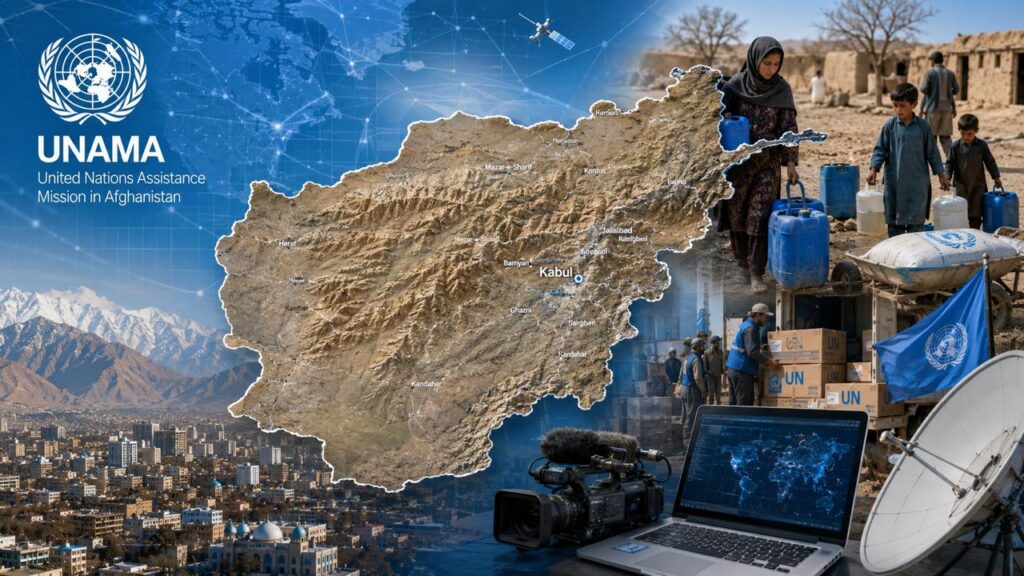
A recent briefing on Afghanistan before the United Nations Security Council again showed that the country’s challenges can no longer be viewed only through humanitarian assistance or debates over recognition of the Taliban government. Afghanistan remains a deeply complex domestic issue, but it is increasingly becoming a regional one as well. The discussion now extends beyond human rights and political dialogue with the de facto authorities. It now includes the return of millions of people from neighboring countries, pressure on cities and rural communities, shortages of jobs and water, cross-border trade, security, and the future of regional transport corridors. Against this backdrop, the question of who should lead the United Nations Assistance Mission in Afghanistan (UNAMA) is no longer only a personnel decision. It has become part of a wider debate about what international policy toward Afghanistan should look like in its next phase. The catalyst for this discussion was the recent briefing delivered by Georgette Gagnon, the UN Secretary-General’s Deputy Special Representative for Afghanistan, before the Security Council. According to Gagnon, the de facto authorities maintain control over both Afghanistan’s territory and administrative structures. At present, they face no significant armed or political challenge. The Taliban themselves view the restoration of security across Afghanistan as one of their principal achievements. Yet this does not mean the situation is stable. Gagnon pointed to a fundamental contradiction within the current system of governance. There are rigid ideological policies that place considerable pressure on society. There are also more pragmatic approaches that have so far allowed the system to function and survive. In other words, Afghanistan appears to have achieved a form of managed stability, but without a clear vision of where that system is ultimately headed. Stability Conceals Deep Structural Problems The economic picture is equally mixed. Afghanistan has recorded positive growth in absolute terms. Fiscal stability has improved, revenue collection has increased, and several infrastructure projects are moving forward. The country has also largely maintained the gains achieved through the reduction of opium poppy cultivation. Yet beneath these signs of stabilization lie significant challenges. According to Gagnon, nearly 5.9 million people have returned to Afghanistan since 2023. This represents a population increase of more than 10%. Another 2.8 million Afghans could return during 2026 alone. Many returnees arrive with no savings, no employment, and limited prospects for rebuilding their lives. For a country with a fragile economy, this creates enormous pressure. Cities and rural communities are struggling to absorb new arrivals. Jobs, housing, water resources, and social services remain in short supply. The humanitarian situation remains severe. In 2026, approximately 21.9 million people, around 45% of Afghanistan’s population, are expected to require humanitarian assistance. Another major concern is demographics. More than half of Afghanistan’s population is under the age of 25. This generation is growing up amid limited opportunities. While the challenges facing girls have received international attention, boys increasingly face difficulties as well. Employment opportunities are scarce, household incomes are declining, and competition for livelihoods is intensifying. Environmental pressures...

Opinion: From the Indo-Pacific to the Eurasian Heartland – What Kyrgyzstan’s UNSC Win Reveals

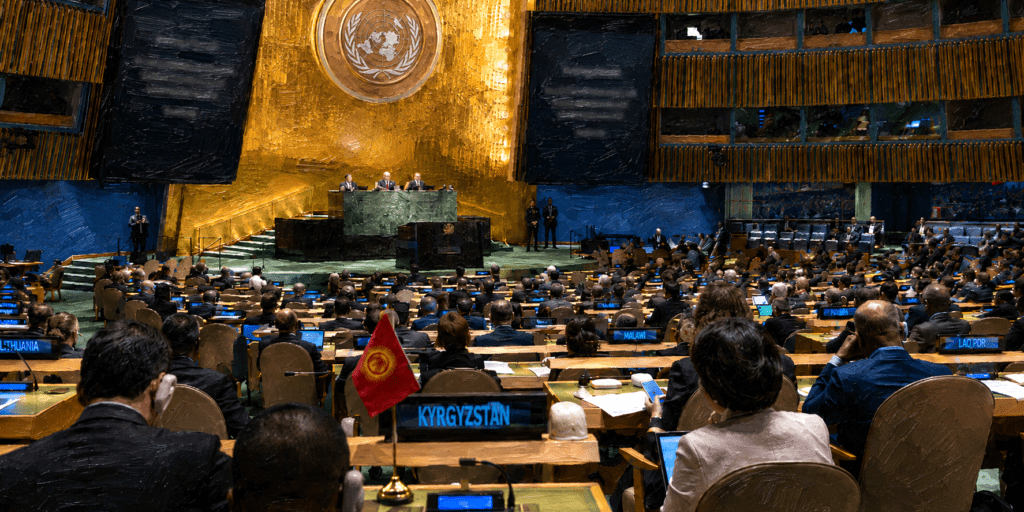
After years of campaigning and four rounds of voting, Kyrgyzstan defeated the Philippines to secure the Asia-Pacific's sole non-permanent seat on the UN Security Council (UNSC) for the 2027-2028 term. Kyrgyzstan won decisively by 142-49, a result that underscores the growing call from small, developing, and landlocked states for greater representation at the UNSC table and highlights the increasing geopolitical importance of the Eurasian heartland. Kyrgyzstan promoted itself as a bridge-builder committed to advancing dialogue, applying preventive diplomacy, and utilizing mediation as a means to resolve global conflicts and reduce geopolitical tensions. The country outlined several priorities for its 2027-2028 term, including nuclear disarmament and non-proliferation, regional stability, reform of the UN, stronger participation from the Global South, and greater attention to the needs of developing countries, landlocked nations, and vulnerable regions affected by climate change. These priorities likely resonated with states that have often felt overlooked in the UNSC, in contrast to member states such as the Philippines, which has already served multiple terms. Before its victory, Kyrgyzstan was among 59 states that had never been elected to the UNSC since its establishment in 1946. It is now the second Central Asian country to secure a non-permanent seat, following Kazakhstan's 2017-2018 term. Kyrgyzstan's initial campaign in 2011 ended in defeat to Pakistan, coming just a year after the violent 2010 revolution, when the country lacked unified support from its Central Asian neighbors. This time, however, Kyrgyzstan received the full backing of its neighbors after settling regional border disputes. This historic achievement reflects growing regional solidarity in the Eurasian heartland, where platforms such as the Organization of Islamic Cooperation have supported Kyrgyzstan's bid to enhance representation in the UNSC. With a non-permanent seat secured, Kyrgyzstan is positioned to advance its priorities and assume the UNSC presidency, which it is scheduled to hold for one month in 2028. This role carries considerable significance, as it enables Kyrgyzstan to shape the UNSC's agenda, schedule votes, manage operations, and lead discussions on conflicts, sanctions, peacekeeping missions, and emerging security challenges. Kyrgyzstan's election suggests a shifting diplomatic perspective in global geopolitics. Since the American pivot to Asia, the Indo-Pacific has dominated much of the strategic conversation in Asia, given flashpoints such as the South China Sea and the Taiwan Strait. Yet the vote also shows that Indo-Pacific salience does not automatically translate into UN General Assembly support. Many member states appeared receptive to Kyrgyzstan's argument that Central Asia, landlocked countries, and the wider Eurasian heartland deserved a stronger voice in the UNSC. Eurasia has long been a strategic area for culture, commerce, and conflict. Its vast landmass, stretching from Europe to Asia, has historically served as a crossroads for civilizations, armies, and trade, from the Silk Road to the two World Wars and China's Belt and Road Initiative. Today, Eurasia remains central to global competition over critical minerals, energy security, trade corridors, and logistics networks. Control of infrastructure and transportation directly shapes global supply chains, and as power balances shift, Eurasia is emerging as...