TASHKENT, June 10, 2026 – Indian Ambassador to Uzbekistan Smita Pant used her official remarks at the Termez Dialogue 2026 to argue that connectivity between Central and South Asia cannot be judged by infrastructure alone. Roads, railways, ports, energy links, financial channels, and digital systems are essential. But durable cooperation also depends on confidence, cultural memory, and a willingness to treat sovereignty as a condition for partnership rather than an obstacle to it.
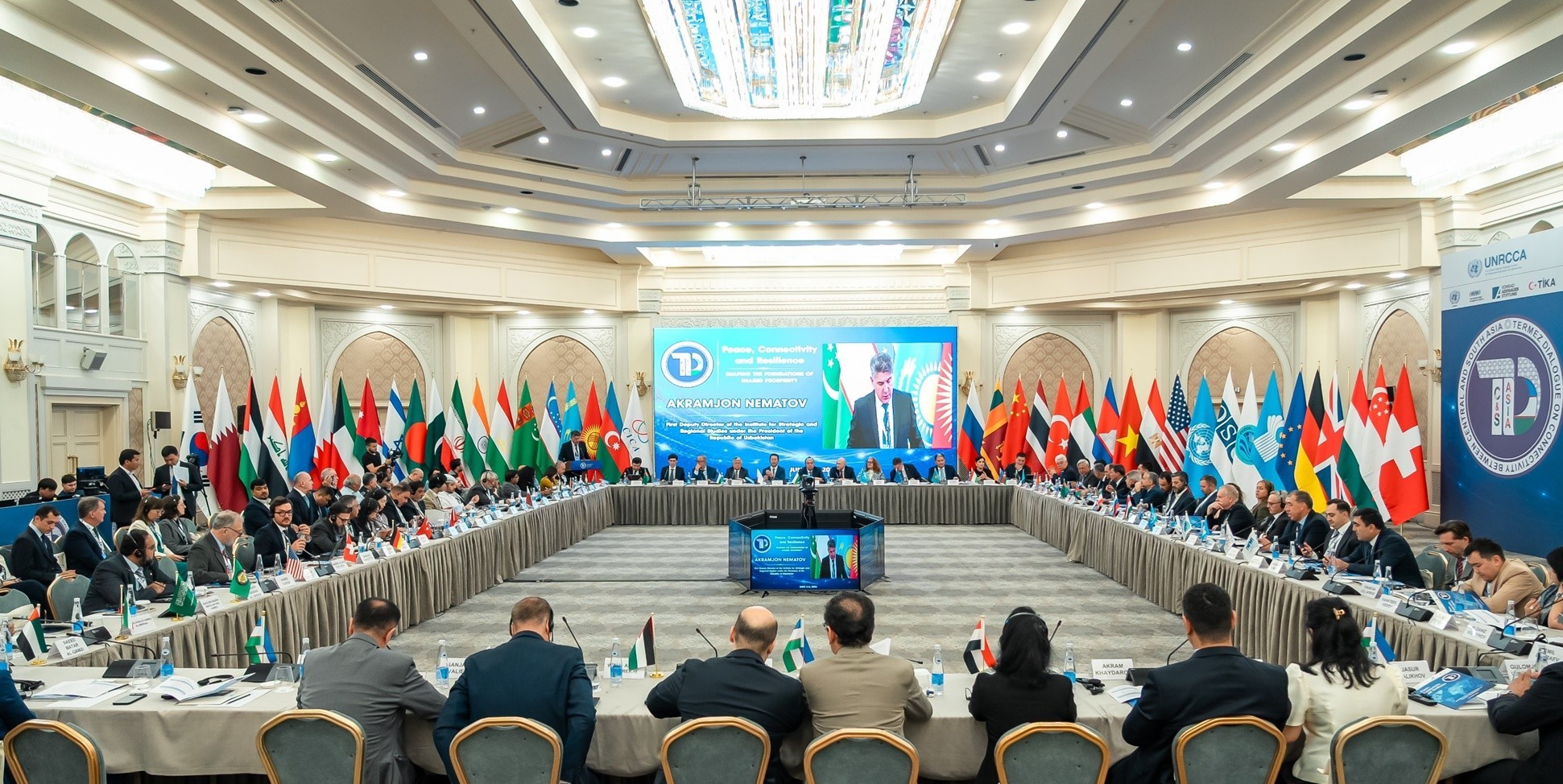
The second meeting of the Termez Dialogue was held under the theme “Peace, Connectivity, and Resilience: Shaping the Foundation for Shared Prosperity.” It was organized by the Institute for Strategic and Regional Studies under the President of Uzbekistan and the Ministry of Foreign Affairs of Uzbekistan, in partnership with CICA. The forum fits into a wider Uzbek diplomatic push to reconnect Central and South Asia through political dialogue, trade, transport, climate cooperation, and cultural exchange.
Pant’s address stood out because it placed the human dimension of connectivity at the center of the discussion. The broader idea associated with the Termez platform was captured in the phrase: “Eurasia needs not lines of division, but spaces of trust.” For India and Uzbekistan, that argument has particular force. Their relationship is not only diplomatic. It rests on older movements of people, ideas, language, food, faith, scholarship, and trade.
That history gives modern policy a deeper base. Central and South Asia are often discussed today through the language of corridors, transit costs, sanctions risk, and access to ports. Those questions are real. The International North-South Transport Corridor, Chabahar, air freight links, customs procedures, and digital payment systems all matter to India’s practical engagement with Central Asia. But the old routes that connected India, Uzbekistan, Afghanistan, and the wider Eurasian space carried more than goods. They also carried habits of coexistence.
“Connectivity is not just material. It is not just about roads and rail. It is also cultural, spiritual, financial, and digital,” she said, reminding delegates that human relationships and shared values constitute the most resilient infrastructure of all.
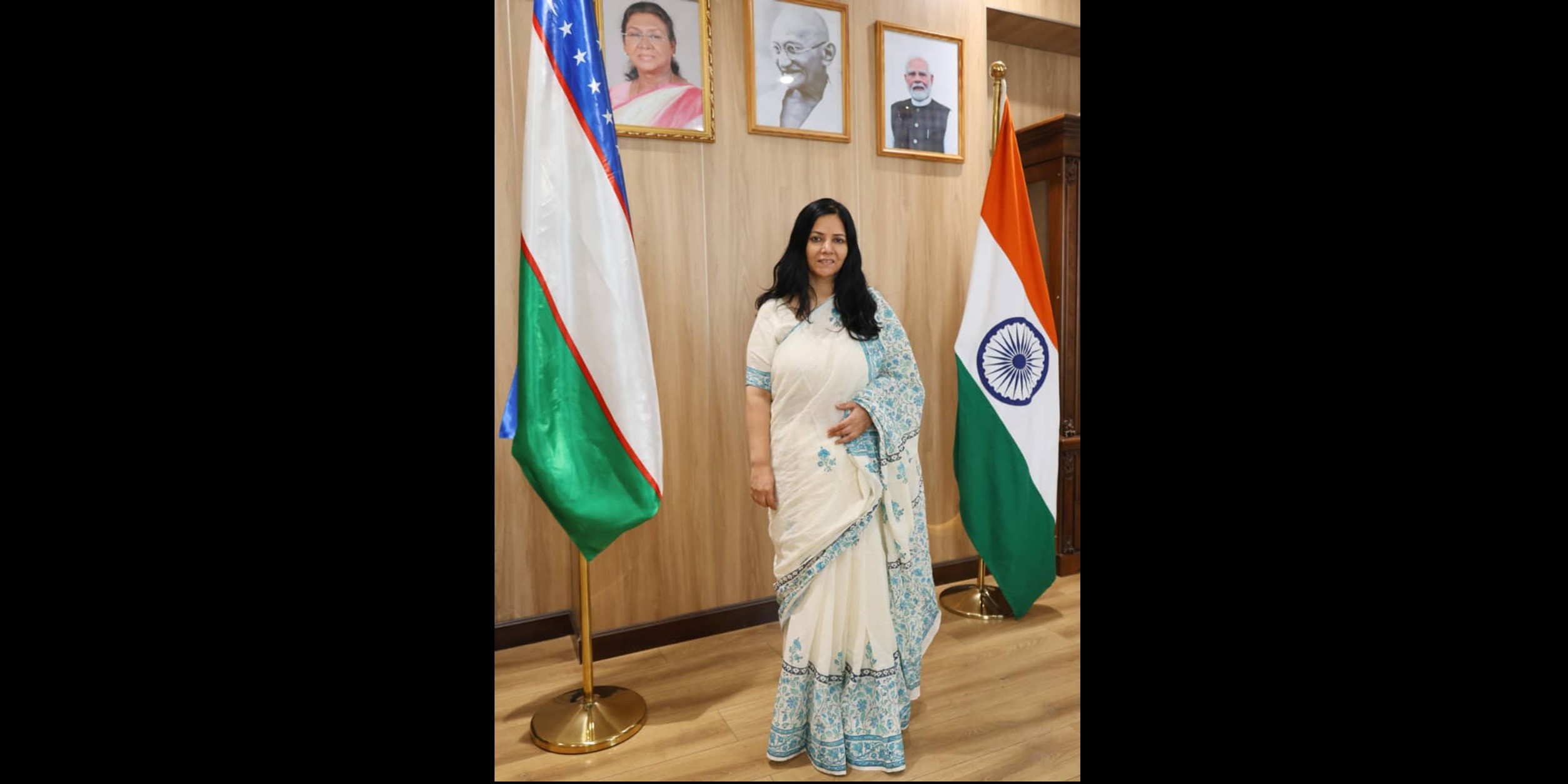
Indian Ambassador to Uzbekistan, Smita Pant. Photo: Embassy of India, Tashkent
This is not a decorative point. Central Asia’s geography makes connectivity a strategic necessity, but its history shows that routes endure only when they are trusted. The UN General Assembly resolution on strengthening connectivity between Central and South Asia gave international backing to this agenda in 2022. The harder question now is how to make that connectivity commercially viable, politically acceptable, and socially useful.
Pant’s answer was to frame India’s approach around sustainability and sovereignty. “India’s approach on connectivity is guided by a very simple mantra – it must be built on the bedrock of financial sustainability and local priorities and should not bypass ideas connected to national sovereignty and independence. India’s approach to connectivity dictates that relations must be transparent, fair and benefit the person on the ground,” she said.
That line is important because connectivity projects can easily become abstract. Maps look clean from a conference hall. On the ground, however, infrastructure affects debt, customs regimes, jobs, border communities, environmental risk, and political choices. If new routes are to succeed, they must answer the needs of the countries and citizens they are supposed to serve.
The ambassador pointed to India’s engagement with Central Asia and other regions as evidence that partnerships work best when they are founded on respect rather than rivalry. “Countries can build sustainable partnerships and move forward on connectivity, energy, and integration when initiatives are built on trust, respect, and mutual respect. That is exactly the approach India brings to Central Asia,” she observed.
Afghanistan remains central to this discussion. No serious vision of Central-South Asian connectivity can avoid the country’s geography or the humanitarian needs of its people. Pant emphasized that India’s support for the Afghan people remains development-oriented and humanitarian. That position reflects a wider reality: without peace and stability in Afghanistan, the promise of regional connectivity will remain constrained.
The Indo-Uzbek relationship gives this argument a practical setting. India and Uzbekistan have described their ties as a strategic partnership, and the bilateral relationship now spans diplomacy, defense, education, culture, digital cooperation, and trade. Uzbekistan’s multi-vector foreign policy also makes it a natural convener for conversations that bring together South Asia, Central Asia, Afghanistan, and wider Eurasian partners.
The philosophical core of Pant’s speech was Vasudhaiva Kutumbakam, usually rendered as “The World is One Family.” In a news report, that idea can sound soft beside hard infrastructure. In an opinion piece, it deserves more space. It points to a simple but often neglected truth: countries may build corridors for trade, but people use them only when they believe the relationship behind them is fair, predictable, and respectful.
Pant made that point most clearly when she said that “we can build roads, bridges and railways and establish digital interface, but the most important infrastructure we share is the connectivity of the hearts.”
She concluded by linking shared interests to shared values. “We, like our partners in Central Asia, including Uzbekistan, do not just advocate for but also practice the values of friendship and harmony, as is reflected in our age-old core philosophy of Vasudhaiva Kutumbakam – World is one Family.”
That is the value of the Termez Dialogue. It does not reduce Eurasia to competing lines on a map. It asks whether infrastructure can be matched by trust, whether commerce can be matched by dignity, and whether regional strategy can be built around confidence rather than coercion. For India and Uzbekistan, the answer should be yes. The material bridge matters, but it will last only if the human bridge is strong enough to carry it.
The views expressed in this article are those of the author and do not necessarily reflect the official policy or position of the publication, its affiliates, or any other organizations mentioned.