• KGS/USD = 0.01144 0%
  • KZT/USD = 0.00211 0%
  • TJS/USD = 0.10460 0.19%
  • UZS/USD = 0.00008 0%
  • TMT/USD = 0.28490 0%
  • KGS/USD = 0.01144 0%
  • KZT/USD = 0.00211 0%
  • TJS/USD = 0.10460 0.19%
  • UZS/USD = 0.00008 0%
  • TMT/USD = 0.28490 0%
  • KGS/USD = 0.01144 0%
  • KZT/USD = 0.00211 0%
  • TJS/USD = 0.10460 0.19%
  • UZS/USD = 0.00008 0%
  • TMT/USD = 0.28490 0%
  • KGS/USD = 0.01144 0%
  • KZT/USD = 0.00211 0%
  • TJS/USD = 0.10460 0.19%
  • UZS/USD = 0.00008 0%
  • TMT/USD = 0.28490 0%
  • KGS/USD = 0.01144 0%
  • KZT/USD = 0.00211 0%
  • TJS/USD = 0.10460 0.19%
  • UZS/USD = 0.00008 0%
  • TMT/USD = 0.28490 0%
  • KGS/USD = 0.01144 0%
  • KZT/USD = 0.00211 0%
  • TJS/USD = 0.10460 0.19%
  • UZS/USD = 0.00008 0%
  • TMT/USD = 0.28490 0%
  • KGS/USD = 0.01144 0%
  • KZT/USD = 0.00211 0%
  • TJS/USD = 0.10460 0.19%
  • UZS/USD = 0.00008 0%
  • TMT/USD = 0.28490 0%
  • KGS/USD = 0.01144 0%
  • KZT/USD = 0.00211 0%
  • TJS/USD = 0.10460 0.19%
  • UZS/USD = 0.00008 0%
  • TMT/USD = 0.28490 0%

Viewing results 4411 - 4416 of 5686

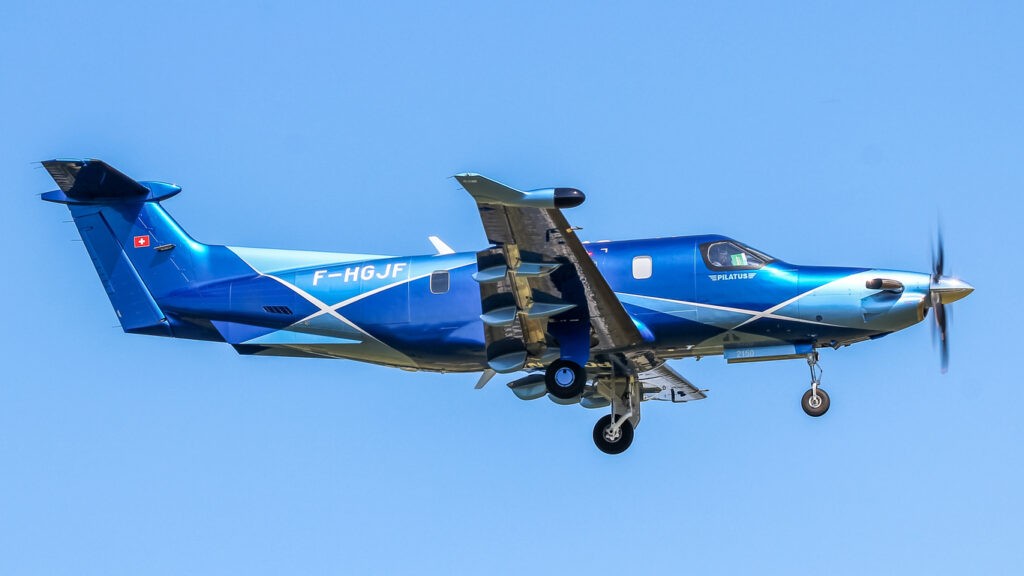
U.S. Refurbishment of Pilatus PC-12 Aircraft for Uzbekistan

US company Sierra Nevada Corporation (SNC) has been awarded a $64.2 million contract to refurbish six Pilatus PC-12 aircraft for Uzbekistan. The work will be performed in Uzbekistan and completed by August 2027. According to the U.S. Defense Department's website, the contract which was awarded under the U.S. Department of Defense's Foreign Military Sales (FMS) program, includes not only the restoration of the aircraft but also logistical support and on-site maintenance. The Pilatus PC-12 is a single-engine turboprop aircraft widely used for various missions, including surveillance and transportation. Since the aircrafts' proven reliability lends itself to civilian and military applications, their rehabilitation will have a significant impact on the expansion of Uzbekistan's aviation capabilities, including long-range monitoring and transportation missions. It is worth noting that the Pilatus PC-12 aircraft is often used in difficult conditions due to its ability to take off and land on short runways, making it indispensable for operations in Uzbekistan's remote and hard-to-reach regions.

Middle Corridor Container Transit Through Kazakhstan Showing Dramatic Growth

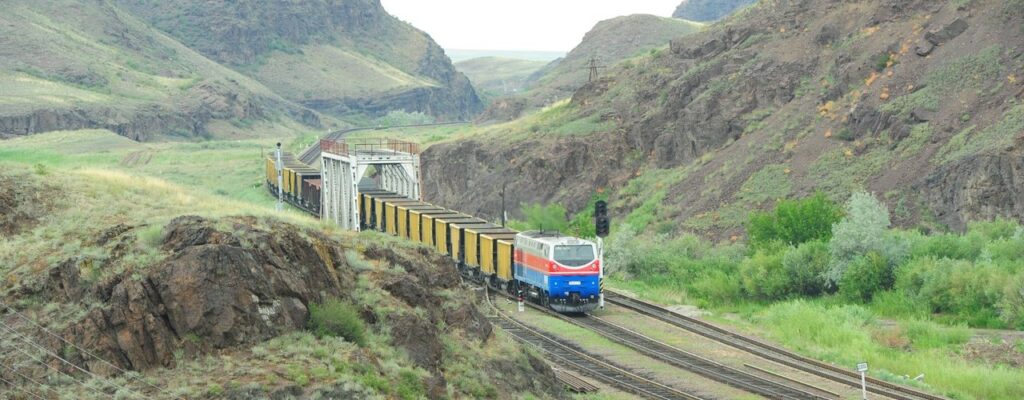
Kazakhstan’s national railways company Kazakhstan Temir Zholy (KTZ) has announced that the volume of container transportation through the country is growing rapidly. In the first seven months of this year, rail container transportation from China to Europe through Kazakhstan along the Trans-Caspian International Transport Route (TITR) grew 14-fold compared to the same period last year, The TITR is a multimodal transport corridor connecting China and Europe by bypassing Russia, also known as the Middle Corridor. To develop it, Kazakhstan Temir Zholy, together with other stakeholders, is working to increase transportation volumes, improve services, and speed up cargo delivery. To date, the transportation time from Altynkol railway station on the Kazakh-Chinese border to Absheron (Azerbaijan) has been reduced to 9 days, to Poti/Batumi (Georgia) to 12 days, and to Constanta (Romania) via Poti/Batumi to 20–22 days. In 2023, KTZ and the railway administrations of Azerbaijan and Georgia established the Middle Corridor Multimodal Ltd. Joint Venture to improve multimodal services along the route. The joint venture provides a 'one-stop shop' service and guarantees delivery times and costs. KTZ is developing Kazakh port infrastructure in the Caspian Sea with the involvement of large international logistics companies.

Blast off to Baikonur: A Space Tourist’s Odyssey

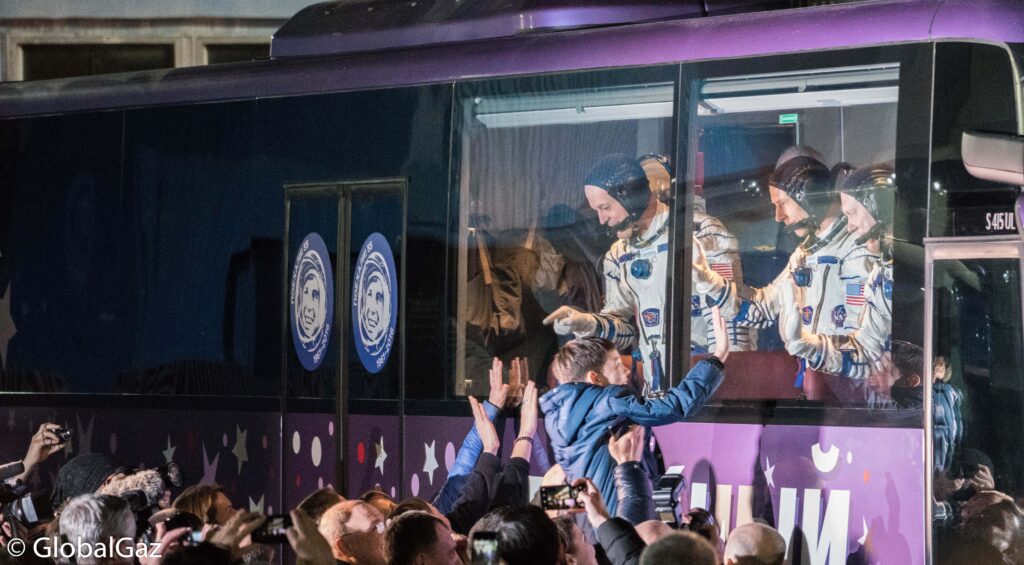
Space tourism is a growing industry, with visitors to Baikonur attending launches, especially missions to the International Space Station. The town is a leased Russian enclave ensconced within Kazakhstan, including the cosmodrome which is controlled by Roscosmos, the Russian space agency. After NASA ended its Space Shuttle program in 2011, Baikonur became the only launch site to the International Space Station (ISS) until 2020. Now, 60 years after space travel began, it still remains an important gateway to the stars. As described by Megan Eaves, “Baikonur is in many ways a perfect relic of the Soviet 1960s. Stoic mosaics depicting muscular comrades heralding a new era of space still decorate entrance gates and the walls of the town's functional, Brutalist apartment blocks, which once housed construction workers, aerospace engineers and space families. Inside the cosmodrome, crumbling hangars stand side-by-side next to the original, minimalist cottages where Yuri Gagarin and the early cosmonauts slept.” [caption id="attachment_21654" align="aligncenter" width="800"] Statue of Yuri Gagarin in the town of Baikonur, Kazakhstan; image: Ric Gazarian[/caption]   Near a hotel where visitors stay is Cosmonaut’s Alley, a path in a wooded area surrounded by trees planted by all those who launched into space from Baikonur. The first tree that greets visitors is Yuri Gagarin’s from 1961. Continuing our coverage of Baikonur, TCA spoke to renowned travel blogger, Ric Gazarian, who in 2018 witnessed the MS-08 launch which sent three men on the 55th expedition to the ISS. TCA: Your blogs about your experience at Baikonur contain a lot of history on the Russian space program; where and when did you find out about Baikonur and the space program? Was there anything in particular that piqued your interest? Gazarian: There wasn’t a specific moment, but I’ve been intrigued by space travel since I was a kid. NASA is exceedingly cool and fascinating, and so is Roscosmos, but with the addition of the exoticness from a Western perspective. The history and rivalry between the U.S. and the Soviet Union’s space program is so rich. So, when I found out about the opportunity to visit Baikonur and witness a space launch, it was immediately added to my bucketlist. It was this unique opportunity to witness firsthand Soviet/Russian space traditions. The added bonus is so few people make the effort to visit. [caption id="attachment_21619" align="aligncenter" width="2560"] Museum in the Chelomey International Space School, Baikonur, Kazakhstan; image: Ric Gazarian[/caption]   TCA: You stated that “This was not your typical tourist trip to Paris…This was a group of space geeks and Soviet fan boys.” Which one are you? Gazarian: A little bit of both. One experience we had was watching the cosmonauts leave their quarantine hotel and board the bus to take them for their final preparations before the launch. A crowd of a couple of hundred people had circled their bus; it was a rock star moment. To know these guys were soon to be launched into space touches you emotionally. And yes, this is a dream come true for Soviet...

Comic Con Astana 24: Mixed Impressions from Delight to Disappointment

Comic Conventions, known as Comic Con, began back in1970 when a group of enthusiasts gathered in San Diego, California to exchange comics. Since then, international festivals promoting comics, pop culture, sci-fi, video games, anime and related films and TV series have soared in popularity, attracting thousands of fans to venues across the globe. Now an annual event, Kazakhstan’s Comic Con was first staged in 2019, and Comic Con Astana '24, running from 25-28 July at the city’s Expo International Exhibition Center, was one of the most eagerly anticipated events in the world of pop culture. Tickets were available online from 15 April as well as at the door. Quick to sell out, the four-day festival attracted over 53,000 visitors from 30 countries. [caption id="attachment_21630" align="alignnone" width="720"] photo TCA : Center stage[/caption] Comprising a comprehensive program representing all aspects of the international comics industry, Astana’s festival included appearances by numerous superstars such as Russian actors Ruzil Minekaev and Anton Lapenko, and Danish actor Mads Mikkelsen renowned for his leading role in the TV series ‘Hannibal’ and as Cliff Unger in Hideo Kojima’s video game ‘Death Standing.’ Representing the home front, presentations were made by over 100 Kazakh authors of graphic novels. In addition to having a unique opportunity to meet their heroes, actors and authors, visitors were able to actively participate in various themed events, masterclasses, autograph sessions, and exhibitions. Professionals and attendees alike, injected great flair to the event by dressing as their favorite heroes to compete for prizes totaling US$ 27,000 in a Cosplay contest. [caption id="attachment_21629" align="alignnone" width="540"] photo: TCA: Cosplay participants[/caption] Response to the organizers’ delivery of a dynamic, wide-spanning program was generally positive, with visitors reporting that the event had met their expectations. Many however, commented that their overall impression was significantly marred by the considerable discomfort caused by lengthy, bottleneck queues of up to three hours to either enter the building or access popular events. [video width="480" height="848" mp4="https://timesca.com/wp-content/uploads/2024/08/WhatsApp-Video-2024-08-13-at-17.49.23_d55b7dfb.mp4"][/video] "The program was great, especially meeting our favorite actors,” a guest named Altair, told TCA. “But the queues were simply unbearable. We spent almost half of the day just waiting, and it greatly affected our enjoyment.” Nastya, another guest, also expressed her dissatisfaction over the control of the flow of visitors: "The festival was cool, but the crush, which led to some visitors fainting, made our stay not as comfortable as we would have liked. I hope that in the future, Comic Con will take this into account and improve the organization.” Aruzhan, the third visitor interviewed by TCA, added, "I liked everything, it was especially cool to see stars from all over the world, but I think they should have sold fewer tickets so that everyone was comfortable in the building.” On the other side of the fence, blogger Anastasiz and a guest headliner of the Comic Con, was similarly upset by administrative oversights and in a video post, condemned the fact that because the queues were not closed, hundreds of people, standing in tight...

Turkmenistan Celebrates Caspian Sea Day

The Caspian Sea Day is currently being celebrated in a series of festive events in Turkmenistan's national tourist zone, Avaza, With a key focus on environmental awareness, specialists from the Nature Protection Society of Turkmenistan have organized a programme of educational activities in schools and public spaces to instil in children, a love and respect for nature, encourage them to live in harmony with the environment, and develop a strong sense of responsibility for nature conservation. As part of the Caspian Day celebrations, the Society has conducted creative contests on environmental themes, exhibitions demonstrating the beauty of nature, photo contests, and cultural and sports competitions dedicated to the flora and fauna of the Caspian Sea. In addition to the above, Turkmenistan has organized international conferences, scientific meetings, and environmental events, with special attention paid to protecting the marine environment, preserving the unique ecosystem of the Caspian Sea, and developing regional cooperation. President Serdar Berdimuhamedov of Turkmenistan has consistently advocated turning the Caspian Sea into a zone of peace, trust, and ecological well-being, and is actively involved in developing trade, economic, and socio-cultural ties in the region. The Caspian Day on August 12 - a date chosen in connection with the instigation of the Framework Convention on the Protection of the Caspian Sea and the Environment from Pollution - has been celebrated annually since 2006, by the five Caspian littoral states: Kazakhstan, Azerbaijan, Iran, Russia, and Turkmenistan.

Kyrgyzstan Establishes Center for “Information Security”

Kyrgyzstan has created the Information Environment Research Center (IERC), which will be part of the Ministry of Culture, Information, Sports, and Youth Policy; its main task is to monitor and analyze the country's information space in order to protect citizens' rights and freedoms and prevent the spread of misinformation and inaccurate information. The Center will identify and block illegal content on the internet and in the media and cooperate with the administrations of major social networks such as Facebook, Google, and TikTok. It will monitor compliance with legislation in the information sphere and provide recommendations on improving the information environment in Kyrgyzstan. The establishment of the Center is part of the state strategy to strengthen information security and control the observance of citizens' rights in the media space. Earlier, we reported that a unified TV channel and a regional media platform could appear in Central Asia, which would become important elements in strengthening information security and cultural exchange in the region. This year, Central Asia, and Kazakhstan in particular, has been the subject of swathes on disinformation on the internet. However, independent media in Kyrgyzstan has been the target of repression by the authorities, which UN Special Rapporteurs have denounced.